Minimalist Home Decor: Essential Tips for a Clutter-Free Space
Most people don’t come to minimalism because they love empty rooms. They come to it because they’re tired. Tired of hunting for keys under a pile of post, tired of cleaning around things they never use, tired of a living room that looks messy again an hour after tidying it. The promise of a minimalist…
Most people don’t come to minimalism because they love empty rooms. They come to it because they’re tired. Tired of hunting for keys under a pile of post, tired of cleaning around things they never use, tired of a living room that looks messy again an hour after tidying it. The promise of a minimalist home isn’t bare walls. It’s a space that stays calm without constant effort.
That’s also where a lot of attempts go wrong. Photos of minimalist interiors can make the style look like a matter of buying a white sofa and hiding everything else, and the result often feels cold, sterile, or impossible to live in. Real minimalist decor works the other way around. It starts with what you own and how you live, and only then turns to furniture, colour, and styling.
What follows covers the whole process: what the style actually is, the design principles that make it look good, a realistic way to declutter, storage that keeps surfaces clear, how to apply it in each room, and how to keep a minimalist home warm and sustainable over the long term.
What Minimalist Home Decor Really Means
Minimalist home decor is a style built on keeping only what’s useful or genuinely loved, arranged in uncluttered rooms with simple furniture, a restrained palette, and plenty of open space. The goal isn’t owning as little as possible. It’s giving every object a purpose and a place, so the home feels calm and easy to maintain.
The style draws on a few older traditions. Early twentieth-century modern design argued that form should follow function and that ornament for its own sake was unnecessary. Traditional Japanese interiors, with their low furniture, natural materials, and respect for empty space, shaped it just as strongly. Scandinavian homes added comfort and light. Contemporary minimalism combines all three.
Two ideas sit at its centre. The first is intention: every item in a room should earn its place, either by being used regularly or by bringing real pleasure. The second is negative space, the empty areas of wall, floor, and surface that let the eye rest and let the remaining objects stand out. A single ceramic bowl on a clear table has far more presence than the same bowl surrounded by candles, remotes, and a stack of magazines.
Is minimalist decor the same as having nothing?
Minimalist decor doesn’t mean owning nothing or living in empty rooms. It means editing belongings so that what remains is useful, meaningful, or beautiful, and storing everyday items out of sight. A minimalist home can hold books, art, and personal objects, provided they’re chosen deliberately and given room to breathe.
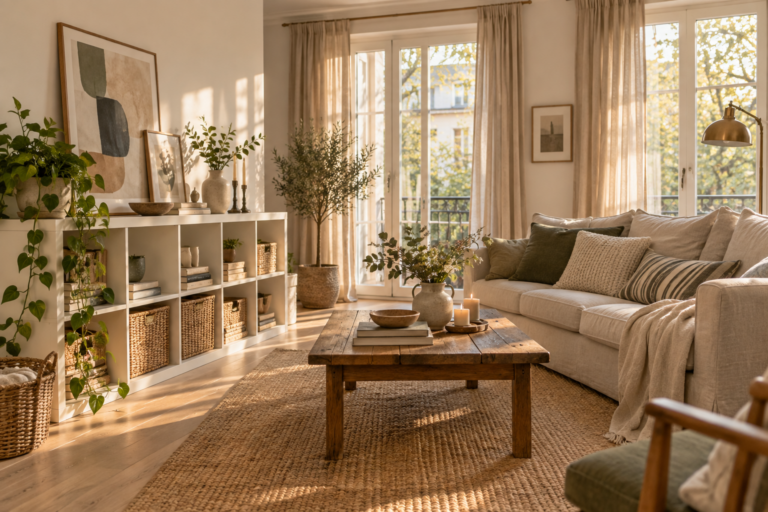
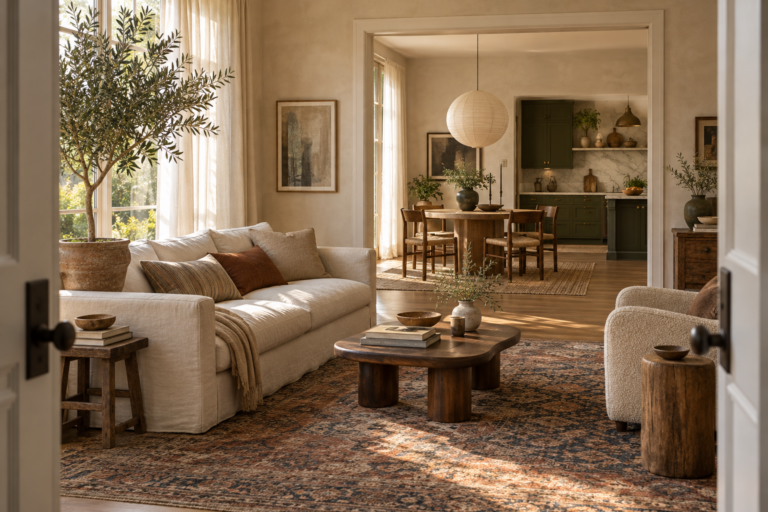
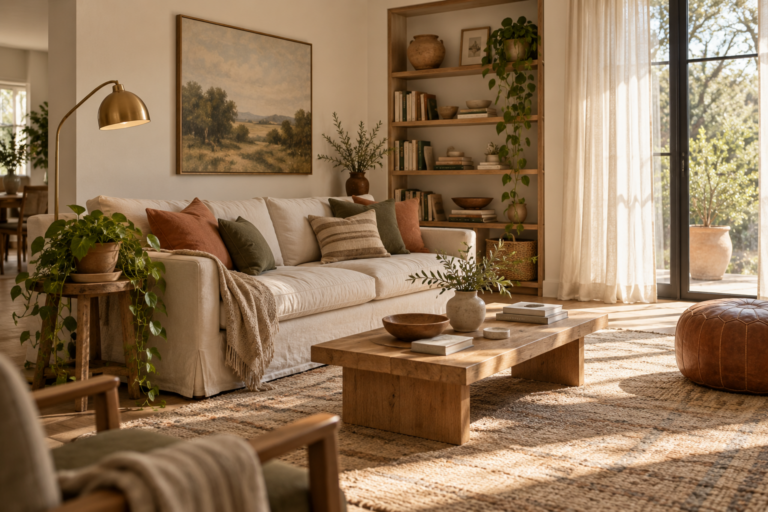
There’s a wide range within the style. At one end sits strict, almost gallery-like minimalism with bare surfaces and very few pieces. At the other is what many people call warm minimalism, which keeps the clean layout but welcomes texture, wood, plants, and a handful of meaningful objects. Most homes that feel good to live in sit closer to the warm end.
What is the difference between minimalist and Scandinavian decor?
Minimalist decor is defined by restraint: few objects, clear surfaces, hidden storage, and simple forms in any material or colour. Scandinavian decor is a specific regional style that shares that simplicity but adds pale woods, white walls, cosy textiles, candles, and plants. A Scandinavian room is often minimal, but minimalism doesn’t require Scandinavian ingredients.
Japandi, which blends Japanese and Scandinavian design, and organic modern, which softens modern shapes with natural texture, are both close relatives. All three can be understood as minimalism with a particular personality layered on top.
The Design Principles Behind a Minimalist Home
Once the clutter is under control, a handful of design decisions determine whether a room looks deliberately minimal or simply unfinished. These principles apply whether you’re furnishing from scratch or refining what you already have.
Choose a restrained colour palette
Minimalist rooms usually work from a small palette: one main neutral, one or two supporting tones, and perhaps a single darker contrast. Warm whites, soft greige, stone, sand, and pale taupe make a gentle base. Charcoal, black, or deep brown can provide definition through a picture frame, a lamp base, or window frames.
Warm neutrals tend to be easier to live with than stark cool white, especially in rooms with north-facing light, where cool whites can look grey and flat. Test paint samples on several walls and look at them in morning, afternoon, and evening light before committing.
Colour isn’t forbidden. A muted sage, dusty blue, or clay tone repeated in two or three places can bring character without adding visual noise. The key is limiting how many different colours compete in one room.
Let materials and texture do the decorating
Because minimalist rooms have fewer objects, the materials themselves become the decoration. Natural wood with visible grain, linen with a relaxed weave, wool, leather, stone, plaster, and handmade ceramics all bring depth without clutter.
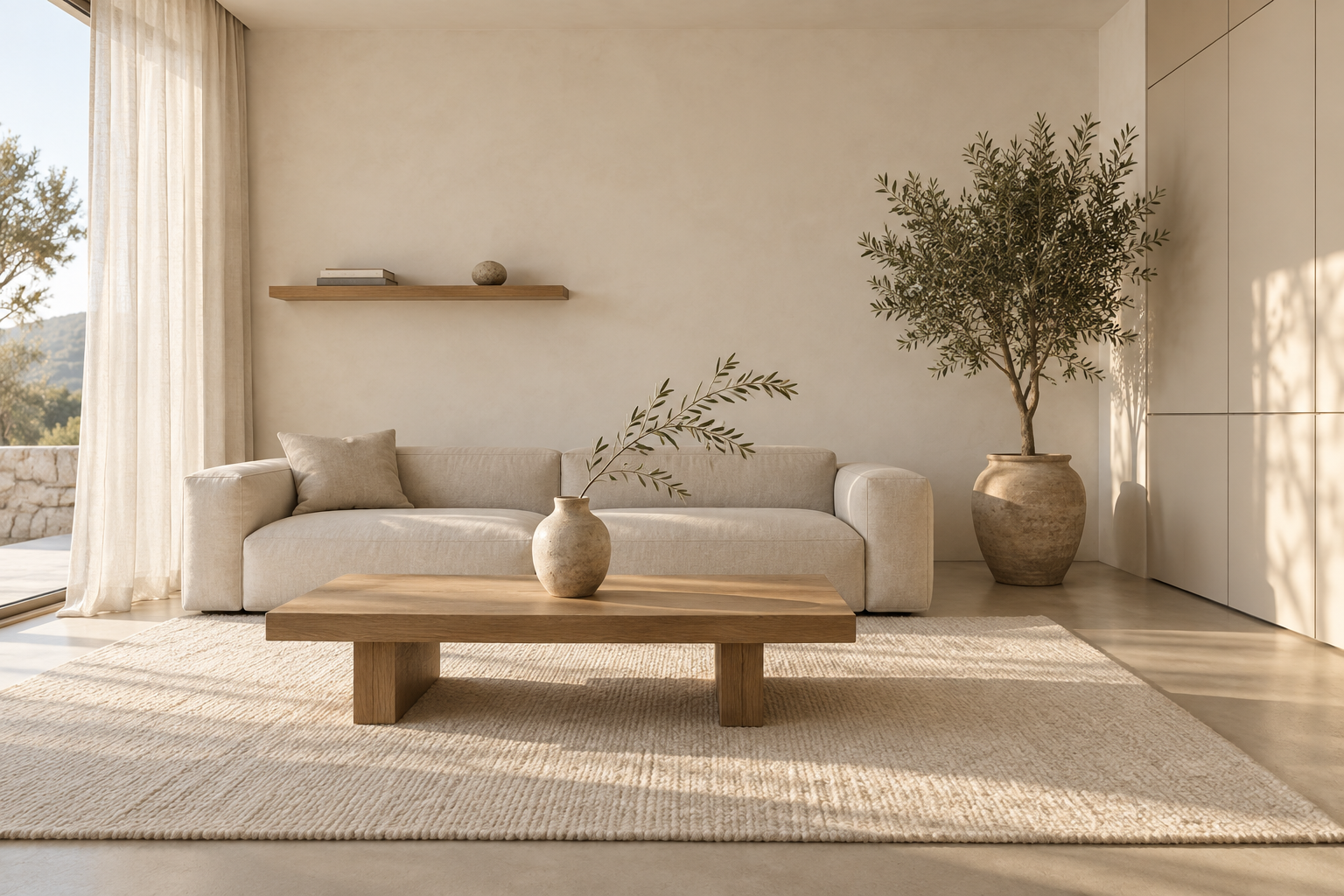
Mixing textures within the same colour family is one of the most effective techniques. Picture a cream room with a nubby wool rug, smooth plaster walls, a linen sofa, a pale oak table, and a rough stoneware vase. Everything is roughly the same colour, yet the room feels layered and inviting because each surface feels different.
Pick fewer, better pieces of furniture
Minimalist furniture is simple in form: clean lines, uncomplicated silhouettes, and little applied decoration. Pieces that sit on slim legs show more floor underneath, which makes a room feel lighter and larger. Low profiles keep sightlines open.
Scale matters more than quantity. A room with one generously sized sofa and a substantial coffee table often feels calmer than one crowded with a loveseat, two small armchairs, three side tables, and an ottoman. Before buying, ask whether the piece solves a real need and whether it will still suit the room in several years.
Multifunctional furniture is especially valuable. A bench with storage beneath, a coffee table with a hidden drawer, an extendable dining table, or a bed with built-in drawers reduces the number of pieces needed without sacrificing function.
Use light to make space feel open
Natural light is one of the most important elements in a minimalist home. Keep windows as unobstructed as possible, using sheer linen curtains, simple roller blinds, or unlined panels that let daylight through while offering privacy. Mounting curtain rods close to the ceiling and extending them beyond the frame makes windows look larger.
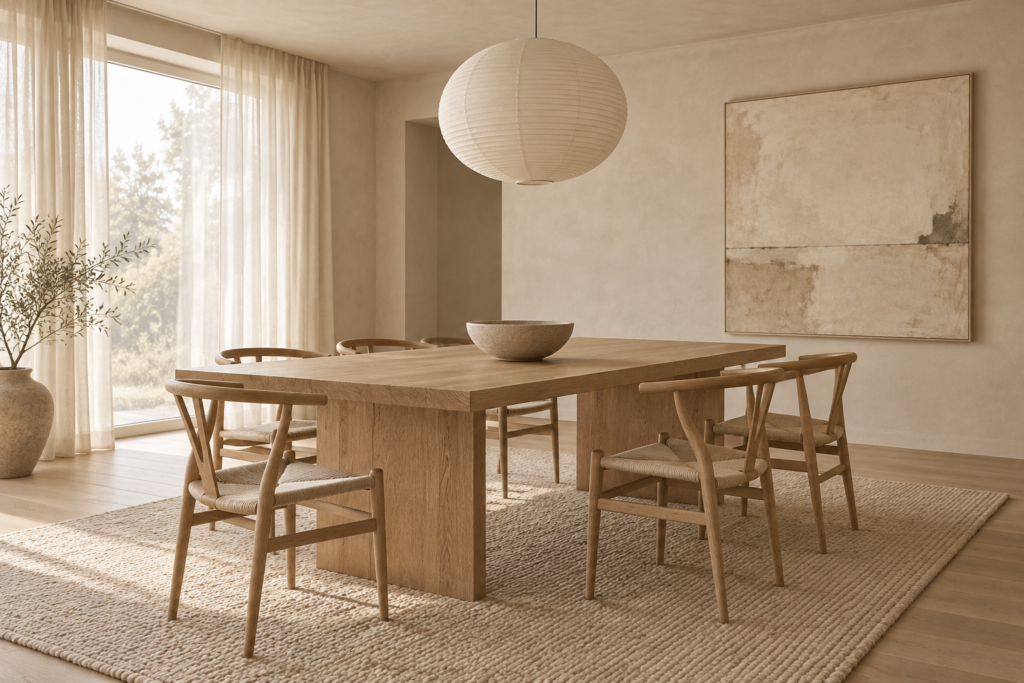
For artificial light, layer a few simple sources rather than relying on a single overhead fixture. A sculptural pendant, one floor lamp for reading, and a small table lamp for evening warmth are usually enough. Choose fixtures with simple forms so they read as considered objects rather than extra clutter.
Give each room a single focal point
A minimalist room works best when the eye has one clear place to land: a fireplace, a large artwork, a beautiful dining table, a view through the window, or a statement light. Supporting elements stay quieter. When several features compete for attention in a pared-back room, the calm effect disappears quickly.
How to Declutter Before You Decorate
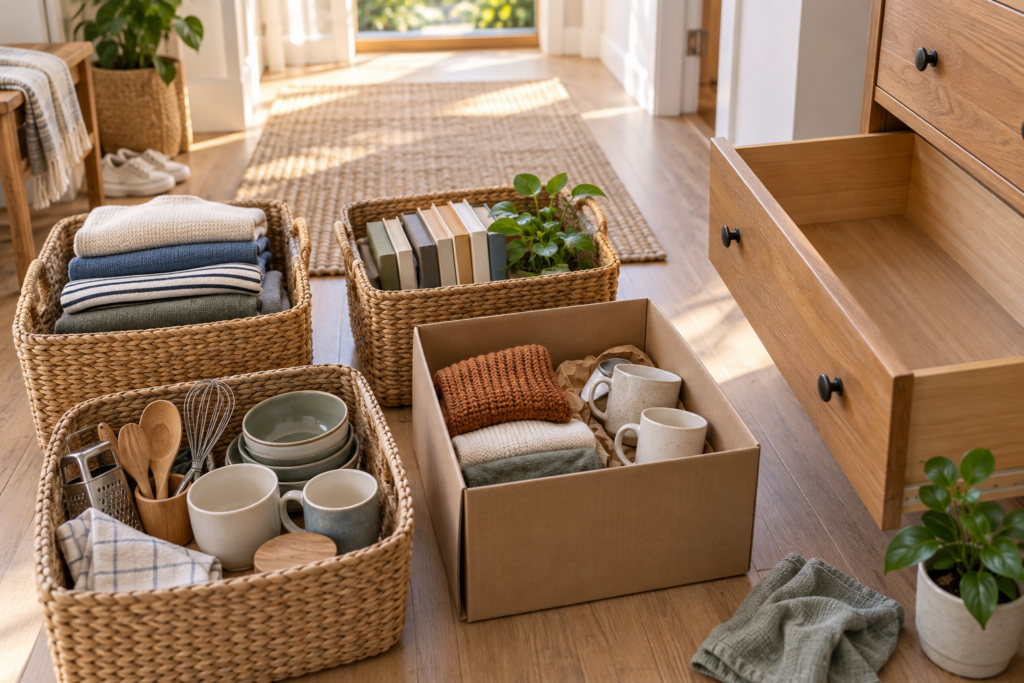
Decorating comes second. No amount of stylish furniture will make a room feel minimal if every drawer overflows and the kitchen counters are covered. Decluttering is the unglamorous foundation, and approaching it methodically makes it far less daunting.
How do you start decluttering when you feel overwhelmed?
Start small with one clearly defined area, such as a single drawer, shelf, or bathroom cabinet, and finish it completely before moving on. Quick visible wins build momentum. Work in short sessions, sort items into keep, donate, and discard, and remove the donate and discard piles from the house the same day.
Trying to declutter an entire home in a weekend is the most common reason people give up. Progress feels slow at first, then accelerates as decisions become easier and each cleared space shows what’s possible.
A room-by-room decluttering method
- Choose one category or zone. Some people prefer working by category, gathering all books or all clothes in one place so they can see the full volume. Others prefer tackling one room at a time. Both work; categories tend to reveal duplicates more clearly.
- Empty the space completely. Take everything out of the drawer, cupboard, or shelf. Seeing items spread out makes it easier to judge what’s there than rummaging through a full space.
- Sort into clear groups. Use keep, donate or sell, recycle, and discard. A small “unsure” box is useful, but set a limit on how big it can get.
- Ask practical questions. Have you used this in the last year? Would you buy it again today? Do you own something else that does the same job? Are you keeping it out of guilt rather than use or affection?
- Clean before putting anything back. Wipe shelves and drawers so the space feels like a fresh start.
- Return only what earns its place. Put back keepers with their most-used items at the front and within easy reach.
- Remove outgoing items immediately. Bags of donations left in a hallway or car boot have a habit of drifting back into the house.
Dealing with sentimental items
Sentimental belongings are usually the hardest part, so leave them until last, when decision-making feels easier. Rather than keeping everything or forcing yourself to part with it all, choose the most meaningful few items from a group, such as a single piece of a grandmother’s china set or a handful of a child’s artwork. Photographing items before letting them go can help preserve the memory without keeping the object. Pieces you do keep deserve to be displayed or stored with care rather than buried in a box.
Keeping clutter from returning
A few simple habits prevent a decluttered home from filling up again:
- One in, one out. When something new comes in, something similar leaves.
- A landing zone. A tray or bowl near the entrance for keys, wallet, and sunglasses stops them from spreading across surfaces.
- Daily reset. A few minutes each evening returning items to their homes keeps rooms under control.
- Paper control. Deal with post as soon as it arrives: recycle, act on, or file it.
- Seasonal reviews. At the change of each season, check wardrobes, cupboards, and hobby supplies for anything no longer used.
Storage Solutions That Keep Surfaces Clear
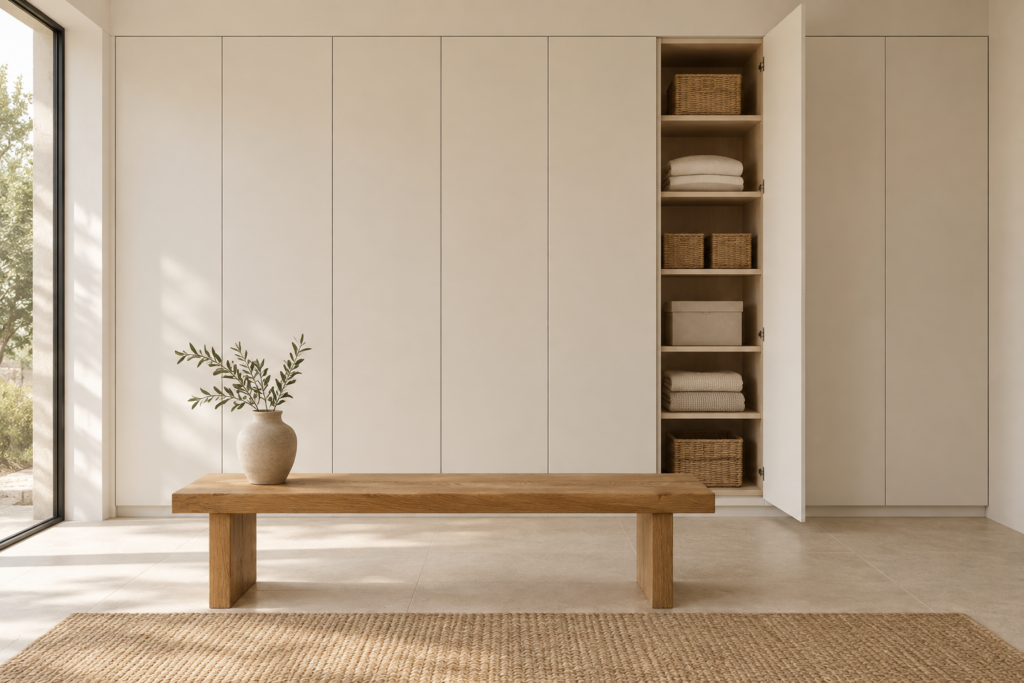
Minimalist homes aren’t free of everyday items. They simply have somewhere to put them. Good storage is what allows a room to look calm while still functioning for real life.
Prioritise closed storage
Open shelving looks lovely in photographs but shows everything on it. For a clutter-free look, rely mainly on closed storage: cabinets with doors, drawers, lidded boxes, and built-in cupboards. Handleless or push-to-open fronts, flush cabinetry, and doors painted the same colour as the wall help storage blend into the room almost invisibly.
Keep open shelving for a small number of items you genuinely enjoy seeing, such as a few books, a plant, or a single piece of pottery, and leave some of each shelf empty.
Use vertical and hidden space
Tall cabinets that reach close to the ceiling hold far more than several shorter units and create fewer visual breaks. Other often-overlooked spaces include the area under the bed, inside ottomans and benches, above doorways, beneath stairs, and on the inside of cupboard doors, where slim racks can hold cleaning supplies or spices.
Organise inside drawers and cupboards
Storage only stays tidy when items have a defined place within it. Drawer dividers, shallow trays, and uniform containers stop things from becoming a jumble. Keep frequently used items at the front and at waist to eye height, with seasonal or rarely used items higher up or further back.
Matching containers in a single material, such as woven baskets, plain boxes, or clear glass jars, look much calmer than a mixture of different colours and packaging. In pantries, decanting dry goods into simple jars removes the busy branding of original packaging.
Store by frequency of use
Everything in a home can be sorted into three groups: daily, occasional, and rare. Daily items belong in the most accessible spots. Occasional items, such as a roasting tin or guest bedding, can go in less convenient places. Rarely used items, like holiday decorations or suitcases, belong in lofts, high shelves, or deep cupboards. Organising this way prevents everyday clutter from landing on counters simply because its proper home is hard to reach.
Minimalist Decor Ideas Room by Room
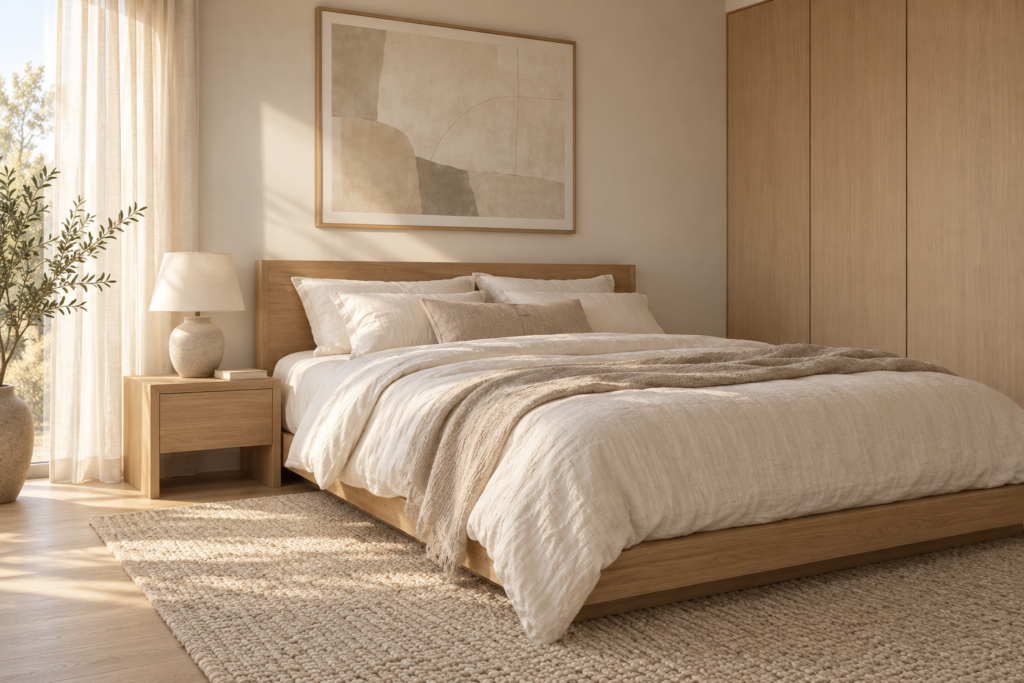
The principles stay the same throughout the home, but each room brings its own challenges and opportunities.
Minimalist living room
Build the living room around a comfortable sofa, a rug large enough to anchor the seating, and a coffee table with a clear surface. Limit additional seating to what you actually use. A media unit with closed storage hides cables, game controllers, and remotes, and the television can be softened by wall-mounting it and keeping the area around it simple.
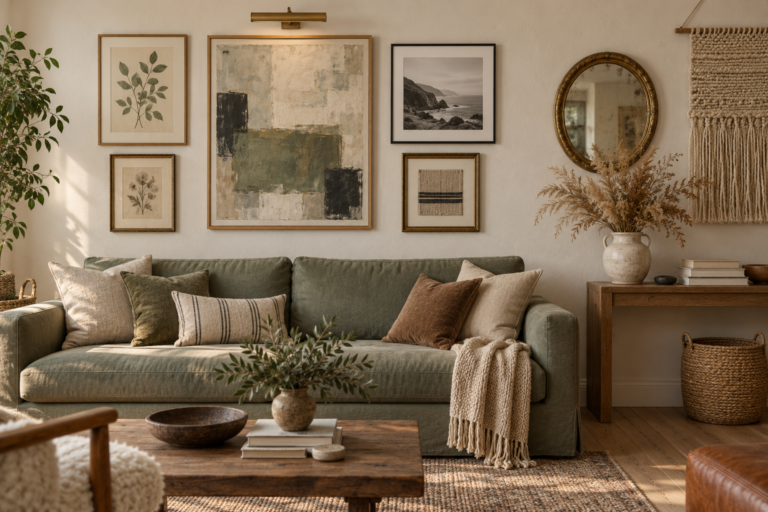
Style the coffee table with no more than two or three items, such as a tray, a book, and a small vase. On shelves, group objects in small clusters and leave generous gaps. One large piece of art usually looks better in a minimalist room than a gallery wall of many small frames.
Minimalist bedroom
The bedroom is where minimalism has the most noticeable effect on how you feel. Keep the area around the bed especially calm, with a simple frame, quality bedding in natural fibres, and nightstands holding only a lamp and perhaps a book or small plant.
Wardrobes and dressers with closed fronts prevent clothing from becoming visual clutter. A slim hook or valet stand for tomorrow’s outfit stops clothes from piling onto a chair. Keep work, exercise equipment, and laundry out of the bedroom where possible so it remains a space for rest.
Minimalist kitchen
Clear counters are the single biggest visual change in a kitchen. Store small appliances you don’t use daily inside cupboards, and keep out only the essentials, perhaps a kettle, a chopping board, and a bowl of fruit. Choose a matching set of everyday dishes and glassware rather than a mixed collection accumulated over years.
Flat-front or simple shaker cabinets, a single hardware finish, and a solid-colour backsplash suit the style. If you love open shelving, limit it to one short run and display only everyday pieces in a consistent colour.
Minimalist bathroom
Bathrooms clutter up quickly because so many products are used every day. Keep the counter to a soap dispenser and perhaps one small plant or dish. Move everything else into a cabinet, drawer organiser, or wall-mounted mirror cabinet. Decanting hand soap and body wash into plain refillable bottles makes a surprising difference. Matching towels in a single calm colour complete the look.
Minimalist entryway and home office
Entryways set the tone for the whole home and tend to gather shoes, bags, and post. A slim console or wall shelf, a tray for keys, a few hooks, and closed shoe storage are usually enough.
In a home office, the aim is a desk surface that can be cleared at the end of each day. Use cable management to hide cords, keep paperwork in a closed file drawer or box, and store supplies in a single organiser. Going digital with documents and bills where practical reduces paper clutter considerably.
How to Keep a Minimalist Home Warm and Liveable
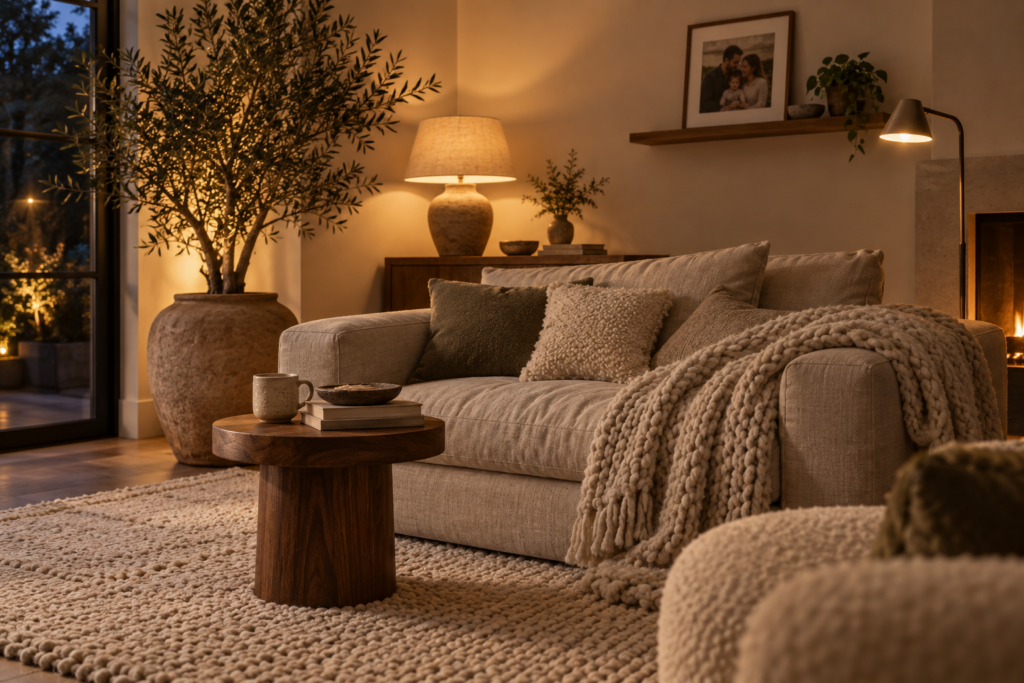
The most common criticism of minimalist interiors is that they feel cold, unwelcoming, or impossible for real families. Those problems come from how the style is applied, not from the style itself.
How do you make minimalist decor feel warm instead of cold?
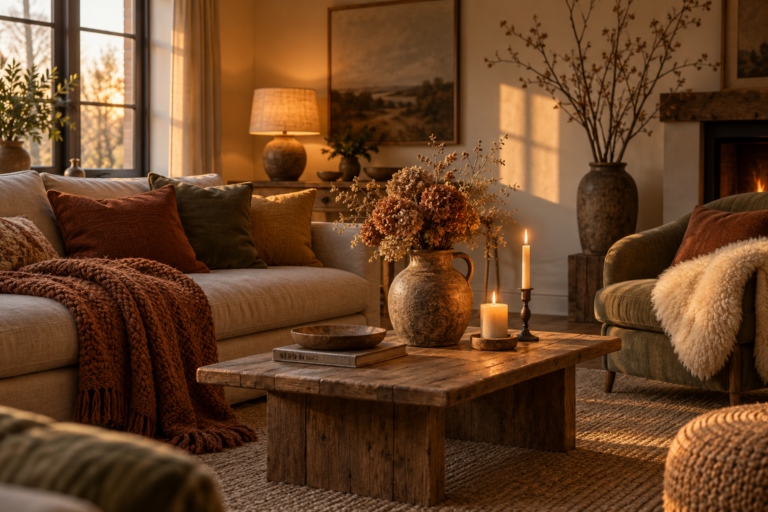
Make minimalist decor feel warm by using natural materials like wood, linen, and wool, choosing warm neutral paint colours instead of stark white, layering soft textures in similar tones, adding plants, and using warm-toned lamps at several heights. A few personal objects, such as books or handmade ceramics, make the space feel lived in.
A few specific additions help any pared-back room:
- A large, soft rug under seating or beside the bed, preferably wool or a thick natural weave
- Wood with visible grain in at least one substantial piece, such as a dining table or coffee table
- Textured fabrics like linen curtains, a chunky knit throw, or bouclé cushions
- One or two larger plants rather than many small ones, such as an olive tree, rubber plant, or snake plant
- Warm lighting from lamps rather than bright overhead lights in the evening
- Meaningful objects chosen carefully: a favourite photograph, a travel keepsake, or art that means something to you
Seasonal changes keep a minimalist home comfortable throughout the year without adding clutter. Swap lighter linen throws for wool in winter, bring in a bowl of seasonal branches or evergreen cuttings, and rotate a small number of accessories rather than adding more.
Can you have a minimalist home with kids or pets?
A minimalist home with kids or pets is achievable when the focus is on practical storage and durable materials rather than empty perfection. Give toys and pet supplies dedicated closed storage, rotate toys so fewer are out at once, choose washable fabrics and sturdy furniture, and accept that daily life will leave temporary mess.
Low baskets or cabinets in shared rooms let children help tidy up. Performance fabrics, wool rugs, and wood furniture with an oiled finish handle wear better than delicate pale upholstery or glossy surfaces. Rotating toys every few weeks keeps the collection feeling fresh while reducing how much sits out at any time.
Common minimalist decor mistakes
Mistaking emptiness for style. A room with no rug, no curtains, and nothing on the walls tends to echo and feel unfinished. Minimalism still needs comfort.
Buying a new minimalist home. Throwing out everything and replacing it with new neutral furniture is costly and wasteful. Declutter first, then replace only what doesn’t work.
Too much of one tone. An all-grey or all-white room with no texture looks flat. Vary materials, finishes, and shades within your palette.
Hiding clutter instead of reducing it. Beautiful cabinets full of things you never use only move the problem out of sight. Storage should hold items worth keeping.
Ignoring comfort. Hard, uncomfortable seating and harsh lighting may look sleek in photographs, but a home should be pleasant to spend time in.
Following rules too rigidly. Minimalism should reduce stress. If a strict rule about owning a set number of items makes daily life harder, adjust it to suit your household.
Frequently Asked Questions
What are the basic rules of minimalist home decor?
The basic rules of minimalist home decor are to keep only useful or meaningful items, maintain clear surfaces, choose simple furniture with clean lines, use a restrained colour palette, rely on closed storage, and leave plenty of open space. Natural materials and good lighting keep the result warm and comfortable.
How do I start minimalist decorating on a budget?
Start by decluttering, since removing items costs nothing and immediately makes rooms feel calmer. Rearrange existing furniture, sell or donate what you don’t need, and use the proceeds toward one or two quality pieces. Paint walls a warm neutral and replace mismatched accessories only gradually as budget allows.
What colours work best for a minimalist home?
Warm whites, soft greige, stone, sand, pale taupe, and light oatmeal tones work well as a minimalist base. Charcoal, black, or deep brown add definition in small doses. Muted accent shades such as sage, dusty blue, or clay can bring character when repeated in a few places throughout a room.
How many decorative items should a minimalist room have?
There’s no fixed number, but minimalist rooms usually display only a handful of carefully chosen decorative items, often grouped in small clusters of two or three. A good test is whether each surface still shows plenty of empty space and whether every displayed object is noticed and appreciated.
Does minimalist decor work in small apartments?
Minimalist decor is especially well suited to small apartments. Fewer belongings, light colours, leggy furniture, and closed vertical storage all make limited space feel larger. Multifunctional pieces such as storage beds, extendable tables, and benches with hidden compartments help a small home function without feeling crowded.
How do I decorate walls in a minimalist style?
Choose one larger artwork, mirror, or textile instead of many small frames, and give it space on the wall. Simple framed prints, a single sculptural wall light, or a textured plaster or limewash finish can also add interest. Leaving some walls completely bare is a deliberate part of the style.
What is warm minimalism?
Warm minimalism combines the clean layouts and clear surfaces of minimalist design with natural materials, soft textures, warm neutral colours, and a few personal objects. It uses wood, linen, wool, plants, and gentle lighting to create a pared-back home that feels cosy and inviting rather than stark.
How do I maintain a clutter-free home long term?
Maintain a clutter-free home by giving every item a designated place, following a one in, one out approach to new purchases, resetting rooms for a few minutes each evening, handling paperwork as soon as it arrives, and reviewing cupboards and wardrobes at the change of each season.