Boho Home Decor: How to Get the Boho Chic Look
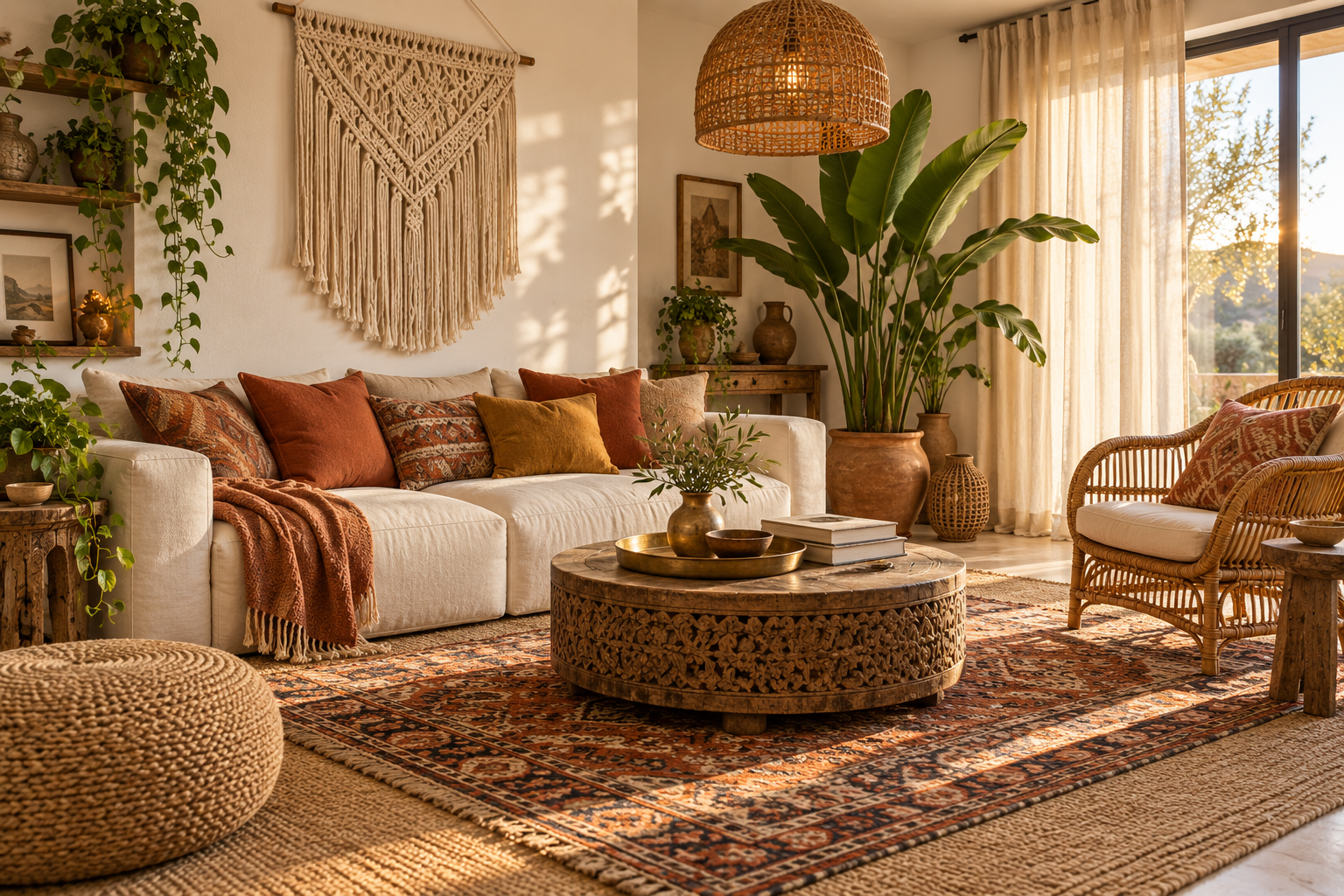
There’s a particular kind of room that makes people slow down the moment they walk in. Sunlight falls across a worn rug, a rattan chair sits at an angle with a throw tossed over its arm, plants spill from a shelf, and nothing looks like it came out of the same delivery box. It feels…
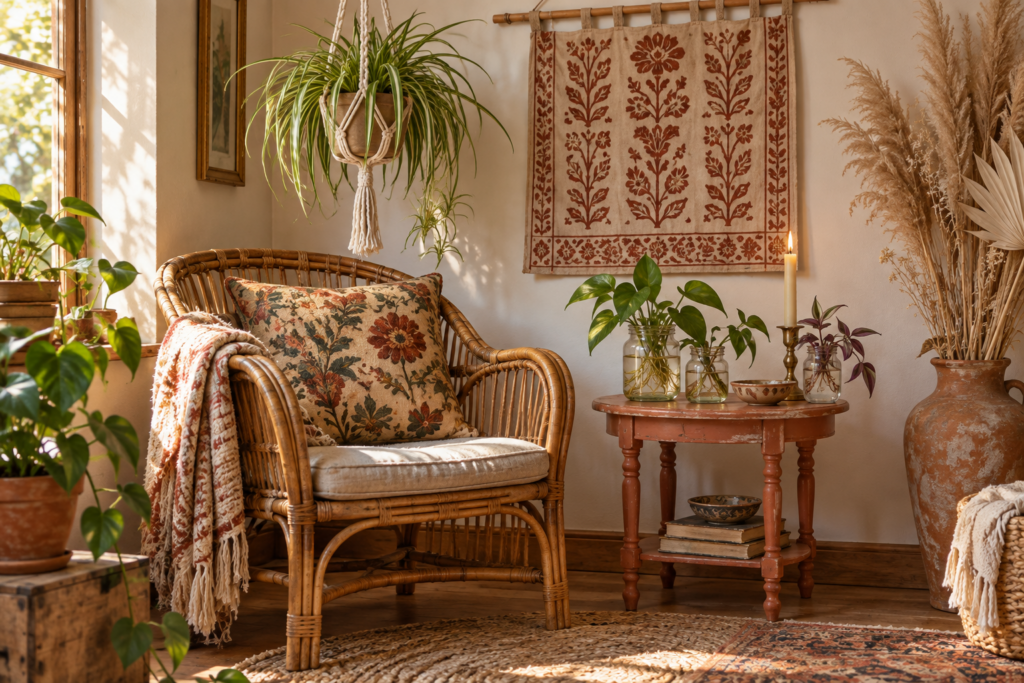
There’s a particular kind of room that makes people slow down the moment they walk in. Sunlight falls across a worn rug, a rattan chair sits at an angle with a throw tossed over its arm, plants spill from a shelf, and nothing looks like it came out of the same delivery box. It feels relaxed without being careless, personal without being cluttered. That’s the boho chic look, and it’s one of the most welcoming ways to decorate a home.
The appeal is easy to understand. Boho decor rewards collecting over time, mixes old with new, and gives you permission to bring in the textiles, travel finds, and plants you love. The difficulty is that the same freedom can quickly tip into chaos. A room with too many patterns, too many small objects, and no clear colour story doesn’t read as boho chic. It just reads as busy.
What separates a polished bohemian room from a cluttered one comes down to a few deliberate choices: a controlled palette, a strong base of natural texture, patterns that relate to each other, and enough breathing room for each piece to be seen. The sections below cover all of it, from the roots of the style to a step-by-step method and ideas for every room in the house.
What Boho Chic Actually Is
Boho chic is a relaxed, globally inspired decor style built on natural materials, layered textiles, plants, and collected objects. It takes the free-spirited mood of bohemian design and refines it with a more edited palette, better balance, and a lighter hand, so rooms feel effortless rather than crowded.
The word bohemian was first used to describe artists, writers, and travellers who lived outside conventional society, often on modest means. Their homes filled up with whatever they found, traded, inherited, or brought back from their journeys. Furniture didn’t match because it wasn’t bought as a set. Fabrics came from different countries. Art hung wherever there was a nail. That spirit of creative, unconventional living is still at the heart of the style.
Later decades added their own layers. The free-spirited looks of the late 1960s and 1970s brought macramé, rattan, floor cushions, and houseplants into mainstream homes. More recently, the style has swung back into favour with a lighter, cleaner interpretation that many people now call boho chic or modern boho.
What is the difference between boho and boho chic?
Traditional boho decor is maximal and saturated, with deep colours, pattern on nearly every surface, and dense collections. Boho chic keeps the same ingredients but edits them. It usually starts with a neutral base, uses pattern in fewer places, repeats a small colour palette, and leaves more open space, which makes it feel calmer and more polished.
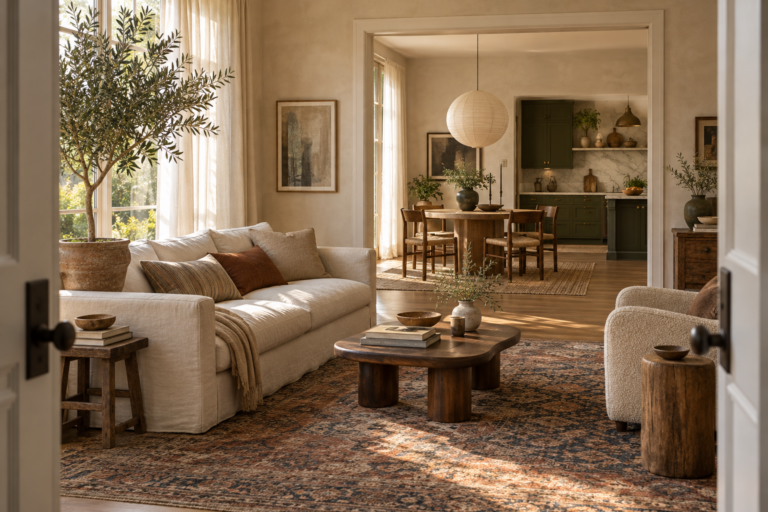
Think of the difference in terms of volume. A classic bohemian room might have jewel-toned walls, three patterned rugs, a tapestry, and shelves overflowing with trinkets. A boho chic version might have warm white walls, one vintage rug layered on jute, a single textured wall hanging, and a few carefully grouped objects. Both are recognisably bohemian. One simply turns the dial down.
How boho relates to other decor styles
Boho shares traits with several neighbouring aesthetics, which is part of why it blends so easily. Like Scandinavian design, it values light, natural wood, and cosy textiles. Like eclectic decor, it mixes eras and origins. Like organic modern, it relies on raw texture and plants. What makes a room specifically boho is the combination of global textiles, woven natural fibres, visible layering, and a laid-back, slightly imperfect mood.
The Building Blocks of Boho Home Decor
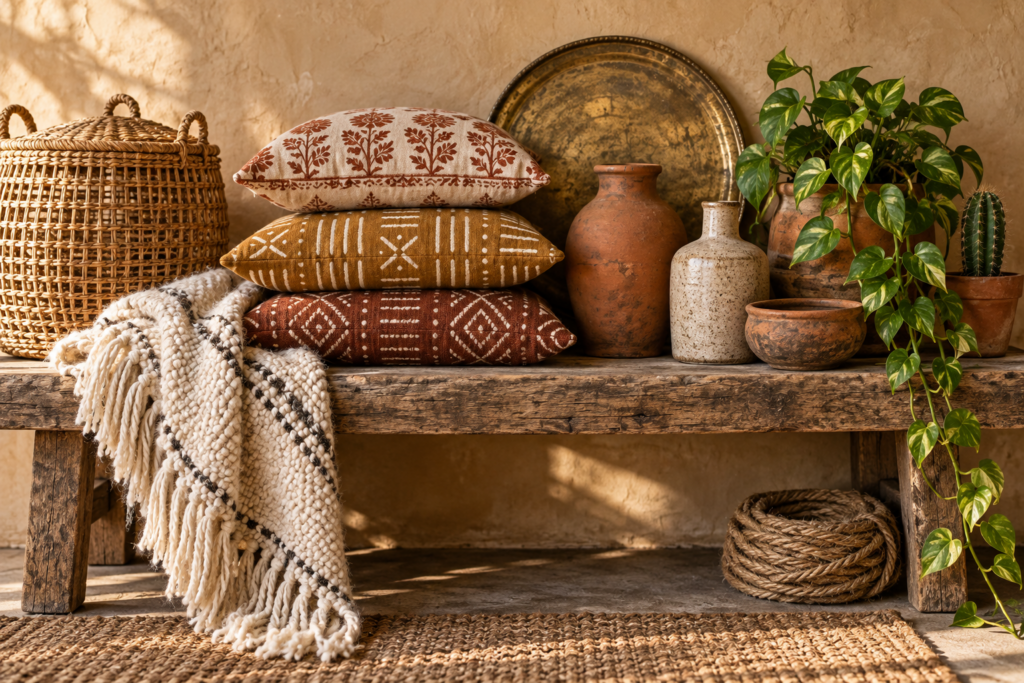
Every successful boho room is built from the same five ingredients: a warm colour palette, natural materials, layered textiles, pattern with a common thread, and plenty of greenery. Getting these foundations right matters more than buying any single statement piece.
What colours are used in boho decor?
Boho decor typically uses a warm neutral base of cream, sand, and soft white, layered with earthy accents such as terracotta, rust, mustard, olive, and clay pink. Richer versions add deep teal, burgundy, or indigo. Most well-balanced boho rooms stick to one neutral base, two main accents, and one deeper contrast colour.
Starting with a neutral backdrop is the most reliable approach, especially in smaller rooms or homes with limited daylight. Warm whites with a hint of yellow or pink look softer against natural wood and rattan than stark, cool whites do. From there, choose your accents from nature. A desert-inspired room might lean into terracotta, sand, and sage. A richer, moodier version might pair ochre with deep plum and forest green.
A simple way to test a palette is to pull colours directly from a rug or textile you already love. If the cushions, throws, and art repeat colours found in that one piece, the room will hang together even with a lot going on.
Natural materials and texture
Texture is what makes boho feel warm and tactile. The most common materials include:
- Rattan, wicker, and cane for chairs, headboards, lampshades, and cabinet fronts
- Jute, sisal, and seagrass for rugs and baskets
- Reclaimed or carved wood for coffee tables, stools, and side tables
- Linen and cotton for curtains, bedding, and slipcovers, ideally with visible slub or a relaxed crinkle
- Wool for rugs, knitted throws, and woven wall hangings
- Clay, terracotta, and stoneware for planters, vases, and bowls
- Aged brass and hammered metal for lanterns, trays, and mirror frames
- Leather and suede for poufs and sling chairs
A room built mostly from these materials already feels bohemian before a single accessory goes in. Glossy lacquer, chrome, and high-shine plastic work against the style, so keep them to a minimum.
Pattern and global textiles
Pattern is where boho shows its personality. Kilim and Persian-style rugs, block-printed cotton, mudcloth, ikat, suzani embroidery, and woven tribal-inspired geometrics all appear often. When buying textiles with cultural origins, handmade and fairly sourced pieces bring more character and honour the craft they come from.
Mixing patterns successfully depends on scale and colour. Pair one large-scale pattern, such as a rug, with a medium-scale pattern on cushions and a small-scale pattern or simple stripe on a throw. Keep all three within the same colour family so they talk to each other rather than compete.
Plants as a design element
Plants aren’t an optional extra in boho decor. They soften hard lines, add life, and bring in the green that balances warm earthy tones. Trailing plants like pothos, string of pearls, and heartleaf philodendron look lovely spilling from shelves and hanging planters. Taller statement plants such as a bird of paradise, a rubber plant, a fiddle-leaf fig, or a monstera give a corner real presence. Low-light rooms can still get the look with snake plants, ZZ plants, and cast-iron plants.
Group plants in odd numbers at varied heights, and use natural containers: terracotta pots, woven baskets with a plastic liner inside, or macramé hangers. In winter, move tropical plants away from cold draughts and heaters, and cut back watering as growth slows.
How to Get the Boho Chic Look Step by Step
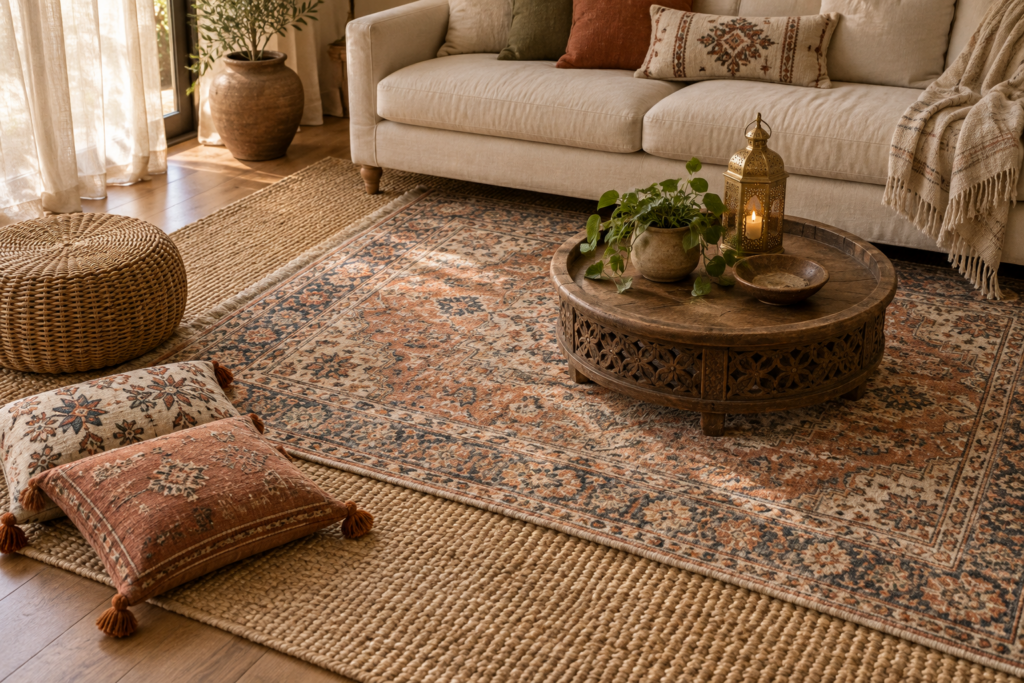
You don’t need to redecorate a whole house at once. The most convincing bohemian rooms are built in layers, starting with the largest surfaces and finishing with small personal details. Working in this order keeps the room balanced and stops accessories from taking over.
Step 1: Set the base
Begin with walls, floors, and window treatments. Paint walls a warm white, soft sand, or pale clay if the current colour is cool or stark. If you want more drama, a limewash or plaster-effect finish in a warm earth tone gives beautiful movement. Replace heavy or synthetic curtains with sheer or lightweight linen panels hung close to the ceiling, so light filters through softly.
Step 2: Ground the room with rugs
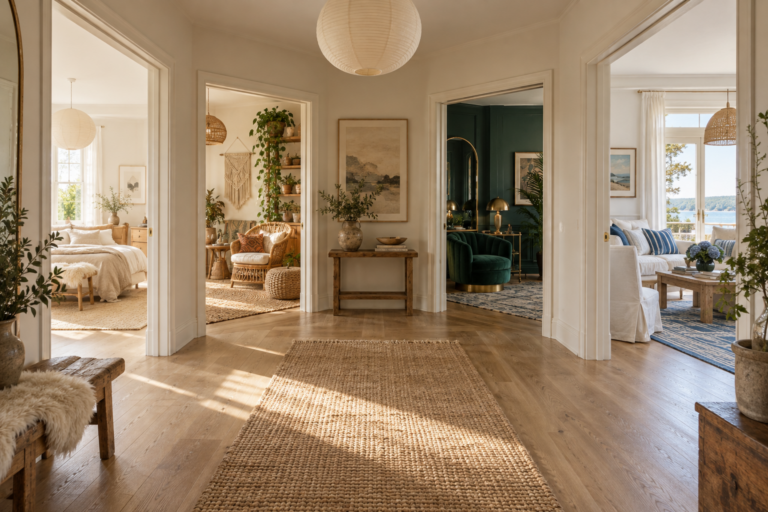
Lay a large natural fibre rug, such as jute or sisal, sized so the front legs of your main furniture rest on it. Then layer a smaller vintage-style or patterned rug on top, slightly off-centre. Layering adds depth, makes an affordable rug go further, and is one of the most instantly recognisable boho moves. Use a non-slip rug pad underneath to keep both layers in place.
Step 3: Choose relaxed, low furniture
Boho seating is comfortable and inviting. A low sofa in linen, cotton, or a textured weave works well, especially one with deep seats and loose cushions. Add one or two pieces with natural character: a rattan or wicker chair, a leather sling chair, a carved wooden bench, or a vintage armchair reupholstered in a warm fabric. Floor cushions and poufs create extra seating and reinforce the laid-back mood.
Resist buying matching sets. A coffee table in reclaimed wood, a side table in hammered brass, and a small woven stool will look far more authentic together than three pieces from one collection.
Step 4: Layer textiles
Now bring in the softness. Choose cushions in three or four sizes and at least two textures, such as a woven cotton cushion, a velvet one, and a tasselled or fringed one. Add a throw with a chunky knit, a fringed edge, or a block print over the arm of the sofa or across a chair. Mix solid colours in with the patterns so the eye has somewhere to rest.
Step 5: Add greenery
Place one large plant in a corner that feels empty, then add smaller trailing plants on shelves, windowsills, or in a hanging planter near the window. If the room gets very little light, choose hardy low-light varieties or use dried arrangements of pampas grass, bunny tails, eucalyptus, or palm spears as a lower-maintenance alternative.
Step 6: Bring in lighting with texture
Boho lighting is warm, soft, and often patterned by its shade. Rattan and woven pendant lights cast lovely shadows across walls and ceilings. Add a ceramic or wooden table lamp, a paper or fabric floor lamp, and perhaps a few lanterns or candles. Warm bulbs are essential, since cool white light flattens natural textures.
Step 7: Finish with walls and personal objects
Choose one focal feature for the main wall: a macramé or woven wall hanging, a large textile, a round rattan mirror, or a relaxed gallery wall mixing framed prints, woven baskets, and small mirrors. Then add personal pieces such as books, travel finds, handmade pottery, vintage brass, and photographs. Group them in small clusters of three or five rather than scattering them across every surface.
How do you make boho decor look chic and not messy?
Keep boho decor chic by limiting the palette to a few repeated colours, grouping accessories instead of scattering them, leaving some surfaces and wall space empty, and anchoring the room with a few larger pieces rather than many small ones. Hidden storage for everyday items stops genuine clutter from blending into the decor.
A useful habit is the step-back test. Stand in the doorway and look at the room as a whole. If your eye jumps around without landing anywhere, remove a few objects. If every shelf is full, clear a third of it. Chic boho rooms feel generous, not packed.
Boho Decor Ideas Room by Room
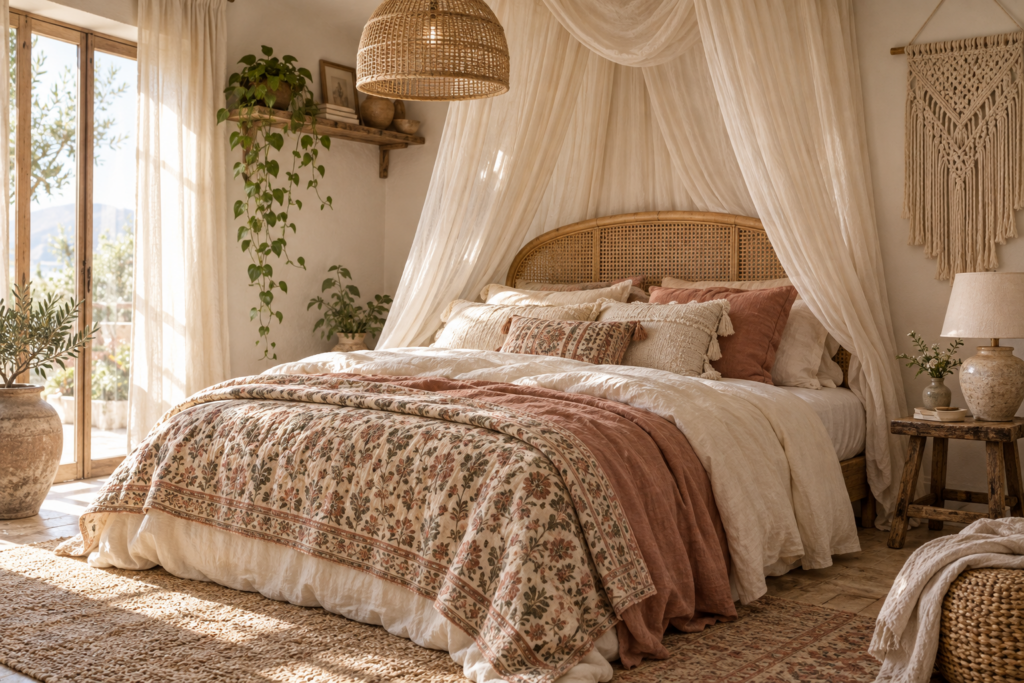
The core principles stay the same throughout the house, but each room gives boho style a slightly different job to do.
Boho living room
The living room is where layering matters most. Build the conversation area around a large layered rug, a relaxed sofa, and at least one natural-fibre chair. A round or organic-shaped coffee table in wood or rattan softens the grid of a typical room layout. Use a low console or vintage sideboard for plants, books, and a lamp, and hang one strong piece above it, such as a woven hanging or large textile.
If the room has a television, soften its presence with plants on either side and a wall hanging or artwork nearby, so the screen doesn’t become the only focal point.
Boho bedroom
Bedrooms suit boho style beautifully because the look is so tied to comfort. Start with a bed in natural wood or rattan, or add a cane or woven headboard to an existing frame. Dress the bed in stonewashed linen or crinkled cotton in warm neutrals, then layer a quilt, a patterned throw, and a mix of cushions.
A canopy made from sheer fabric draped over a ceiling hook or curtain rod brings a dreamy, relaxed feel. Mismatched nightstands, such as a small wooden stool on one side and a woven basket table on the other, keep things loose. Swap harsh overhead lighting for pendant shades or plug-in wall lights, and add a trailing plant on a high shelf.
Boho kitchen and dining area
In kitchens, the style usually comes through accessories and open shelving rather than cabinetry. Display handmade ceramic bowls, stoneware jugs, woven baskets for produce, and glass jars on open wooden shelves. Hang a woven or rattan pendant over the table, and mix different chairs around it, perhaps a bench on one side and cane or wooden chairs on the other.
A runner rug in a faded vintage pattern warms up hard kitchen floors. Potted herbs like basil, mint, and rosemary on the windowsill add greenery that’s also useful for cooking.
Boho bathroom
Small bathrooms can take on a boho feel quickly. Swap plastic accessories for woven baskets, a teak or bamboo bath mat, and ceramic soap dishes. Add a round mirror framed in rattan or aged brass, a patterned cotton hand towel, and a hanging plant that enjoys humidity, such as a fern or pothos. Terracotta or zellige-style tiles work wonderfully if you’re renovating, while renters can use removable adhesive tiles or simply focus on textiles and plants.
Boho balcony or patio
Outdoor spaces are a natural extension of the style. Layer an outdoor rug in a woven or geometric pattern, add floor cushions and a low table, string warm lights overhead, and group potted plants and grasses around the edges. Rattan-look outdoor furniture in weather-resistant materials holds up better than natural rattan, which can deteriorate when left out in rain. Bring cushions inside or store them in a covered box between uses.
Modern Boho and Other Boho Variations
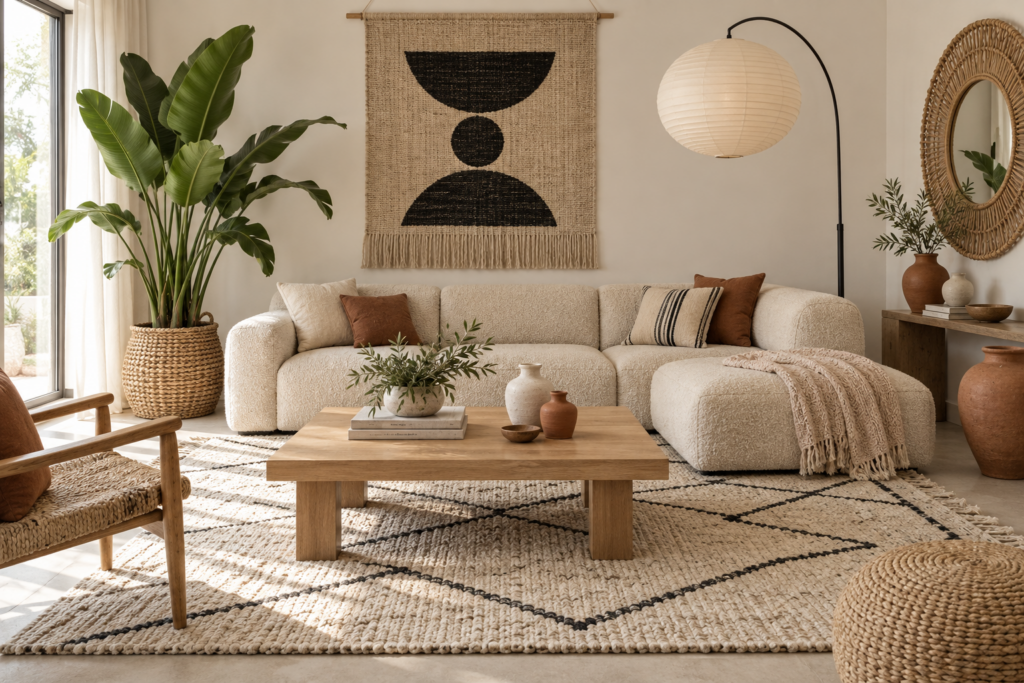
Bohemian decor isn’t one fixed look. Several variations have grown from it, and understanding them helps you choose the version that fits your home and taste.
Modern boho
Modern boho combines the clean lines and restraint of modern design with bohemian texture. Walls stay light, furniture shapes are simpler, and pattern appears in only one or two places, often a rug and a few cushions. The palette leans heavily on cream, sand, and warm wood with small touches of terracotta or black. It’s a good choice for people who love the warmth of boho but prefer a calmer, tidier home.
Scandi boho
Scandi boho blends pale Scandinavian woods, white walls, and cosy wool with bohemian rattan, plants, and woven textiles. It feels bright, airy, and practical, and it works especially well in apartments and rooms with limited floor space.
Desert boho
Inspired by warm, dry landscapes, desert boho uses sun-baked colours like terracotta, sand, and dusty rose, alongside cacti, succulents, leather, clay pottery, and geometric woven textiles. Arched mirrors and plaster-textured walls suit it particularly well.
Rustic boho
Rustic boho brings in heavier natural materials such as reclaimed timber, stone, chunky knits, and leather. It works well in older homes with exposed beams or in cabins, and it’s a practical choice for households with pets and children because worn wood and textured fabrics hide everyday wear.
Maximalist or eclectic boho
This is the most expressive version, closest to the style’s original roots. Deep, saturated colours cover walls, patterns overlap freely, and collections take pride of place. It requires the most careful editing to avoid chaos, and it tends to work best in rooms with good natural light and generous proportions.
Is boho decor still in style?
Boho decor remains popular because it’s built on timeless elements such as natural materials, plants, and handmade textiles rather than a single trend. Its look has shifted over time toward a calmer, more neutral modern boho. Specific details can date, but the core ingredients adapt easily to changing tastes.
The easiest way to keep a boho room current is to invest in long-lasting foundations, such as a quality sofa, a natural fibre rug, and solid wood pieces, while treating trendier details like specific wall hanging designs or colour accents as items you can swap out later.
Boho Decor on a Budget and Common Mistakes to Avoid
Boho is one of the most affordable styles to create well, because it favours secondhand, handmade, and collected pieces over anything brand new. The mistakes people make are usually about quantity and cohesion rather than money.
How can you decorate boho style on a budget?
Decorate boho style on a budget by shopping secondhand for wood, rattan, brass, and vintage textiles, making simple DIY pieces like macramé hangings or dried floral arrangements, propagating plants from cuttings, and investing only in one or two anchor pieces such as a rug or sofa. Layering affordable jute with a smaller vintage rug stretches your budget further.
A few practical ways to save:
- Thrift and resale shops are full of rattan chairs, brass candlesticks, carved wooden bowls, and baskets, all of which suit boho perfectly. A scuffed piece often adds more character than a new one.
- Refresh what you already own. Slipcover a tired sofa in natural linen, paint a dated side table in a warm clay colour, or replace lampshades with woven versions.
- Propagate plants. Pothos, spider plants, and tradescantia root easily in a glass of water. A single plant can become several over a few months.
- Make simple wall decor. Hang a vintage scarf or a piece of block-printed fabric from a wooden dowel, or frame pressed leaves and botanical prints.
- Use dried stems. Branches, grasses, and seed heads collected from gardens or bought inexpensively last for many months with no watering.
Common boho mistakes
Too many colours. Adding every colour you like results in visual noise. Stick to a defined palette and repeat it.
Clutter disguised as decor. Bohemian style embraces objects, but not everything deserves display. Store everyday items like mail, chargers, and remotes out of sight.
Everything is the same height. When every object sits at tabletop level, the room feels flat. Mix low floor cushions, mid-height tables and lamps, tall plants, and hanging planters or pendants.
Buying the whole look at once. Rooms bought entirely from one shop in one weekend tend to look staged. Boho feels most authentic when it’s assembled gradually.
Neglecting plants. A room full of drooping or dead plants undermines the whole look. Choose varieties suited to your light and routine, and use dried arrangements where live plants would struggle.
No resting spots for the eye. Pattern on every cushion, rug, throw, and wall leaves nowhere to pause. Balance busy textiles with solid colours and at least one mostly clear surface.
Boho decor in a rental
Renters can create a convincing boho room without making permanent changes. Layer rugs over existing flooring, use tension rods or removable hooks for sheer curtains and lightweight hangings, lean large mirrors and art against walls instead of drilling, and change lampshades rather than light fixtures. Furniture, plants, textiles, and lighting carry most of the style anyway, and they all move with you.
Frequently Asked Questions
What are the key elements of boho home decor?
The key elements of boho home decor are a warm neutral colour base with earthy accents, natural materials like rattan, jute, wood, and clay, layered rugs and textiles, globally inspired patterns, plenty of plants, soft warm lighting, and collected personal objects arranged in a relaxed but intentional way.
Can boho decor work in a small apartment?
Boho decor works well in small apartments when it leans toward the lighter modern boho or Scandi boho variations. Use light walls, a limited palette, leggy furniture, vertical plant displays, and hanging planters to save floor space. Keep patterns to a few key pieces and group accessories so the space feels cosy rather than cramped.
What furniture is best for a boho living room?
The best furniture for a boho living room includes a low, comfortable sofa in a natural fabric, rattan or wicker accent chairs, a wooden or organic-shaped coffee table, poufs and floor cushions, and a vintage sideboard or console. Pieces with visible texture, curves, or age suit the style better than glossy, uniform furniture.
How do I mix patterns in a boho room?
Mix patterns by varying their scale and keeping them within a shared colour palette. Pair one large pattern, often on a rug, with a medium pattern on cushions and a small pattern or stripe on a throw. Add solid-coloured textiles between them so the room has visual resting points and the patterns feel coordinated.
What is the difference between boho and Scandinavian decor?
Scandinavian decor focuses on pale woods, white walls, clean lines, and minimal accessories for a bright, orderly feel. Boho decor uses warmer colours, more pattern, global textiles, rattan, and collected objects for a relaxed, layered look. Scandi boho combines the two, pairing Scandinavian simplicity with bohemian texture and greenery.
Is boho decor good for homes with pets and kids?
Boho decor can be very practical for families because its textured fabrics, patterned rugs, and worn wood hide stains and scratches well. Choose washable cotton or performance fabrics, sturdy wooden furniture, and low-pile or flatweave rugs. Keep plants that are toxic to pets out of reach, and secure hanging planters firmly.
What wall decor suits a boho chic home?
Boho chic walls suit macramé and woven wall hangings, round rattan or brass mirrors, framed botanical or abstract prints, textiles hung from wooden dowels, woven basket wall displays, and hanging plants. Choose one main focal feature per wall and give it space rather than covering every surface.
How do I add boho style to a modern home without renovating?
Add boho style to a modern home by layering a jute rug with a vintage patterned rug, adding a rattan or wicker chair, swapping cushions and throws for textured and patterned versions, introducing plants at different heights, and replacing lampshades with woven ones. These changes shift the mood significantly without altering the architecture.