Types of Home Decor Styles: A Complete Guide to Every Aesthetic
Scroll through any interiors feed and you’ll see the same room described five different ways. One person calls it Japandi, another says organic modern, someone else insists it’s just minimalist with nicer pottery. Decor style names multiply every year, and the overlap between them can make choosing a direction feel more confusing than it should….
Scroll through any interiors feed and you’ll see the same room described five different ways. One person calls it Japandi, another says organic modern, someone else insists it’s just minimalist with nicer pottery. Decor style names multiply every year, and the overlap between them can make choosing a direction feel more confusing than it should.
Underneath all the labels, though, there’s a fairly clear structure. Most aesthetics grow from a handful of root traditions, and each one is shaped by a particular place, era, or way of living. Once you can see those roots, the dozens of named styles stop looking like a random list and start making sense as a family tree.
This guide walks through that tree in full. You’ll find the classic styles that have shaped homes for centuries, the modern movements that stripped them back, the expressive aesthetics that break the rules on purpose, and the looks inspired by coastlines, deserts, and countryside. Along the way, each style gets its defining features, the details that make it work, and the mistakes that tend to spoil it, followed by a practical method for working out which direction belongs in your home.
How Home Decor Styles Are Defined
A home decor style is a recognisable combination of furniture shapes, materials, colours, patterns, and accessories that together create a particular mood. Styles usually trace back to a place, a historical period, or a design philosophy, which is why many share traits and overlap.
It helps to separate two words people often use interchangeably. Design style usually refers to the bones of a space: architecture, layout, built-in cabinetry, flooring. Decor style is about what you bring into it: furniture, textiles, lighting, art, and objects. You can’t easily change a home’s architecture, but you can shift its decor style dramatically with paint, fabric, and furniture.
How many types of home decor styles are there?
There’s no fixed number of home decor styles. Designers commonly recognise somewhere between 15 and 30 major styles, but new named aesthetics appear constantly as trends evolve. Most of them branch from a smaller group of roots: traditional, modern, rustic, regional, and eclectic.
Newer names are often a blend of two older styles, or an existing look refreshed for a new generation. Organic modern is essentially modern design softened with natural texture. Grandmillennial is traditional decor revived with a sense of humour. Knowing the parent style makes any new term easy to decode.
The five clues that reveal any style
When you’re trying to identify an aesthetic, look at these elements in roughly this order:
- Silhouettes. Are furniture legs straight and tapered, carved and curved, or chunky and rough? Are sofas low and boxy or deep and rolled?
- Materials. Polished marble and lacquer tell a different story from reclaimed timber and wicker, or chrome and glass.
- Colour palette. Muted neutrals, earthy clay tones, saturated jewel colours, and crisp blue and white each point to different families.
- Pattern density. Some styles barely use pattern at all, while others layer florals, stripes, and prints on nearly every surface.
- Amount of stuff. Count the objects on shelves and tables. Minimal styles leave surfaces bare; collected styles celebrate display.
With those five clues, you can place almost any room you see into its broad family within seconds.
Classic and Traditional-Rooted Decor Styles
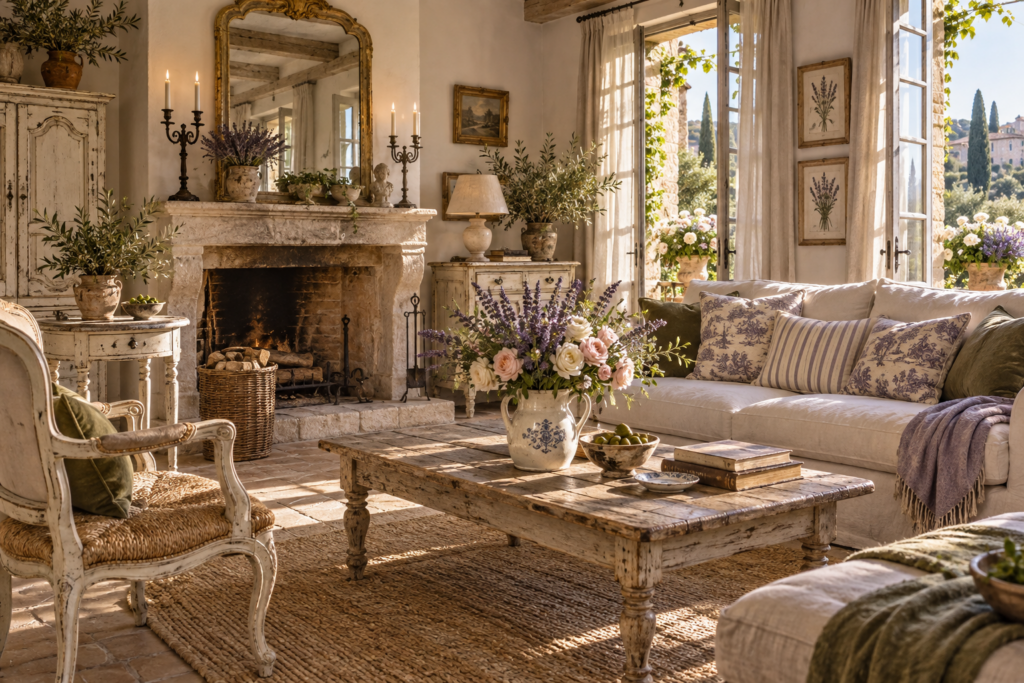
These styles draw on history, craftsmanship, and a sense of continuity. They tend to feel comfortable, familiar, and settled, and they’ve proven remarkably durable because they aren’t tied to a single trend cycle.
Traditional
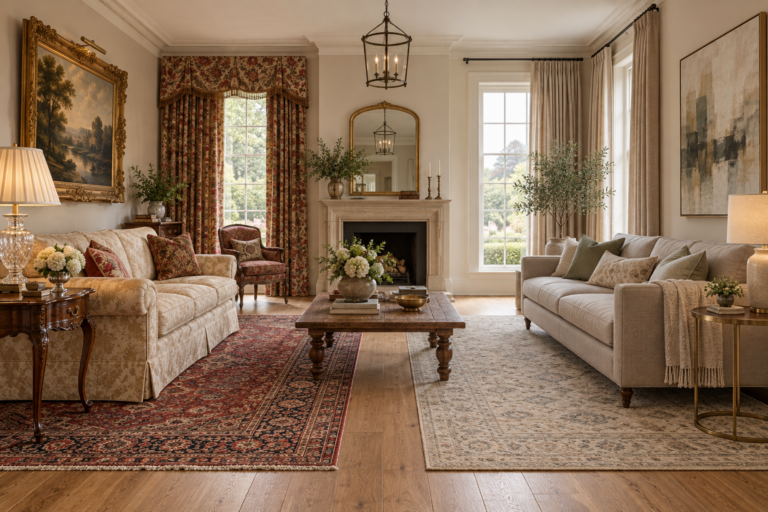
Traditional decor takes its cues from eighteenth and nineteenth-century European homes. Symmetry is central: a pair of lamps on matching side tables, two armchairs facing each other across a fireplace. Furniture is often dark polished wood with carved details, cabriole legs, and wingback or rolled-arm upholstery. Fabrics include damask, chintz, plaid, and silk, and walls may carry wainscoting, crown moulding, or classic wallpaper. Oil paintings in gilt frames, Oriental-style rugs, and china cabinets complete the look.
The risk with traditional decor is heaviness. Too much dark wood and too many matching pieces can make a room feel stiff. Lightening walls, loosening symmetry in one corner, and adding fresh flowers keeps it welcoming.
Transitional
Transitional style sits deliberately between traditional and modern. It keeps classic proportions while stripping away ornament. A rolled-arm sofa comes in a solid neutral fabric instead of a pattern. A traditional wood dining table is paired with simple upholstered chairs. Colours are soft and calm, usually greige, ivory, taupe, and gentle blue, and texture replaces busy prints.
It’s one of the most widely used decor styles in family homes because it feels polished without being formal, and it adapts easily as tastes change.
Farmhouse and Modern Farmhouse
Traditional farmhouse style is rooted in working rural homes. Furniture is sturdy and practical, often scrubbed or painted wood. Kitchens feature big tables, deep apron-front sinks, open shelving, and utensils within reach. Galvanised metal, enamelware, and woven baskets add practical charm.
Modern farmhouse keeps those comforting elements but lightens everything: white or pale walls, black window frames and hardware, wide-plank floors, and a cleaner, more restrained approach to accessories. Shiplap walls and sliding barn doors became strongly associated with it, though many people now prefer subtler versions of both.
French Country
French country decor is soft, elegant, and a little romantic. Furniture has graceful curves and a gently distressed painted finish, often in cream, dove grey, or duck-egg blue. Toile de Jouy fabric, linen, and ticking stripes appear on cushions and curtains. Wrought iron, weathered stone, rush-seat chairs, and faded gilt mirrors add character. Colours borrow from Provençal landscapes: lavender, sunflower yellow, olive green, and terracotta.
English Cottage
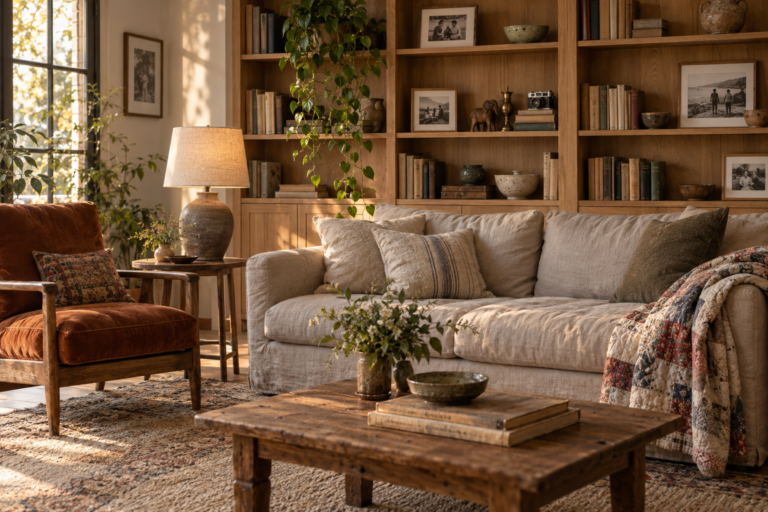
English cottage style feels layered and lived in. Floral prints, patchwork quilts, painted dressers full of mismatched china, overstuffed armchairs, and shelves crowded with books all belong here. Low ceilings with beams, small-paned windows, and fireplaces are classic backdrops, but the look translates well to newer homes through fabric and furniture. Fresh-cut garden flowers in jugs are almost essential.
Rustic
Rustic decor celebrates raw, natural materials in their most rugged form. Think rough-hewn timber beams, stone fireplaces, leather armchairs, iron hardware, and thick wool or knit throws. Its cabin and lodge variations add plaid, antler-style details, and heavy log furniture. Rustic works best where there’s plenty of natural light, because dark wood and stone can make small or dim rooms feel gloomy.
Victorian
Victorian decor is rich, ornate, and full of detail. Deep burgundy, forest green, and navy walls pair with heavily patterned wallpaper, velvet and brocade upholstery, carved dark furniture, fringed lampshades, and densely hung picture walls. It suits period homes with tall ceilings and original features. In modern homes, a lighter touch works better: a single Victorian-style chair, a gallery wall, or dramatic wallpaper in a powder room.
Modern and Minimal Decor Styles
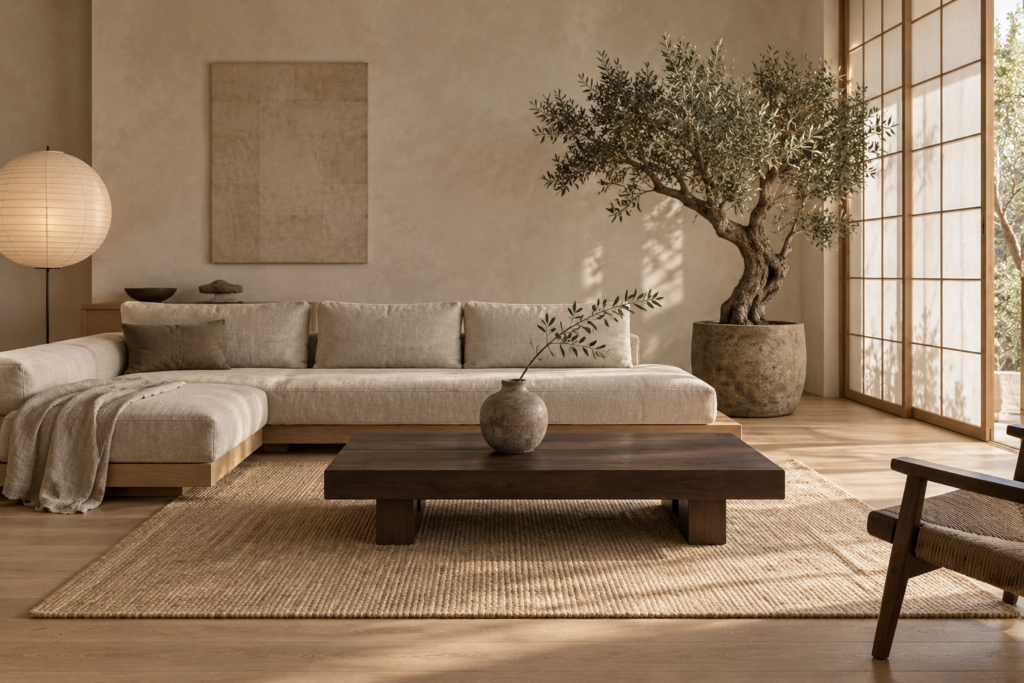
The modern family grew from the early twentieth-century idea that form should follow function. These styles value clean lines, uncluttered space, and materials shown honestly. Each branch interprets that philosophy a little differently.
Modern
Modern decor, in the strict sense, refers to design from roughly the early to mid twentieth century. Furniture is geometric, low, and free of ornament. Materials include steel, glass, leather, and natural wood. Palettes rely on neutrals and black, with contrast and form providing visual interest. Open layouts and large windows are typical.
Contemporary
Contemporary decor simply means what’s current, so its definition keeps shifting. Right now it leans toward rounded, sculptural furniture, bouclé and textured upholstery, earthy tones like clay, rust, and olive, arches in mirrors and doorways, and statement lighting. A contemporary room from a decade ago looks quite different from one today, which is the easiest way to tell it apart from modern.
Mid-Century Modern
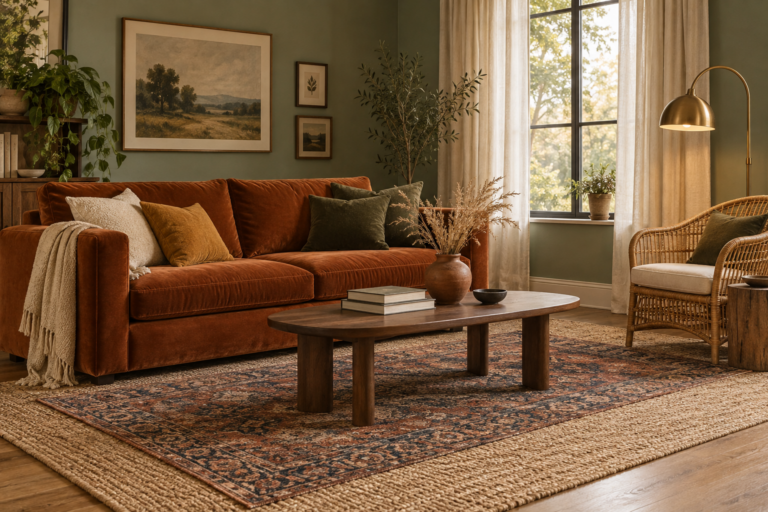
Mid-century modern comes from the middle of the last century and remains one of the most recognisable decor styles. Look for tapered wooden legs, walnut and teak, low sideboards, organic curves, molded plywood and fibreglass chairs, and graphic patterns. Accent colours include mustard, burnt orange, teal, and avocado green. Sunburst mirrors and globe or tripod lamps are signature accessories.
A common mistake is building a room entirely from reproductions of famous pieces. Mixing one or two iconic shapes with vintage finds and modern upholstery keeps it from looking like a museum set.
Minimalist
Minimalism reduces a room to what’s genuinely needed and loved. Storage is concealed, surfaces are nearly bare, and every object has a purpose or a strong visual reason to be there. Palettes are restrained, often white, stone, and black, with texture from wood, linen, and plaster.
Minimalist decor is less about owning very little and more about making space for things to matter. It rewards people who enjoy tidiness and can feel stressful for households where daily clutter is unavoidable.
Scandinavian
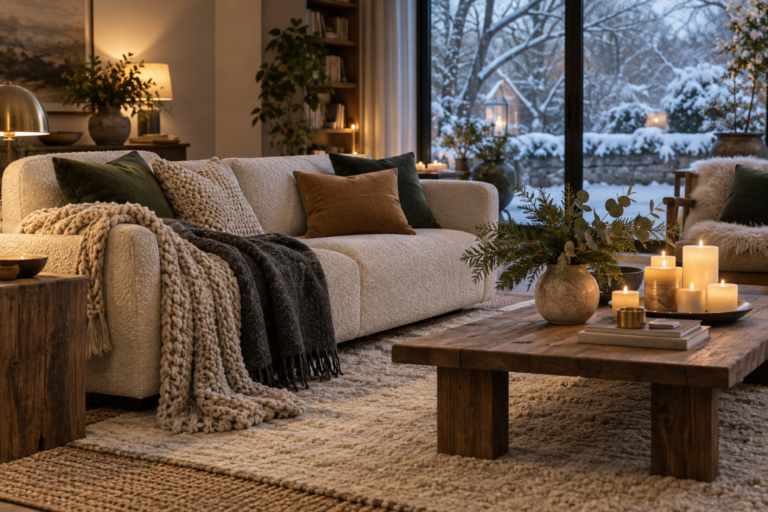
Scandinavian style softens minimalism with warmth, comfort, and light. White or very pale walls maximise daylight. Blond woods like birch, ash, and pale oak dominate. Wool throws, sheepskin, simple linen, and plenty of candles and lamps make rooms feel cosy during long, dark winters. Accents come in muted greens, dusty pinks, and soft greys, and houseplants appear everywhere.
What’s the difference between Scandinavian and Japandi decor?
Scandinavian decor favours pale woods, white walls, and cosy textiles, with a relaxed, bright feel. Japandi blends that Scandinavian comfort with Japanese restraint, adding lower furniture, darker woods, earthier muted tones, handmade ceramics, and an even stronger focus on calm, craftsmanship, and fewer objects.
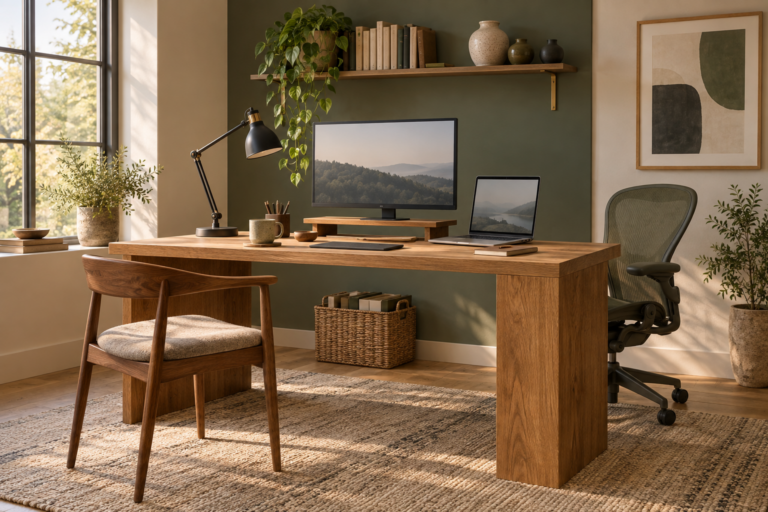
Japandi rooms often include a contrast between light and dark timbers, paper or linen lanterns, stone, bamboo, and natural fibre rugs. Where Scandinavian style might display a cheerful collection of candles and cushions, Japandi would choose one beautiful vase and leave the rest of the surface empty.
Industrial
Industrial decor takes inspiration from converted warehouses, factories, and lofts. Exposed brick, concrete floors, visible pipes and ductwork, and steel-framed windows provide the backdrop. Furniture combines black metal with reclaimed wood, and leather adds warmth. Edison-style bulbs, cage pendants, and factory stools are familiar details.
In homes without original industrial architecture, the look relies on furniture and lighting. Balance cold surfaces with a large rug, heavy curtains, and warm leather so it doesn’t feel harsh.
Organic Modern
Organic modern takes the clean shapes of modern design and fills the room with natural texture and soft curves. Limewashed or plaster walls, rounded sofas, jute and wool rugs, raw wood, clay pottery, stone, and large sculptural plants all feature. Palettes stay warm and neutral: cream, sand, mushroom, and soft brown.
Wabi-Sabi
Wabi-sabi is rooted in a Japanese philosophy that finds beauty in imperfection, age, and impermanence. Rooms feature handmade and irregular objects, rough plaster, weathered wood, linen with natural creases, and cracked or mended ceramics. Nothing is too polished. It pairs naturally with Japandi and organic modern but places even more emphasis on patina and the passage of time.
Bold, Eclectic, and Expressive Decor Styles
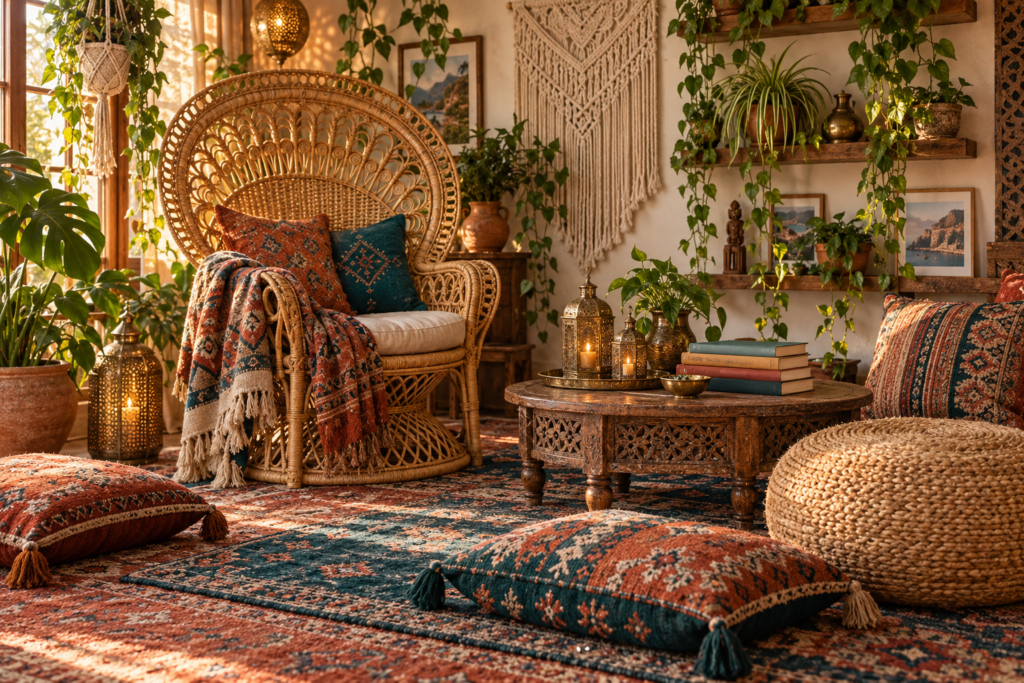
Not everyone wants calm neutrals. These styles lean into colour, pattern, glamour, and personality. They take more confidence to pull off, but when done well, they produce some of the most memorable homes you’ll ever walk into.
Bohemian
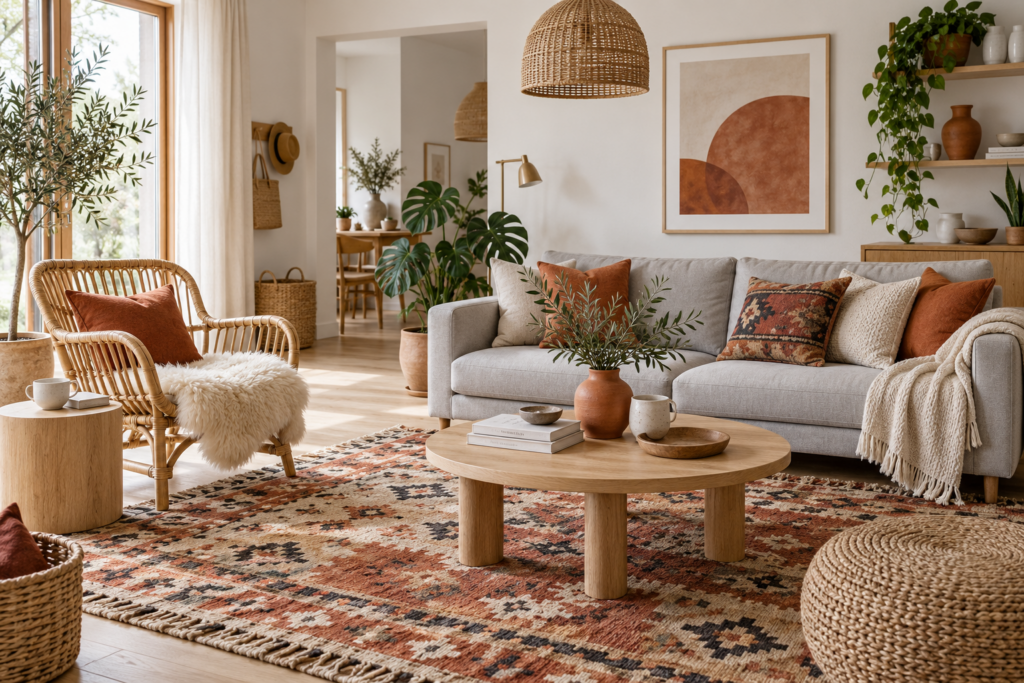
Bohemian, or boho, decor is relaxed, free-spirited, and globally inspired. Rattan and wicker furniture, layered rugs, macramé, embroidered and block-printed textiles, floor cushions, and poufs create an easygoing mood. Plants are essential, often trailing from shelves or hanging planters. Colours can be warm and earthy or rich and saturated, with terracotta, mustard, and deep teal common.
Today’s lighter take on the style, sometimes called modern boho, uses a mostly neutral base with natural textures and a few patterned pieces instead of covering every surface.
What is the difference between bohemian and eclectic decor?
Bohemian decor is a specific aesthetic with recognisable ingredients: natural fibres, global textiles, plants, and a laid-back atmosphere. Eclectic decor is broader, combining furniture and objects from any era, culture, or style. A boho room follows a theme, while an eclectic room is unified only by the owner’s taste and a deliberate thread of colour or form.
Eclectic
Eclectic style mixes periods and influences on purpose: a mid-century sideboard under an ornate gilded mirror, a modern sofa beside an antique trunk, contemporary art above a Persian rug. It looks effortless but relies on careful editing. The most successful eclectic rooms repeat two or three colours throughout, balance busy areas with quieter ones, and keep a consistent level of quality so no single piece feels out of place.
Maximalist
Maximalism is the opposite of minimalism. It embraces more colour, more pattern, more objects, and more layers. Walls may be covered in bold wallpaper, sofas upholstered in strong prints, and shelves filled with collections. The guiding idea is abundance with intention. Maximalism works when patterns share a colour story and when collections are grouped rather than scattered.
Art Deco
Art Deco emerged in the 1920s and 1930s and brings glamour through geometry. Fan, sunburst, and chevron motifs appear on mirrors, rugs, and tiles. Materials include lacquer, polished wood, chrome, brass, marble, and glass. Curved velvet seating, rich jewel tones such as emerald and sapphire, and black and gold contrasts create drama. Deco touches work particularly well in dining rooms, entryways, and bathrooms.
Hollywood Regency
Hollywood Regency, sometimes simply called glam, is theatrical and luxurious. Expect mirrored furniture, high-gloss lacquer, tufted velvet, animal prints, bold colour, and plenty of gold and brass. Statement chandeliers and dramatic headboards are central. It’s a style that rewards restraint in scale: one mirrored console or a lacquered cabinet can bring glamour without overwhelming a room.
Grandmillennial
Grandmillennial style revives traditional decor with a youthful twist. Chintz, ruffles, wicker, needlepoint cushions, scalloped edges, pleated lampshades, and blue and white porcelain return, often mixed with modern furniture and art. It feels nostalgic, cheerful, and personal rather than stuffy.
Internet-Born Aesthetics
Several aesthetics have grown from online communities rather than design history, and they increasingly influence how people decorate.
Cottagecore romanticises simple country living: floral fabrics, vintage crockery, dried herbs, baskets, lace, and a soft pastoral palette.
Dark academia draws on old libraries and university buildings: dark wood, leather chairs, deep green and brown walls, antique books, globes, brass lamps, and oil paintings.
Quiet luxury favours understated wealth: neutral palettes, travertine and marble, cashmere and fine linen, tailored furniture, and a complete absence of flashy details.
Coastal grandmother borrows from breezy seaside homes of well-travelled older hosts: crisp white slipcovers, blue and white stripes, rattan, hydrangeas, and cookbooks on open shelves.
These are best treated as moods to borrow from rather than strict rules, since they tend to evolve quickly.
Nature and Place-Inspired Decor Styles
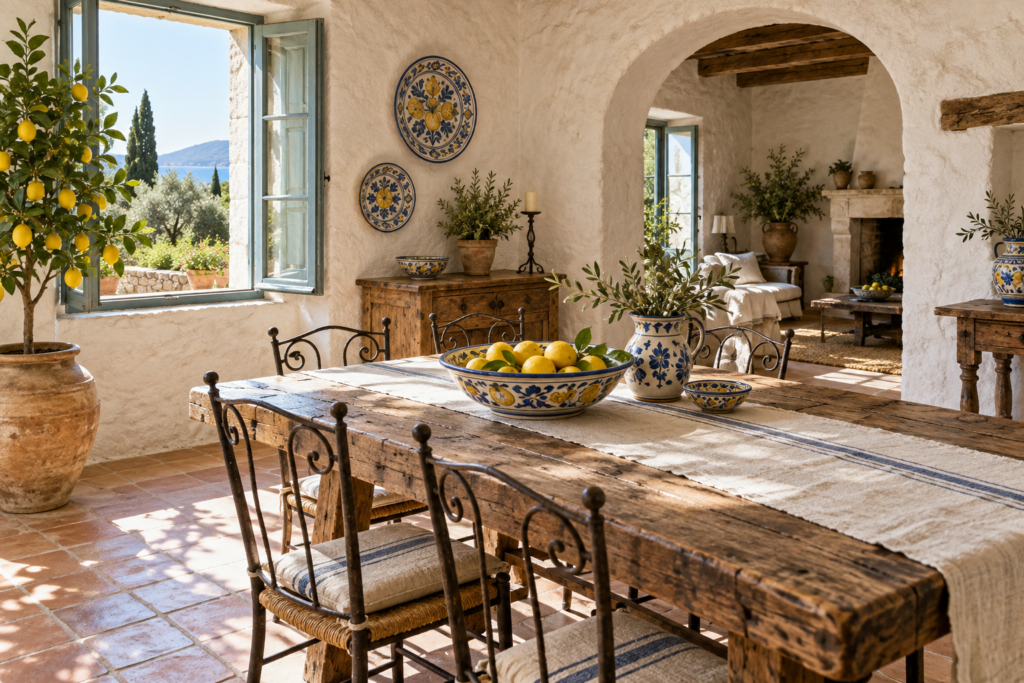
Some styles come directly from geography and climate. They carry the light, colours, and materials of a particular landscape, which makes them especially good at creating atmosphere.
Coastal
Coastal decor captures the fresh, airy feel of seaside living. White and sand-toned walls, blue and aqua accents, slipcovered sofas, natural fibre rugs, whitewashed or driftwood-toned furniture, and plenty of sunlight define it. Linen curtains that move with the breeze and woven baskets are typical.
The biggest mistake is going too literal. Anchors, seashell collections, and signs with beach slogans quickly look themed. A few pieces of natural coral-toned art, weathered wood, and a restrained palette capture the coast far more convincingly.
Nautical
Nautical style is a more tailored cousin of coastal. It draws on boats and sailing: navy and white stripes, brass fittings, rope details, dark polished wood, and red accents. It suits studies, bathrooms, and lake or seaside houses where a crisp, structured look fits.
Mediterranean
Mediterranean decor combines influences from Spain, Italy, Greece, and North Africa. Rough plastered or limewashed walls, terracotta floor tiles, arched doorways, wrought iron, handpainted ceramic tiles, and heavy wooden furniture set the tone. Greek-inspired versions lean white and blue, while Italian and Spanish versions use warmer golds, ochres, and deep reds. Olive trees, lemon trees, and potted herbs connect interiors to the outdoors.
Tuscan
Tuscan style is a warmer, richer branch of Mediterranean design. Colours come from sun-baked hillsides and vineyards: ochre, burnt sienna, olive, and wine red. Stone, exposed beams, travertine, wrought iron, and rustic wooden tables are central, often alongside copper cookware and ceramic urns.
Southwestern and Desert
Southwestern decor reflects the deserts of the American Southwest. Adobe-style plaster walls, terracotta, leather, woven textiles with geometric patterns, pottery, and cacti or succulents appear frequently. Palettes include sand, rust, turquoise, and sunset pink. Its modern version, often called desert modern, keeps the warm, earthy colours but uses cleaner lines and fewer patterns.
Tropical and British Colonial
Tropical decor brings lush greenery indoors with large-leaved plants, palm or banana leaf prints, rattan and bamboo furniture, and bright, fresh colour. British colonial style, historically associated with homes in warm climates, pairs dark carved wood furniture with light walls, cane and wicker, ceiling fans, and mosquito-net canopies over beds. Both focus on keeping rooms cool, shaded, and airy.
Seasonal adjustments for place-inspired styles
These styles often look best when they shift with the seasons. Coastal and Mediterranean rooms can swap light linen for heavier wool and warmer throws in winter without losing their character. Rustic and cabin styles benefit from lighter cotton and fewer heavy textiles in summer. Rotating cushions, throws, and rugs twice a year keeps a place-inspired room feeling right for the weather outside.
How to Choose Your Decor Style and Blend Aesthetics
With so many types of home decor styles, the goal isn’t to pick one and follow it perfectly. It’s to find the combination that suits your taste, your home, and your daily life, and then apply it consistently enough that the result feels intentional.
How do I identify my home decor style?
Save images of rooms you love over a couple of weeks, then look for repeated colours, materials, furniture shapes, and moods. Match those patterns to the style families in this guide. Your personal style is usually one dominant aesthetic with elements of one or two others, shaped by your home and lifestyle.
A practical process looks like this:
- Collect without filtering. Save 20 to 40 images of rooms that appeal to you. Include details like a single chair or a tile pattern, not just full rooms.
- Find the repeats. Group the images and note recurring features: warm wood, lots of plants, dark walls, brass, curved shapes, pattern-heavy textiles.
- Name the families. Use the five clues from earlier to place your repeats into style families. You might find mostly Scandinavian with bohemian textiles, or transitional with Art Deco glamour.
- Audit what you already own. Pick the pieces you’d keep no matter what. Your new direction should support them.
- Check your lifestyle. Pale velvet and glass tables are tricky with children and pets. Maximalism requires dusting. Minimalism needs daily tidying. Farmhouse and rustic styles hide wear well.
- Respect the architecture. Period features, ceiling heights, flooring, and window styles push a home toward some aesthetics and away from others.
- Test before committing. Paint large sample swatches on walls, look at fabrics in morning and evening light, and live with a direction for a while before buying big pieces.
How do you mix two decor styles without it looking messy?
Mix two decor styles by letting one lead and the other support, often in roughly an 80 to 20 balance. Keep a consistent colour palette across both, repeat at least one material or finish, and match furniture scale so pieces from different styles look like they belong together.
Some combinations work especially well because the styles share an underlying value:
- Scandinavian and bohemian share a love of natural texture and plants.
- Modern and farmhouse balance clean lines with warm, touchable materials.
- Traditional and contemporary create a transitional look with classic shapes and fresh colour.
- Industrial and mid-century both favour honest materials and functional forms.
- Coastal and Japandi meet in calm palettes, natural fibres, and uncluttered surfaces.
Combinations like strict minimalism and maximalism, or Hollywood Regency and rustic cabin, are much harder because their core values contradict each other. They’re possible, but they need an experienced eye.
Which decor styles are the most timeless?
Traditional, transitional, mid-century modern, and Scandinavian styles have lasted for decades and are considered the most timeless. They rely on proven proportions, natural materials, and restrained palettes rather than fashionable colours or novelty details, so rooms decorated in these styles tend to age gracefully.
Timelessness also depends on how a style is applied. Trend-driven details, such as a very specific paint colour or an overused accessory, date quickly within any aesthetic. Spend more on large, long-lasting pieces in simple forms, and bring trends in through inexpensive, easily changed items like cushions, throws, and small accessories.
Applying your style room by room
Style is carried most strongly by the largest surfaces and pieces in each space. In the living room, that’s the sofa, rug, and curtains. In the bedroom, it’s the bed frame, headboard, and bedding. In the kitchen, cabinetry, countertops, and hardware do most of the work. In the bathroom, tile and fixtures lead. Get those foundations right for your chosen style, and accessories become a finishing layer rather than a rescue effort.
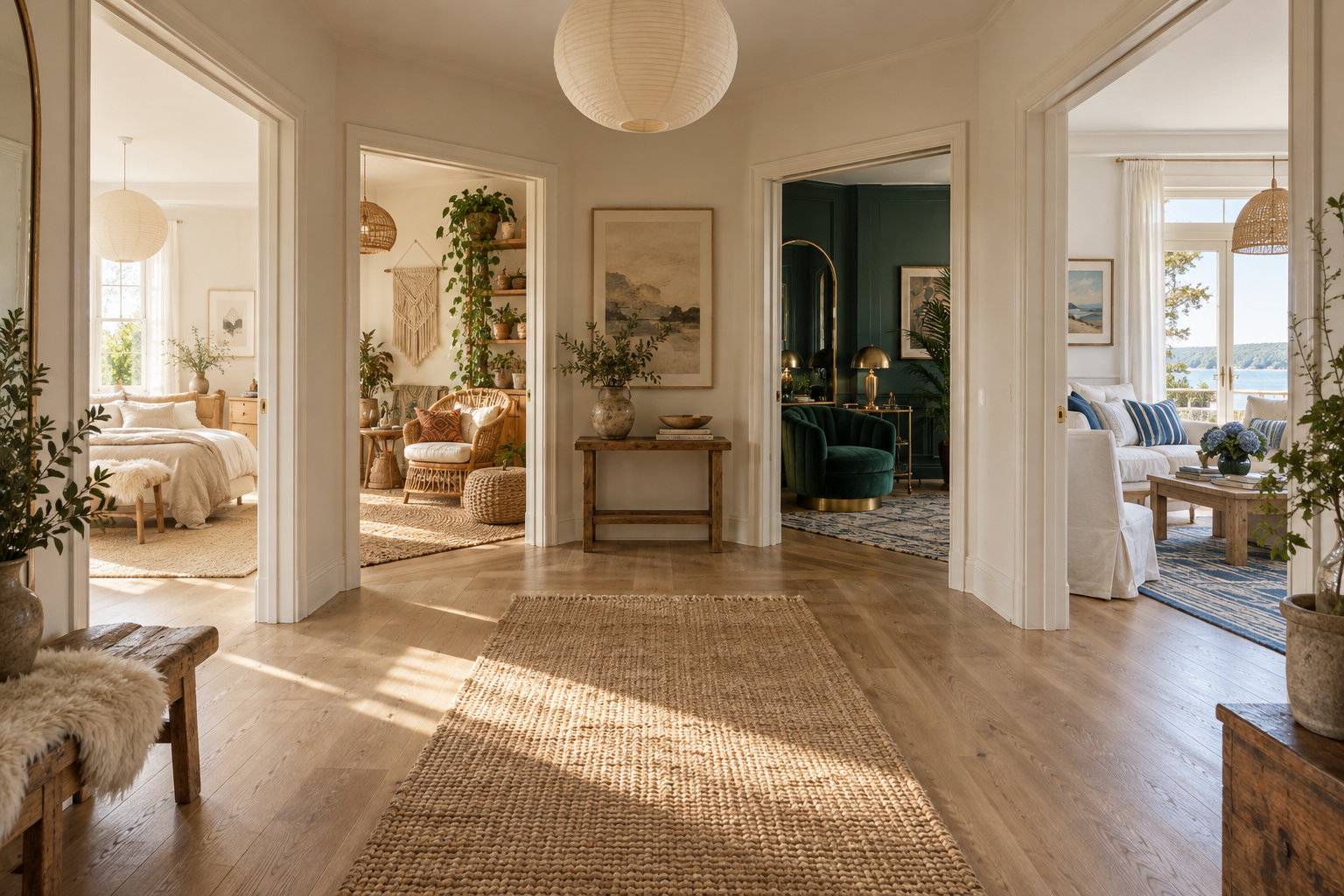
Keep a thread running between rooms, such as one wood tone, one metal finish, or a shared accent colour. It allows each room to lean a little differently, a cosier cottage bedroom beside a cleaner Scandinavian kitchen, while still feeling like one home.
Frequently Asked Questions
What are the main types of home decor styles?
The main types of home decor styles include traditional, transitional, modern, contemporary, mid-century modern, minimalist, Scandinavian, Japandi, industrial, farmhouse, rustic, bohemian, eclectic, coastal, Mediterranean, Art Deco, and Hollywood Regency. Most newer aesthetics are variations or blends of these established styles.
What is the most popular home decor style right now?
Popular styles shift over time, but warm, nature-focused aesthetics are widely favoured at the moment. Organic modern, Japandi, modern farmhouse, transitional, and quiet luxury all appear frequently, as do blends that combine clean lines with natural textures, curved furniture, and earthy, neutral colour palettes.
Is it okay not to have one specific decor style?
It’s completely fine not to follow a single decor style. Most well-designed homes blend influences from two or three styles. What makes a room feel cohesive isn’t strict adherence to one label but a consistent colour palette, balanced proportions, and repeated materials or finishes throughout the space.
What decor style is best for a small apartment?
Scandinavian, minimalist, Japandi, and modern styles tend to suit small apartments because they use light colours, slim furniture, and uncluttered surfaces that make rooms feel bigger. Bohemian and cottage styles can also work in small spaces if patterns and accessories are carefully edited to avoid a crowded feeling.
What is the difference between modern and contemporary decor?
Modern decor refers to a specific design period from roughly the early to mid twentieth century, with fixed features like clean lines, natural materials, and minimal ornament. Contemporary decor reflects whatever is current today, so it changes over time. At present it often includes curves, textured fabrics, and warm earthy tones.
Which decor styles work well for families with kids and pets?
Farmhouse, rustic, transitional, and bohemian styles are generally the most forgiving for busy households. They use durable wood, performance or washable fabrics, slipcovers, and patterns or textures that disguise everyday wear. Styles relying on glossy surfaces, glass, or pale delicate upholstery require more care and maintenance.
Can I change my decor style without buying new furniture?
You can shift a decor style significantly without replacing furniture. Paint colours, curtains, rugs, cushions, throws, lighting, hardware, and art have a large influence on how a room reads. Rearranging existing furniture, reupholstering or slipcovering a sofa, and editing accessories can move a space toward a completely different aesthetic.
How do I make different decor styles flow from room to room?
Choose a connecting element and repeat it throughout the home. This could be a consistent flooring material, a shared wood tone, a single dominant metal finish, or a core colour palette used in different amounts in each room. That thread lets individual rooms have their own character while the whole home still feels unified.