Best Places to Learn Gardening Online: Courses and Free Resources
There has never been more gardening information available, and that is exactly the problem. Search for advice on pruning tomatoes and you’ll get a university research page, a fifteen-minute video from someone in a completely different climate, a forum thread with four contradictory answers, and an article that was clearly written by someone who has…
There has never been more gardening information available, and that is exactly the problem. Search for advice on pruning tomatoes and you’ll get a university research page, a fifteen-minute video from someone in a completely different climate, a forum thread with four contradictory answers, and an article that was clearly written by someone who has never touched a tomato plant. Free does not always mean good, and paid does not always mean better.
The good news is that a handful of genuinely excellent online sources exist, and most of them cost nothing. This guide sorts through the landscape: the horticultural institutions quietly publishing research-backed material, the structured courses worth paying for, the video creators who actually show their failures, and the podcasts, apps, and communities that fill in the gaps. It also covers how to tell a reliable source from a confident-sounding one, and how to turn what you watch into something that grows.
What to Look For Before You Trust an Online Gardening Source

Gardening advice is unusually local. Soil, rainfall, frost dates, day length, and pest pressure change everything, so an instruction that works beautifully in one place can be terrible advice a few hundred miles away. Before you commit hours to any course or channel, run it through a few quick checks.
Does the source say where it is? A creator who tells you their climate zone, region, or typical last frost date is being honest about the limits of their advice. One who presents universal rules with no geographic context is either inexperienced or not thinking carefully.
Is there a real person or institution behind it? Look for named authors, horticultural qualifications, a research affiliation, or simply years of documented growing. Anonymous content farms produce enormous volumes of gardening articles that are reworded from each other, and errors propagate through them unchecked.
Does it show the whole season? Anyone can film a bed of perfect lettuce in May. Sources worth following come back in July when something bolted, and in September when the squash got mildew. A creator who publishes failures is showing you far more useful information than one who only posts harvest baskets.
Is it selling something at every turn? Useful product recommendations exist. But when every lesson funnels toward a specific fertilizer or subscription box, the teaching is secondary to the sales pitch.
Is it current? Recommendations around pesticides, invasive species, and certain plant varieties change as research and regulations move. A page written a decade ago and never updated may be repeating guidance that has since been withdrawn.
How do I find gardening advice for my specific climate?
Start with your regional agricultural extension service, a national horticultural society, or a botanical garden in your own climate, because all three publish region-specific planting calendars and pest guidance. Then filter general courses and videos through what those local sources tell you about your frost dates, soil, and growing season.
Practically, this means keeping two layers of learning. The local layer gives you timing and species selection. The general layer gives you technique, which travels much better: how to take a cutting, how compost works, how to prune for airflow, how to read a soil test. Technique is broadly universal. Timing almost never is.
Free Learning From Extension Services, Botanical Gardens, and Master Gardener Programs
If you only use one category of resource, make it this one. Publicly funded horticultural institutions produce the most rigorously checked gardening information available online, and nearly all of it is free.
University extension services
In the United States, land-grant universities run cooperative extension programs, and each state’s service publishes fact sheets, planting guides, pest identification pages, and often full video libraries tailored to that state’s conditions. The material is written by horticulturists and reviewed before publication. It is rarely glamorous, but it is accurate, and it tells you exactly which varieties perform in your area. Similar public advisory services exist in Canada through provincial agriculture ministries, in Australia through state departments of primary industries, and in many European countries through agricultural institutes.
National horticultural societies
The Royal Horticultural Society in the UK maintains an enormous free advice library covering plant care, diseases, and design, along with paid courses for people who want structure. Comparable bodies serve other regions, and most publish free seasonal guidance. These organizations have institutional memory measured in decades, which matters when you want to know whether a technique is genuinely reliable or simply fashionable.
Master Gardener programs
Master Gardener training is one of the best-value routes into serious gardening knowledge. Run through extension services, these programs teach botany, soils, plant pathology, entomology, and integrated pest management over a structured course, usually in exchange for volunteer hours afterward. Many now offer online or hybrid delivery. You come out with real horticultural grounding and a local network of experienced gardeners, which is worth as much as the coursework.
Botanical gardens and arboretums
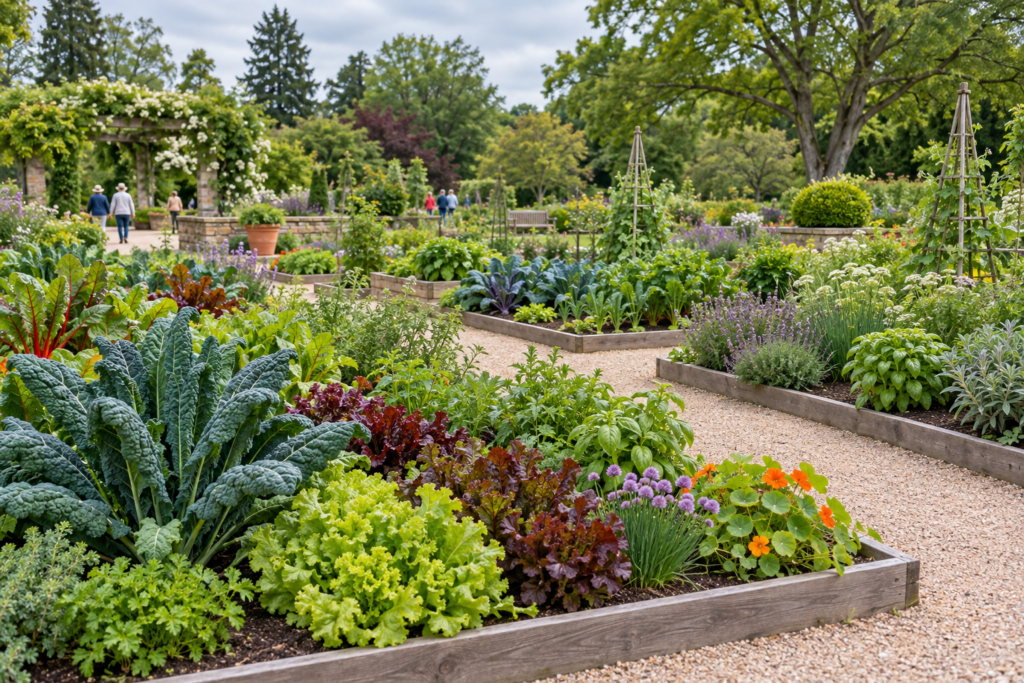
Large public gardens increasingly run online classes, recorded lecture series, and free plant databases. Their teaching tends to be strong on ornamentals, native plants, and design, and they often host specialists you would never otherwise get access to. Their plant finders are also a quiet gem: searchable records of what actually grows well in that region, maintained by people who grow it.
Seed companies and specialist nurseries
Established seed houses and specialist nurseries publish growing guides that are genuinely useful, because they have a commercial interest in your seeds germinating. Expect thorough sowing depths, spacing, days to maturity, and variety notes. Read them knowing they also want to sell you seed, but the horticultural content is usually sound.
Can you learn gardening online for free?
Yes. Between extension services, horticultural societies, botanical gardens, seed company guides, video channels, podcasts, and public library access, a motivated beginner can reach a genuinely competent level without paying for a course. Paid programs mainly buy structure, feedback, and credentials rather than better information.
That said, free learning demands more of you. Nobody sequences the material, nobody tells you what to learn next, and nobody notices when you skip the boring but essential parts, like soil. If you struggle to self-direct, paying for structure is a reasonable trade.
Structured Courses, Certificates, and Paid Platforms
Paid courses come in several tiers, and they are not interchangeable. Knowing which tier you’re buying into saves both money and disappointment.
General online course marketplaces host thousands of gardening courses uploaded by independent instructors. Quality varies enormously because almost anyone can publish. These platforms work best when you have a narrow, specific goal, such as bonsai basics or hydroponic lettuce, and you can read reviews carefully before enrolling. Prices fluctuate constantly, so it rarely makes sense to pay full sticker price.
Skill-based subscription platforms offer shorter, project-oriented classes with better production values, often taught by designers, florists, or urban growers. They suit people who learn by following along with a project rather than by studying theory.
University-affiliated MOOC platforms carry horticulture, botany, soil science, and sustainable agriculture courses from actual universities. These are more academic and more demanding, and they are the right choice if you want to understand why things work rather than only what to do. Many can be audited free, with payment only required for a verified certificate.
Dedicated horticultural institutions offer the most serious option: certificate and diploma courses from horticultural societies, botanical gardens, and agricultural colleges, delivered online with assessed coursework. These are the closest thing to professional training you can do from home, and they cost accordingly.
Independent grower courses are sold directly by market gardeners, permaculture teachers, and specialist growers. When the teacher has a long public track record, these can be outstanding, because you are buying hard-won operational detail rather than general theory. When they don’t, you are buying a slideshow.
Is an online gardening certificate worth it?
For a home gardener, usually not. A certificate rarely grows better tomatoes than free extension material plus practice. It becomes worth it if you want to work professionally in horticulture, landscaping, or garden design, or if you need the deadlines and assessment to actually finish something.
There is one more honest reason to pay, and it’s worth naming: some people simply follow through better when they’ve spent money. If that describes you, a modest paid course is a legitimate tool rather than a waste. Just choose one with a real instructor who answers questions, because feedback is the part you genuinely cannot get free.
Video Channels and Watching Someone Actually Do It
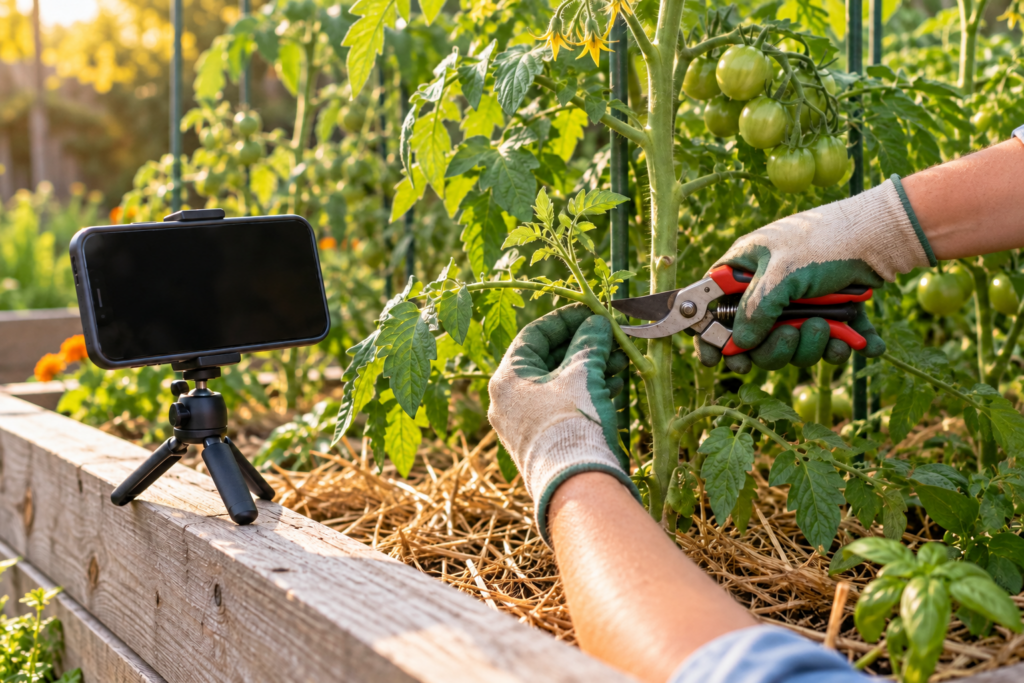
Some gardening skills are almost impossible to learn from text. How hard to firm soil around a transplant, what a correctly pruned fruit tree looks like from underneath, how a healthy division of a perennial should come apart in your hands. Video solves that, and free video channels are among the most valuable gardening resources online.
The strongest gardening channels share a few traits. They film in a stated climate. They follow crops across a whole season instead of cutting from planting to harvest. They show what went wrong. And they repeat techniques across years, which lets you see whether an approach actually holds up.
Different channels serve different purposes, and it helps to build a small mixed roster rather than following one personality:
Regional home gardeners who grow in conditions like yours are the most directly applicable. Search for creators in your climate zone or country rather than defaulting to whoever is most popular.
Small-scale market growers teach efficiency, crop planning, and succession sowing better than anyone, because their income depends on it. Their methods scale down well to a home plot.
Specialists in one area, such as fruit tree pruning, roses, native plants, dahlias, or seed saving, go deeper than any general channel can. When you hit a specific problem, a specialist channel usually has a forty-minute answer.
Institutional channels from extension services, botanical gardens, and horticultural societies post lectures, demonstrations, and diagnostic walkthroughs. Less entertaining, more reliable.
Watch with a little skepticism about the economics. Sponsored segments are common, and a glowing review of a soil amendment in a video funded by that company deserves the same scrutiny you’d apply anywhere. Watching a technique the day before you plan to do it, rather than passively in the evening, also converts far more of it into actual skill.
Podcasts, Newsletters, Books, and Plant Identification Apps

Courses and videos get most of the attention, but the resources you use in the margins of the day often teach the most over a full season.
Podcasts are ideal for gardening precisely because gardening involves long stretches of weeding, digging, and watering. Interview-led shows bring in plant breeders, soil scientists, and career horticulturists whose knowledge rarely gets written down. Public radio gardening programs and society-run shows tend to be well researched. Regional shows are especially good, because callers describe problems you’re about to have.
Newsletters from botanical gardens, seed companies, and individual growers arrive with seasonal timing built in, which is genuinely useful. A reminder to start peppers indoors landing in your inbox at the right week does more for your garden than a bookmarked article you never reopen.
Books still outperform almost everything online for depth, and your library card is an underused online resource in its own right. Most public library systems offer free digital lending of ebooks and audiobooks, plus access to gardening magazine archives and sometimes research databases. A well-edited reference book on plant propagation or pruning has been through fact-checking that a blog post has not.
Plant identification and diagnostic apps have improved substantially. Photo-based identification apps, particularly those built on scientific citizen-science databases, are reliable enough for narrowing down a plant or an insect, though they should be treated as a strong first guess rather than a verdict. Confirm anything that matters, especially before removing a plant you think is a weed or treating something you think is a pest. Several apps also connect to naturalist communities where real people verify identifications.
Garden planning tools round out the set. Frost date lookups, planting calendar tools, and simple bed-planning apps turn abstract advice into dated, specific tasks for your own location.
Forums, Communities, and Turning Online Learning Into a Real Garden
Courses teach principles. Communities tell you what actually happens on your street.
Regional gardening groups, whether on forums, social platforms, or local club websites, are where you learn that everyone nearby loses their first sowing of beans to cold soil, or that a particular blight arrives in August every year. This hyperlocal knowledge exists almost nowhere else. Look for groups tied to a specific city, county, or climate region rather than enormous general ones.
Long-running gardening forums remain excellent for complicated problems, because their archives go back years and the regulars tend to be experienced. Plant-society groups devoted to a single genus are extraordinary if you get obsessed with roses, hostas, chilies, or orchids. And in-person community gardens, allotment associations, and local horticultural societies almost always have an online presence now, which makes them easy to find and easy to join.
Two cautions. First, confident tone is not expertise, and popular advice in a group can be locally traditional rather than correct. Cross-check anything significant against an extension service or society page. Second, diagnostic requests need good information. Post clear photos of the whole plant and the affected part, state your location, and describe watering, soil, and how long it’s been going on. Vague questions get vague answers.
What’s the best way to learn gardening as a complete beginner?
Pick one small space, choose three or four easy crops, and learn those specific plants deeply using your local extension service’s guide. Add a regional video channel and one podcast for background learning. Skip broad courses until you have a season of hands-on experience to attach the information to.
The reason this works is that gardening knowledge sticks only when it maps onto something you’ve actually watched happen. Reading about damping off means little. Losing a tray of seedlings to it once, then reading about airflow and watering from below, embeds the lesson permanently.
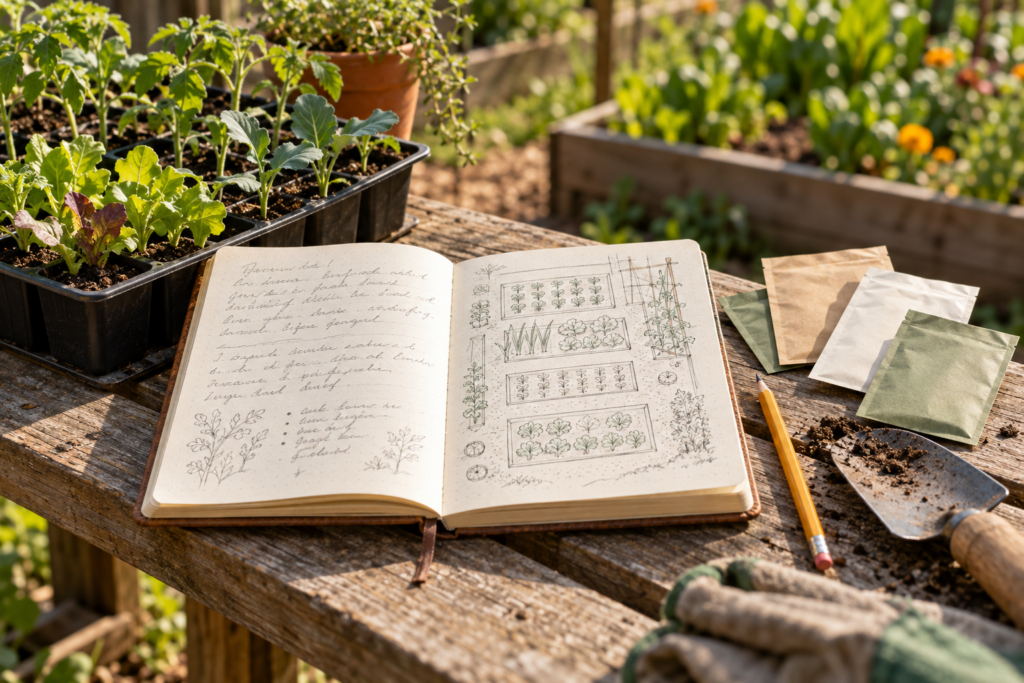
A few habits turn passive consumption into real skill. Keep a simple log of what you planted, when, and what happened, because your own notes eventually become your most valuable gardening resource. Learn one technique per month and practice it rather than collecting bookmarks. Allow yourself to abandon a course you aren’t using; unfinished courses are the norm and not a personal failing. And accept that you will kill plants. Every gardener with good online content has killed far more than you have. They just had somewhere to put the footage.
Frequently Asked Questions
Are free gardening resources as good as paid courses?
For factual accuracy, free institutional resources are often better. Extension services, horticultural societies, and botanical gardens publish material reviewed by horticulturists, while many paid courses are produced by individuals with no formal review process. What you pay for is structure, sequencing, assessment, and access to an instructor who can answer your specific questions, not necessarily more reliable information.
Can I learn gardening online without any outdoor space?
Yes, and a surprising amount of it transfers later. Container growing, houseplant care, windowsill herbs, seed starting, propagation, and hydroponics can all be practiced indoors or on a balcony. Botany, soil science, and plant identification are entirely learnable without land. Many people work through the theory while growing in pots, then apply it when they eventually get a garden or allotment.
How do I know if online gardening advice is reliable?
Check whether the source names its location and climate, whether a real person or institution is behind it, and whether the same guidance appears on an extension service or horticultural society page. Be cautious with advice that promises dramatic results from a single product, and with content that never shows anything going wrong. Cross-checking two independent sources catches most bad information.
What should a beginner gardener learn first?
Soil and timing, in that order. Understanding what your soil is like and how to improve it with organic matter affects every plant you will ever grow, and knowing your average last frost date determines when almost everything can be planted. Watering technique comes next. Plant-specific knowledge is easier to pick up once those three foundations are in place.
Do I need a gardening certificate to work in horticulture?
It depends on the role. Practical landscaping and maintenance work is often learned on the job, while garden design, arboriculture, nursery management, and public garden roles increasingly expect formal qualifications. If you’re aiming at a career, look at accredited horticultural diplomas and apprenticeship routes rather than short online courses, and check what employers in your own country actually ask for.
How long does it take to learn gardening?
You can grow a successful first crop within a single season, and most beginners do. Becoming genuinely competent across a range of plants usually takes three to five growing seasons, because each year only gives you one attempt at each seasonal task. Experienced gardeners tend to say the learning never really stops, which sounds like a platitude but reflects how much local variation there is.
Are gardening apps accurate for identifying plants and pests?
Photo identification apps are good at narrowing possibilities but should not be treated as final answers. Accuracy improves with clear, well-lit photos showing leaves, stems, and flowers rather than a single close-up. For anything consequential, such as suspected toxic plants, invasive species, or a pest treatment decision, confirm the identification with an extension service, a plant society, or a knowledgeable community.
Where can I find gardening courses in my own language or region?
Start with the national horticultural society or agricultural advisory service for your country, since most publish in the local language and cover local conditions. University MOOC platforms carry courses in several languages with subtitles. Regional gardening forums and social groups are also a practical way to find local online classes, which often aren’t well indexed by search engines.
Keep Learning
For more beginner help, see How to Start a Garden: The Complete Beginner’s Guide, How to Start a Vegetable Garden: Step-by-Step Guide for Beginners, and Essential Gardening Tools and Equipment: A Complete Buyer’s Guide.