National Gardening Day: How to Celebrate It at Home and in Your Community
Most of the calendar’s novelty days pass without anyone doing much about them. National Gardening Day is an exception, and the reason is practical rather than sentimental. It lands in mid-April, which in much of the Northern Hemisphere is the precise week when soil has warmed, frost risk is easing, and everything you’ve been meaning…
Most of the calendar’s novelty days pass without anyone doing much about them. National Gardening Day is an exception, and the reason is practical rather than sentimental. It lands in mid-April, which in much of the Northern Hemisphere is the precise week when soil has warmed, frost risk is easing, and everything you’ve been meaning to do since January suddenly becomes possible.
That timing is what makes it worth marking. A day set aside for gardening in November would be an invitation to think about gardening. A day set aside in April is an invitation to actually start. Seeds go in, beds get cleared, somebody’s grandmother finally shows them how to take a cutting, and a school somewhere has thirty children with their hands in compost for the first time.
You can observe it with an hour on a balcony or turn it into a neighbourhood event. What follows covers what the day is, how to spend it whether you have a full garden or a windowsill, ways to involve children and neighbours, and how to carry the momentum into the rest of the growing year rather than letting it evaporate by May.
What National Gardening Day Is and Why the Date Matters
When is National Gardening Day?
National Gardening Day is observed annually on April 14 in the United States. It sits within National Garden Month, which runs through April, and near several related observances including Arbor Day in late April and Earth Day on April 22. The UK’s National Gardening Week, run by the Royal Horticultural Society, usually falls in late April or early May.
The day is a relatively recent addition to the calendar, created by people in gardening publishing to encourage more beginners to try growing something. It carries no formal rules, no organising body dictating what you must do, and no requirement to register anything. That informality is part of its appeal. It functions as a prompt rather than a programme.
Why mid-April is well chosen
For most temperate regions in the Northern Hemisphere, the second week of April is when a garden genuinely wakes up. Soil temperature has begun to climb past the point where cool-season seeds will germinate rather than rot. Daylight is lengthening noticeably. Perennials are pushing through, and the hard pruning window for many shrubs has closed while the planting window has opened.
It’s also, crucially, before the rush. Mid-April is late enough to work outside comfortably and early enough that nothing has got away from you yet. Weeds are small. Slug populations haven’t peaked. Nothing has bolted. Spend a day in the garden on April 14 and you are setting up a season. Spend the equivalent day in late June and you are mostly catching up.
If you’re in the Southern Hemisphere
April is autumn below the equator, which changes the character of the day entirely but doesn’t make it useless. Autumn is the best planting season in much of Australia, New Zealand, South Africa, and southern South America, because soil is still warm while the heat stress of summer has passed. It’s prime time for planting trees and shrubs, sowing cool-season vegetables, putting in garlic and broad beans, dividing perennials, and building soil with compost and mulch before winter.
Australia and New Zealand also have their own gardening weeks and festivals at locally appropriate times of year. There’s no obligation to follow a northern calendar. The useful idea is a designated day to garden deliberately, and that works in any hemisphere as long as you match the tasks to your season.
Related observances worth knowing
Arbor Day encourages tree planting and is observed on different dates in different states and countries, timed to local planting conditions. Earth Day has a broader environmental focus but overlaps naturally with native planting and pollinator projects. National Pollinator Week falls in June. Many countries run their own national gardening or allotment weeks. If you want to build an annual rhythm rather than a one-off, these give you several fixed points across the year.
How to Spend the Day in Your Own Garden
What do you do on National Gardening Day?
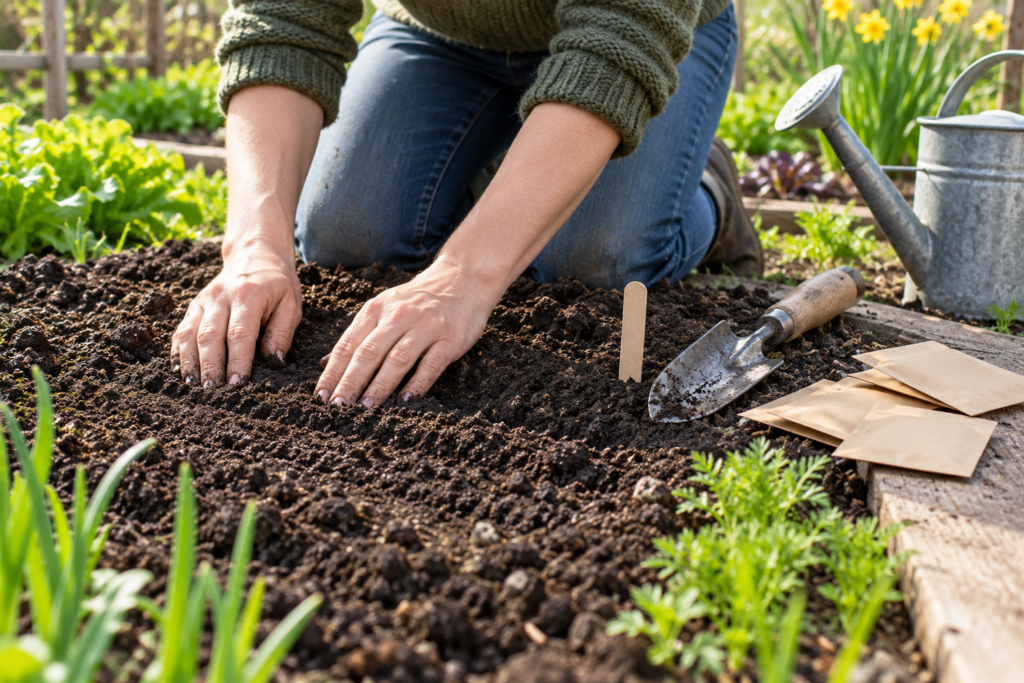
Pick one project you can finish. Sow a bed of salad and radishes, plant a tree or fruit bush, build a raised bed, clear and mulch a neglected corner, or pot up containers for summer. Completing a single visible thing is more satisfying and more useful than starting five jobs and finishing none.
That’s the core principle for the day. A garden always presents an infinite task list, and the temptation on a designated gardening day is to attack all of it. Resist that. The point is to end the day looking at something that wasn’t there in the morning.
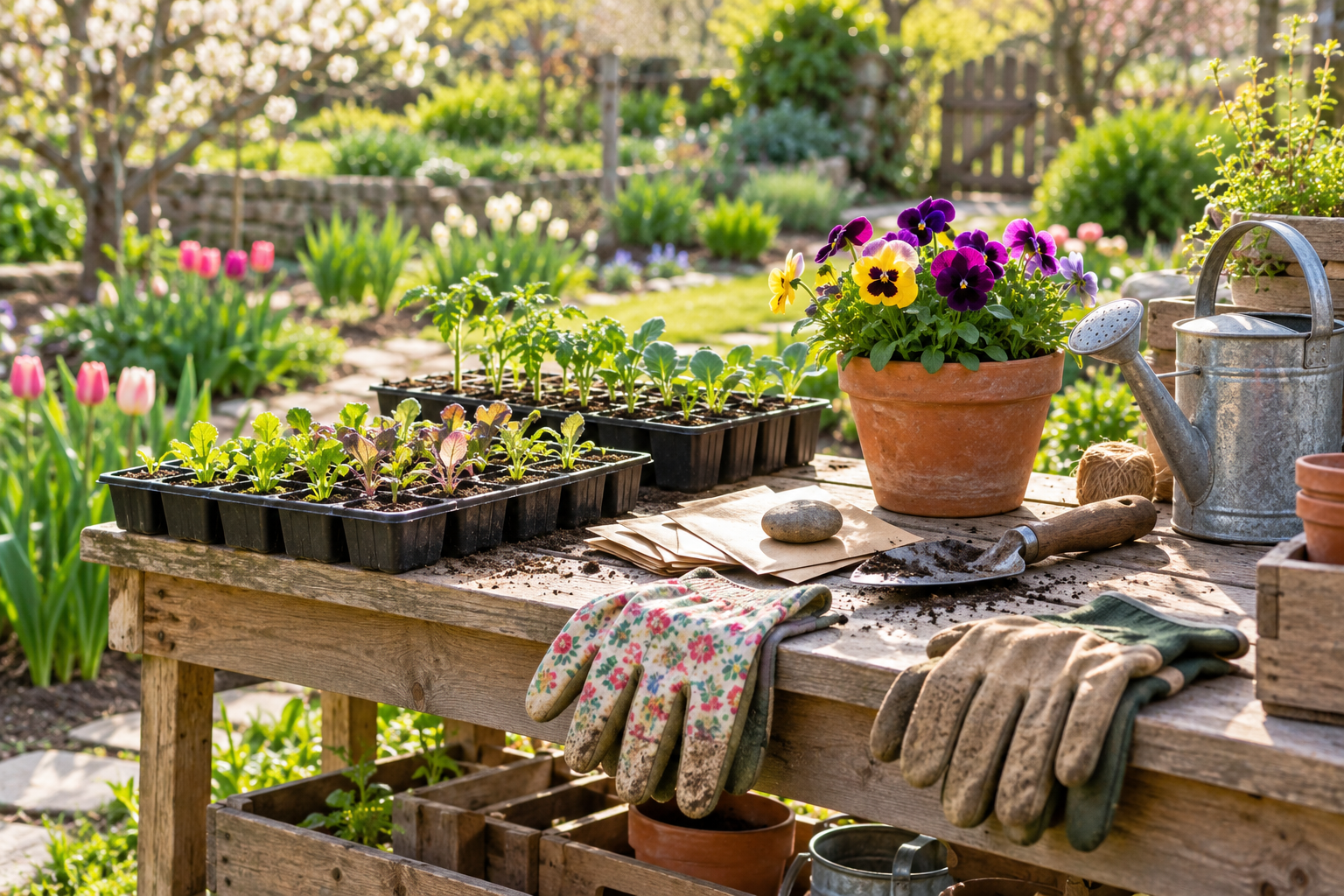
Sow something quick. Radishes, salad leaves, rocket, spinach, and spring onions will show results within weeks, which keeps the momentum going. Peas, broad beans, carrots, and beetroot can go in directly in most temperate areas around this point in spring, depending on your local last frost date. Sunflowers and nasturtiums are good choices if there are children involved, because the seeds are large and easy to handle.
Plant something permanent. A fruit tree, a hedge plant, a rose, a berry bush, a clump of perennials. Mid-April is a reasonable window for container-grown stock as long as you water it properly through its first summer. Something planted on a specific date acquires a marker in your memory, and in five years you’ll still know exactly how old it is.
Take on a project you’ve been putting off. Build a raised bed. Install a water butt on a downpipe. Put up a trellis or an obelisk. Fix the fence panel. Lay a path. These are the jobs that never rise to the top of a Saturday’s priorities, and a day with a label attached is a good excuse to finally do one.
Service your tools. Clean, sharpen, and oil everything before the season properly begins. Sharpen secateurs and hoes, tighten loose bolts, rub linseed oil into wooden handles, check the hose for perishing, and test any battery tools. It takes an hour and makes every subsequent session easier. Most gardeners intend to do this in winter and don’t.
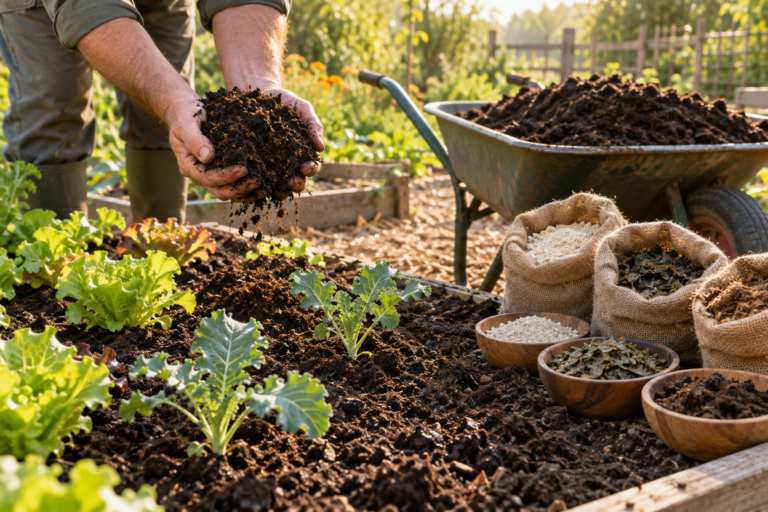
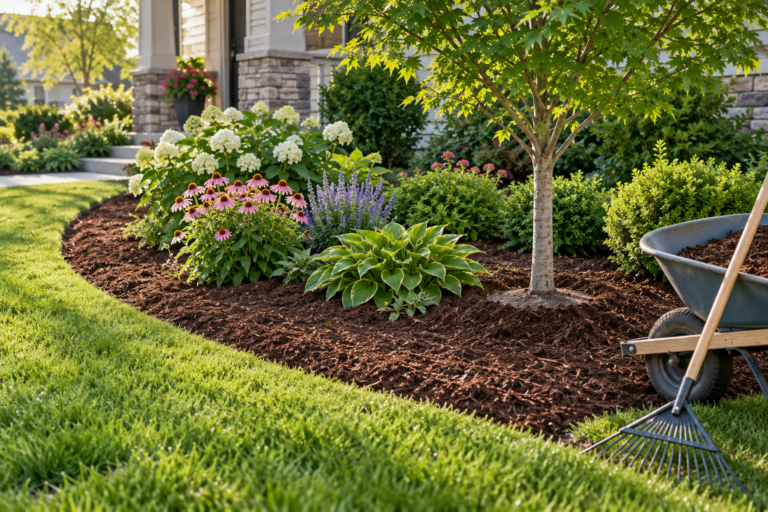
Feed the soil. Spread a thick layer of compost or well-rotted manure over beds and mulch around established plants. It suppresses weeds, holds moisture through summer, and feeds soil life. It’s the highest-return hour of work available in April and it’s almost always skipped in favour of planting.
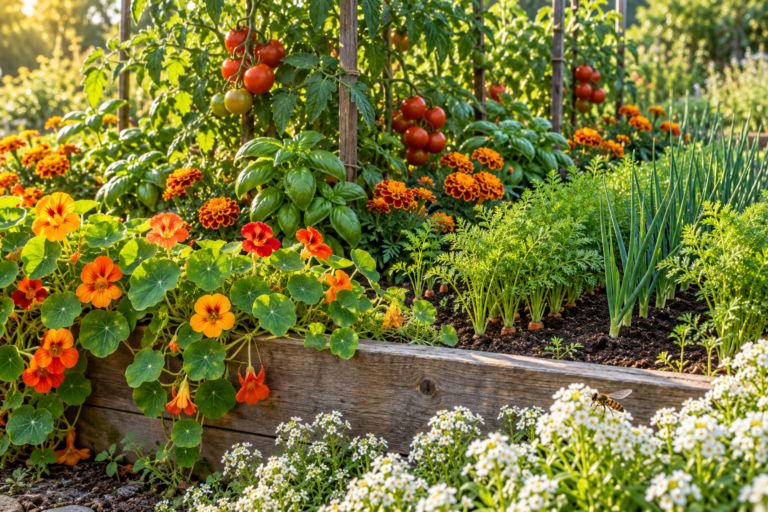
Do something for wildlife. Put up a bee hotel or a nest box, sow a patch of native wildflowers, add a shallow water dish with stones for insects to land on, or simply decide to leave one corner of the lawn unmown through spring. Mid-April is when pollinators are emerging and looking for both forage and nest sites.
Spend part of it doing nothing. Make tea, sit down, and look at the garden properly. Notice what’s coming up, what died over winter, what’s in the wrong place, and where the light falls now that the sun is higher. Observation is real gardening work, and it’s the part that gets squeezed out on every ordinary weekend.
Sharing the Day: Neighbours, Community Gardens, and Gifts
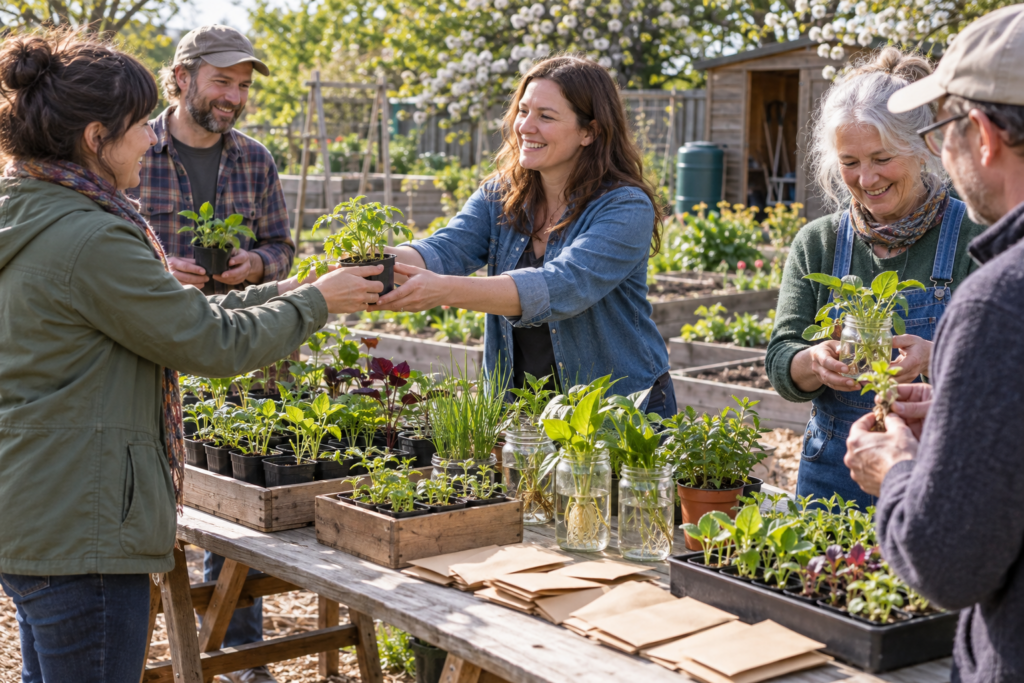
Gardening is unusually communal for a hobby practised mostly alone, and April 14 is a natural excuse to lean into that.
Give plants away. Almost every gardener over-sows in spring and ends up with more seedlings than space. Pot up the surplus, label them, and hand them to neighbours, colleagues, or anyone who’s mentioned wanting to try growing something. This is the oldest tradition in gardening and it costs nothing.
Run or join a plant and seed swap. A trestle table, a few hours, and word of mouth is all it takes. People bring divisions, seedlings, cuttings, and half-used seed packets and go home with something different. Community gardens, allotment sites, libraries, and local gardening groups often host these already in April, and joining one is the fastest way to meet gardeners near you and find out what actually grows well in your area.
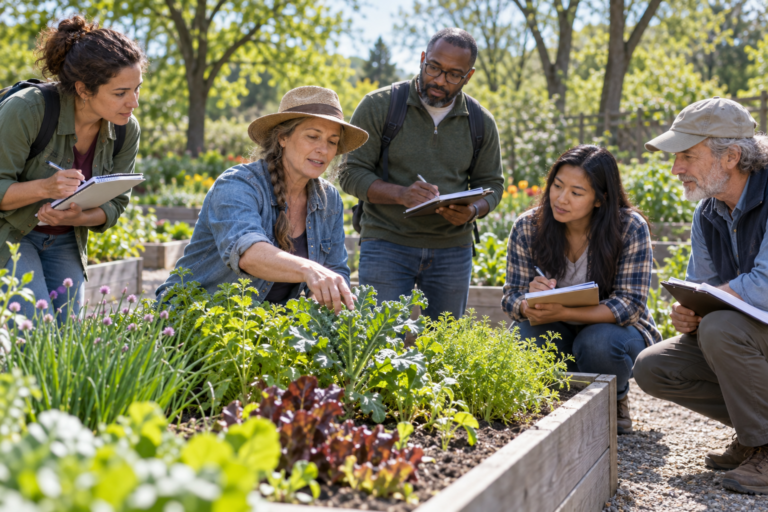
Volunteer for a session. Community gardens, school gardens, church grounds, park friends groups, and conservation projects all need hands in spring and are usually delighted to get them. A morning of weeding, mulching, or planting with a group teaches you more than a weekend of reading, because you’re working alongside people with local experience.
Help someone who can’t garden anymore. An elderly neighbour whose beds have got away from them, or someone recovering from illness. Mowing, weeding, pruning, and planting a few pots of something colourful by the door is a genuinely meaningful use of the day. Ask first about what they want touched, because a garden they built themselves is not a blank canvas.
Give gardening gifts, well chosen. If you want to mark the day for someone who gardens, useful beats decorative. A quality pair of bypass secateurs, well-fitting gloves, a bag of good compost, an unusual seed variety, a horticultural society membership, or a kneeler bench will get used. Novelty tools and ornaments generally won’t. A rooted cutting from your own garden, potted and labelled, is free and often the most appreciated option of all.
Start a conversation with the people either side of you. Shared hedges, overhanging branches, and what to do about the gap between two fences are all easier discussed while both parties are outside gardening on a pleasant April day.
Getting Children Involved
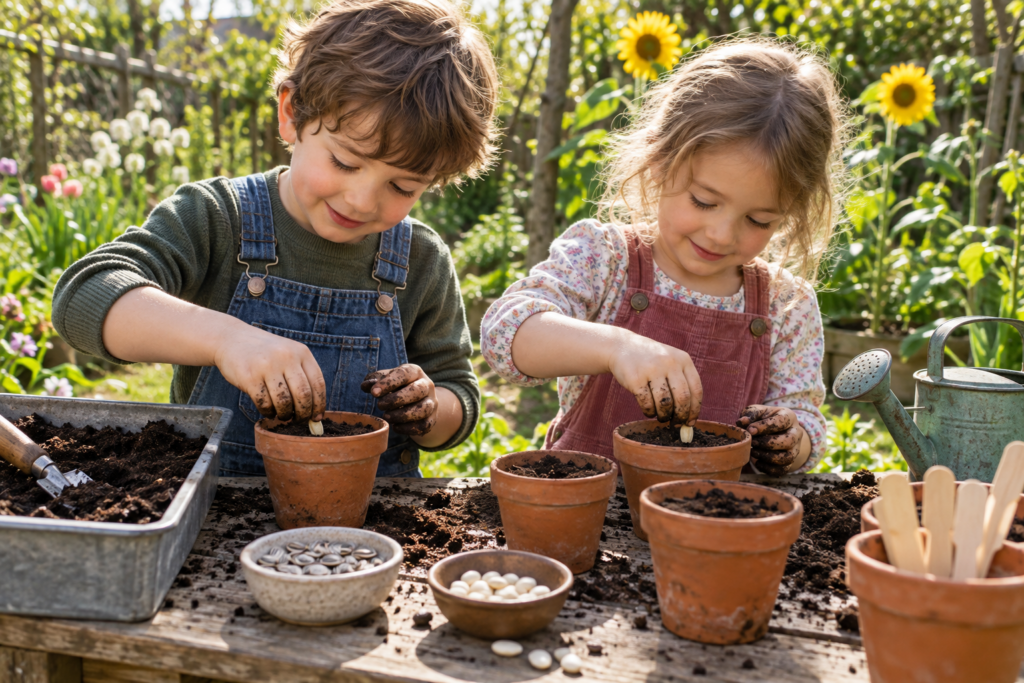
National Gardening Day works particularly well with children, partly because April gives fast results and partly because it fits neatly into the school year.
What are good National Gardening Day activities for kids?
Choose plants with large seeds and quick, dramatic growth: sunflowers, beans, pumpkins, radishes, peas, and nasturtiums. Let children handle the seeds themselves, give them their own labelled pot or small patch to own entirely, and pair the planting with something tactile like a worm hunt or a bug hotel.
Children lose interest in plants that do nothing for six weeks. They stay interested in plants that visibly change. Radishes can be pulled within a month. Beans germinate fast enough to check daily. Sunflowers become a competition about height that runs all summer.
Ownership matters more than technique. A child with their own pot, their own label, and responsibility for watering it will stay engaged far longer than one helping with an adult’s project. Let them plant things slightly wrong. A crooked row still produces carrots.
Make it sensory. Herbs are excellent for this because they can be crushed and smelled immediately. Mint, lemon balm, rosemary, and chives all survive rough handling. Lambs’ ears and other soft-leaved plants are worth growing purely because children touch them.
Go looking for the living soil. Lifting a log or a paving slab to find woodlice, worms, and beetles is often the most memorable part of the day. It also introduces the genuinely important idea that soil is an ecosystem rather than dirt.
Build something. A bug hotel from bamboo canes, sticks, and pine cones. A bean teepee from canes and string, which becomes a den by July. A painted set of plant markers. A simple scarecrow. Construction projects hold attention differently from planting ones.
For schools and groups. Container growing works where ground is limited, and a few large tubs of salad, strawberries, and herbs near a classroom get checked constantly. Sowing in individual pots means every child takes something home. Sunflower height competitions run for months and cost almost nothing. If the school has beds, mid-April is right for sowing quick crops that will be harvestable before the summer break, which matters enormously for keeping children engaged. Salad leaves, radishes, and early potatoes planted in bags all deliver in time.
Keep sessions short. Enthusiasm in young children is intense and brief. Forty minutes of genuine involvement beats two hours of gradually declining interest, and it leaves them wanting to come back.
Celebrating Without a Garden
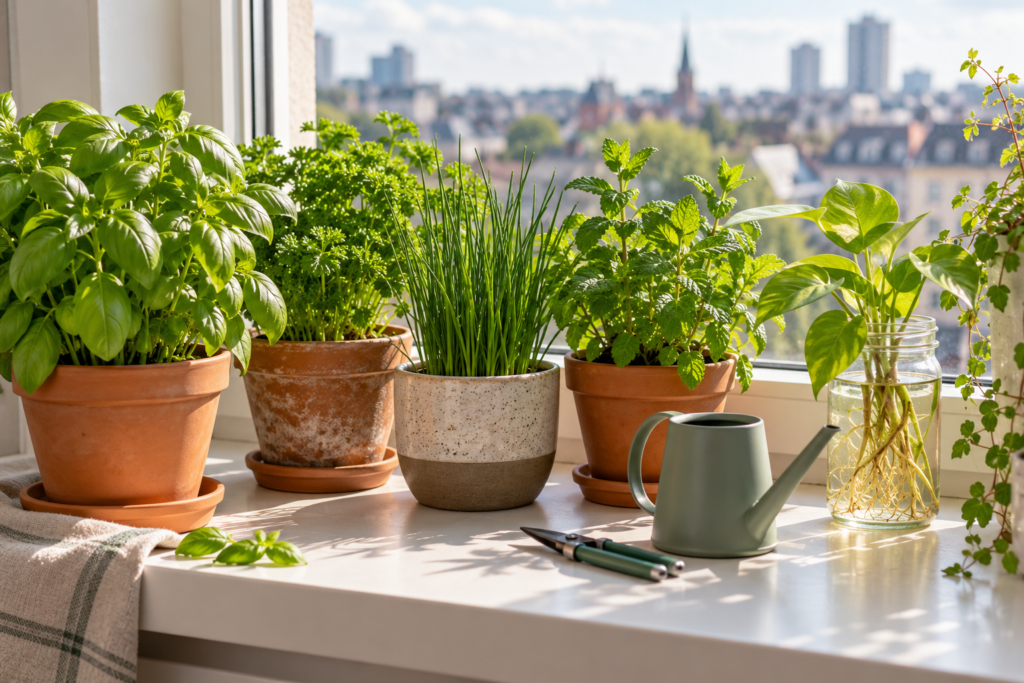
A large share of people who’d enjoy gardening have no ground to garden on, and the day is arguably more useful for them than for anyone already tending an established plot.
How can I celebrate National Gardening Day without a garden?
Start a windowsill herb pot, plant up a balcony container, propagate cuttings from houseplants, or visit a botanical garden. Community gardens and allotment associations also welcome new volunteers in spring, which gives you real growing space and experienced company without owning any land.
Grow herbs where you cook. Basil, parsley, chives, mint, and thyme in a sunny kitchen window is a genuine garden at small scale, and it’s the version most likely to be used daily. Choose the sunniest sill you have and check how many hours of direct light it actually gets before deciding what to grow.
Plant up a balcony or doorstep container. One large pot holds far more than several small ones and dries out far more slowly. Cherry tomatoes, peppers, bush beans, salad leaves, and compact flowers all perform well in containers. Use a proper potting mix rather than garden soil, and check the pot has drainage holes.
Propagate what you already own. Houseplant cuttings in water on a windowsill are an absorbing, free way to multiply a collection. Pothos, spider plants, tradescantia, and many succulents root readily. Spring is when houseplants come out of dormancy and start growing again, which makes April a good moment to repot, feed, and divide.
Get on a waiting list. Allotment and community garden lists can run long in some areas, so April is as good a time as any to put your name down. In the meantime, most community gardens welcome volunteers on shared plots without any waiting.
Visit something planted by somebody else. Botanical gardens, arboretums, public parks, and open garden schemes are at their best in April. Many run events, guided walks, and plant sales around this point in spring. Walking around a well-planted garden with a notebook is a legitimate way to spend a gardening day, and it teaches you which plants thrive in your local conditions better than any catalogue.
Learn something instead. Extension services, horticultural societies, and botanical gardens publish free courses, fact sheets, and seasonal guides. An afternoon spent understanding soil, frost dates, or propagation technique is time that pays off the moment you do get growing space.
Turning One Day Into a Better Growing Year
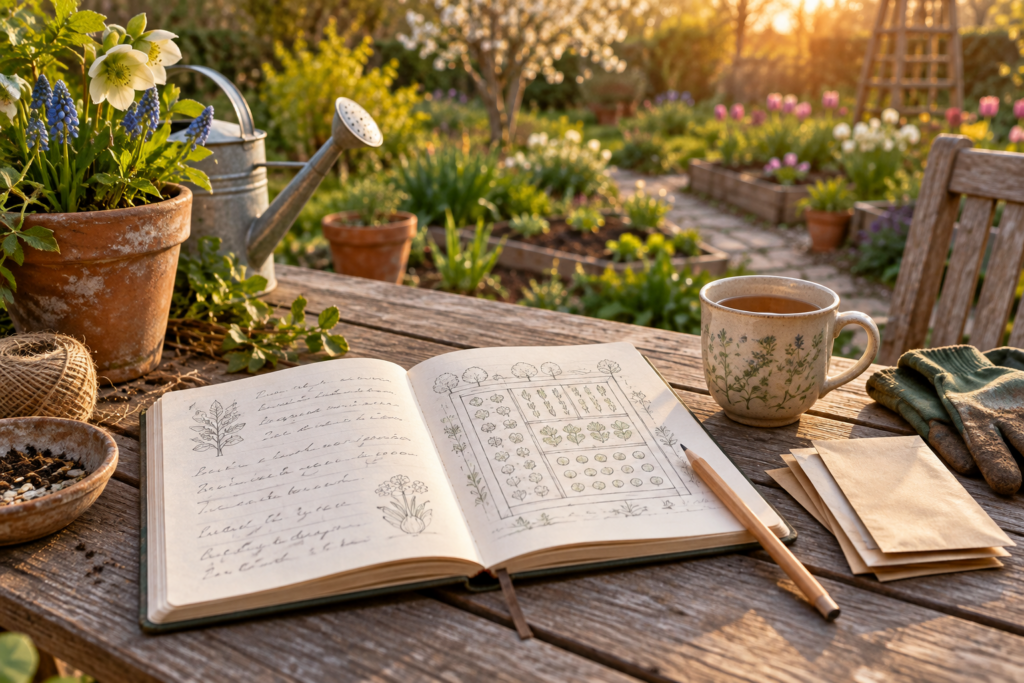
The risk with any designated day is that it becomes the entire contribution. April 14 is most valuable when treated as a starting point.
Write down what you did and what you planted. Date, variety, location, and where it came from. Do this on the day while it’s fresh. A garden journal becomes the most useful reference you own within two seasons, because it’s the only source written for your exact soil, light, and climate. Photographs of beds taken on the same date each year are surprisingly informative too.
Set up the systems that save you in July. Midsummer is when gardens get away from people. A soaker hose or drip line on a timer, a thick layer of mulch, and a water butt installed now prevent most of the August collapse. So does deciding in advance who waters while you’re on holiday.
Plan succession sowings while you’re in the mood. Note in a calendar to sow a short row of salad or radishes every two or three weeks, rather than all at once. This is the difference between a glut followed by nothing and a steady supply through summer.
Book the rest of the year’s fixed points. Diary a session for early summer feeding, a late-summer sowing of autumn crops, autumn bulb planting, and a winter tool service. Gardening rewards short frequent attention far more than occasional marathons, and having dates already written down makes that far more likely.
Decide on one skill to learn this year. Taking cuttings, saving seed, pruning fruit trees, making decent compost, or starting seeds indoors under lights. One properly learned craft per season compounds quickly, and having chosen it on a specific day makes it feel like a commitment rather than a vague intention.
Make it annual. The best version of this day is the one you repeat. A tree planted every April 14 becomes a small orchard. A photograph of the same border taken each year becomes a record of a garden maturing. And a habit of spending one deliberate day at the start of each season tends to spread outward into the weeks either side of it, which is rather the point.
Frequently Asked Questions
What day is National Gardening Day celebrated?
National Gardening Day falls on April 14 each year in the United States. It sits within National Garden Month, observed throughout April, and close to other spring observances such as Earth Day and Arbor Day. The UK holds a separate National Gardening Week, run by the Royal Horticultural Society, which typically takes place in late April or early May.
Who started National Gardening Day?
It was created relatively recently by people working in gardening publishing, with the aim of encouraging more beginners to try growing something. Unlike long-established observances such as Arbor Day, it has no governing body, no official programme, and no registration requirements. Anyone can mark it however they like, which is part of why it has spread informally through gardening communities and schools.
What should I plant on National Gardening Day?
In most temperate northern regions, mid-April suits cool-season crops and hardy annuals. Radishes, salad leaves, spinach, peas, broad beans, carrots, and beetroot can generally be sown directly, while sunflowers, nasturtiums, and cosmos are good for quick colour. Check your local average last frost date before sowing anything frost-tender such as beans, squash, or tomatoes.
Is National Gardening Day the same as National Garden Month?
No, though they overlap. National Garden Month covers the whole of April and is a broader promotional period for gardening and community green space. National Gardening Day is a single date within it, April 14, and tends to be observed more as a personal or family prompt to get outside and plant something rather than as an organised campaign.
How can schools and classrooms celebrate National Gardening Day?
Sow fast-growing crops that will be harvestable before the summer break, such as salad leaves, radishes, and potatoes in bags. Give each child their own labelled pot so something goes home with them. Sunflower height competitions run all season and cost very little. Container growing works where a school has no beds, and a soil-life hunt under logs or paving reliably holds attention.
What if I miss April 14 or the weather is bad?
Nothing about the date is binding. Shift the day to the next dry weekend, or to whenever your soil is workable, since planting into cold, waterlogged ground is counterproductive anyway. If it rains, spend the time indoors sowing seeds in trays, servicing tools, planning beds, ordering seed, or repotting houseplants. The point is a deliberate session, not a specific square on the calendar.
How do people in the Southern Hemisphere celebrate it?
April is autumn below the equator, so the tasks change while the idea holds. Autumn is the best planting season across much of Australia, New Zealand, and South Africa, making it ideal for planting trees and shrubs, sowing cool-season vegetables, putting in garlic and broad beans, dividing perennials, and mulching ahead of winter. Several southern countries also run their own gardening weeks at locally suitable times.
Can I celebrate National Gardening Day if I only have houseplants?
Yes, and spring is a good moment for it. Houseplants come out of winter dormancy in April and start actively growing again, which makes it the right time to repot anything rootbound, resume feeding, take cuttings, divide crowded pots, and clean dust off leaves so they photosynthesise properly. Starting a windowsill herb pot also turns the day into something you’ll use in the kitchen all summer.
Keep Learning
For more beginner help, see How to Start a Garden: The Complete Beginner’s Guide, How to Start a Vegetable Garden: Step-by-Step Guide for Beginners, and How to Become a Master Gardener: Certification Requirements Explained.