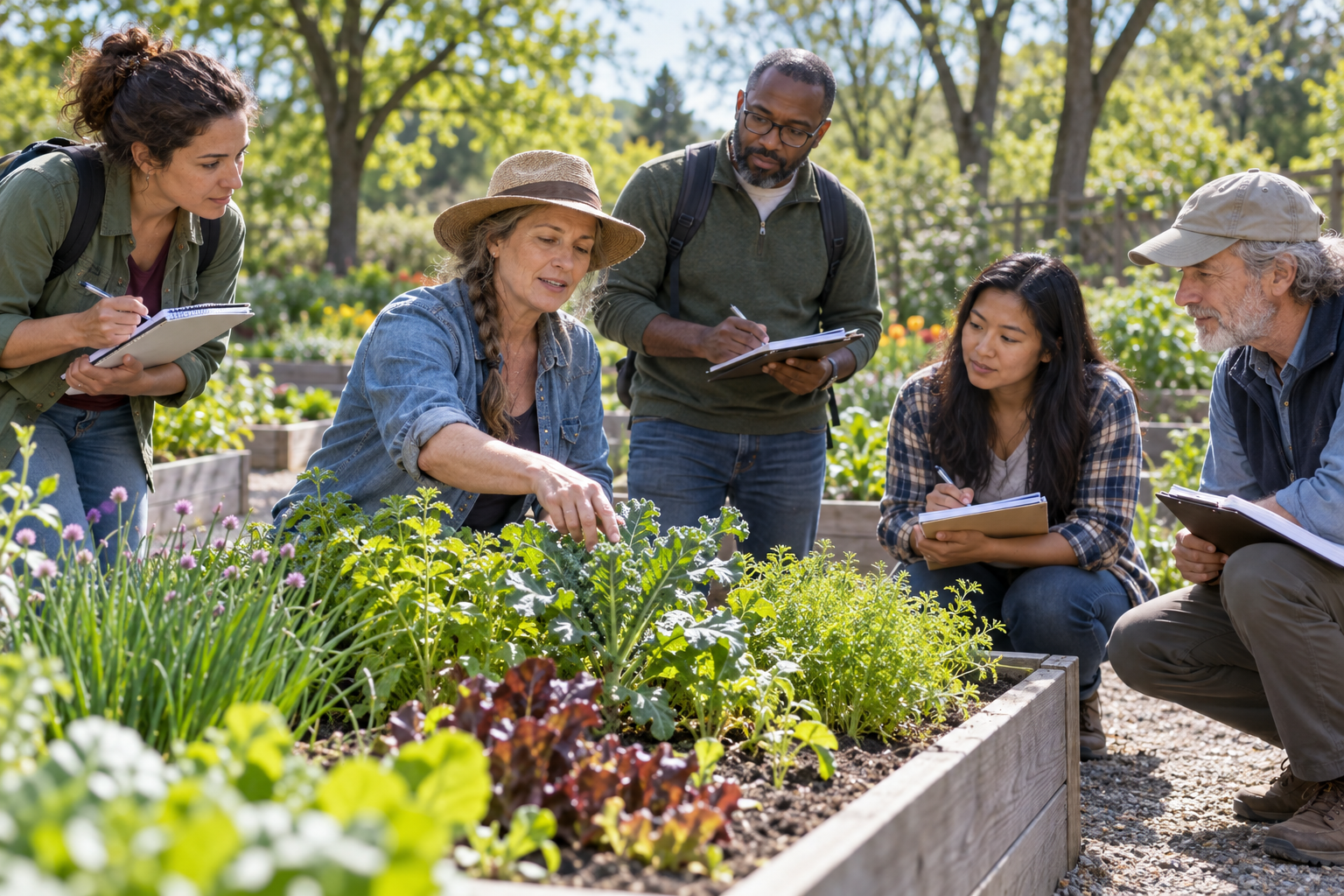
How to Become a Master Gardener: Certification Requirements Explained
The title sounds grander than it is, which causes a fair amount of confusion. A Master Gardener is not a professional horticulturist, not a licensed anything, and not someone who has proven they grow better tomatoes than you do. It’s a volunteer credential. You take a structured horticulture course run through a university extension service,…
The title sounds grander than it is, which causes a fair amount of confusion. A Master Gardener is not a professional horticulturist, not a licensed anything, and not someone who has proven they grow better tomatoes than you do. It’s a volunteer credential. You take a structured horticulture course run through a university extension service, pass the assessment, then pay the training back by volunteering a set number of hours helping the public with gardening questions.
That structure explains almost everything about the program, including why it costs so little and why it asks so much. The training is heavily subsidised because you’re being trained to deliver a public service. Extension services can’t answer every gardening question in a county themselves, so they train volunteers to do it using research-based information rather than folklore.
For the right person it’s outstanding value: a genuine grounding in botany, soils, plant pathology, entomology, and integrated pest management, taught by university faculty, for a fraction of what a comparable course would cost. For the wrong person it’s a course they finish and then quietly fail to volunteer for. This guide covers what the program actually is, who runs it, how to apply, what you’ll study, the real cost in money and hours, what the certification does and doesn’t allow, and the alternatives worth considering if the volunteer commitment doesn’t fit your life.
What a Master Gardener Actually Is
What does it mean to be a Master Gardener?
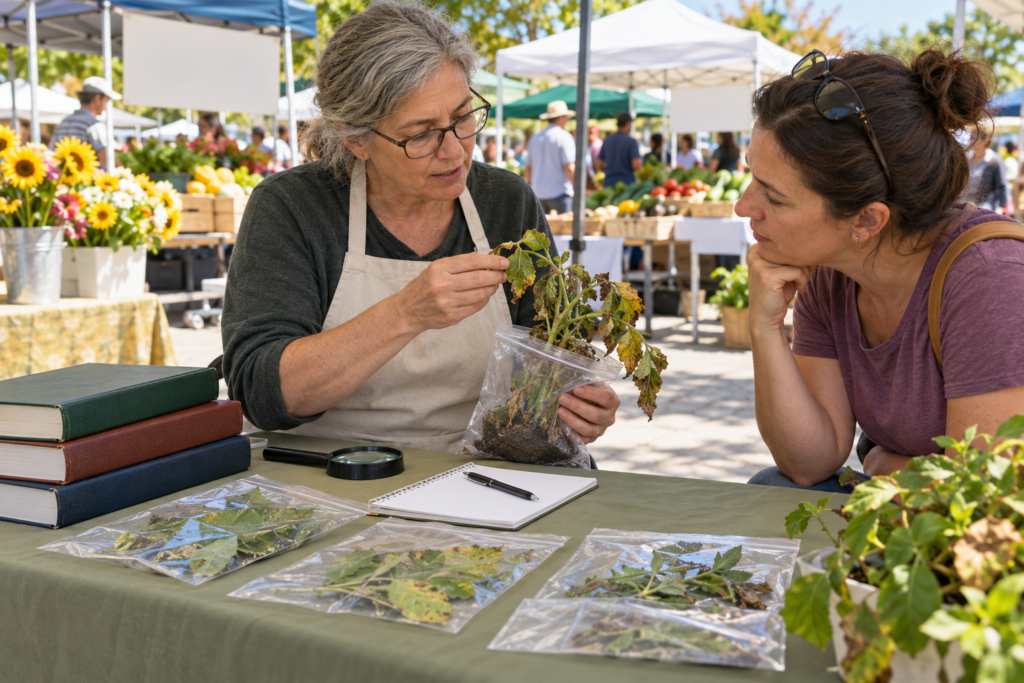
A Master Gardener is a trained volunteer who has completed a university extension horticulture course and agreed to give back a set number of volunteer hours each year answering public gardening questions, staffing helplines and clinics, and running community education. It is a volunteer certification, not a professional or legal qualification.
The concept began in Washington State in the early 1970s. Extension agents were being overwhelmed by home gardening enquiries from a growing urban population, and the solution was to train enthusiastic amateurs thoroughly enough to handle the routine questions. It worked, spread across the United States, and has since been adopted in Canada and several other countries.
The core idea has stayed intact. You are trained to give research-based advice, sourced from land-grant university research and extension publications, rather than personal opinion or inherited habit. This distinction matters more than it sounds. A significant part of the training is learning to say “let me look that up” and knowing where to look, rather than confidently repeating something you read online.
What the title does not mean
It does not license you to practise professionally, charge for advice, or trade on the title commercially. It does not make you an arborist, a landscape designer, a pesticide applicator, or a soil scientist. It does not certify that you are an expert grower. Some programs explicitly prohibit using the Master Gardener title in advertising or on business materials, because the credential belongs to the university extension service and is tied to volunteer service on its behalf.
It also isn’t a permanent title in most programs. Certification is generally maintained year by year through continuing education and ongoing volunteer hours. Stop volunteering and you typically move to an inactive or emeritus status rather than keeping the active designation.
Who tends to do it
The typical entrant is not a beginner. Most people who enrol have gardened for several years, hit the ceiling of what they can learn by doing, and want structure and science behind their practice. Retirees are heavily represented, as are people midway through a career change, teachers, community garden organisers, and people who simply enjoy the social side of a volunteer organisation.
You do not need a horticulture background. You do need to be comfortable with a fair amount of classroom-style learning, some of it scientific, and genuinely willing to volunteer. Programs screen for the second part more than the first.
Who Runs the Program and How It Varies Where You Live
The Master Gardener program is run locally, and this is the single most important practical fact about it. There is no national curriculum, no central application, and no standard fee. Everything runs through individual land-grant universities and their county or regional extension offices.
In the United States, each state’s cooperative extension service administers its own version through a land-grant university. Counties within a state often run their own cohorts with their own schedules, fees, and volunteer structures. Two neighbouring counties can differ meaningfully in cost, format, and hour requirements.
In Canada, Master Gardener programs are generally run through provincial associations and horticultural bodies rather than extension services, with their own training structures and standards.
Elsewhere, some countries have adopted similar volunteer horticulture training under different names, while others rely on horticultural societies offering certificate courses without a volunteer component. The UK, for instance, has no direct equivalent; the closest routes are Royal Horticultural Society qualifications and various volunteer garden schemes, which are structured quite differently.
This variation means one thing for you: find your local program before planning anything. Search for your state or province’s extension service or Master Gardener association, or contact your county extension office directly. Application windows, class formats, costs, and hour requirements all come from them, and general information found online may describe a program several states away.
Where classes are held and in what format
Traditional cohorts meet in person weekly at an extension office, community college, or botanical garden for several months. Many programs now run hybrid or fully online versions, with recorded or live lectures plus in-person practical sessions and field days. Online delivery has widened access considerably for people in rural areas or with inflexible work schedules.
Timing is usually seasonal. Many cohorts run in late winter and early spring so that graduates are ready to volunteer through the growing season, though autumn intakes exist too.
The Application Process, Step by Step

Applications are competitive in popular areas, and cohorts are often capped by classroom space and instructor time. Waiting lists of a year are not unusual in busy counties.
Find your local program and its contact. Start with your state or provincial extension service, then narrow to your county or region. The local coordinator is the person who actually knows the schedule and the requirements.
Check when applications open. Many programs open applications months before the course begins, often in late summer or autumn for a winter or spring cohort. Missing the window means waiting a full year, so getting on a mailing list early is worth doing.
Meet the basic eligibility requirements. These vary but commonly include being an adult resident of the county or region, being able to attend the required classes, and being willing to commit to the volunteer hours. Some programs require a background check, particularly where volunteers work with children or in schools.
Submit the application. Expect questions about your gardening experience, why you want to join, your availability, and what you’d like to contribute. Applications are as much about volunteer suitability as horticultural knowledge, so answer honestly about the time you can give. Overpromising helps nobody.
Attend an interview or orientation if required. Some programs interview applicants or run an information session first, partly to explain the volunteer obligation clearly before anyone commits.
Pay the course fee and complete enrolment. Fees are usually due before classes begin, and many programs offer reduced fees or scholarships for people who would struggle with the cost.
Complete the training and pass the assessment. Most programs require a minimum attendance level and a passing grade on a final exam or series of quizzes. Open-book assessment is common, since the skill being tested is finding and applying correct information rather than memorising it.
Complete your initial volunteer hours to become fully certified. In most programs you graduate the course as an intern or trainee and only become a certified Master Gardener once the first year’s volunteer hours are logged.
Do you need experience or a degree to apply?
No. Master Gardener programs are open to adults from any background, and no horticulture degree, formal qualification, or professional experience is required. Most applicants are keen home gardeners. What programs do look for is a genuine willingness to complete the volunteer service, since that is the purpose of the training.
What You Actually Study

The curriculum is more scientific than most applicants expect, and this is consistently the biggest surprise for people who arrive thinking it will be practical gardening tips. It’s a condensed introduction to applied horticultural science.
Typical core subjects include:
Botany and plant science. Plant structure, how photosynthesis and respiration work, plant families and classification, life cycles, and how plants actually take up water and nutrients. This underpins everything else and is usually taught first.
Soils and plant nutrition. Soil texture, structure, and biology; organic matter; pH and how it controls nutrient availability; reading and interpreting a soil test; fertiliser types and the meaning of N-P-K ratios. Soil is the foundation of most extension advice and gets substantial time.
Plant pathology. How fungal, bacterial, viral, and abiotic problems present themselves, the disease triangle of host, pathogen and environment, and how to distinguish a disease from a cultural problem such as drought stress or compaction.
Entomology. Insect anatomy and life cycles, identifying beneficial insects and pollinators as well as pests, and understanding that most insects in a garden are neutral or helpful.
Integrated pest management. Arguably the heart of the program. IPM is a decision-making framework: identify the problem correctly, establish whether it actually warrants action, then work through cultural, physical, and biological controls before considering chemical ones, and use the least disruptive effective option. Programs place heavy emphasis on this because it’s the area where bad public advice does the most damage.
Pesticide safety and regulation. Reading labels, legal responsibilities, and why extension volunteers advise within strict limits on this subject.
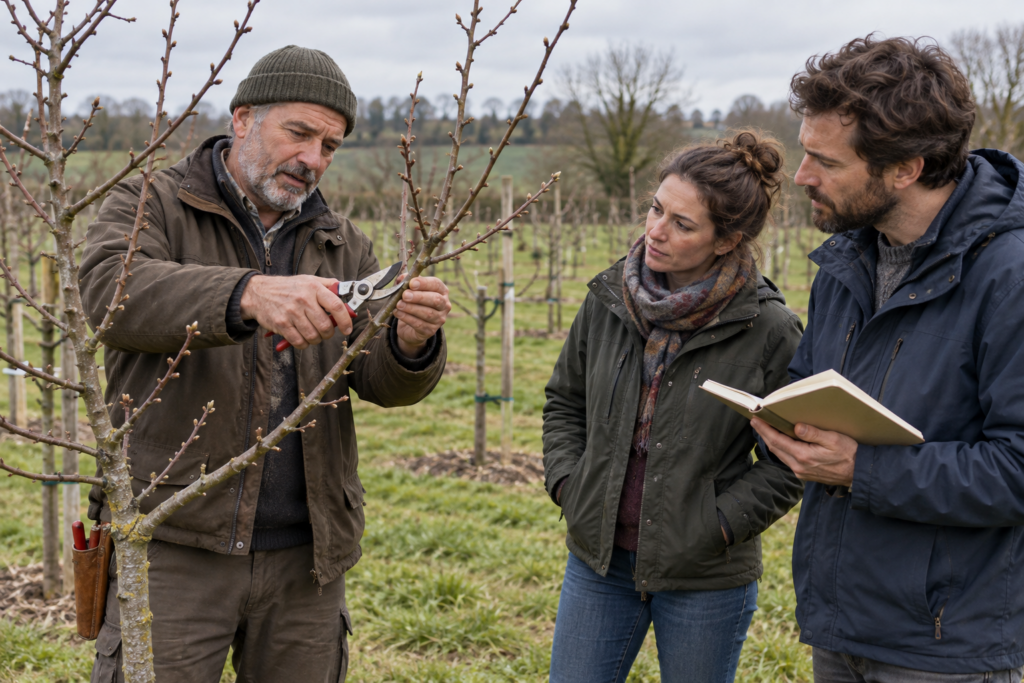
Vegetable and fruit production. Planting calendars, variety selection, crop rotation, pruning fruit trees and bushes, and common production problems.
Ornamentals, trees and shrubs. Selection, planting technique, pruning principles, and the correct diagnosis of common landscape failures, most of which turn out to be planting depth, watering, or site selection.
Lawns and turf management. Grass species, mowing height, thatch, and reducing inputs.
Weed science, water management, and composting. Weed identification and control, irrigation efficiency, drought-tolerant planting, and composting and soil building.
Native plants, pollinators and sustainable landscaping. A growing area in most programs, covering habitat, invasive species, and environmentally sound practice.
Diagnostics and client interaction. How to take a proper plant problem enquiry: asking the right questions, examining samples, using keys and references, and knowing when to refer to a specialist rather than guess.
Many programs also offer advanced specialisations after certification, in areas such as tree care, composting, native plants, water conservation, school gardening, seed saving, or bee keeping.
The Real Cost: Money, Hours, and Time
How much does it cost to become a Master Gardener?
Course fees vary by region but typically fall somewhere in the low hundreds of dollars, covering the training manual, materials, and instruction. Many programs offer reduced fees, payment plans, or scholarships. The cost is subsidised because the training is an exchange: cheap tuition in return for volunteer service.
Additional costs are usually modest. Expect possible expenses for a background check, an annual association membership, travel to classes and volunteer sites, and continuing education events. Some programs supply a branded shirt or badge at cost.
How many volunteer hours are required?
Most programs require an initial commitment of roughly 40 to 50 volunteer hours in the first year to complete certification, followed by a smaller annual requirement, commonly in the range of 20 to 30 hours, plus around 10 hours of continuing education to stay active. Exact figures vary by state and county.
The total time investment is bigger than the fee suggests, and it’s worth doing the arithmetic before you apply. The course itself typically runs 40 to 70 hours of instruction spread over two to four months, often as a weekly half-day or full-day session. Add homework and reading. Then add the first year’s volunteer hours on top of that. Realistically, the first year asks for something in the region of 100 hours of your life.
That’s the trade. It’s an unusually good deal for the education you receive, but it’s not a casual course, and programs are quite direct about not wanting people who intend to take the training and disappear.
What the volunteer work involves
Volunteer hours are logged against approved activities, not general gardening. Typical roles include:
Staffing a gardening helpline or answering email enquiries. Running plant diagnostic clinics at farmers markets, libraries, and garden centres. Maintaining demonstration and teaching gardens. Working with school gardens and youth programs. Giving talks to community groups. Supporting community gardens and food bank growing projects. Writing for extension newsletters or local media. Seed libraries, plant sales, and soil testing events. Administrative and coordination work for the local association.
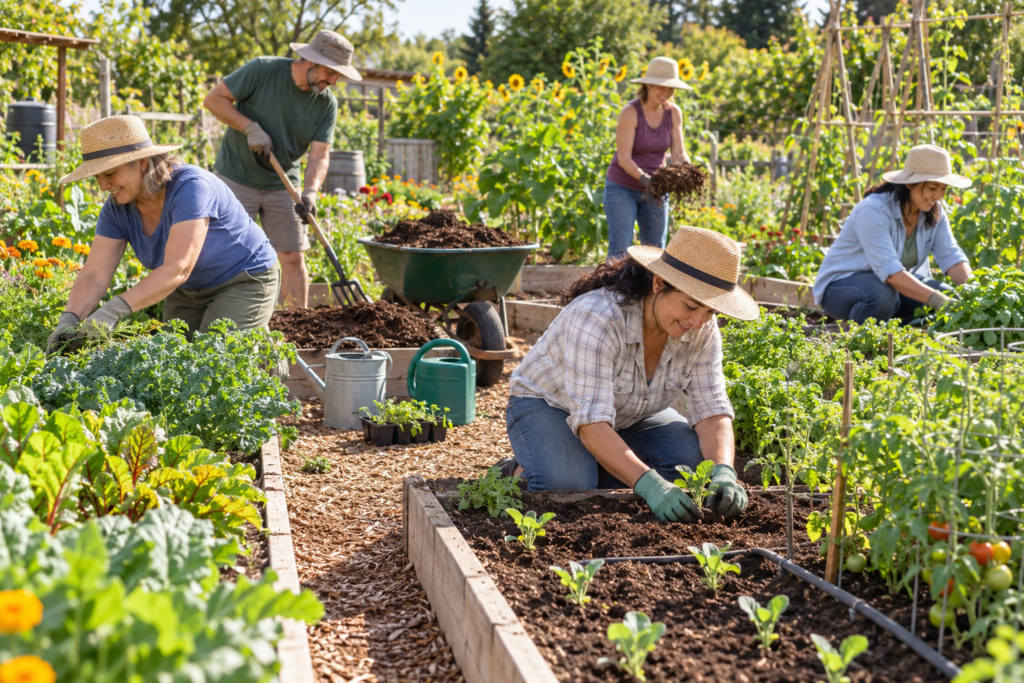
Most programs are flexible about which activities you choose, which means you can lean toward whatever suits you, whether that’s teaching, hands-on growing, diagnostics, or organising. Working in your own garden does not count, which catches some people out.
Is It Worth It, and What Are the Alternatives?
Is a Master Gardener certification worth it?
It’s worth it if you want structured horticultural science, a local network of experienced gardeners, and genuinely enjoy volunteering. It’s not worth it if you mainly want a credential, a career route, or information alone, since extension services publish most of the same material free and the volunteer obligation is substantial.
The strongest arguments in favour are the depth of the training relative to its cost, the quality of instruction from university faculty and specialists, the access to diagnostic resources and soil labs, and the community. That last point is underrated. Master Gardener associations are full of people who have gardened in your exact conditions for decades, and the informal knowledge exchange often outlasts the formal curriculum.
The honest arguments against are the time commitment, the fact that the volunteer work is a genuine obligation rather than an option, and that the credential carries little professional weight outside the program itself. People occasionally enrol imagining it’s a horticulture qualification and are disappointed to learn it doesn’t function as one.
Can you make money as a Master Gardener?
Not through the title itself. Master Gardener certification is a volunteer credential and most programs restrict using it commercially or in advertising. The training is genuinely useful if you later work in horticulture, but professional work requires separate qualifications, licences, and insurance depending on the role and jurisdiction.
If professional practice is the goal, look at horticulture certificates and diplomas from agricultural colleges and horticultural institutions, arboriculture certification for tree work, landscape design qualifications, pesticide applicator licensing where required, and nursery or grounds apprenticeships. Several of these can be studied alongside or after Master Gardener training, and many Master Gardeners do exactly that.
Alternatives if the volunteer commitment doesn’t fit
Extension publications and courses without certification. The same research-based material the program teaches from is largely published free. If you want the knowledge rather than the credential, this route costs nothing.
Horticultural society courses. Structured certificate and diploma programs with assessment, no volunteer requirement, and recognised standing in some countries.
University MOOCs and continuing education. Botany, soil science, plant pathology, and sustainable agriculture courses from actual universities, often free to audit.
Botanical garden and arboretum classes. Practical, local, and frequently taught by working horticulturists.
Volunteering without the course. Community gardens, botanical gardens, park friends groups, and conservation projects all take volunteers, and you learn a great deal alongside experienced people without a formal commitment.
Junior and youth programs. Some extension services run Junior Master Gardener programs for children and school groups, which are separate from adult certification and worth knowing about if you have children or teach.
Frequently Asked Questions
How long does it take to become a Master Gardener?
The classroom training typically runs two to four months, often as one session per week totalling roughly 40 to 70 hours. Full certification usually comes after completing the first year’s volunteer hours, so most people are certified around nine to twelve months after starting. Programs that run online or in intensive formats can be quicker.
Do Master Gardeners get paid?
No. The role is explicitly voluntary, and the reduced course fee reflects that exchange. Some programs reimburse expenses such as mileage for approved activities, but there is no salary or stipend. People who want paid horticultural work generally pursue separate professional qualifications alongside or instead of the program.
Can I take Master Gardener training online?
In many regions, yes. A large number of extension services now offer hybrid or fully online training, with recorded or live lectures supplemented by in-person field days and practical sessions. Volunteer hours usually still need to be completed locally and in person. Availability varies by state and county, so check with your local coordinator.
What happens if I don’t complete my volunteer hours?
Most programs move you to an inactive, lapsed, or trainee status rather than penalising you further. You generally keep the education but lose the right to use the active title and to represent the extension service. Many programs allow reinstatement by completing the outstanding hours or, after a long gap, retaking parts of the training. Coordinators are usually understanding about illness, caregiving, and work changes if you tell them early.
Is there a national Master Gardener certification?
No single national certification exists. Programs are administered independently by state land-grant universities in the US and by provincial associations in Canada, each with its own curriculum, fees, and requirements. There is some coordination and shared standards between programs, but certification is granted locally and transferring between states usually requires contacting the new program to arrange it.
Can I become a Master Gardener if I’m a complete beginner?
Yes, though it may be harder going. No experience is formally required and beginners do complete the program successfully. That said, the material is scientific and moves quickly, and students with a few seasons of hands-on growing behind them tend to absorb it more easily because they have something to attach it to. A year or two of practical gardening first is a reasonable preparation.
Do I have to live in the county where I train?
Usually yes, or at least in the region the program serves, since volunteer service is delivered locally. Some programs accept applicants from neighbouring counties without their own cohort, and online training has made this more flexible in places. If you move after certifying, contact the program in your new area about transferring your status.
What’s the difference between a Master Gardener and a horticulturist?
A horticulturist holds a formal academic or professional qualification in plant science and typically works in the field for a living, in roles such as nursery production, public garden management, research, or landscape design. A Master Gardener is a trained volunteer with a condensed grounding in the same subjects, certified to deliver research-based advice to the public rather than to practise professionally.
Keep Learning
For more beginner help, see How to Start a Garden: The Complete Beginner’s Guide, How to Start a Vegetable Garden: Step-by-Step Guide for Beginners, and Greenhouse Gardening Tips for Beginners: Your First-Year Guide.