Native Plant Gardening: Why and How to Grow Native Plants
Plant a tray of bright bedding annuals and you’ll get color for the summer. Plant a patch of native milkweed and something different happens: within weeks, a monarch butterfly arrives to lay eggs, striped caterpillars start munching the leaves, and you realize your garden has become part of something much larger than a flower bed….
Plant a tray of bright bedding annuals and you’ll get color for the summer. Plant a patch of native milkweed and something different happens: within weeks, a monarch butterfly arrives to lay eggs, striped caterpillars start munching the leaves, and you realize your garden has become part of something much larger than a flower bed.
That’s the heart of native plant gardening. Native plants evolved alongside the insects, birds, and other wildlife of a particular region, and those relationships run deep. Many native insects can only feed on the plants they evolved with, and many birds depend on those insects to raise their young. When a yard is filled with plants from other continents, much of that food web quietly disappears.
Growing natives doesn’t mean giving up a beautiful, well-kept garden or tearing out every plant you already love. It means choosing plants that fit your local climate and soil, support local wildlife, and often need less water, fertilizer, and fuss once established. This guide explains what native plants are, why they matter, how to choose the right ones, which are easiest to start with, how to plant them, and how to care for a native garden so it looks good and works hard for wildlife.
What Native Plants Are (and What They Aren’t)
What Counts as a Native Plant?
A native plant is a species that occurs naturally in a particular region and evolved there over thousands of years, rather than being introduced by people. In North America, native usually means a plant present before European settlement. Native status is regional: a plant native to the Southeast may not be native to New England or the Pacific Northwest.
Because of this, the most useful way to think about native plants is by ecoregion, an area defined by its climate, soils, landforms, and natural plant communities, rather than by state or country boundaries. A plant native to your ecoregion is adapted to its rainfall, winter temperatures, summer heat, and soils, and has long-standing relationships with the local wildlife.
Native, Non-Native, and Invasive
It helps to distinguish three groups:
- Native plants occur naturally in your region.
- Non-native plants (also called exotic or introduced plants) come from other regions or continents. Many, such as most vegetables, herbs, and familiar ornamentals, are harmless and stay where they’re planted.
- Invasive plants are non-native species that spread aggressively into natural areas, crowding out native plants and disrupting ecosystems. In many parts of North America, examples include Japanese barberry, burning bush, Callery pear, English ivy, Japanese honeysuckle, and purple loosestrife. Which plants are considered invasive varies by region.
Some native plants are vigorous spreaders in garden settings, but that’s different from being invasive. A native that spreads quickly fills its natural role in the landscape; an invasive species displaces native plant communities.
What About Cultivars?
Many nurseries sell cultivars of native plants, sometimes called “nativars.” These are selected or bred for traits such as compact size, different flower colors, double flowers, or unusual leaf color. Trials at public gardens and universities suggest the wildlife value of cultivars varies. Some perform as well as the wild species, while others, particularly those with dramatically changed flower forms or leaf colors, may attract fewer pollinators or be less suitable as food for caterpillars.
Where possible, choose the straight species or cultivars that look similar to the wild plant. Plants grown from locally collected seed, known as local ecotypes, are often the best-adapted choice of all.
Why Grow Native Plants
Supporting the Food Web
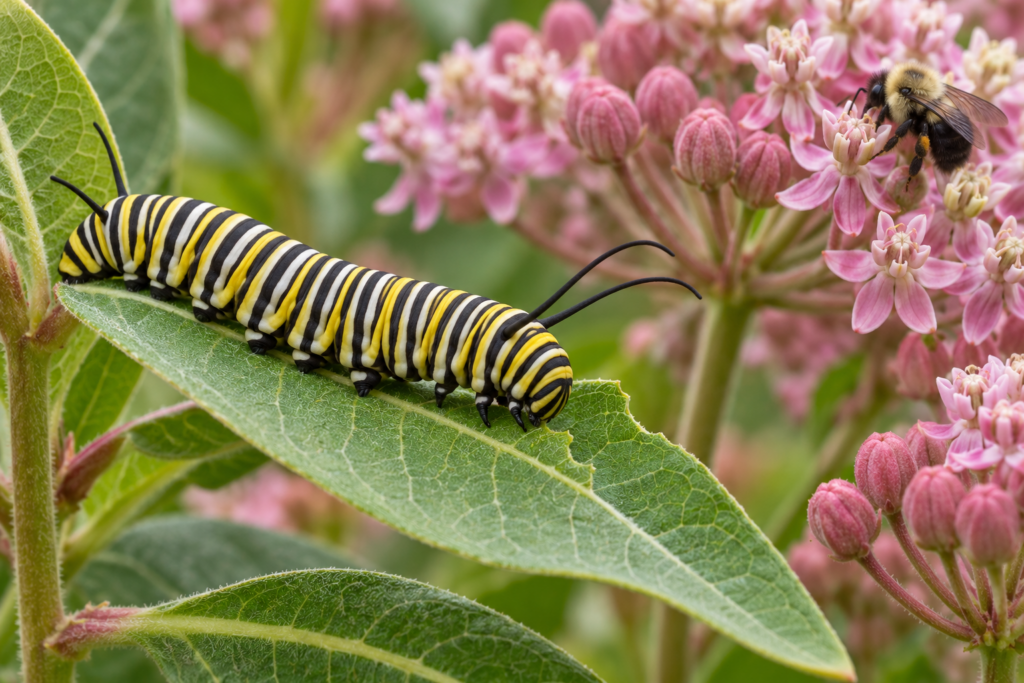
The strongest argument for native plants is their role in supporting wildlife. Many plant-eating insects, especially caterpillars, are specialists, meaning they can only eat certain plants they evolved with. When those plants are missing, the insects disappear too.
Those insects matter far beyond themselves. Most songbirds feed their nestlings almost entirely on insects, especially soft, protein-rich caterpillars, even species that eat seeds as adults. A yard filled with native plants that support caterpillars can feed far more nesting birds than one filled with non-native ornamentals that few insects can eat.
The most famous example is the monarch butterfly, whose caterpillars can only feed on milkweed. Without milkweed, monarchs cannot reproduce.
Keystone Plants
Some native plants support far more wildlife than others. These are sometimes called keystone plants. In much of North America, native oaks support a remarkable number of caterpillar species, as do native cherries, willows, and birches. Among perennials, goldenrods, asters, and native sunflowers are especially valuable for both insects and birds. Including even a few keystone plants can dramatically increase the wildlife value of a garden.
Pollinators
Native bees, butterflies, moths, flies, and beetles all pollinate flowers. Many native bees are generalists, visiting a wide range of flowers, but some are specialists that collect pollen only from particular plant groups. Native plants provide both nectar and pollen these pollinators evolved to use, along with nesting materials and larval food.
Are Native Plants Really Better for Pollinators?
Native plants aren’t the only plants pollinators visit; many non-native flowers provide nectar and pollen too. The difference is that natives also support specialist pollinators and serve as food for caterpillars and other insect larvae, which non-native plants often can’t. For the greatest benefit to pollinators and wildlife, a garden built mainly around native plants is far more effective.
Lower Maintenance Once Established
Native plants suited to their site are adapted to local rainfall, temperatures, and soils. Once established, many need little or no supplemental watering in normal years, no fertilizer, and no pesticides. This doesn’t mean no maintenance at all, but the routine work is often lighter than for many traditional garden plants.
Healthier Soil and Water
Many native perennials and grasses, particularly those from prairies and meadows, develop deep, extensive root systems. These roots help rainwater soak into the ground, reduce runoff and erosion, and build soil organic matter over time. Replacing part of a lawn with native plantings can reduce the need for watering, mowing, and fertilizing.
Resilience and Sense of Place
Gardens built from regional native plants tend to cope well with local weather extremes, and they give a garden a sense of belonging to its landscape. A prairie garden in the Midwest, a woodland garden in the East, or a drought-tolerant chaparral garden in California each reflect the character of their region.
How to Choose Native Plants for Your Garden
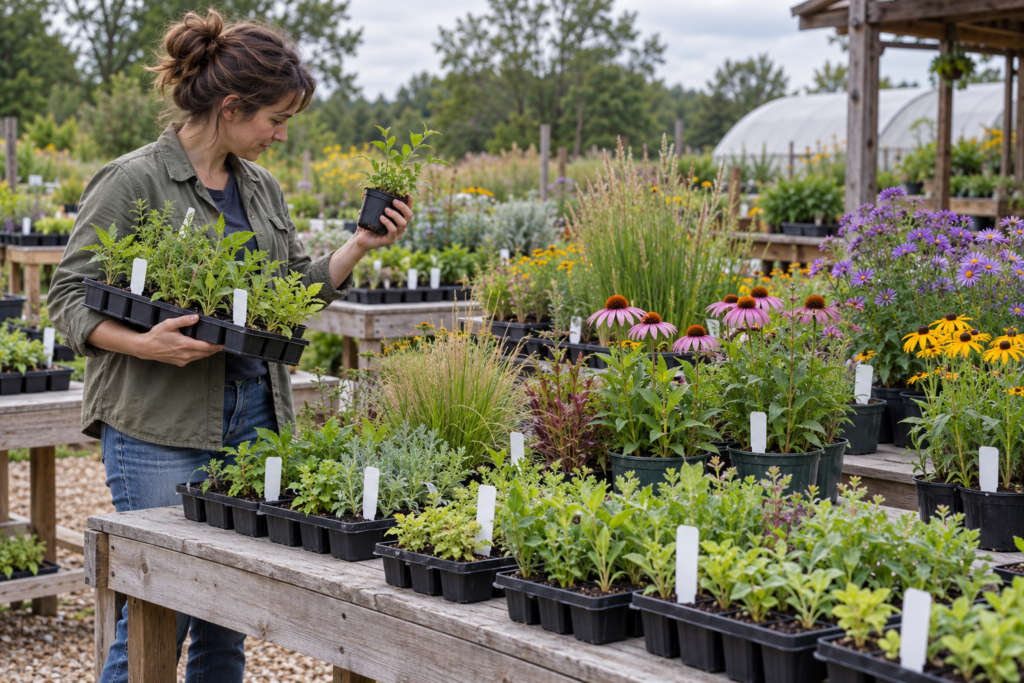
Successful native gardens start with matching plants to both your region and your specific site.
Learn What’s Native to Your Area
Start by identifying your ecoregion and the plant communities that naturally occur there, such as prairie, woodland, wetland, or coastal scrub. State native plant societies, agricultural extension services, botanical gardens, and nature centers often publish lists of native plants suited to local conditions, along with guidance on which are best for gardens.
Visiting natural areas nearby is also helpful. Notice which plants grow together in sunny meadows, shaded woods, and wet areas, since similar combinations often work well in gardens.
Assess Your Site
“Right plant, right place” matters just as much with natives as with any other plants. Before choosing, check:
- Light: full sun (six or more hours of direct sun), part shade, or full shade.
- Soil type: sandy, loamy, or clay.
- Moisture: dry, average, or consistently moist or wet.
- Space: how tall and wide each plant will grow at maturity.
Not all natives are drought tolerant. A native plant from a wet meadow will struggle in dry, sandy soil, while a dry prairie plant may rot in heavy, wet ground.
Plan for Season-Long Bloom
Pollinators need food from early spring to late autumn. Choose a mix of natives that flower at different times:
- Spring: early bloomers like native columbine, wild geranium, golden Alexanders, and spring-flowering shrubs such as serviceberry and redbud.
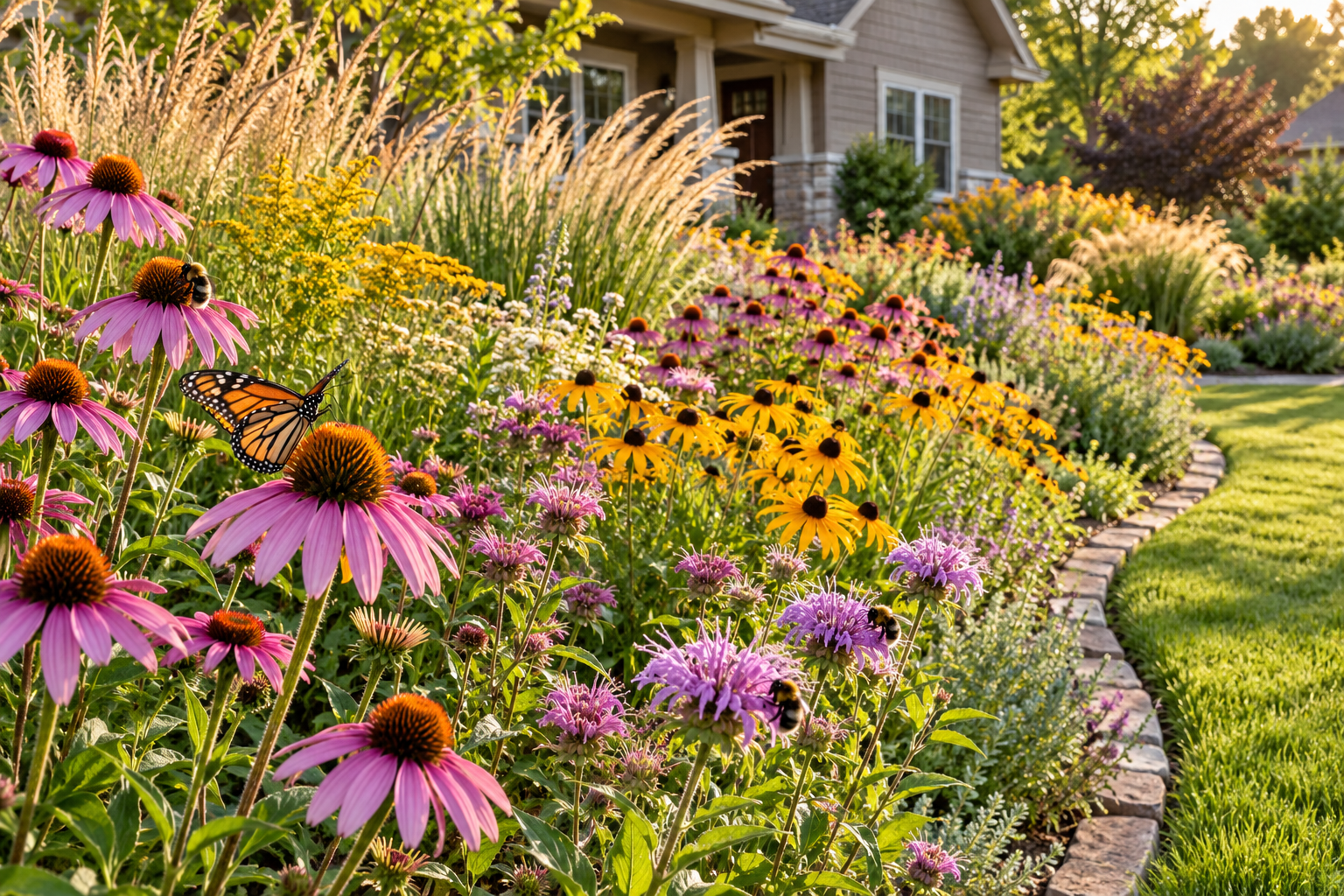
- Summer: coneflowers, black-eyed Susans, bee balm, milkweeds, blazing star, and penstemons.
- Late summer and autumn: goldenrods, asters, Joe-Pye weed, and native sunflowers, which are especially important for migrating butterflies and late-season bees.
Native grasses and plants with persistent seed heads add structure and food through winter.
Where Can I Buy Native Plants?
Buy native plants from specialist native plant nurseries, native plant society sales, nature center and botanical garden plant sales, and conservation district sales. Many general garden centers also stock natives, though selection varies. Choose nursery-propagated plants, ideally grown from regional seed, and ask whether plants have been treated with systemic insecticides, which can harm pollinators.
Plugs, Containers, or Seed?
- Plugs are small, young plants grown in narrow cells. They’re inexpensive, establish quickly, and are ideal for planting larger areas.
- Container plants in larger pots give more immediate impact and suit smaller gardens and focal points.
- Seed is the most economical way to establish large areas such as meadows, though it takes longer to fill in and requires careful site preparation.
Best Native Plants to Start With
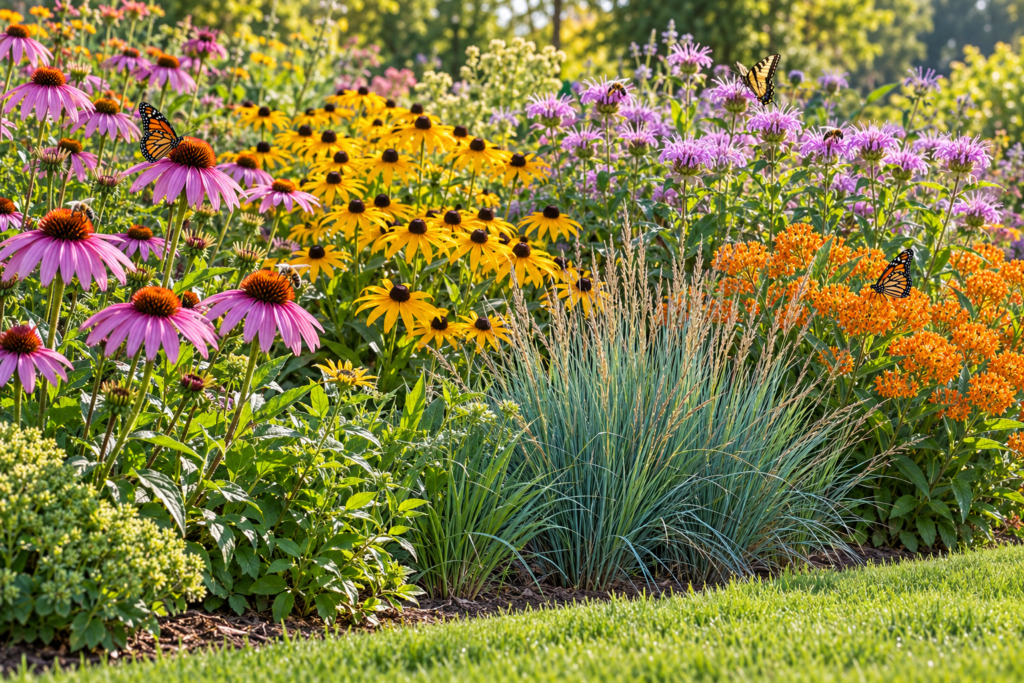
The plants below are widely grown and well suited to gardens. Many are native to large parts of central and eastern North America; always check which are native to your own region before planting.
What Are the Easiest Native Plants for Beginners?
Some of the easiest native plants for beginners in much of North America are purple coneflower, black-eyed Susan, bee balm, butterfly weed, New England aster, goldenrod, little bluestem, and switchgrass. They establish readily, tolerate a range of conditions, bloom reliably, and attract pollinators. Native shrubs such as serviceberry and ninebark are also forgiving starter choices.
Native Perennials for Sun
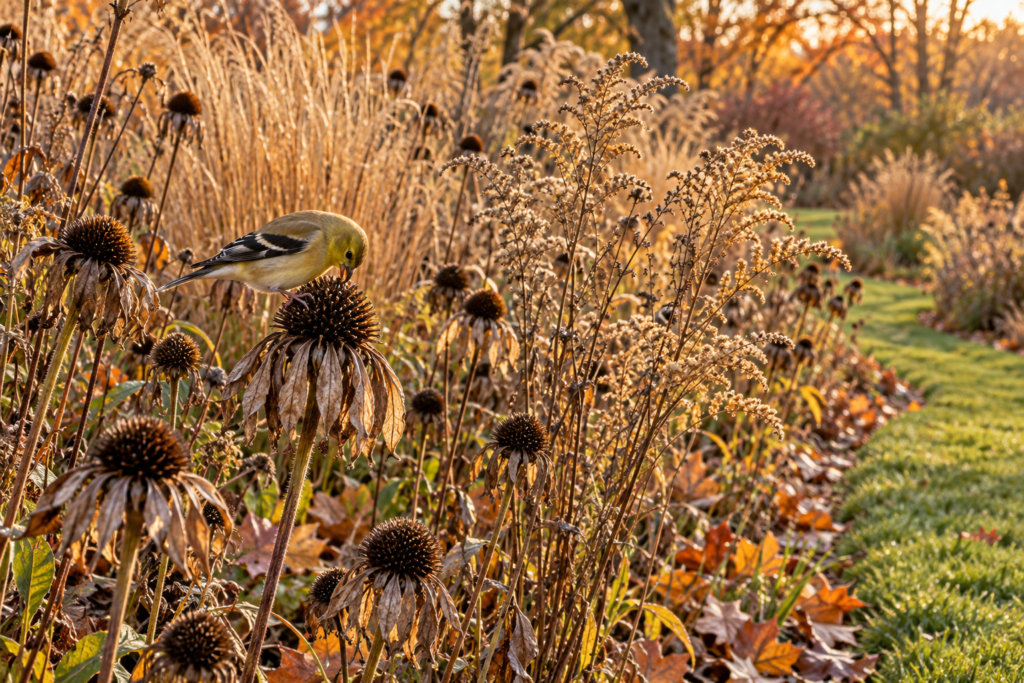
- Purple coneflower: large pink-purple daisies loved by bees and butterflies, with seed heads that feed goldfinches in autumn.
- Black-eyed Susan: cheerful golden flowers through summer, tough and adaptable.
- Butterfly weed: bright orange flowers and a host plant for monarch caterpillars; prefers dry, well-drained soil.
- Swamp milkweed: pink flowers and another important monarch host plant, suited to moist soil.
- Bee balm (wild bergamot): lavender flowers favored by bees and hummingbirds.
- Blazing star (liatris): tall purple spikes that attract butterflies.
- Goldenrod: late-season golden flowers that feed a huge number of insects. Choose clump-forming species for small gardens.
- New England aster: purple autumn flowers vital to late-season pollinators and migrating monarchs.
- Coreopsis: long-blooming yellow flowers for sunny, dry spots.
- Mountain mint: silvery foliage and small flowers that attract an exceptional variety of pollinators.
Native Plants for Shade
- Wild geranium: soft pink-lavender spring flowers.
- Foamflower: frothy white spring blooms and attractive foliage.
- Wild columbine: red and yellow flowers favored by hummingbirds.
- Woodland phlox: fragrant spring flowers in blue to lavender.
- Native ferns: such as Christmas fern and ostrich fern for texture.
- Native sedges: grass-like plants that work well as groundcovers in shade.
Native Grasses
- Little bluestem: blue-green summer foliage that turns copper-red in autumn.
- Switchgrass: upright grass with airy seed heads that provides cover for wildlife.
- Prairie dropseed: fine-textured mounds with lightly fragrant late-summer flowers.
Native Shrubs
- Serviceberry: white spring flowers, edible summer berries loved by birds, and colorful autumn leaves.
- Arrowwood viburnum: white flowers and blue berries for birds.
- Winterberry holly: bright red berries that persist into winter. Female plants need a nearby male plant to produce berries.
- Ninebark: tough, adaptable shrub with white flowers and peeling bark.
- Spicebush: fragrant shrub and host plant for spicebush swallowtail caterpillars.
- Elderberry: clusters of white flowers and dark berries enjoyed by birds.
Native Trees
- Oaks: among the most valuable trees for wildlife.
- Eastern redbud: pink spring flowers on bare branches.
- Flowering dogwood: white spring bracts and red autumn berries.
- Red maple: brilliant autumn color and early spring flowers for bees.
- River birch: peeling bark and tolerance of wet soil.
Western and Southern Gardens
In the western United States, natives such as California poppy, ceanothus, manzanita, native salvias, penstemons, and buckwheats suit dry summers and well-drained soils. In the Southeast, natives such as coral honeysuckle, beautyberry, Stokes’ aster, and native azaleas thrive. In other parts of the world, the same principles apply: seek out plants native to your region and its natural plant communities.
Planting and Establishing a Native Garden
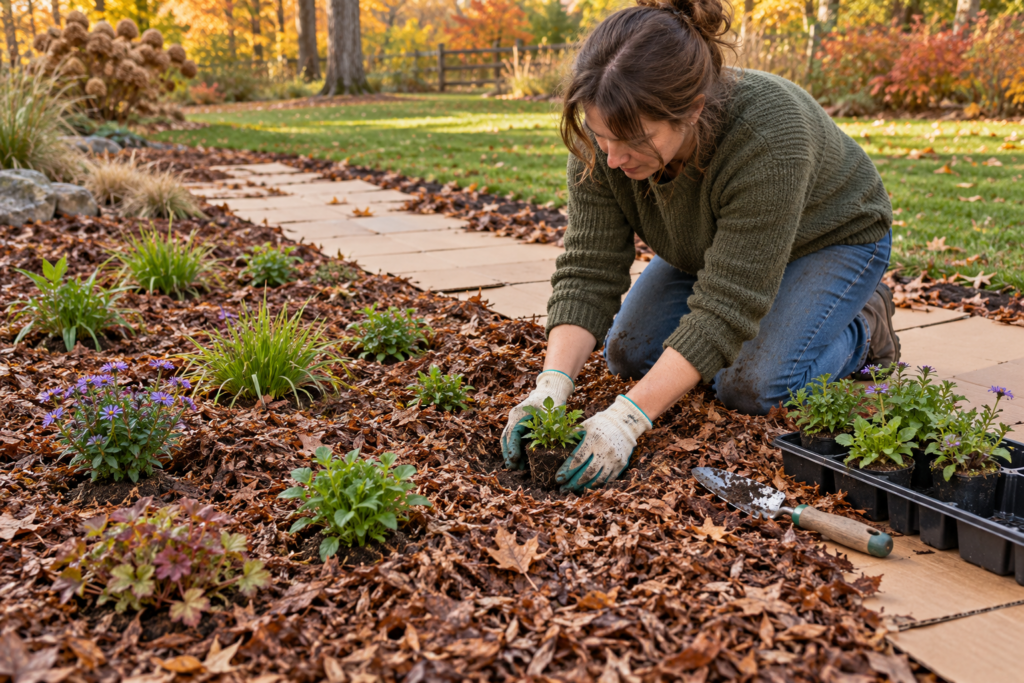
Prepare the Site
Removing existing lawn or weeds is the most important step in establishing a native planting.
- Sheet mulching: cover the area with plain cardboard, overlapping the edges, and top it with several inches of mulch. Over a few months, the grass and weeds beneath die and the cardboard breaks down.
- Solarization: cover moist ground with clear plastic during the hottest part of summer for several weeks to heat the soil and kill vegetation and many weed seeds.
- Removing sod: cut out turf with a spade or sod cutter for faster results.
Avoid heavy tilling, which brings buried weed seeds to the surface.
Go Easy on Soil Amendments
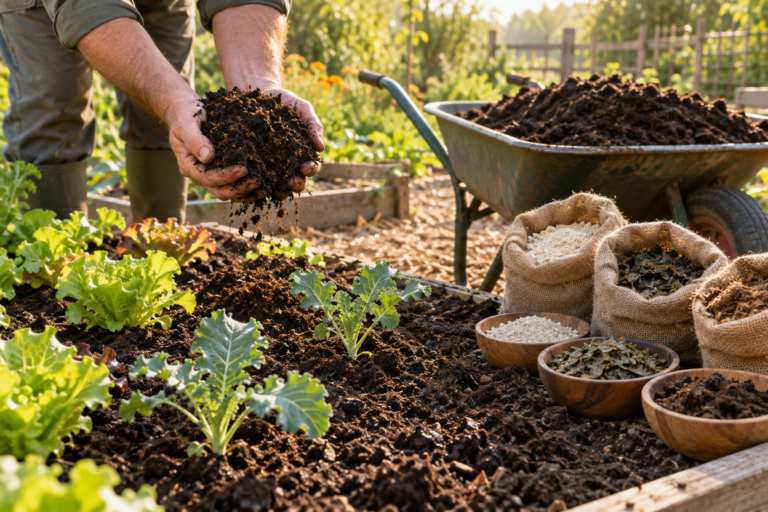
Most native plants are adapted to the existing soils of their region and don’t need heavy amendments. In fact, very rich soil can make many prairie natives grow tall and floppy. Unless your soil is severely compacted or degraded, add little more than a light layer of compost, and skip fertilizer.
When to Plant
Autumn and spring are the best times to plant native perennials, shrubs, and trees. Autumn planting gives roots time to establish in cool, moist soil before summer heat. Spring planting works well too, though plants need more attention to watering during their first summer.
Planting Plugs and Potted Plants
Plant plugs and small perennials fairly close together, often about 12–18 inches (30–45 cm) apart, so they knit together quickly and leave less room for weeds. Group plants in drifts or clusters of the same species rather than dotting single plants across the bed. Water thoroughly at planting.
Sowing Native Seed
Many native seeds need a period of cold, moist conditions before they’ll germinate, a process called cold stratification. Sowing seed outdoors in late autumn or early winter allows nature to provide this. Seeds sown in spring may need to be stratified first in the refrigerator in damp sand or paper towels, following the seed supplier’s guidance.
For meadows and larger seeded areas, sow onto well-prepared, weed-free ground, press the seed into contact with the soil, and avoid burying small seeds too deeply.
Be Patient
Native perennials often focus on growing roots before putting on much top growth. Gardeners describe this with a simple saying: “first year they sleep, second year they creep, third year they leap.” Don’t be discouraged if a planting looks thin in its first season.
Watering and Weeding While Plants Establish
Native plants still need regular watering during their first growing season, especially in dry spells. Water deeply about once a week if rain is lacking, and gradually reduce watering as plants establish. Weeding is most important in the first two years, before plants fill in and shade out competing weeds.
Mulch Thoughtfully
A light mulch of shredded leaves or shredded bark helps suppress weeds and retain moisture in the first years. Most native bee species nest in the ground, so leave a few sunny patches of bare soil free of mulch to give them places to nest.
Caring for Native Plants and Designing for Wildlife
Leave the Leaves and Stems
Many insects, including butterfly and moth caterpillars, overwinter in fallen leaves, while native bees and other insects overwinter in hollow plant stems. Leave fallen leaves in beds where possible, and leave perennial stems and seed heads standing through winter. They also provide seeds for birds and add structure to the winter garden.
In spring, cut stems back once the weather is consistently mild, leaving stubs about 12–18 inches (30–45 cm) tall for stem-nesting bees. New growth quickly hides them.
Skip the Pesticides
Pesticides kill beneficial insects along with pests, undermining the point of a native garden. Expect to see some chewed leaves; that damage is a sign your garden is feeding caterpillars and other insects that birds rely on. Natural predators, including birds, wasps, and beetles, generally keep populations in balance.
Managing Vigorous Natives
Some natives spread quickly by roots or seed. Divide clumps every few years, pull unwanted seedlings in spring, and deadhead plants before they set seed if you want to limit spreading. Choosing clump-forming species helps in smaller gardens.
Designing a Native Garden That Looks Intentional
One of the most common worries about native gardens is that they’ll look messy or unkempt. Simple design cues signal that a planting is deliberate:
- Crisp edges along lawns and paths.
- Mown paths through larger meadow plantings.
- Massing plants in drifts or groups rather than scattering single plants.
- Structure from shrubs, small trees, fences, walls, or benches.
- Repeating plants across the garden for a cohesive look.
- Neat borders of low, tidy natives along the front of beds.
- A small sign identifying a pollinator or wildlife habitat garden.
Add Habitat Features
Wildlife needs more than food. Consider adding:
- Water: a shallow birdbath or small pond, cleaned regularly.
- Shelter: dense shrubs, brush piles, and evergreen plants.
- Nesting sites: bare ground for ground-nesting bees, hollow stems, and dead wood where safe.
- Leaf litter: for insects, amphibians, and ground-feeding birds.
Start Small
You don’t have to convert your whole yard at once. Start by adding native plants to existing beds, replacing a few non-native shrubs with natives, or converting a small section of lawn into a native bed. Each addition increases the wildlife value of your garden.
Common Native Gardening Mistakes
Assuming all natives are drought tolerant. Match plants to your site’s moisture, light, and soil.
Planting natives from a different region. Choose plants native to your own ecoregion.
Over-amending and fertilizing. Rich soil can make many natives floppy.
Expecting instant results. Natives often take two to three years to fill in.
Neglecting watering and weeding early on. First-year care makes all the difference.
Cleaning up too thoroughly. Leaving stems and leaves supports overwintering insects.
Using pesticides. They harm the wildlife a native garden is meant to support.
Buying plants treated with systemic insecticides. Ask nurseries before buying.
Every native plant you add, whether a single milkweed by the mailbox or a full meadow where a lawn used to be, gives local wildlife a little more of what it needs. Over time, a native garden becomes one of the most rewarding kinds of garden to grow: full of color, movement, birdsong, and the quiet satisfaction of a landscape that truly belongs where it is.
Frequently Asked Questions
Are native plants deer resistant?
Some native plants are less appealing to deer, but many are eaten readily, so native status alone doesn’t guarantee deer resistance. Natives with strong scents, fuzzy leaves, or tough foliage, such as bee balm, mountain mint, native grasses, ferns, and many asters and goldenrods, tend to be browsed less. Young plants of almost any species may need protection where deer are common.
Can I mix native and non-native plants?
Yes. Many gardeners combine native plants with well-behaved non-native ornamentals and vegetables. Even partly native gardens support far more wildlife than gardens without natives. Aim to include as many natives as practical, prioritize keystone plants, and avoid non-native species considered invasive in your region.
Will native plants attract more bugs and mosquitoes?
Native plants attract more insects, but the vast majority are harmless or beneficial, including pollinators, butterflies, and predators of garden pests. Mosquitoes breed in standing water, not on plants, so a native garden doesn’t increase mosquitoes. Empty saucers and containers regularly, and change birdbath water every few days to prevent breeding.
Can native plants grow in containers?
Yes. Many native perennials and grasses grow well in containers, including coneflowers, black-eyed Susans, butterfly weed, little bluestem, penstemons, and native sedges. Use large pots with good drainage and quality potting mix. Container roots are exposed to winter cold, so choose plants hardy to a colder zone than yours or move pots to a sheltered spot over winter.
Does goldenrod cause allergies?
Goldenrod is often blamed for late-summer hay fever, but it rarely causes allergies. Its pollen is heavy and sticky, carried by insects rather than wind. The real culprit is usually ragweed, which blooms at the same time, has inconspicuous green flowers, and releases large amounts of wind-blown pollen.
Can I dig up native plants from the wild?
No. Digging plants from the wild can damage natural populations, and it’s often illegal on public land and private property without permission. Some native species are protected. Buy nursery-propagated native plants or seeds from reputable sources instead, ideally grown from responsibly collected regional seed.
Can native plants grow in clay soil?
Many native plants grow well in clay soil, particularly those from prairies and meadows, where heavy soils are common. Coneflowers, bee balm, New England aster, switchgrass, blazing star, and many goldenrods tolerate clay. Choose plants suited to your soil’s moisture level, since some clay soils stay wet while others dry hard in summer.
Keep Learning
For more beginner help, see How to Start a Garden: The Complete Beginner’s Guide, How to Start a Vegetable Garden: Step-by-Step Guide for Beginners, and Plant Care Basics: A Beginner’s Guide to Keeping Plants Healthy and Thriving.