Container Gardening: How to Grow Healthy Plants in Pots
Some of the most productive gardens have no garden at all. A single sunny balcony can produce a summer’s worth of tomatoes, a front step can hold enough herbs to cook with every night, and a bare concrete patio can turn into a riot of color with a dozen well-planted pots. Container gardening makes all…
Some of the most productive gardens have no garden at all. A single sunny balcony can produce a summer’s worth of tomatoes, a front step can hold enough herbs to cook with every night, and a bare concrete patio can turn into a riot of color with a dozen well-planted pots. Container gardening makes all of that possible, whether you rent, have poor soil, or simply want plants closer to the kitchen door.
Growing in pots isn’t quite the same as growing in the ground, though. A container holds a small, fixed amount of soil, which means water, nutrients, and root space all run out faster. Temperatures swing more, roots can overheat or freeze, and the plant depends almost entirely on you for everything it needs. The upside is control: you choose the soil, the position, and the conditions, and you can move plants when those conditions change.
This guide covers everything that decides whether potted plants thrive or struggle: choosing containers, getting the potting mix right, watering and feeding properly, picking plants that suit pots, and caring for them through the seasons, including repotting and getting them safely through winter.
Choosing the Right Container
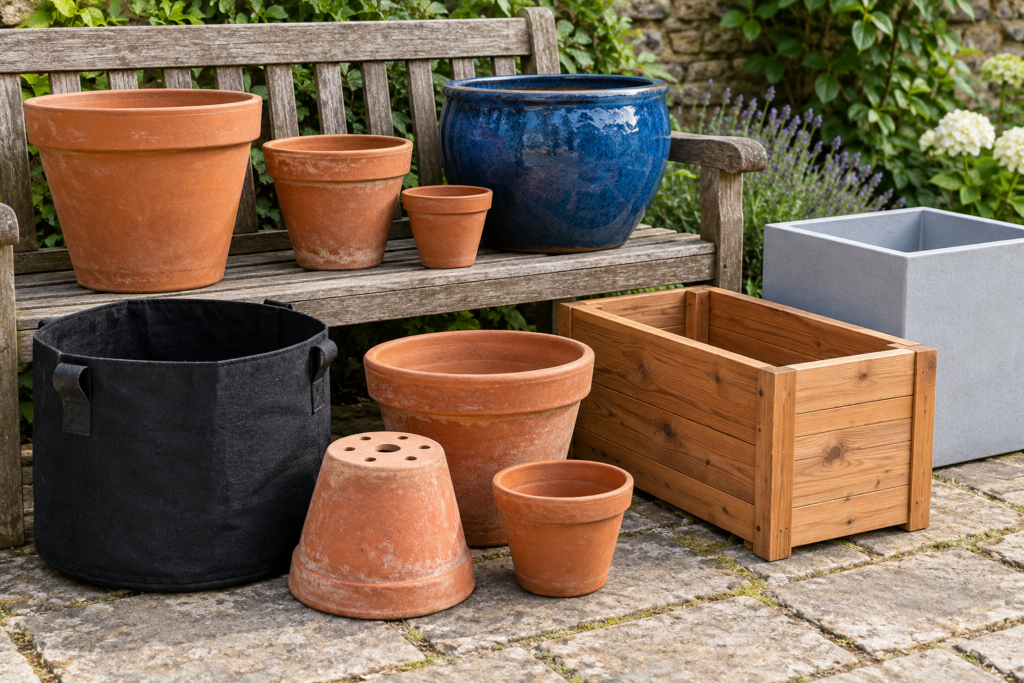
Almost anything that holds soil and lets water drain out can become a plant container. That flexibility is part of the fun, but a few rules separate containers that help plants from those that quietly hold them back.
Drainage holes are non-negotiable. Without an exit, water collects at the bottom of the pot, roots sit in it, and they rot. If you fall in love with a decorative pot that has no holes, either drill some (a masonry bit works for ceramic and terracotta, taken slowly with a little water to keep it cool) or use it as a cachepot: plant in a plain plastic pot with holes, then set it inside the decorative one on a few pebbles so it doesn’t sit in water.
Bigger is easier. Beginners often choose pots that are too small. A larger volume of potting mix holds more water, buffers temperature swings, and gives roots room to spread, so the plant is far more forgiving if you miss a watering. Small pots can dry out completely in a single hot afternoon.
What Size Pot Do I Need?
The right pot size depends on how large the plant grows and how deep its roots go. As a general guide, most herbs need pots at least 6–8 inches (15–20 cm) across, peppers need about 3–5 gallons (11–19 liters), and tomatoes need at least 5 gallons (19 liters). Compact fruit trees need 15 gallons (57 liters) or more.
A few more reference points help:
- Salad greens and radishes: shallow but wide containers around 6–8 inches (15–20 cm) deep, such as window boxes or troughs.
- Carrots and beets: at least 10–12 inches (25–30 cm) deep so roots can develop fully.
- Bush or patio tomatoes: 5 gallons (19 liters) minimum per plant.
- Tall, vining tomatoes: 10 gallons (38 liters) or larger, since they grow big and drink heavily.
- Potatoes: 10–15 gallon (38–57 liter) grow bags or tubs.
- Seasonal flower combinations: 12–16 inches (30–40 cm) across for a full display that doesn’t dry out daily.
- Shrubs, dwarf fruit trees, and small trees: start around 15–20 gallons (57–76 liters) and move up as they grow.
Comparing Container Materials
Terracotta (unglazed clay) looks classic and lets air and moisture pass through its walls, which suits plants that dislike wet roots, such as succulents, rosemary, lavender, and thyme. That same breathability means it dries out quickly in summer heat. Terracotta is heavy and can crack when wet soil freezes inside it.
Glazed ceramic holds moisture much better than bare terracotta and comes in endless colors. It’s heavy, which helps in windy spots, but many glazed pots aren’t fully frost-proof.
Plastic and resin pots are light, inexpensive, and hold moisture well, which makes them excellent for thirsty plants and for balconies where weight matters. Cheaper plastic can turn brittle after a few years in strong sun.
Fabric grow bags are breathable and allow air to prune roots at the edges, which encourages a dense, fibrous root system rather than roots circling the pot. They’re light and fold flat for storage, but they dry out fast in hot weather.
Wood planters, especially cedar, insulate roots well against heat and cold. They eventually rot, though rot-resistant woods last many years.
Metal containers look striking but heat up quickly in direct sun, which can cook roots near the edges. They work best in partial shade or when lined, or when used as a cachepot around a plastic pot.
Fiberglass and lightweight concrete blends mimic stone or clay at a fraction of the weight and generally handle frost well.
Color matters too. Dark pots absorb far more heat than pale ones, which is useful in cool climates but can stress roots in hot, sunny spots.
Self-watering containers have a reservoir in the base that wicks water up into the potting mix. They’re genuinely useful for thirsty crops like tomatoes and for anyone who travels or forgets to water, though plants that prefer to dry out between waterings don’t enjoy them.
Do You Need to Put Rocks in the Bottom of a Pot?
No. Adding gravel, stones, or broken pottery to the bottom of a container doesn’t improve drainage. Water doesn’t move easily from fine potting mix into a coarse layer below until the mix above is saturated, so the wet zone actually sits higher in the pot, leaving less healthy space for roots. Fill the whole pot with potting mix instead.
If you’re worried about soil washing out of the drainage hole, cover it with a small square of mesh, a piece of window screen, or a coffee filter. These keep the mix in while letting water flow out freely. The one time to add a layer of stones is when you need weight to stop a tall plant in a light pot from blowing over, and even then, placing a heavy object around the pot’s base outside is a better solution.
Potting Mix: The Most Important Ingredient
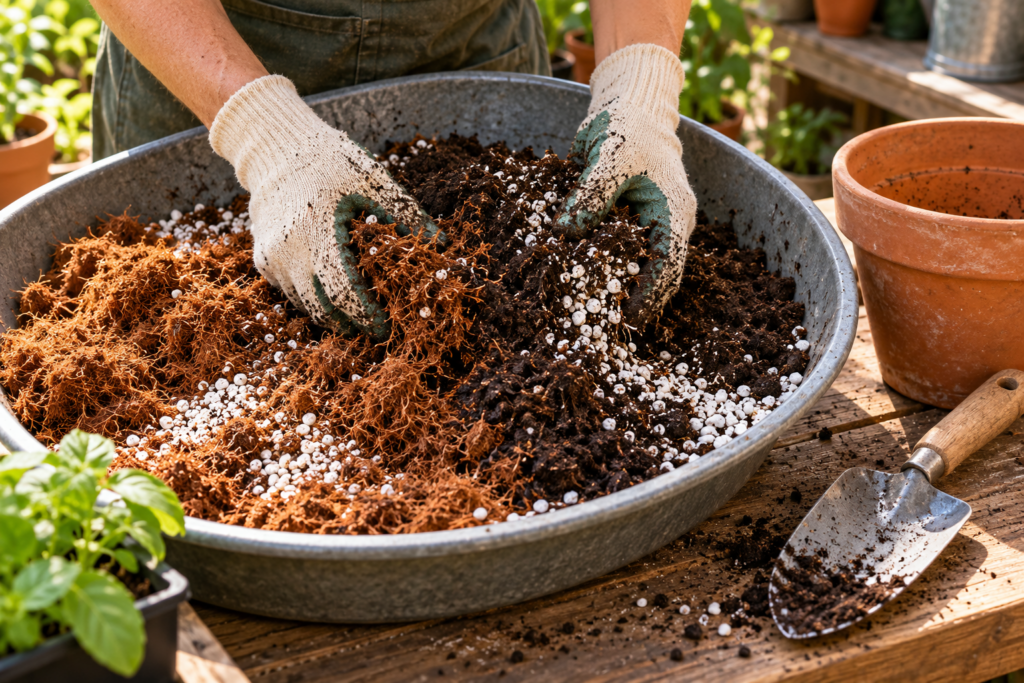
If there’s one decision that makes or breaks container gardening, it’s the growing medium. Roots in a pot need a mix that holds moisture yet drains freely, stays loose enough for air to reach them, and doesn’t collapse into a dense block over the season.
Ordinary garden soil fails at all of this in a pot. It compacts quickly, drains poorly in a confined space, can bring in weed seeds, pests, and diseases, and becomes heavy and airless once watered repeatedly. Even rich, beautiful garden soil behaves badly in a container.
It helps to understand the confusing labels on bags:
- Potting mix (sometimes called container mix) is a soilless blend designed for pots. This is what you want for almost all container plants.
- Potting soil is a loose term; some products are true potting mixes, others contain a proportion of real soil. Check the ingredients.
- Garden soil, topsoil, and raised bed mix are meant for the ground or raised beds, not pots.
- Compost on its own is too rich and too fine to use as a potting mix, though it’s a valuable ingredient in one.
What Goes Into a Good Potting Mix
Most quality potting mixes combine a few core ingredients:
- Peat moss or coconut coir forms the moisture-holding base. Coir is a renewable byproduct of coconut processing and has become a popular alternative to peat.
- Composted pine bark adds structure and long-lasting air spaces.
- Perlite, the white, lightweight granules, improves drainage and aeration.
- Vermiculite holds water and nutrients.
- Compost adds nutrients and beneficial microbes.
Specialty mixes exist for plants with specific needs. Cactus and succulent mixes are gritty and fast-draining. Orchid mixes are mostly chunky bark. Ericaceous (acidic) mixes suit blueberries, azaleas, camellias, and other acid-loving plants.
If you’re filling many containers, making your own mix saves money. A simple, dependable homemade blend is roughly equal parts coir or peat, compost, and perlite. For plants that need sharper drainage, such as herbs from the Mediterranean or succulents, increase the perlite or add coarse grit.
When filling a pot, leave about 1 inch (2.5 cm) of space between the top of the mix and the rim. This headspace holds water long enough for it to soak in rather than running straight off the surface.
Watering Plants in Pots
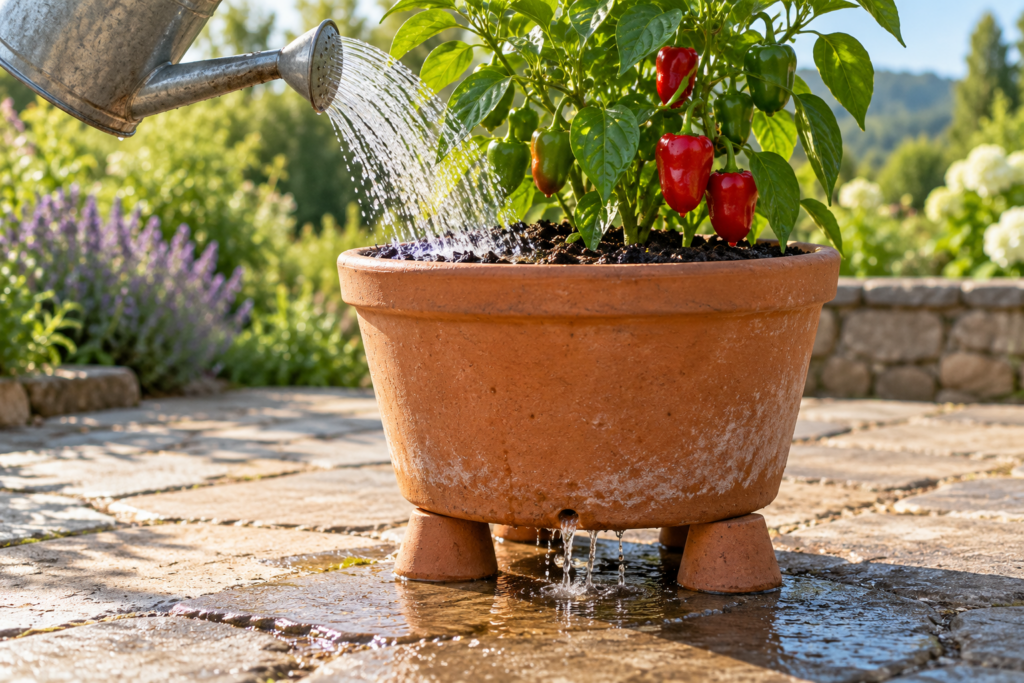
Watering is where most container plants succeed or fail, and the problem can run in both directions. Pots dry out far faster than garden beds, but overwatering, especially in cool weather or in containers that sit in saucers of water, rots roots just as surely.
The goal is to water thoroughly when the plant needs it, rather than little and often on a fixed schedule. Pour water slowly over the entire surface until it runs out of the drainage holes. This ensures the whole root ball is moistened and flushes out salts left behind by fertilizers. Then let the top layer dry before watering again.
Empty saucers about half an hour after watering. Pots left sitting in standing water stay waterlogged at the bottom, which is where the oldest and most important roots live.
How Often Should You Water Container Plants?
Water container plants whenever the top inch (2.5 cm) of potting mix feels dry, rather than on a fixed schedule. In hot summer weather, that often means daily for most pots and twice a day for small containers or hanging baskets. In spring and autumn, every few days may be enough, and in winter, much less.
How quickly a pot dries depends on its size, material, the plant’s size, sun, wind, and temperature. A small terracotta pot of herbs on a sunny, windy balcony may need water twice as often as a large glazed pot in dappled shade holding the same plant.
A few simple checks take the guesswork out:
- The finger test. Push a finger into the mix up to the first or second knuckle. If it’s dry at that depth, water.
- The lift test. A freshly watered pot feels noticeably heavy. Lift or tip smaller pots regularly and you’ll quickly learn to feel when they’re dry.
- Watching the plant. Slight wilting in the afternoon heat can be normal. Wilting in the cool of the morning means the plant is genuinely thirsty.
Rescuing a Pot That Has Dried Out Completely
Potting mixes based on peat can become water-repellent when they dry out completely. Water poured on top simply runs down the gap between the root ball and the pot and straight out of the bottom. If you see this happening, set the whole pot in a bucket or sink of water for 30 minutes or so until bubbles stop rising, then let it drain.
Watering Less Often
Several simple strategies reduce how often you need to water:
- Choose larger containers and group pots together, which creates a shared humid microclimate and shades each other’s sides.
- Add a layer of mulch, such as fine bark, gravel, or shredded leaves, over the surface of large pots.
- Move pots out of the harshest afternoon sun during heat waves.
- Use self-watering containers for thirsty crops.
- Install a simple drip irrigation kit with a battery-powered tap timer if you have many pots.
Water early in the morning where possible. Plants go into the heat of the day well hydrated, and foliage has time to dry, which reduces fungal disease.
Feeding Container Plants
Plants in pots rely entirely on you for nutrients. Every thorough watering washes some nutrients out through the drainage holes, and the limited volume of mix can only hold so much in the first place. Most bagged potting mixes contain enough fertilizer to support plants for their first several weeks, after which regular feeding becomes important.
There are two main approaches, and many gardeners combine them.
Slow-release fertilizer comes as granules or coated pellets that release nutrients gradually each time you water, typically over several months. Mixing it into the potting mix at planting time provides a steady baseline supply and reduces the risk of forgetting to feed.
Liquid fertilizer, diluted in a watering can, acts quickly and lets you adjust feeding as plants grow. During the main growing season, most container plants benefit from a liquid feed every one to two weeks.
Match the fertilizer to the plant:
- Leafy crops, foliage plants, and young plants respond well to a balanced fertilizer or one slightly higher in nitrogen.
- Flowering and fruiting plants, such as tomatoes, peppers, strawberries, and summer flowers, do better with a high-potassium (high-potash) feed once flowers appear. Liquid tomato feed works well for almost all of them.
- Acid-loving plants such as blueberries and camellias need a fertilizer formulated for ericaceous plants.
Always water a dry plant before feeding it, since fertilizer applied to parched roots can scorch them. More isn’t better: overfeeding causes soft, lush growth that attracts pests, can burn roots, and leaves a white crust of salts on the soil surface or around the pot rim. If you see that crust, flush the pot by watering heavily a few times in a row.
Pale, yellowing older leaves on an otherwise healthy plant often signal that it’s hungry, especially in pots that have gone a long time without feeding.
Choosing the Best Plants for Containers
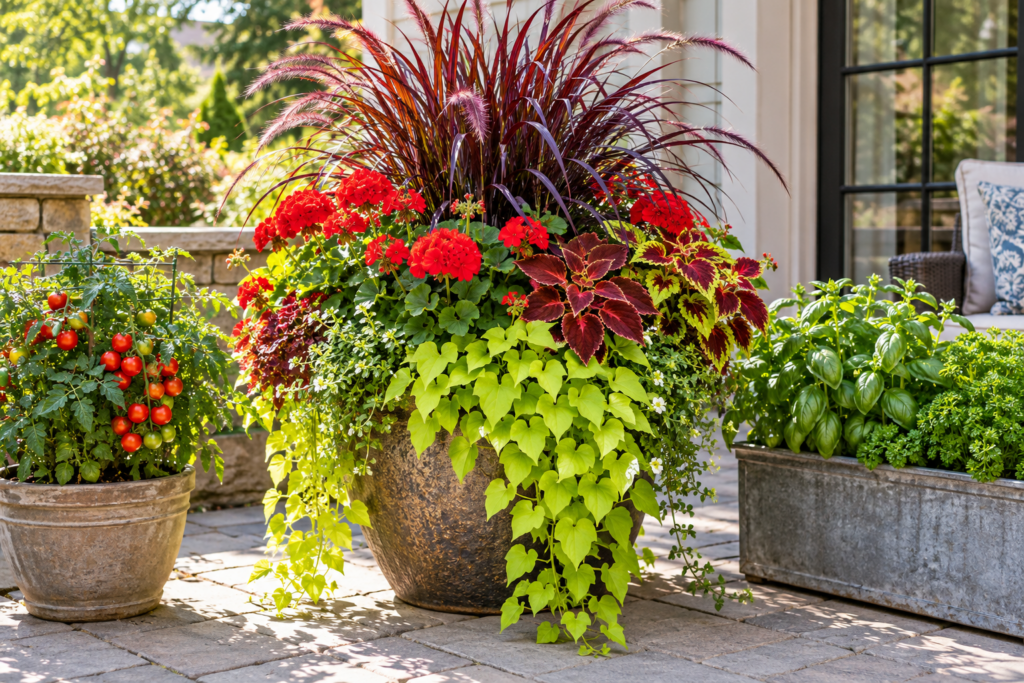
Nearly any plant can be grown in a pot for a while, but some adapt far better than others. The best choices are compact, relatively shallow-rooted, and bred or naturally suited to confined spaces.
Start by checking the light where your containers will sit. Six or more hours of direct sun suits most vegetables, fruit, Mediterranean herbs, and sun-loving flowers. Four to six hours works for leafy greens, parsley, mint, and many flowering plants. Shady spots with fewer than four hours of direct sun suit ferns, hostas, begonias, impatiens, and coleus.
What Are the Easiest Plants to Grow in Containers?
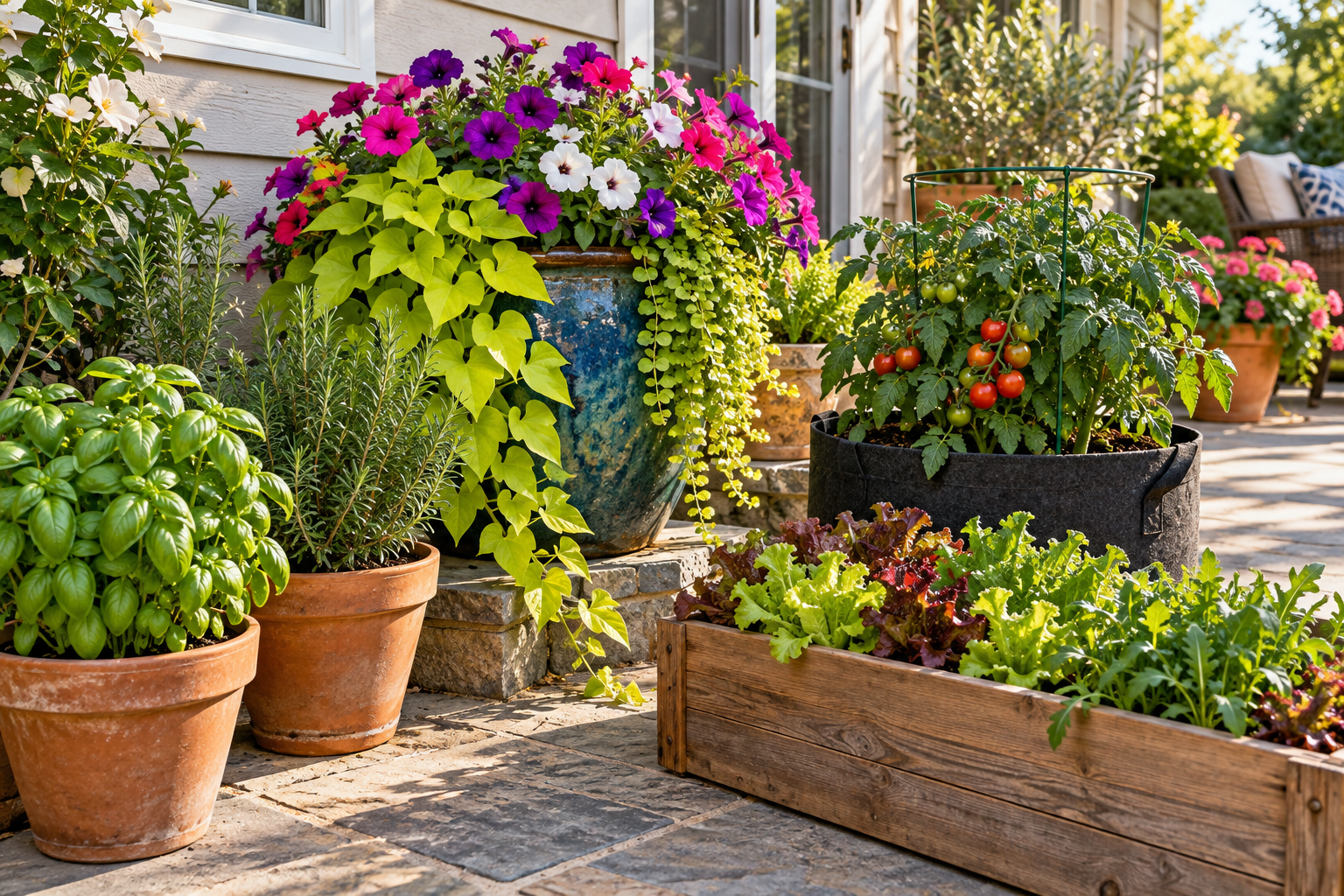
Herbs such as basil, parsley, chives, and mint, along with salad greens, cherry tomatoes, peppers, and strawberries, are among the easiest edibles to grow in pots. For flowers, geraniums (pelargoniums), marigolds, petunias, and calibrachoa are forgiving, long-flowering choices that tolerate the occasional missed watering and bloom all summer.
Vegetables, Herbs, and Fruit in Pots
Look for varieties with words like “patio,” “bush,” “compact,” “dwarf,” or “container” in their descriptions. Plant breeders have developed small versions of many crops specifically for pots.
- Tomatoes: bush (determinate) and dwarf cherry types are easiest in pots. Larger vining types need big containers and tall stakes or cages.
- Peppers and chilies: naturally compact and very productive in 3–5 gallon pots.
- Salad greens: lettuce, arugula, spinach, and Asian greens grow fast in shallow, wide containers. Harvest outer leaves and they’ll keep producing.
- Herbs: basil, parsley, chives, thyme, oregano, rosemary, and sage all thrive in pots. Grow mint in its own container, since it spreads aggressively and will crowd out anything it shares space with.
- Potatoes: grow well in large grow bags, and harvesting is as easy as tipping the bag out.
- Beans and peas: bush beans suit containers; climbing types need a trellis or obelisk inserted into the pot.
- Strawberries: excellent in pots, troughs, and hanging baskets, where fruit stays clean and off the ground.
- Blueberries: thrive in containers filled with acidic (ericaceous) potting mix, which is easier than changing garden soil.
- Dwarf citrus and fig trees: grow well in large pots and can be moved to shelter in climates too cold for them to overwinter outdoors.
Designing Attractive Flower Containers
A widely used approach for mixed ornamental containers is known as “thriller, filler, spiller”:
- Thriller: one tall, eye-catching plant in the center or back, such as an ornamental grass, canna, or upright fuchsia.
- Filler: mounding plants around it that fill out the middle, such as geraniums, begonias, salvia, or coleus.
- Spiller: trailing plants that cascade over the edge, such as sweet potato vine, trailing verbena, bacopa, or ivy.
The most important rule for any combination is to group plants with similar needs for sun and water. A drought-loving succulent paired with a thirsty fuchsia means one of them will always be unhappy.
Perennials, grasses, and small shrubs also make excellent long-term container plants. Heuchera, hostas, lavender, boxwood, compact hydrangeas, and Japanese maples are common choices that give structure year after year.
Seasonal Care, Repotting, and Overwintering
Container plants need a little ongoing attention beyond watering and feeding to stay healthy and attractive through the year.
Summer Maintenance
Deadheading, meaning removing faded flowers, keeps most annuals blooming rather than setting seed. Pinching back leggy growth on plants such as petunias and basil encourages bushier, fuller plants. Harvest vegetables and herbs regularly to keep them productive.
During heat waves, move pots into light shade in the afternoon if possible, and raise them on pot feet or small blocks so air circulates underneath and drainage holes aren’t blocked. For heavy containers, a wheeled plant caddy placed underneath before planting makes moving them simple.
Pests in Containers
Container plants are prone to the same pests as garden plants, with a few that are especially common in pots:
- Aphids cluster on soft new growth; spray them off with water or use insecticidal soap.
- Spider mites cause fine speckling on leaves and thrive on stressed plants in hot, dry conditions.
- Fungus gnats are small dark flies around damp potting mix; letting the surface dry between waterings usually controls them.
- Vine weevil grubs are C-shaped, cream-colored larvae with brown heads that feed on roots, particularly in pots of strawberries, heuchera, and fuchsias. A plant that suddenly wilts and lifts easily from its pot is often a sign. Biological controls using beneficial nematodes are widely used against them.
When and How to Repot
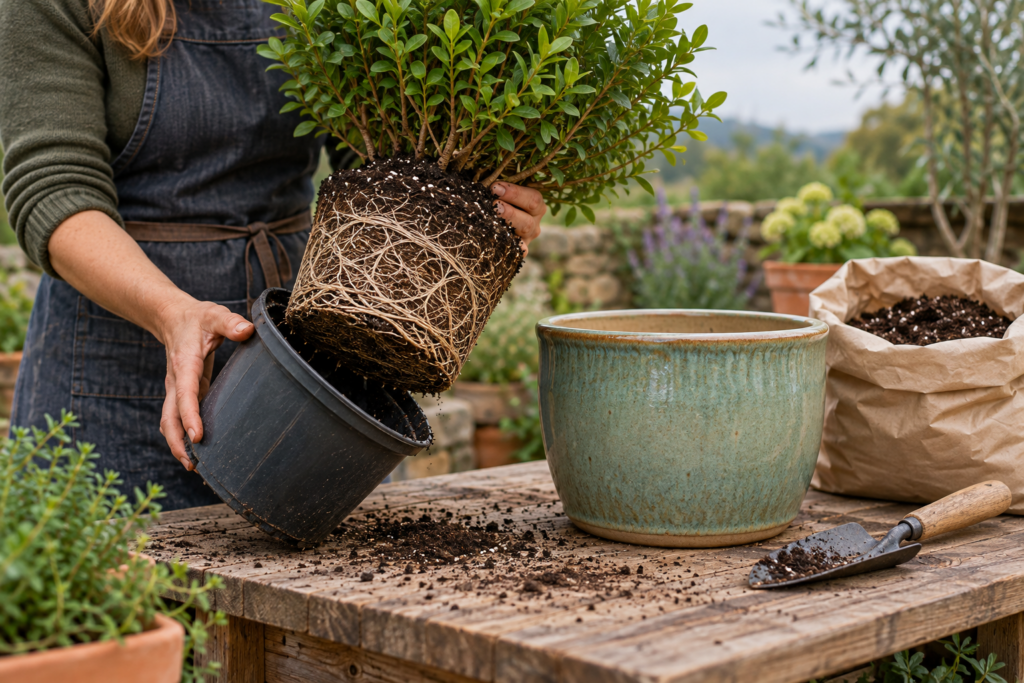
Perennials, shrubs, and houseplants eventually outgrow their containers. Signs a plant needs repotting include roots growing out of the drainage holes, water running straight through without soaking in, a plant that needs watering far more often than before, and roots circling the inside of the pot in a dense mat.
The best time to repot is usually in spring, just as active growth begins. Choose a new pot only about 1–2 inches (2.5–5 cm) wider than the old one; jumping to a much larger pot leaves a mass of wet mix that roots can’t reach, which can lead to rot. Gently tease apart circling roots, set the plant at the same depth as before, and fill around it with fresh potting mix.
For very large containers that can’t easily be repotted, top-dressing works well: remove the top 2–3 inches (5–8 cm) of old mix each spring and replace it with fresh mix and compost.
Getting Container Plants Through Winter
Roots in a pot are far more exposed to cold than roots in the ground, where the surrounding soil insulates them. A common rule of thumb is that a perennial or shrub kept outdoors in a container should be hardy to at least one or two zones colder than your own to survive winter reliably.
To protect permanent container plants in cold weather:
- Group pots together against a sheltered house wall, where they insulate each other and benefit from the building’s warmth.
- Wrap pots (not the plants themselves) in burlap, bubble wrap, or old blankets to insulate the roots.
- Raise pots on feet so they don’t sit in icy puddles.
- Water sparingly, keeping the mix barely moist rather than wet, since wet, frozen mix does the most damage.
Tender plants such as citrus, geraniums, and many tropical plants should come indoors or into a frost-free garage, greenhouse, or porch before the first frost. Empty and store terracotta and non-frost-proof pots somewhere dry over winter, since water trapped in the clay can freeze, expand, and crack them.
Common Container Gardening Mistakes
Choosing pots that are too small. Small containers dry out, overheat, and run out of nutrients quickly. When in doubt, go bigger.
Using garden soil. It compacts and drains poorly in pots. Always use a proper potting mix.
Forgetting drainage. Pots without holes, or holes blocked by pots sitting flat on paving, lead to waterlogged roots.
Watering on a schedule. Water when the plant needs it, not because it’s Tuesday. Needs change with weather and season.
Never feeding. Potted plants use up their nutrients within weeks. Regular feeding keeps them productive.
Mixing plants with different needs. Combinations work only when every plant in the pot likes the same light and moisture.
Once you get the basics right, containers become one of the most flexible ways to garden. You can rearrange a patio in an afternoon, chase the sun around a small yard, try a new crop without committing a whole bed to it, and bring a little green into spaces that could never hold a traditional garden.
Frequently Asked Questions
Can you grow vegetables in containers on a balcony?
Yes, balconies can be very productive for vegetables, provided they get enough sun. Choose lightweight plastic, resin, or fabric containers, since wet potting mix is heavy, and check any weight limits for your building. Balconies are often windy, which dries pots quickly and can snap tall plants, so stake crops securely and group pots together for shelter.
Why are the leaves on my potted plant turning yellow?
Yellow leaves on container plants usually come from one of three causes. Overwatering or poor drainage starves roots of oxygen, causing yellowing and wilting despite wet soil. Nutrient deficiency, most often nitrogen, turns older lower leaves yellow first. A root-bound plant that has outgrown its pot may also yellow. Check moisture and drainage first, then consider feeding or repotting.
How do I keep container plants alive while I’m on vacation?
Water every pot thoroughly just before you leave and move containers out of direct afternoon sun into a shaded, sheltered spot grouped closely together. Standing pots on a tray of damp sand or capillary matting helps them draw up water. For longer trips, a drip irrigation kit on a timer or a neighbor’s help is the most reliable option.
Can I reuse potting soil from last year?
You can usually reuse potting mix if the previous plants were healthy. Remove old roots, loosen the mix, and refresh it by blending in roughly a third to a half of fresh compost or new potting mix, along with a slow-release fertilizer. Don’t reuse mix from plants that suffered root diseases or pests such as vine weevils; add it to garden beds or discard it instead.
What vegetables can you grow in a 5-gallon bucket?
A 5-gallon (19-liter) bucket suits one bush or dwarf tomato plant, one or two pepper plants, a small crop of potatoes, bush beans, or a single zucchini of a compact variety. Drill several drainage holes in the bottom and fill with potting mix rather than garden soil. Food-grade buckets are the safest choice for growing edibles.
How do you stop pots from blowing over?
Choose containers that are wide at the base and heavy enough for the plant’s height, such as glazed ceramic, concrete, or stone-effect pots. Group pots together so they shelter one another, and place tall plants against walls or railings where they can be secured with ties. For lightweight plastic pots, setting them inside a heavier decorative pot adds stability.
Do container plants need full sun?
Not all of them. Most vegetables, fruiting plants, and Mediterranean herbs need at least six hours of direct sun daily to grow and crop well. Leafy greens and many herbs manage with four to six hours, and shade-loving plants such as ferns, hostas, begonias, and impatiens grow happily in containers with only a few hours of gentle morning light.
Keep Learning
For more beginner help, see How to Start a Garden: The Complete Beginner’s Guide, How to Start a Vegetable Garden: Step-by-Step Guide for Beginners, and Square Foot Gardening: The Complete Method Guide.