Mulch Guide: Best Types of Mulch and How to Use It
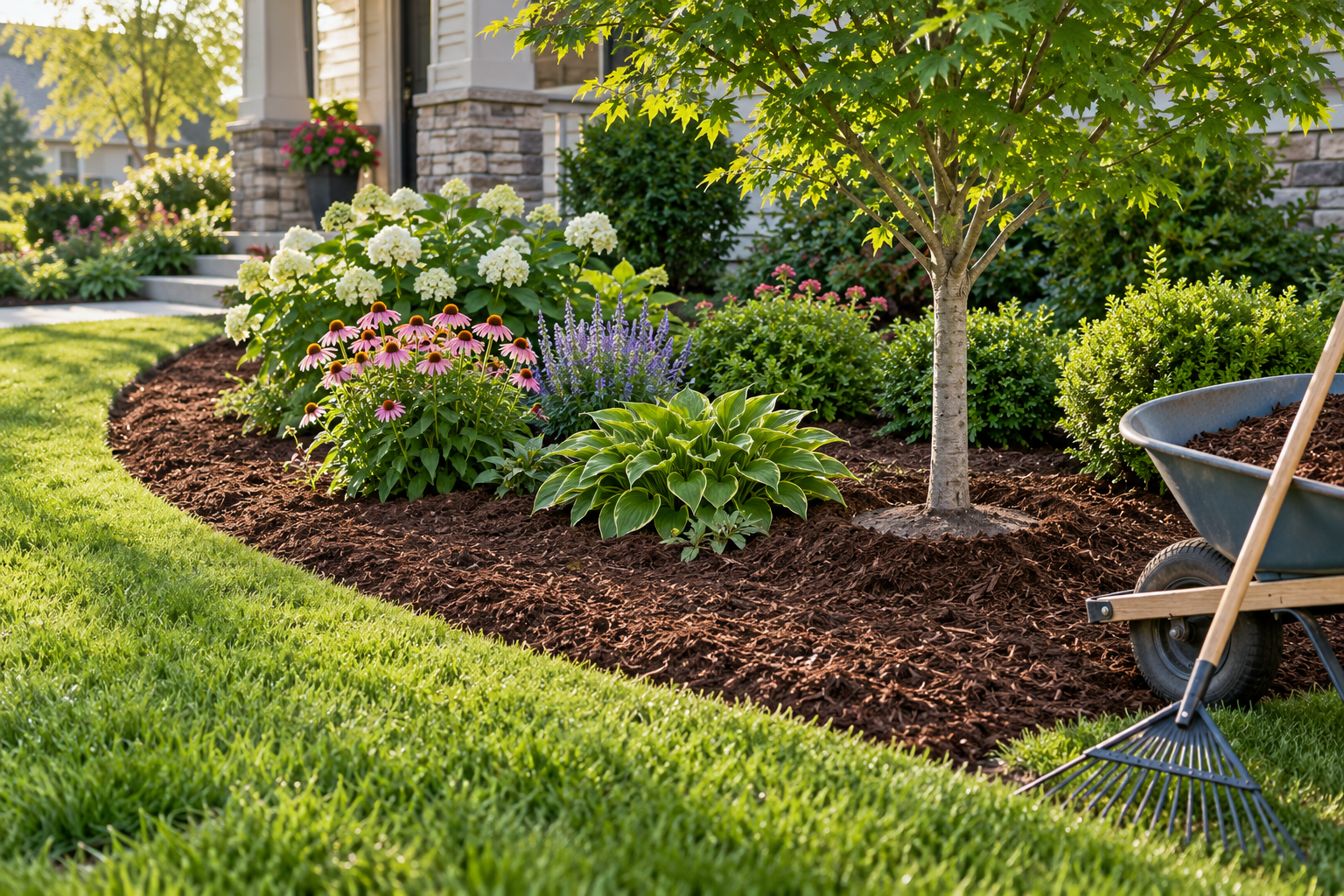
Spend a few hot July afternoons watering, weeding, and watching bare soil crack in the sun, and the appeal of mulch becomes obvious. A few inches of the right material spread over a bed can halve the weeding, keep soil moist for days longer, and make a garden look finished almost overnight. Mulch is one…
Spend a few hot July afternoons watering, weeding, and watching bare soil crack in the sun, and the appeal of mulch becomes obvious. A few inches of the right material spread over a bed can halve the weeding, keep soil moist for days longer, and make a garden look finished almost overnight.
Mulch is one of the simplest, most effective things you can do for a garden, yet it’s easy to get wrong. Too thin and it barely helps; too thick and it can suffocate roots. Piled against tree trunks, it invites rot. The wrong type in the wrong place can wash away down a slope, blow across the lawn, or shift the look of a bed completely.
This guide covers what mulch does, the main organic and inorganic types and their strengths, which mulch suits which part of the garden, how and when to apply it, how much you need, and how to maintain it so it keeps working year after year.
What Mulch Does and Why It Matters
Mulch is any material spread over the surface of the soil around plants. It can be organic, such as shredded bark, straw, or leaves, or inorganic, such as gravel or stone. Either way, it acts as a protective layer between the soil and the weather.
A well-applied mulch does several jobs at once:
- Conserves moisture. Mulch shades the soil and slows evaporation, so beds stay moist longer and need less frequent watering.
- Suppresses weeds. A layer of mulch blocks light from reaching weed seeds in the soil, preventing many from germinating, and makes it easier to pull the ones that do appear.
- Moderates soil temperature. Mulch keeps soil cooler in summer heat and warmer in winter cold, protecting roots from extremes and reducing damage from repeated freezing and thawing.
- Prevents erosion and compaction. Heavy rain hitting bare soil breaks down its structure and washes it away. Mulch absorbs the impact.
- Reduces soil splash. Rain and watering can splash soil, along with fungal spores, onto lower leaves. Mulch reduces this, lowering the risk of some diseases, especially on tomatoes.
- Improves soil over time. Organic mulches slowly break down, adding organic matter that feeds earthworms and beneficial soil organisms and improves soil structure.
- Improves appearance. Mulch gives beds a clean, uniform, finished look and helps plants stand out.
Organic vs Inorganic Mulch
Organic mulches come from plant material. They improve soil as they decompose, but need topping up every year or two. They suit most garden beds, vegetable gardens, and plantings around trees and shrubs.
Inorganic mulches include gravel, stone, rubber, and plastic or fabric sheeting. They last much longer, sometimes indefinitely, but don’t feed the soil. They suit dry gardens, paths, and plants that prefer drier conditions around their crowns.
Organic Mulch Types
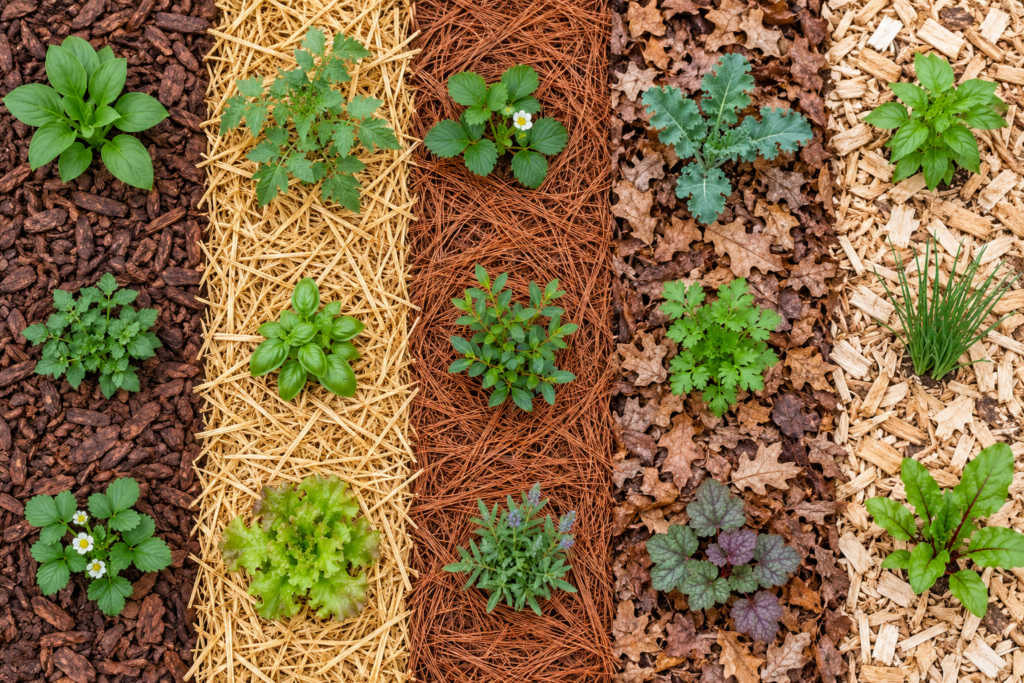
Organic mulches are the most popular choice for most gardens. Each type has its own texture, lifespan, and best use.
Shredded Bark and Shredded Hardwood
Shredded bark and shredded hardwood are among the most widely used landscape mulches. The fibrous pieces knit together, so they stay in place well, even on gentle slopes, and resist blowing away. They break down at a moderate rate, typically needing a top-up every year or so, and give beds a tidy, natural appearance. They suit flower beds, shrub borders, and tree rings.
Bark Nuggets
Bark nuggets, usually made from pine or fir bark, are larger chunks that break down slowly and last several years. They look neat and decorative, but their size means they suppress weeds less effectively than finer mulches, and they tend to float and wash away in heavy rain, so they’re best on level ground.
Wood Chips
Wood chips, including arborist chips from tree-trimming crews, are coarse and long-lasting, and are excellent for tree rings, shrub borders, paths, and woodland areas. Arborist chips contain a mix of wood, bark, and leaves, which helps them break down and feed the soil. They’re often available free or cheaply from tree services. Fresh chips work well as a surface mulch around established plants, but avoid digging them into the soil and don’t use chips from black walnut trees, which can harm many plants.
Pine Straw
Pine straw, made of fallen pine needles, is lightweight, attractive, and interlocks to form a mat that stays in place on slopes. It’s popular in regions where pine trees are common and suits acid-loving shrubs like azaleas, rhododendrons, camellias, and blueberries. Despite a common belief, pine needles have very little effect on soil pH, so they won’t significantly acidify the soil beneath.
Straw
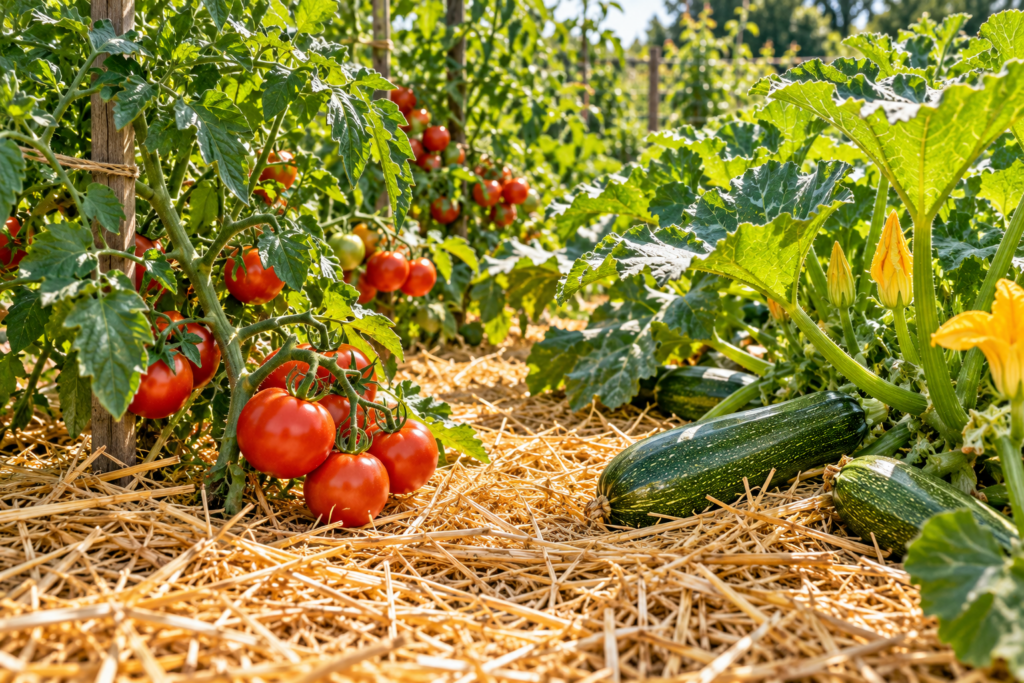
Straw is a classic mulch for vegetable gardens. It’s light, easy to spread, breaks down within a season, and keeps fruit like strawberries, squash, and tomatoes off the soil. Choose straw rather than hay, since hay usually contains seeds that sprout into weeds. Ask suppliers whether the straw came from fields treated with persistent herbicides, which can harm sensitive vegetables.
Shredded Leaves and Leaf Mold
Shredded leaves are a free, nutrient-rich mulch that breaks down into excellent organic matter. Shred them first with a mower or leaf shredder, since whole leaves can mat into a soggy layer that blocks water and air. Leaf mold, which is partly decomposed leaves, makes a fine, crumbly mulch ideal for woodland plants, shade gardens, and vegetable beds.
Grass Clippings
Grass clippings are free and rich in nitrogen, making them a useful mulch for vegetable gardens. Apply them in thin layers of about 1 inch (2.5 cm) at a time, letting each layer dry before adding more. Thick layers of fresh clippings can mat, heat up, and turn slimy and smelly. Only use clippings from lawns that haven’t been treated with herbicides.
Compost
Compost can be used as a thin mulch, typically 1–2 inches (2.5–5 cm), feeding the soil while protecting it. It breaks down quickly and is less effective at suppressing weeds than coarser mulches, since weed seeds can germinate in it. Many gardeners spread compost first and then add a coarser mulch on top.
Cocoa Hulls
Cocoa bean hulls have an attractive dark color and a pleasant chocolate scent when fresh. However, they contain theobromine, the same compound that makes chocolate toxic to dogs, so avoid them in gardens where dogs roam. They can also develop mold in damp conditions.
Dyed Mulch
Dyed mulches, commonly in black, red, or brown, keep their color longer than natural mulches. The colorants used are generally considered safe, but some dyed mulches are made from recycled wood, such as old pallets and construction lumber. Buy from reputable suppliers who can tell you where their wood comes from.
What Is the Best Mulch for Vegetable Gardens?
The best mulches for vegetable gardens are straw, shredded leaves, grass clippings, and compost. They’re easy to spread around plants, break down within a season to feed the soil, and can be turned in or pushed aside at planting time. Coarse wood chips and bark are better kept for paths and perennial areas rather than annual vegetable beds.
Inorganic Mulch Types
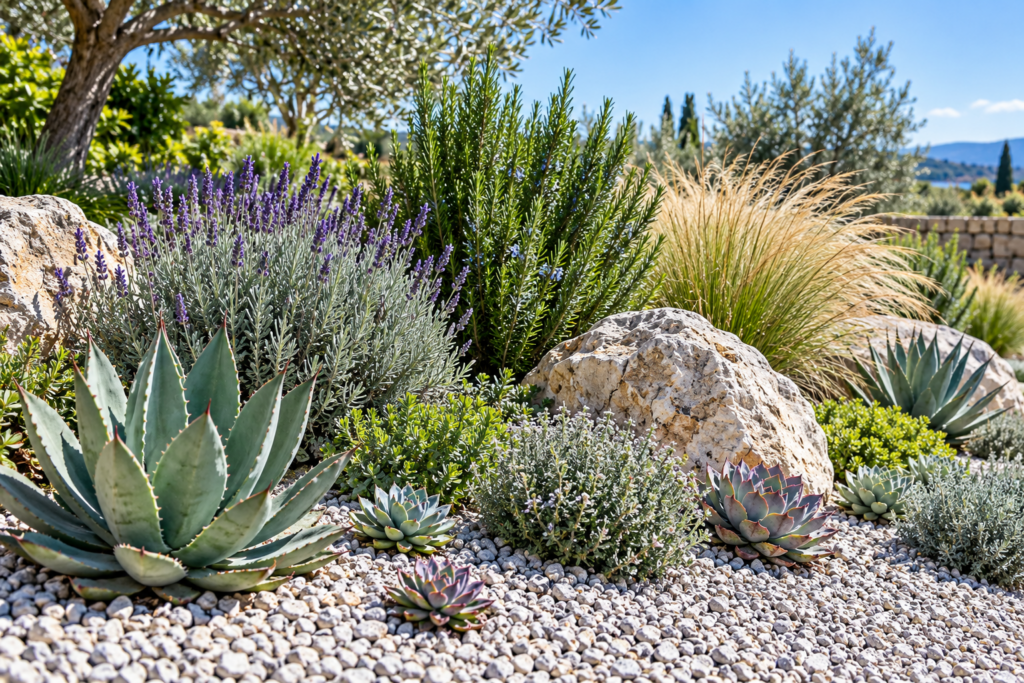
Inorganic mulches don’t break down, so they last for years and need little topping up. They don’t improve soil, though, and some bring drawbacks worth considering.
Gravel, Pebbles, and Stone
Gravel and stone mulches are long-lasting, won’t blow or wash away easily, and give a clean, contemporary look. They suit dry gardens, Mediterranean-style plantings, succulents, cacti, alpine plants, and herbs such as lavender, rosemary, and thyme, which dislike damp conditions around their stems. Pale gravel reflects heat and light, which some sun-loving plants appreciate but which can stress others.
Gravel is difficult to remove once installed, and fallen leaves and debris settle into it, gradually creating soil where weeds can grow. It’s not ideal around acid-loving plants if the stone is limestone, which can raise pH over time.
Lava Rock
Lava rock is lightweight, porous, and long-lasting, and comes in red, black, and brown tones. It holds heat, which can stress plants in hot climates, and it’s hard to remove if you change your planting later.
Rubber Mulch
Rubber mulch, made from recycled tires, lasts many years and doesn’t blow away easily, which is why it’s often used in playgrounds. In garden beds, it has several drawbacks: it doesn’t improve soil, can become very hot in the sun, may release small amounts of zinc and other compounds as it ages, and burns intensely if ignited. For most planted beds, organic mulches are a better choice.
Plastic Sheeting
Black plastic sheeting warms soil quickly in spring, suppresses weeds, and conserves moisture, making it useful for heat-loving vegetables such as melons, peppers, squash, and tomatoes. Cut holes for plants and use drip irrigation beneath, since rain can’t pass through. Plastic breaks down in sunlight and needs removal at the end of the season. Clear plastic is used for soil solarization, which heats the soil enough to kill many weeds and seeds.
Should You Put Landscape Fabric Under Mulch?
In most planted beds, landscape fabric under organic mulch causes more problems than it solves. As the mulch breaks down, it forms a layer of soil on top of the fabric where weeds root easily, and the fabric stops organic matter from reaching the soil below. Fabric is more useful under gravel or stone paths, where it separates stone from soil.
If you want an extra weed barrier in a new bed, plain cardboard beneath the mulch is usually a better option. It smothers existing weeds and grass for a season, then breaks down, letting earthworms and roots move freely.
Living Mulches
Groundcover plants such as creeping thyme, clover, ajuga, sweet woodruff, and low sedums can act as living mulch, covering the soil, suppressing weeds, and reducing erosion. In vegetable gardens, cover crops or low plants like clover grown between rows serve a similar purpose.
Choosing the Right Mulch for Each Area
Different parts of the garden have different needs. Matching the mulch to the area makes it far more effective.
What Is the Best Mulch for Flower Beds?
Shredded bark and shredded hardwood are the best all-around mulches for most flower beds. They stay in place, suppress weeds, look tidy, and break down slowly to improve the soil. Shredded leaves and leaf mold are excellent free alternatives, especially for woodland and shade plantings. Around drought-loving perennials and herbs, gravel is often the better choice.
Vegetable Gardens
Use straw, shredded leaves, grass clippings, or compost. These are easy to pull back when sowing and planting, and they break down within a season. Black plastic suits heat-loving crops early in the season.
Trees and Shrubs
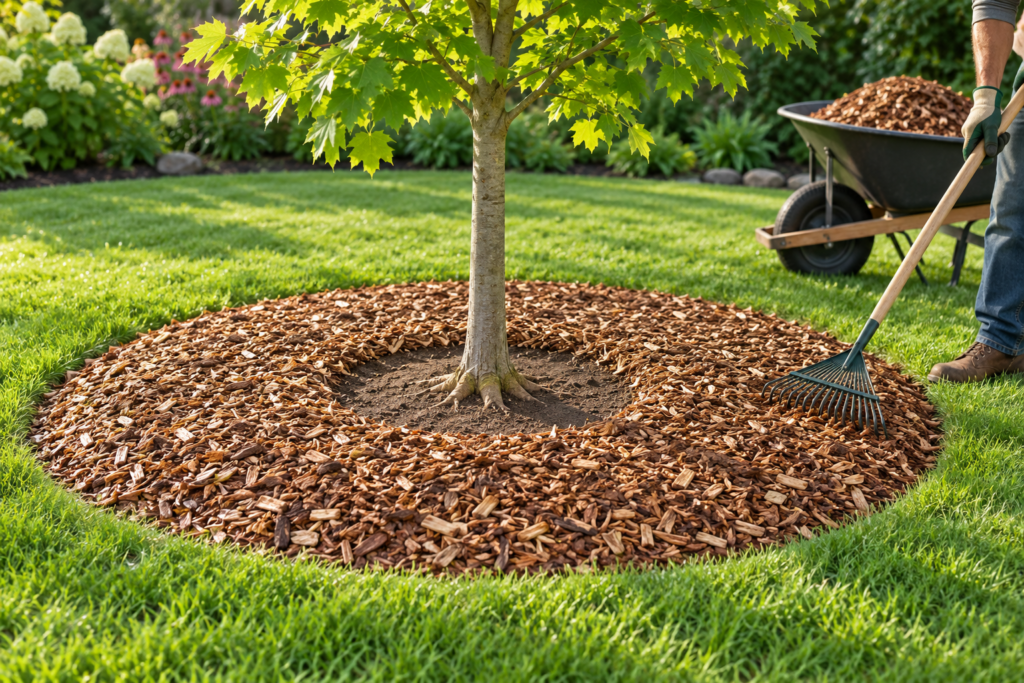
Wood chips, shredded bark, and bark nuggets are ideal around trees and shrubs. Spread a wide ring extending toward the edge of the canopy where possible, keeping mulch several inches away from the trunk. A wide mulch ring also protects trunks from lawn mower and string trimmer damage.
Acid-Loving Plants
Pine bark, pine straw, and shredded leaves suit azaleas, rhododendrons, camellias, blueberries, and other acid-loving plants. Avoid limestone gravel around them.
Dry Gardens and Succulents
Gravel, pebbles, and crushed stone suit succulents, cacti, Mediterranean herbs, and drought-tolerant perennials, keeping their crowns dry and reflecting warmth.
Slopes
On slopes, choose fibrous mulches that knit together, such as shredded bark, shredded hardwood, and pine straw. Avoid bark nuggets and lightweight materials, which wash downhill in heavy rain.
Paths and Play Areas
Wood chips make comfortable, inexpensive garden paths. For play areas, use materials designed and tested for playground safety, which cushion falls.
Near the House
Keep a gap of several inches between mulch and the house foundation, siding, and wooden structures to keep moisture away and make it easier to spot termites or other problems. In areas prone to wildfires, many fire safety guidelines recommend using gravel or stone rather than wood-based mulch within a few feet of the house.
Containers
A thin layer of fine bark, pebbles, gravel, or moss on the surface of containers reduces moisture loss and gives pots a finished look. Choose decorative pebbles or grit for succulents, and bark or moss for most other plants.
How to Apply Mulch Correctly
Applying mulch properly makes the difference between a bed that thrives and one that suffers.
When to Mulch
Spring is the most common time to mulch, but wait until the soil has warmed and dried a little. Mulching cold, wet soil too early keeps it cold and slows plant growth.
Autumn mulching protects perennials, shrubs, and newly planted trees from winter temperature swings. For winter protection of perennials, many gardeners wait until the ground has begun to freeze, which helps keep soil temperatures stable and discourages rodents from nesting in the mulch.
Summer mulching helps conserve moisture during hot, dry periods. Water thoroughly before mulching so the soil beneath starts moist.
Preparing the Bed
- Remove weeds, especially perennial weeds with deep roots.
- Water the bed thoroughly if the soil is dry.
- Edge the bed to create a clean line and help keep mulch in place.
- Add compost first if you want to feed the soil.
How Much Mulch Should You Use?
Most mulches work best at a depth of 2–3 inches (5–8 cm). Fine materials like compost and grass clippings should be thinner, about 1–2 inches (2.5–5 cm), while coarse wood chips can go up to 3–4 inches (8–10 cm). Loose straw can be spread more thickly because it settles. Mulch deeper than about 4 inches can starve roots of oxygen.
Calculating How Much Mulch You Need
To estimate how much mulch to buy, multiply the area of the bed in square feet by the depth in inches, then divide by 12 to get cubic feet. Divide cubic feet by 27 to get cubic yards, the unit most bulk suppliers use.
For example, a 10 x 10 ft (100 square foot) bed mulched 3 inches deep needs 25 cubic feet, which is just under 1 cubic yard. Bagged mulch is commonly sold in 2 cubic foot bags, so that bed would need about 13 bags.
In metric terms, multiply the area in square meters by the depth in meters. A 10 square meter bed mulched 7.5 cm deep needs about 0.75 cubic meters.
For large areas, bulk mulch delivered by the truckload is usually much cheaper than bags.
Keep Mulch Away From Stems and Trunks
Never pile mulch against plant stems or tree trunks. So-called “volcano mulching,” where mulch is heaped in a mound around a tree trunk, is one of the most common and damaging mistakes. Mulch piled against bark keeps it constantly moist, which can lead to rot, disease, insect damage, and rodents chewing the bark. It can also encourage roots to grow up into the mulch and circle the trunk.
Leave a gap of a few inches around the stems of perennials and shrubs, and several inches around tree trunks, creating a donut shape rather than a volcano.
Sheet Mulching
Sheet mulching, sometimes called lasagna mulching, is a way to create new beds or smother lawn and weeds without digging. Lay overlapping sheets of plain cardboard or several layers of newspaper over the area, removing tape and glossy print. Wet it thoroughly, then cover with several inches of compost and organic mulch. Over a season, the cardboard breaks down, the grass beneath dies, and the soil is ready for planting.
Water After Mulching
Water the bed after spreading mulch to settle it into place and help it start protecting the soil.
Maintaining Mulch and Avoiding Common Problems
Mulch isn’t a one-time job, but it doesn’t take much to keep it working well.
Top Up Rather Than Pile On
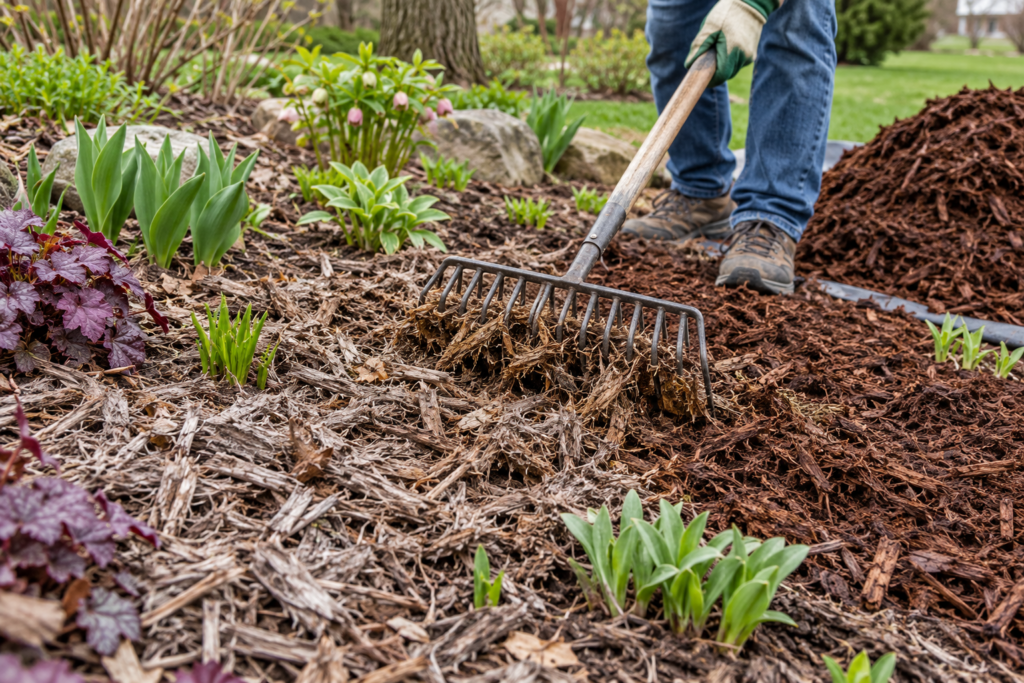
Organic mulches break down over time. Each spring, check the depth and add enough to bring it back to 2–3 inches. Avoid adding a thick new layer every year on top of the old one without checking, since mulch can build up to a harmful depth.
Refresh Matted or Crusted Mulch
Over time, some mulches, particularly fine shredded bark and grass clippings, can form a dense, matted layer that sheds water rather than letting it soak in. Loosen the surface with a rake or garden fork each spring to break up crusting and refresh its appearance.
Mushrooms, Slime Molds, and Fungi
Mushrooms often appear in mulch, especially after rain. They’re a natural sign of decomposition and generally harmless to plants, though some are toxic if eaten, so remove them where children and pets play.
Slime molds sometimes appear as bright yellow or orange patches that look alarming but are harmless and disappear on their own.
Artillery fungus is more troublesome. It forms tiny cups in wood mulch that shoot sticky black spore masses onto nearby light-colored surfaces such as siding, cars, and windows, where they’re very hard to remove. It’s more common in wood-based mulches that stay damp. Raking mulch regularly and replacing heavily affected mulch can help.
Does Mulch Steal Nitrogen From Plants?
Wood-based mulches spread on the surface have little effect on the nitrogen available to established plants, since only a thin layer at the soil surface is involved in decomposition. Problems arise mainly when fresh wood chips or sawdust are mixed into the soil, where microbes breaking them down can temporarily use up nitrogen. Keep woody mulches on the surface, not dug in.
Sour Mulch
Mulch stored in large, wet piles without air can ferment and become “sour,” producing a strong smell of vinegar, ammonia, or rotten eggs. Sour mulch can scorch plants. If bulk mulch smells sour, spread it out in a thin layer to air out for a few days before using it around plants.
Pests Under Mulch
Mulch provides shelter for slugs, snails, earwigs, and sometimes voles. Keep mulch thinner in areas prone to slugs, pull it away from vulnerable seedlings, and avoid deep mulch around tree trunks where voles may nest in winter.
Common Mulching Mistakes
Piling mulch too deep. More than about 4 inches can starve roots of oxygen.
Volcano mulching around trees. Keep mulch several inches away from trunks.
Mulching cold, wet soil too early. Wait until soil has warmed in spring.
Using landscape fabric under organic mulch. It creates more weed problems over time and blocks soil improvement.
Using fresh grass clippings too thickly. Thin layers only.
Choosing lightweight mulches for slopes. Use fibrous mulches that knit together.
Forgetting to weed first. Mulch suppresses new weeds but won’t stop established perennial weeds.
Mulching against the house. Leave a gap between mulch and your foundation or siding.
Get the type, depth, and placement right, and mulch quietly does its work for months at a time, cutting down on watering and weeding while gradually improving the soil beneath it.
Frequently Asked Questions
Should I remove old mulch before adding new mulch?
Usually not. Old organic mulch breaks down into valuable organic matter, so it’s best to rake it loose and top it up to the right depth. Remove old mulch only if it has become too deep, badly matted, heavily affected by artillery fungus, or contaminated with disease, or if you’re changing to a different type of mulch.
Can I use fresh wood chips as mulch?
Yes, fresh wood chips work well as a surface mulch around established trees, shrubs, and perennials, and along paths. Keep them on the surface rather than mixing them into the soil, where they can temporarily reduce available nitrogen. Avoid chips from black walnut trees, and don’t use fresh chips around young seedlings or in annual vegetable beds.
What color mulch is best?
Mulch color is largely a matter of taste. Natural brown tones blend easily into most gardens, black mulch creates strong contrast with green foliage, and red mulch gives a bold look. Dark mulches absorb more heat, which can warm the soil in spring but may stress plants in very hot climates. Natural, undyed mulch fades to gray over time.
How long does mulch last?
It depends on the material. Straw, grass clippings, and compost break down within a season. Shredded bark and shredded hardwood typically last about a year before needing a top-up. Bark nuggets and wood chips can last two to three years or more. Gravel, stone, and rubber mulch last indefinitely, though they may need cleaning or refreshing.
Should you water mulch after putting it down?
Yes. Watering after mulching settles the material into place, reduces the chance of it blowing away, and helps it start protecting the soil. It’s also best to water the soil thoroughly before mulching if it’s dry, since mulch will help keep that moisture in rather than letting it evaporate.
What is the best mulch for gardens with pets?
Shredded bark, wood chips, pine straw, and shredded leaves are generally safe choices for gardens with pets. Avoid cocoa bean hull mulch, which contains theobromine and is toxic to dogs. Watch for dogs that like to chew mulch, since large pieces can cause choking or digestive problems, and remove mushrooms that appear in mulch where pets roam.
Does mulch attract termites?
Mulch doesn’t typically attract termites into an area, but moist mulch can provide conditions termites and other insects find comfortable. To reduce the risk, keep mulch a few inches away from the foundation, siding, and wooden structures of your house, avoid deep mulch against the building, and maintain good drainage around the foundation.
Keep Learning
For more beginner help, see How to Start a Garden: The Complete Beginner’s Guide, How to Start a Vegetable Garden: Step-by-Step Guide for Beginners, and What’s My USDA Gardening Zone? A Full Zone Map Guide.

One Comment