Organic Fertilizer and Soil Amendments: A Complete Garden Guide
Healthy plants start underground. You can choose the perfect varieties, water on time, and plant in full sun, but if the soil beneath them is compacted, depleted, or out of balance, growth will always be a struggle. The gardeners with the most impressive vegetable beds and flower borders are usually the ones who spent years…
Healthy plants start underground. You can choose the perfect varieties, water on time, and plant in full sun, but if the soil beneath them is compacted, depleted, or out of balance, growth will always be a struggle. The gardeners with the most impressive vegetable beds and flower borders are usually the ones who spent years quietly improving their soil.
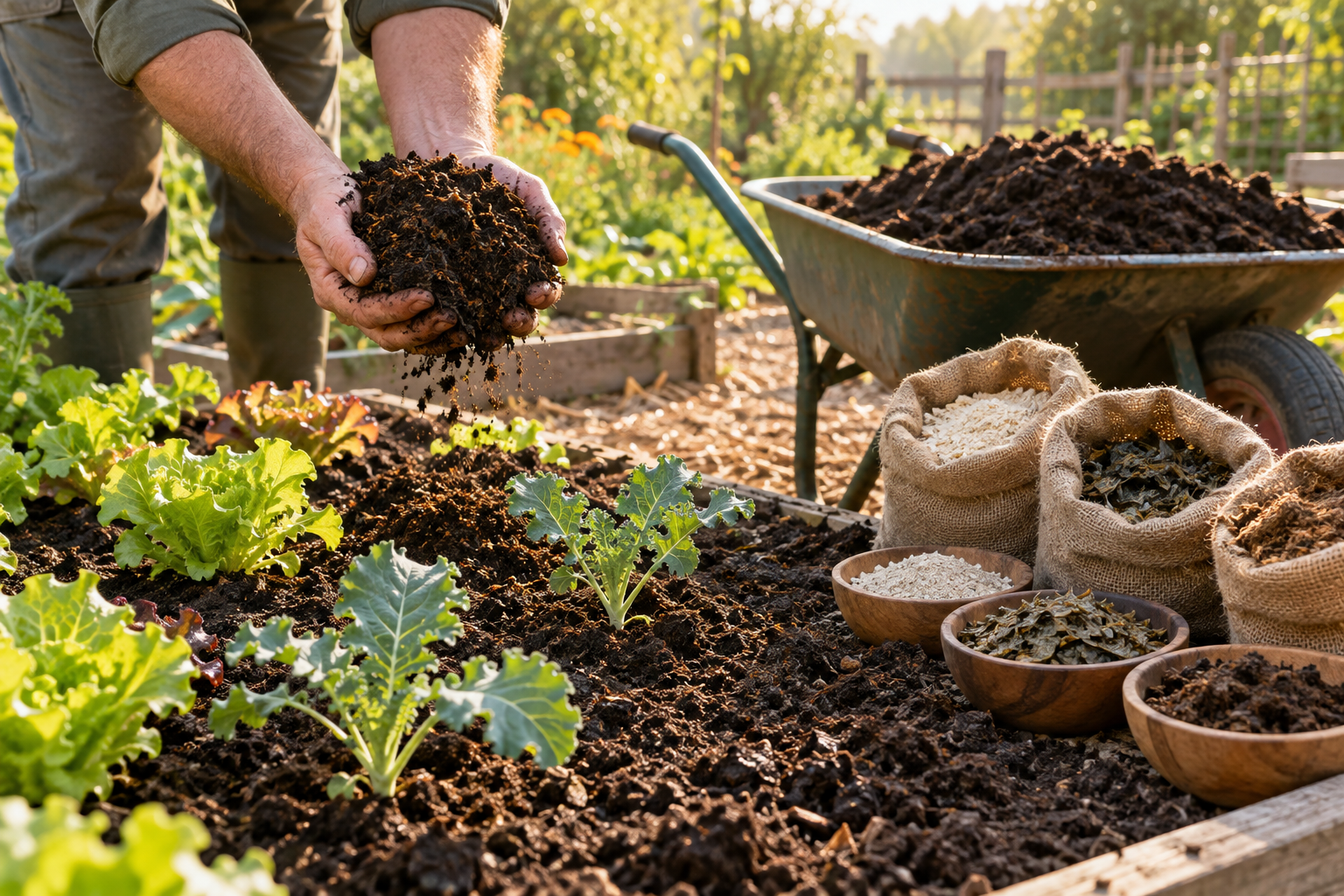
Organic fertilizers and soil amendments are how they do it. Compost, aged manure, leaf mold, bone meal, kelp, and other natural materials don’t just feed plants for a season. They build soil that holds water better, drains more freely, supports billions of beneficial organisms, and becomes more fertile year after year.
The range of products and advice can be confusing, though. This guide explains the difference between fertilizers and amendments, why a soil test should come first, which amendments improve which soils, what each common organic fertilizer provides, how and when to apply them, and how to make your own from garden and kitchen waste.
Fertilizers vs Soil Amendments: Understanding the Difference
The terms are often used interchangeably, but they describe two different jobs.
A fertilizer supplies nutrients that plants use to grow. Its main purpose is to feed plants, and its package lists nutrient content as three numbers representing nitrogen, phosphorus, and potassium.
A soil amendment improves the physical, chemical, or biological properties of the soil itself. It might loosen heavy clay, help sandy soil hold water, raise or lower pH, or add organic matter that feeds soil life. Amendments may contain some nutrients, but that isn’t their main purpose.
Many organic materials do both. Compost and aged manure, for example, improve soil structure and supply a modest, steady amount of nutrients.
How Organic Fertilizers Work
Organic fertilizers come from plant, animal, or mineral sources, such as blood meal, feather meal, bone meal, fish, seaweed, and ground rock. Most of their nutrients are locked in complex organic compounds that plants can’t use directly. Soil microbes gradually break these compounds down, releasing nutrients in forms plant roots can absorb.
That process has several consequences:
- Nutrients release slowly, over weeks or months, rather than all at once.
- Release depends on soil life and temperature. Warm, moist, biologically active soil breaks organic fertilizers down faster than cold or dry soil.
- They feed soil organisms, which improve soil structure and nutrient cycling over time.
- They’re less likely to burn plants, since nutrients aren’t released in a sudden concentrated dose.
- Nutrient numbers are lower than most synthetic fertilizers, so you often apply more by weight.
Understanding NPK and Other Nutrients
The three numbers on a fertilizer label show the percentage by weight of the three primary nutrients:
- Nitrogen (N) fuels leafy, green growth and is part of chlorophyll.
- Phosphorus (P) supports root development, flowering, fruiting, and seed formation.
- Potassium (K) strengthens overall plant health, helps regulate water use, and supports fruit quality and disease resistance.
Plants also need secondary nutrients, including calcium, magnesium, and sulfur, along with tiny amounts of micronutrients such as iron, manganese, zinc, copper, and boron. Organic materials, especially compost and seaweed, often supply a broad range of these trace elements.
Is Organic Fertilizer Better Than Synthetic?
Organic fertilizers improve soil health over the long term, release nutrients slowly, and are less likely to burn plants or wash away. Synthetic fertilizers act faster and deliver precise nutrient amounts, which can be useful for correcting deficiencies quickly. Neither is automatically better; organic options suit gardeners focused on building soil, while synthetics suit fast, targeted feeding.
Plants absorb nutrients in the same chemical forms regardless of their source. The real difference lies in how those nutrients reach the plant and what else the material does for the soil. Many gardeners rely mainly on organic materials for long-term soil building and use targeted feeding only when needed.
Start With a Soil Test
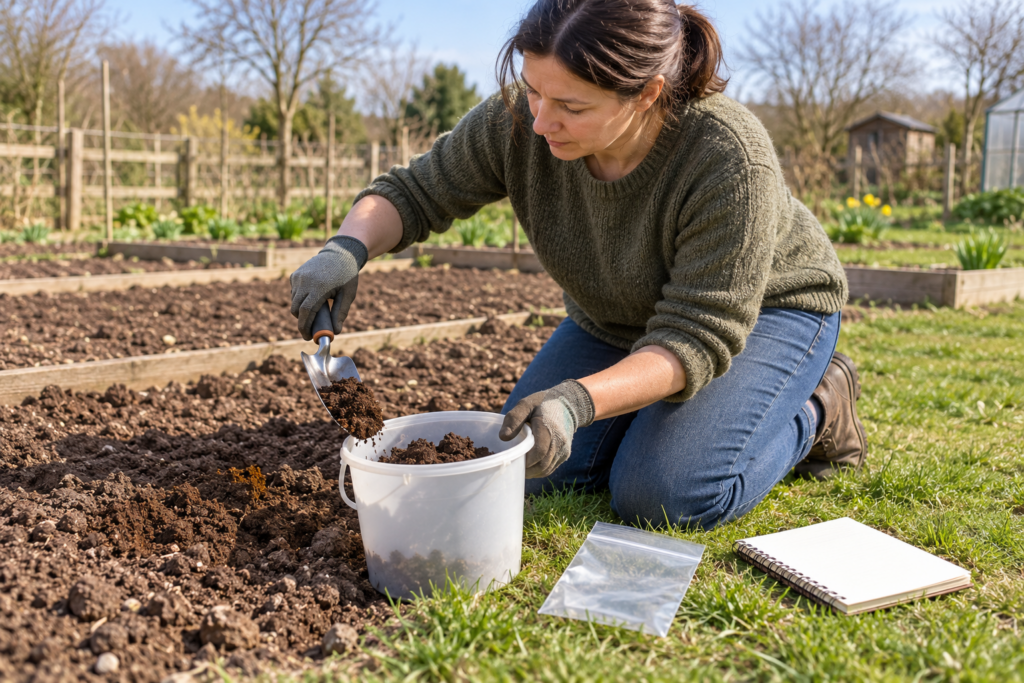
Before adding anything to your soil, find out what it actually needs. Guessing often leads to adding nutrients that are already abundant while missing ones that are in short supply.
What a Soil Test Tells You
A standard soil test typically measures:
- pH, which affects how available nutrients are to plants.
- Phosphorus and potassium levels.
- Calcium, magnesium, and sometimes sulfur.
- Organic matter content.
- Cation exchange capacity (CEC), a measure of how well the soil holds nutrients, which is higher in clay and organic-rich soils.
Many labs also offer tests for micronutrients and for contaminants such as lead, which is worth checking in urban gardens and near older buildings. Nitrogen levels change quickly in soil, so many standard tests don’t measure it or give only a general indication.
Most importantly, a good lab report includes specific recommendations for what to add and how much, based on the crops you plan to grow.
How Often Should You Test Garden Soil?
Test garden soil every two to three years, or before starting a new garden, planting a new bed, or making major changes such as adjusting pH. Testing in autumn gives you time to add slow-acting amendments like lime before spring planting. Test more often if plants show persistent problems that don’t respond to normal care.
How to Take a Soil Sample
A soil test is only as accurate as the sample:
- Use a clean trowel or spade and a clean plastic bucket. Avoid galvanized or rusty metal containers, which can affect micronutrient readings.
- Take small samples from 8 to 12 spots across the bed or area you’re testing, avoiding unusual areas such as old compost piles or spots where fertilizer was recently spread.
- For vegetable and flower beds, sample to a depth of about 6 inches (15 cm). For lawns, sample to about 3–4 inches (8–10 cm).
- Remove surface debris, roots, and stones, then mix the samples thoroughly in the bucket.
- Let the mixed sample air-dry if the lab requests it, then send the amount required.
Test different areas separately if they’re used for different purposes, such as a vegetable garden, a lawn, and a bed of acid-loving shrubs.
Lab Tests vs Home Kits
Home test kits give a quick, rough indication of pH and major nutrients, which can be helpful between lab tests. Professional labs, including many run by universities and agricultural extension services, provide far more accurate and detailed results, along with application recommendations. For planning major amendments, a lab test is worth the modest cost.
Soil Amendments That Build Healthy Soil
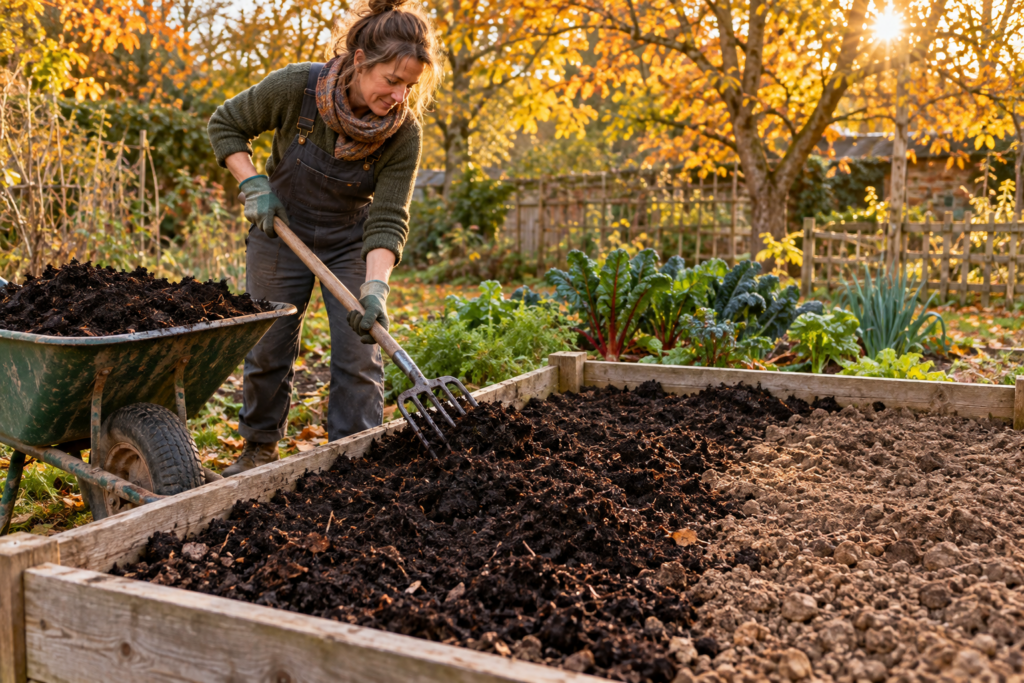
Soil amendments improve the conditions that allow roots to grow and nutrients to cycle. The most important of them all is organic matter.
Compost
Compost is the most valuable all-around soil amendment. Made from decomposed plant material, it improves almost every type of soil. In clay, it opens up the structure so water drains and roots penetrate more easily. In sand, it acts like a sponge, holding water and nutrients that would otherwise drain away. It also feeds earthworms and beneficial microbes and supplies a slow, gentle stream of nutrients.
For vegetable gardens and annual beds, spread 1–3 inches (2.5–8 cm) of compost over the soil each year and work it lightly into the top few inches, or simply leave it on the surface for worms to incorporate. Around perennials, shrubs, and trees, apply it as a top-dressing each spring or autumn.
Homemade compost is ideal, but bagged or bulk compost works well too. Good compost looks dark and crumbly, smells earthy, and contains no recognizable scraps.
Aged Manure
Animal manure adds organic matter and nutrients, especially nitrogen. Cow and horse manure are milder; poultry manure is much richer in nitrogen and can burn plants if used fresh.
Always use manure that has been well aged or composted. Fresh manure can burn roots, contain weed seeds, and carry pathogens such as E. coli and Salmonella. A widely used food safety guideline is to apply raw manure at least 90 days before harvesting crops that don’t touch the soil and at least 120 days before harvesting crops that do, such as lettuce and carrots. Fully composted manure is much safer and easier to use.
Be aware that manure can sometimes carry persistent herbicides from treated hay or pasture eaten by the animals. These chemicals survive digestion and composting, and they cause twisted, cupped, stunted growth in tomatoes, peppers, potatoes, beans, and other sensitive plants. Ask suppliers about the animals’ feed, and avoid sources you can’t verify.
Leaf Mold
Leaf mold is decomposed leaves. It’s lower in nutrients than compost but excellent at improving soil structure and water retention, and it’s a favorite amendment for woodland plants, shade gardens, and seed-starting mixes. It’s also free: pile fallen leaves in a wire enclosure or in bags with a few holes, keep them moist, and within a year or two you’ll have dark, crumbly leaf mold.
Worm Castings
Worm castings, the material produced by composting worms, are rich in organic matter, beneficial microbes, and readily available nutrients. They’re gentle enough to use generously and are especially useful for seedlings, containers, and houseplants. Because they’re relatively expensive to buy, many gardeners make their own with a worm bin.
Cover Crops and Green Manures
Cover crops are plants grown specifically to protect and improve soil. Sown in autumn after harvest or in empty beds, they prevent erosion, suppress weeds, and add organic matter when cut down and left on or turned into the soil. Legume cover crops such as crimson clover, hairy vetch, and field peas add nitrogen. Grains such as winter rye and oats produce large amounts of biomass and extensive roots that improve soil structure.
Mulch
Organic mulches such as shredded leaves, straw, and wood chips protect the soil surface, conserve moisture, suppress weeds, and slowly break down to add organic matter. Wood chips are best kept on the surface around perennials, shrubs, and paths rather than dug into vegetable beds, where their decomposition can temporarily tie up nitrogen.
Adjusting pH: Lime and Sulfur
Soil pH affects how well plants can take up nutrients. Most vegetables and flowers grow best in slightly acidic to neutral soil, around pH 6.0 to 7.0. Acid-loving plants such as blueberries, azaleas, and rhododendrons need more acidic soil.
- To raise pH (make soil less acidic), use garden lime. Calcitic lime adds calcium; dolomitic lime adds both calcium and magnesium, useful if a soil test shows magnesium is low.
- To lower pH (make soil more acidic), use elemental sulfur, which soil bacteria gradually convert into acid.
Both work slowly, over months rather than weeks, so apply them in autumn based on soil test recommendations. Adjust pH gradually, since large changes are hard to reverse.
What Is the Best Way to Improve Clay or Sandy Soil?
The best way to improve both clay and sandy soil is to add organic matter regularly, such as compost, leaf mold, and aged manure. In clay, organic matter binds tiny particles into larger crumbs, improving drainage and aeration. In sand, it holds water and nutrients. Mulching and growing cover crops continue the improvement year after year.
Avoid adding sand to clay soil. Unless you add very large quantities, sand mixed into clay can create a dense, concrete-like material that drains even worse. Gypsum is sometimes recommended for clay, but it mainly helps soils with high sodium levels, which are uncommon in most home gardens. Organic matter is almost always the more effective solution.
Organic Fertilizers and What They Provide
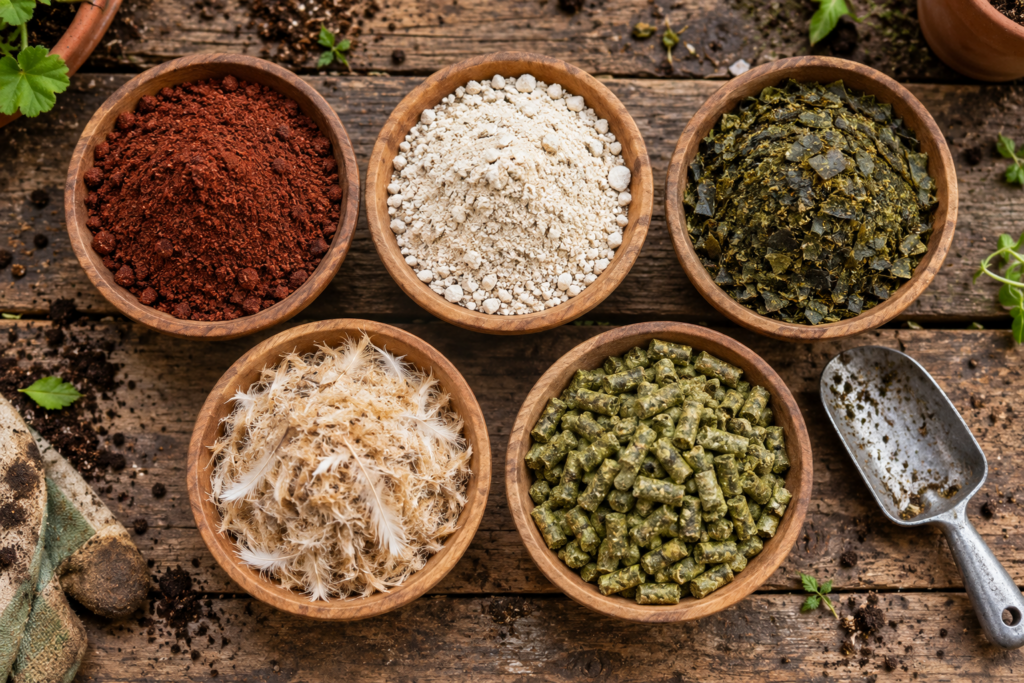
Organic fertilizers are usually grouped by the main nutrient they supply. Nutrient content varies from product to product, so check the label, but the general profiles below hold true for most.
Nitrogen-Rich Fertilizers
- Blood meal is dried blood from meat processing and one of the most concentrated organic nitrogen sources, typically around 12 percent nitrogen. It acts relatively quickly for an organic fertilizer and suits leafy crops and heavy feeders. Use it sparingly, since too much can burn plants.
- Feather meal is made from processed poultry feathers. It’s high in nitrogen but releases it slowly over several months, making it useful as a long-lasting base fertilizer.
- Fish emulsion and fish hydrolysate are liquid fertilizers made from fish byproducts. They supply nitrogen along with smaller amounts of phosphorus, potassium, and trace elements, and act quickly, which makes them useful for seedlings, containers, and midseason feeding. Fish emulsion has a strong smell that fades within a day or two outdoors.
- Alfalfa meal provides modest nitrogen along with potassium, trace minerals, and natural growth-promoting compounds. It’s gentle and popular for roses and vegetables.
- Soybean meal and cottonseed meal are plant-based nitrogen sources. Cottonseed meal is slightly acidifying, which suits acid-loving plants.
Phosphorus-Rich Fertilizers
- Bone meal is ground animal bone, rich in phosphorus and calcium. It’s traditionally used when planting bulbs, perennials, and fruiting crops. Its phosphorus is much less available in alkaline soils, so it’s most useful in slightly acidic to neutral soil.
- Rock phosphate is a mined mineral that releases phosphorus very slowly over years. It’s best for long-term soil building in acidic soils rather than quick correction.
- Bat and seabird guano varies widely in nutrient content depending on its source; some products are high in phosphorus, others in nitrogen.
Potassium-Rich Fertilizers
- Kelp or seaweed meal supplies modest potassium along with a wide range of trace minerals and natural plant growth compounds. Liquid seaweed extract is a popular foliar and soil feed.
- Sulfate of potash (potassium sulfate) is a mined mineral that supplies potassium and sulfur. Many forms are approved for organic gardening.
- Greensand is a mined marine deposit that releases potassium and trace minerals very slowly.
- Wood ash from untreated wood contains potassium and calcium, but it’s strongly alkaline. Use it sparingly, only on acidic soils, and never around acid-loving plants. Don’t use ash from treated wood, painted wood, or charcoal briquettes.
Calcium and Magnesium Sources
- Garden lime adds calcium (and magnesium, in the dolomitic form) while raising pH.
- Gypsum adds calcium and sulfur without changing pH.
- Crushed eggshells add calcium, but break down very slowly unless finely ground.
- Epsom salt (magnesium sulfate) provides magnesium and sulfur. It’s often recommended for tomatoes and peppers, but it only helps if a soil test shows magnesium is actually deficient. Adding it to soil with adequate magnesium can upset nutrient balance.
Balanced Organic Blends
Many garden centers sell balanced organic fertilizers that combine several ingredients, such as feather meal, bone meal, kelp, and sulfate of potash, into one product. These are convenient for general use in vegetable gardens and flower beds, providing a mix of nutrients without the need to combine materials yourself.
Which Organic Fertilizer Is Best for Vegetables?
For most vegetable gardens, a balanced granular organic fertilizer worked into beds at planting, combined with compost each year, is the best foundation. Leafy crops benefit from extra nitrogen sources like feather meal or fish emulsion. Fruiting crops like tomatoes and peppers benefit from potassium-rich feeds such as kelp once they begin flowering.
Your soil test should guide adjustments. If phosphorus is already high, as it often is in gardens that have received years of manure or compost, choose fertilizers with little or no phosphorus.
How and When to Apply Organic Fertilizers
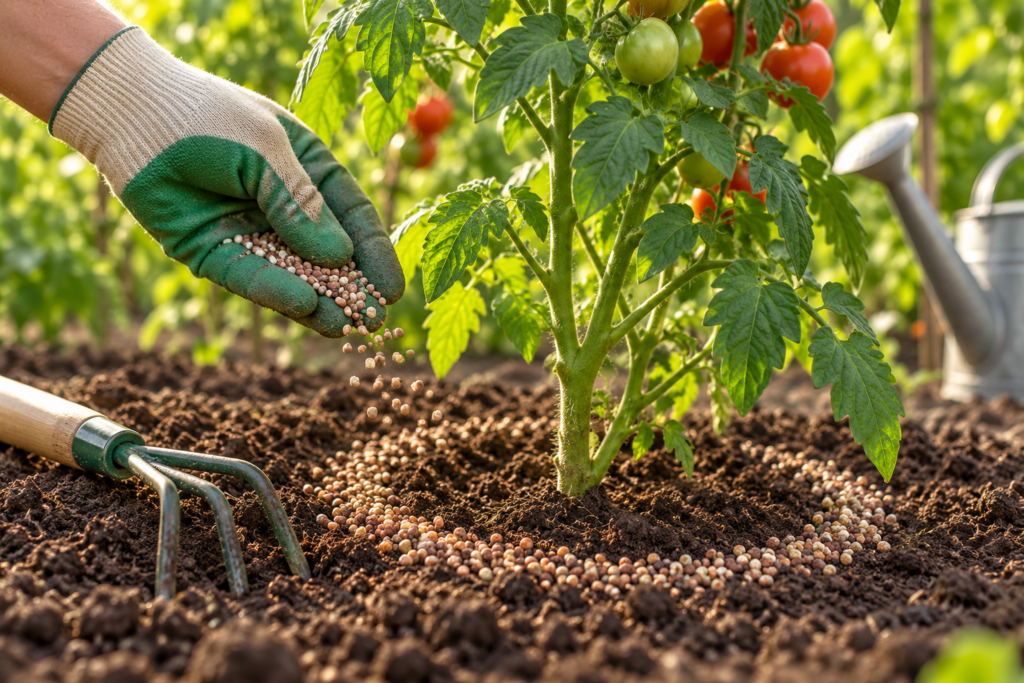
Applying organic fertilizers correctly makes a big difference to results. Timing, placement, and amount all matter.
Timing
Because organic fertilizers depend on soil microbes to release their nutrients, they work best when soil is warm and moist.
- Spring: work compost and a balanced organic fertilizer into vegetable and annual beds a week or two before planting, giving microbes time to begin breaking them down.
- During the growing season: side-dress heavy feeders midseason, and use liquid fertilizers for a quick boost, especially for containers and fast-growing crops.
- Autumn: add slow-acting amendments such as lime, sulfur, rock phosphate, and greensand, along with compost, manure, and cover crops, so they have months to work before spring.
Avoid heavy nitrogen feeding of perennials, shrubs, and trees late in the season, since it can encourage soft new growth that’s damaged by early frosts.
Application Methods
Broadcasting. Spread granular fertilizer evenly across a bed and rake it into the top few inches of soil. This is the most common method for preparing beds before planting.
Banding. Place fertilizer in a narrow strip a few inches to the side of and slightly below a row of seeds, where roots will reach it as they grow.
In the planting hole. Mix a small amount of fertilizer or bone meal into the soil at the bottom of the planting hole for transplants, bulbs, and perennials. Mix it well so roots don’t sit directly against concentrated fertilizer.
Side-dressing. Sprinkle fertilizer in a ring around the base of established plants, a few inches from the stem, then scratch it lightly into the soil and water it in. This is ideal for heavy feeders like tomatoes, squash, and corn midseason.
Top-dressing. Spread compost, worm castings, or fertilizer over the surface of beds, containers, and lawns without digging it in.
Liquid feeding. Dilute liquid fertilizers such as fish emulsion and seaweed extract in water and apply to the soil around plants. Some gardeners also spray diluted seaweed extract onto leaves as a foliar feed, which provides a quick supplement but doesn’t replace soil feeding.
How Much to Apply
Follow the soil test recommendations and the product label. Organic fertilizers vary widely in nutrient content, so application rates differ from product to product. More isn’t better: excess nitrogen leads to lush, soft growth that attracts pests and delays flowering and fruiting, and excess phosphorus can build up in soil and wash into waterways.
Feeding Different Plants
Heavy feeders, such as tomatoes, peppers, squash, cucumbers, corn, and cabbage-family crops, benefit from compost at planting plus regular side-dressing or liquid feeding once they’re growing strongly.
Light feeders, such as carrots, radishes, beets, herbs, and many perennial flowers, often need little more than compost. Too much nitrogen can reduce the flavor of herbs and cause root crops to produce leafy tops at the expense of roots.
Legumes, such as beans and peas, capture much of their own nitrogen and generally need little extra.
Containers need regular feeding, since frequent watering flushes nutrients from potting mix. Liquid organic fertilizers every one to two weeks during the growing season work well.
Perennials, shrubs, and trees usually do well with an annual top-dressing of compost and occasional feeding based on a soil test.
Safety Tips
- Water fertilizer in after application so it reaches the root zone.
- Don’t apply fertilizer to bone-dry soil or drought-stressed plants.
- Keep fertilizers away from waterways, drains, and slopes where runoff can carry nutrients into streams and lakes.
- Store fertilizers in sealed containers, out of reach of pets and children.
- Wear gloves when handling manure and fertilizers, and wash hands afterward.
Making Your Own: Compost, Worm Castings, and Garden Feeds
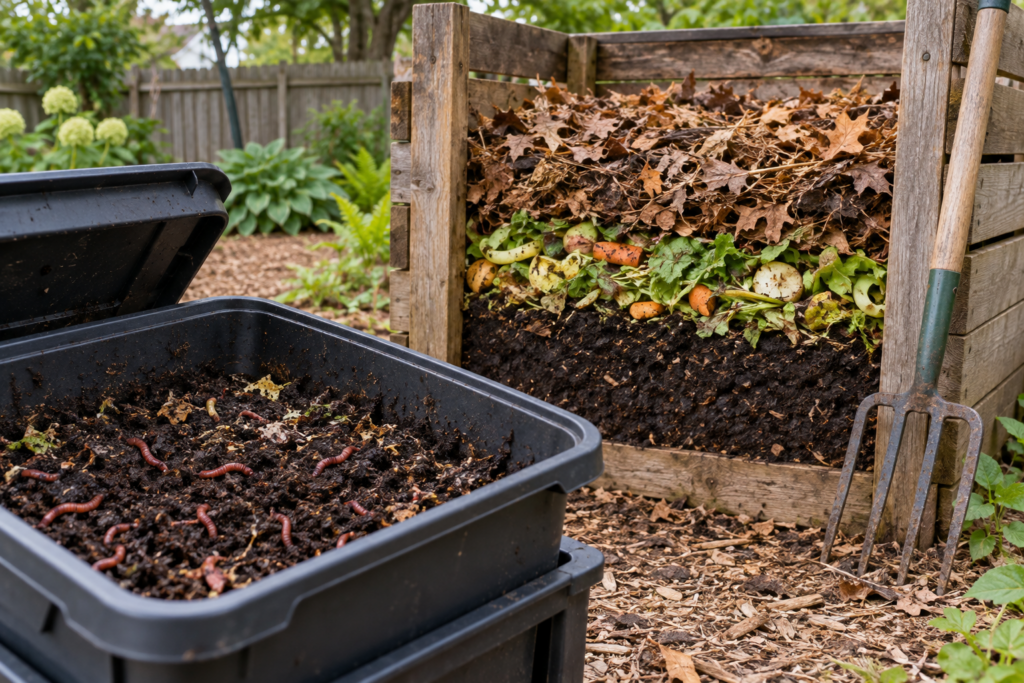
Some of the best organic fertilizers and amendments can be made at home for free from garden and kitchen waste.
Home Composting Basics
Composting turns organic waste into rich soil amendment through the work of microbes, fungi, worms, and other organisms. Good compost needs four things: carbon-rich “brown” materials, nitrogen-rich “green” materials, moisture, and air.
- Browns: dry leaves, straw, shredded cardboard and paper, sawdust from untreated wood, and dry plant stems.
- Greens: vegetable and fruit scraps, fresh grass clippings, coffee grounds, tea leaves, and fresh plant trimmings.
A common rule of thumb is roughly three parts browns to one part greens by volume. Keep the pile as moist as a wrung-out sponge, and turn it every week or two to add air, which speeds decomposition. A well-managed hot compost pile can produce finished compost within a few months. A cold pile that’s left alone takes a year or more but requires almost no work.
Avoid adding meat, fish, dairy, oily foods, pet waste, diseased plants, and weeds that have gone to seed. These can attract pests, spread disease, or survive to cause problems later.
Worm Composting
Worm composting, or vermicomposting, uses composting worms such as red wigglers to turn kitchen scraps into rich worm castings. A worm bin can be kept in a garage, basement, or shaded outdoor spot. Feed worms vegetable and fruit scraps along with shredded newspaper or cardboard as bedding, and avoid citrus, onions, meat, and dairy. Worm castings can be harvested every few months and used as a potent soil amendment for seedlings, containers, and garden beds.
Grass Clippings and Chop-and-Drop
Grass clippings are rich in nitrogen. Leaving them on the lawn after mowing returns nutrients to the grass. They can also be used as a thin mulch in vegetable beds or added to compost, as long as the lawn hasn’t been treated with herbicides.
“Chop-and-drop” is a simple technique where plant trimmings, spent crops, and cover crops are cut up and left on the soil surface as mulch. They break down in place, returning nutrients and organic matter to the soil.
Homemade Liquid Feeds
Comfrey and stinging nettles are traditional sources of homemade liquid fertilizer. Comfrey leaves are rich in potassium, while nettles are higher in nitrogen. Pack leaves into a bucket, cover with water, and leave for several weeks until they break down into a dark liquid. Dilute it before use, typically around one part liquid to ten parts water. Be prepared for a very strong smell.
Kitchen Scraps: What Helps and What’s Myth
- Coffee grounds are a good compost ingredient. Used grounds are close to neutral in acidity and don’t significantly acidify soil. Thick layers applied directly to soil can form a crust that repels water.
- Eggshells add calcium but break down very slowly unless crushed into a fine powder.
- Banana peels contain potassium, but whole peels break down slowly. They’re better added to compost than buried directly under plants.
Common Mistakes With Organic Fertilizers and Amendments
Skipping the soil test. Adding what your soil already has in excess, such as phosphorus, wastes money and can harm plants and waterways.
Using fresh manure. Fresh manure can burn plants, add weeds, and carry pathogens. Use well-aged or composted manure.
Expecting quick results. Organic fertilizers work slowly, especially in cold soil. Plan ahead and apply before plants need nutrients.
Overdoing nitrogen. Too much produces soft, leafy growth and fewer flowers and fruit.
Adding sand to clay. Organic matter improves clay; small amounts of sand can make it worse.
Changing pH too fast. Adjust pH gradually based on soil test results.
Over time, the gardens that receive a steady supply of compost, mulch, cover crops, and carefully chosen organic fertilizers become easier to manage every year. The soil darkens, fills with worms, holds water better, and needs less intervention. That’s the real payoff of feeding the soil rather than just the plants.
Frequently Asked Questions
Can you use too much organic fertilizer?
Yes. Organic fertilizers are less likely to burn plants than synthetic ones, but overapplying them still causes problems. Excess nitrogen leads to soft, leafy growth, poor flowering, and more pest problems, while excess phosphorus builds up in soil and can wash into waterways. Follow soil test recommendations and product labels, and apply only what plants need.
Is organic fertilizer safe for pets?
Some organic fertilizers attract dogs, particularly blood meal, bone meal, and fish-based products, and eating them can cause stomach upset or more serious problems in large amounts. Work granular fertilizers into the soil rather than leaving them on the surface, store products securely, and keep pets away from freshly fertilized areas until they’re watered in.
Do organic fertilizers smell?
Some do. Fish emulsion, blood meal, and manure-based products have noticeable odors when first applied. Outdoors, the smell usually fades within a day or two, especially once the fertilizer is watered in or worked into the soil. Composted materials and pelleted products generally have much milder odors.
How long does organic fertilizer take to work?
Liquid organic fertilizers such as fish emulsion and seaweed extract can show results within days. Granular organic fertilizers typically take a few weeks, since soil microbes must break them down before nutrients become available. They work faster in warm, moist soil and more slowly in cold or dry conditions.
Can I use organic fertilizer on houseplants?
Yes. Liquid seaweed extract, diluted fish-based fertilizers, and worm castings all work well for houseplants. Fish products can smell strongly indoors, so seaweed-based feeds and worm castings are often more pleasant choices. Feed mainly during spring and summer, when houseplants are actively growing, and reduce or stop in winter.
Do I need fertilizer if I use compost?
Many gardens with rich, compost-amended soil need little extra fertilizer, especially for light-feeding crops. Heavy feeders such as tomatoes, squash, and corn, along with plants in containers, usually benefit from additional feeding. A soil test is the best way to know whether compost alone is meeting your plants’ needs.
Can I use organic fertilizer on my lawn?
Yes. Organic lawn fertilizers, compost top-dressing, and leaving grass clippings on the lawn after mowing all feed turf naturally and improve the soil beneath it. Organic lawn products release nutrients slowly, so they’re less likely to cause surges of growth. Apply them in spring and autumn, when grass is actively growing.
Keep Learning
For more beginner help, see How to Start a Garden: The Complete Beginner’s Guide, How to Start a Vegetable Garden: Step-by-Step Guide for Beginners, and How to Keep Rabbits Out of Your Garden: Fencing, Repellents, and Plants.