Companion Planting Guide: What to Plant Together and What to Keep Apart
Walk through an old kitchen garden and you’ll often find tomatoes growing beside basil, marigolds tucked between vegetable rows, and nasturtiums rambling along the edges. None of it is accidental. Gardeners have been pairing plants for generations, noticing that some combinations seem to thrive together while others struggle side by side. That practice is called…
Walk through an old kitchen garden and you’ll often find tomatoes growing beside basil, marigolds tucked between vegetable rows, and nasturtiums rambling along the edges. None of it is accidental. Gardeners have been pairing plants for generations, noticing that some combinations seem to thrive together while others struggle side by side.
That practice is called companion planting, and it’s one of the most popular ideas in home gardening. It’s also one of the most misunderstood. Some pairings have solid reasons behind them, backed by research and generations of practical experience. Others are closer to folklore, passed from chart to chart without much evidence at all.
This guide sorts one from the other. It explains how companion planting actually works, the classic partnerships worth trying, how flowers and herbs support a vegetable garden, a crop-by-crop list of what to plant together, which combinations to avoid, and how to plan beds that put these ideas to practical use.
What Companion Planting Is and How It Works
Companion planting is the practice of growing different plants close together so they benefit one another, whether by reducing pests, attracting helpful insects, improving growing conditions, or making better use of space. It’s based on the idea that a mixed planting behaves differently from a block of a single crop.
The benefits come from several distinct mechanisms. Understanding them makes it much easier to judge which pairings are worth your space.
Attracting beneficial insects. Many flowers and herbs provide nectar and pollen for predatory and parasitic insects such as hoverflies, lacewings, ladybugs, and tiny parasitic wasps. These insects, or their larvae, eat or parasitize aphids, caterpillars, and other pests. This is one of the best-supported benefits of companion planting.
Trap cropping. Some plants are more attractive to certain pests than your main crop. Planted nearby, these “trap crops” draw pests away, where they can be removed or where they do less harm.
Confusing pests. Many pests find host plants by scent and sight. Mixing crops, especially with strongly aromatic herbs, can make target plants harder to find than they would be in a large single-crop block.
Physical support and shelter. Tall plants can support climbers or provide shade for heat-sensitive crops. Low, spreading plants cover the soil, suppressing weeds and holding moisture.
Soil improvement. Legumes such as beans and peas host bacteria in their roots that capture nitrogen from the air. Much of that nitrogen becomes available to other plants as roots and leftover plant material break down.
Efficient use of space. Pairing deep-rooted with shallow-rooted plants, or fast-maturing with slow-maturing crops, lets you grow more in the same area without heavy competition.
Pollination. Flowers planted among vegetables bring in bees and other pollinators, which benefits crops such as squash, cucumbers, melons, and beans.
Does Companion Planting Actually Work?
Some companion planting techniques are well supported, particularly attracting beneficial insects with flowers, trap cropping, intercropping to make better use of space, and growing legumes to improve soil. Many specific pairings found on charts, however, rest mainly on tradition, with little research behind them. Treat companion planting as a useful tool, not a guarantee.
It’s also worth keeping expectations realistic. Companion planting can reduce pest pressure, but rarely eliminates pests on its own. It works best combined with good soil, healthy plants, crop rotation, and regular observation. The most reliable results come from diversity in general, meaning a garden with a variety of crops, flowers, and herbs tends to have more balanced insect populations than one filled with a single crop.
Classic Plant Partnerships That Work

Some companion combinations have earned their reputations through centuries of practical use, supported by clear physical or biological reasons.
The Three Sisters: Corn, Beans, and Squash
The Three Sisters is one of the best-known companion plantings in the world, developed by Indigenous peoples across the Americas. Corn, climbing beans, and squash are grown together in a single planting, each supporting the others:
- Corn provides a tall, sturdy stalk for beans to climb.
- Beans host nitrogen-capturing bacteria in their roots and climb the corn without needing a separate trellis.
- Squash spreads its large leaves across the ground, shading out weeds, keeping soil moist, and discouraging some animals with its prickly stems.
To plant the Three Sisters, build low mounds of soil about 18 inches (45 cm) across and several feet apart. Sow several corn seeds in the center of each mound. When the corn is about 4–6 inches (10–15 cm) tall, plant pole beans around it, a few inches from the stalks. A week or so later, sow squash around the outer edges of the mound. Starting the corn first matters, since beans can overwhelm young corn stalks if they’re planted at the same time.
Choose sturdy field or flint-type corn varieties and pole beans that won’t smother them. Winter squash and pumpkins are traditional, but compact varieties work better in small gardens.
Tomatoes and Basil
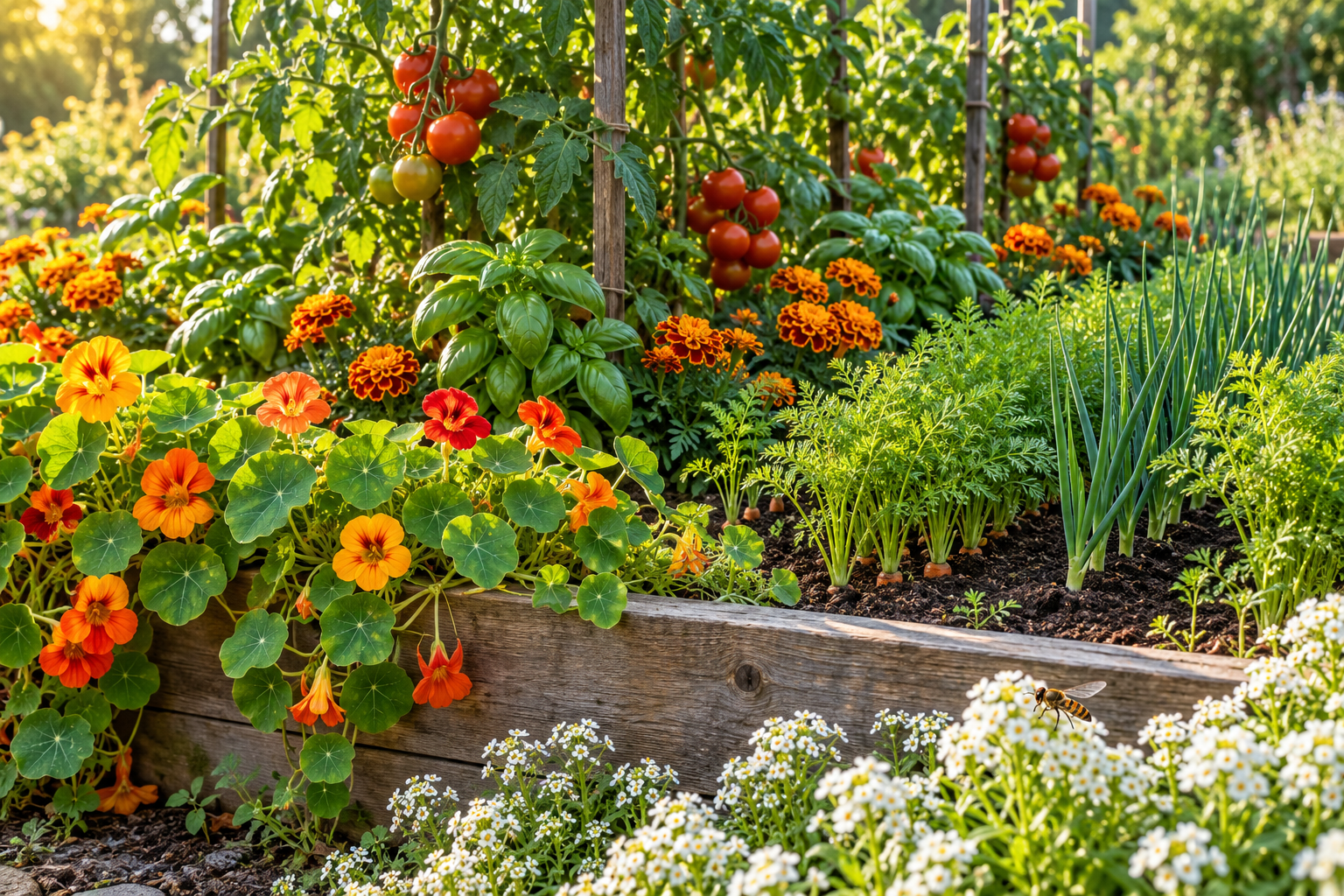
Tomatoes and basil are the most famous garden pairing, and they share the same warm, sunny conditions and watering needs, which makes them easy to grow together. Basil tucked between tomato plants uses space that would otherwise sit empty. Its strong scent may help mask tomatoes from some pests, and when basil flowers, it attracts pollinators and beneficial insects. Many gardeners also claim basil improves tomato flavor, though there’s little evidence for that.
Carrots and Onions
Carrots and onions (or leeks, chives, and garlic) are a traditional pairing aimed at confusing two pests: the carrot fly, which finds carrots by scent, and the onion fly. The idea is that each crop’s strong smell masks the other. Evidence is mixed; the effect seems strongest when onions heavily outnumber carrots. The two crops do make efficient neighbors, since they have different shapes and root depths.
Radishes and Slow Crops
Fast-growing radishes are often sown alongside slower crops like carrots, parsnips, and beets. Radishes germinate within days, marking the rows of slower seeds and breaking up the soil surface. They’re harvested well before the slower crop needs the space.
Lettuce Under Tall Crops
Lettuce and other leafy greens bolt quickly in summer heat. Planting them in the partial shade of taller crops such as tomatoes, pole beans, corn, or trellised cucumbers extends the salad season and uses the space beneath those tall plants.
Nasturtiums as a Trap Crop
Nasturtiums are a classic trap crop. Aphids, particularly black bean aphids, are strongly attracted to them, and cabbage white butterflies often lay eggs on their leaves. Planted at the edges of vegetable beds, nasturtiums can pull these pests away from beans and brassicas. Check them regularly and remove heavily infested stems before pests spread.
Radishes serve a similar purpose for flea beetles, which often prefer them over young cabbage, kale, and broccoli plants.
Do Marigolds Really Keep Pests Away?
French marigolds do have one well-documented benefit: their roots release compounds that suppress root-knot nematodes, microscopic worms that damage the roots of many vegetables. The effect is strongest when marigolds are grown densely as a cover crop for a full season before planting vegetables. Their broader reputation as an all-purpose pest repellent is less well supported.
Marigolds are still worth growing among vegetables. They’re easy, colorful, and long-flowering, and their open flowers attract hoverflies and other beneficial insects.
Legumes and Heavy Feeders
Beans and peas host bacteria that capture nitrogen from the air. Much of this nitrogen stays in their roots and plant residue, becoming available to other plants as it breaks down. For this reason, legumes benefit the crops that follow them in a bed as much as, or more than, the crops growing beside them. Cutting spent pea and bean plants at soil level and leaving the roots in the ground helps return that nitrogen to the soil.
Flowers and Herbs as Garden Allies
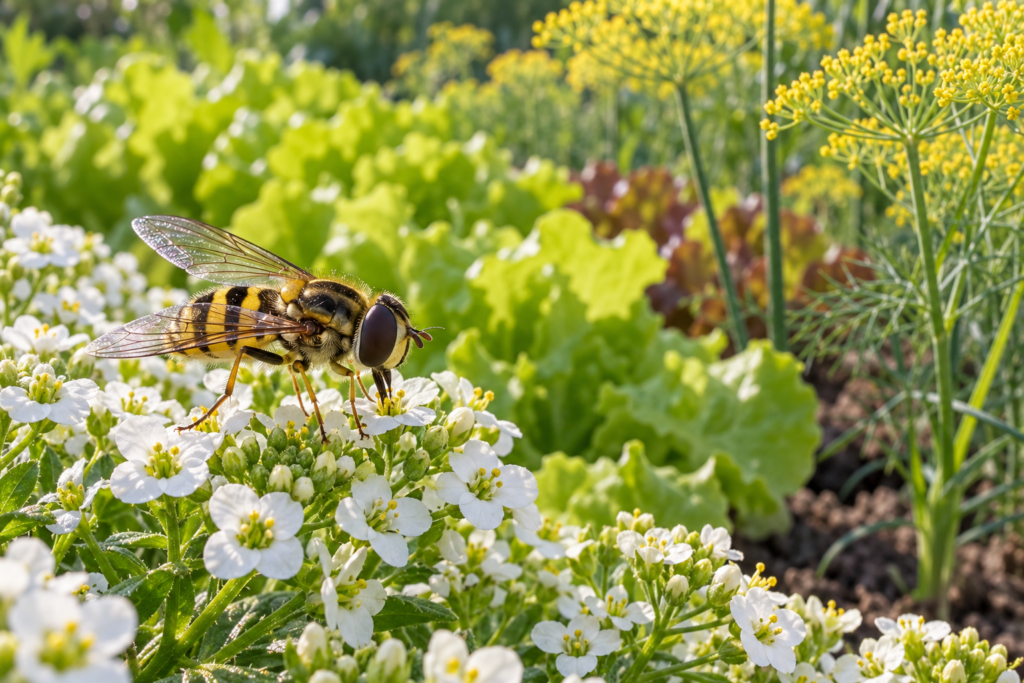
Adding flowers and herbs to a vegetable garden is one of the most effective forms of companion planting. They support the beneficial insects that keep pest populations in check and bring pollinators to crops that need them.
What Flowers Attract Beneficial Insects to a Vegetable Garden?
Flowers with small, open blooms attract the most beneficial insects, since tiny predators and parasitic wasps can reach their nectar easily. Sweet alyssum, dill, cilantro, yarrow, calendula, phacelia, cosmos, and zinnias are excellent choices. Letting a few herbs like dill and cilantro flower also draws in hoverflies, lacewings, and parasitic wasps that control aphids and caterpillars.
The Beneficial Insect Allies
Knowing which insects you’re trying to attract helps you choose flowers:
- Hoverflies look like small bees. Their larvae eat large numbers of aphids.
- Lacewings produce larvae that feed on aphids, mites, and small caterpillars.
- Ladybugs and their larvae eat aphids and other soft-bodied pests.
- Parasitic wasps, most of them tiny and harmless to people, lay eggs inside aphids and caterpillars.
- Ground beetles hunt slugs, cutworms, and other pests at soil level.
- Bees and other pollinators are essential for many fruiting crops.
Best Flowers for the Vegetable Garden
- Sweet alyssum: low, carpeting, and covered in tiny white or purple flowers for months. It’s one of the best plants for attracting hoverflies and fits neatly along bed edges.
- Calendula: bright orange and yellow flowers that bloom from spring into autumn and attract a wide range of beneficial insects. The petals are edible.
- Borage: blue, star-shaped flowers that bees find irresistible, useful near squash, cucumbers, and strawberries. It self-seeds freely.
- Phacelia: feathery purple flowers that attract bees and hoverflies, often grown as a cover crop.
- Yarrow: flat flower heads that attract many predatory insects. It’s a perennial suited to bed edges and borders.
- Cosmos, zinnias, and sunflowers: easy, cheerful annuals that attract pollinators and some beneficial insects.
- Nasturtiums: edible flowers and leaves that double as a trap crop.
Herbs That Support Vegetables
Many culinary herbs play a double role, providing flavor for the kitchen and support in the garden.
- Dill and cilantro: when allowed to flower, their umbrella-shaped blooms attract hoverflies and parasitic wasps. Dill is traditionally planted near cabbage-family crops and cucumbers.
- Basil: a warm-season companion for tomatoes and peppers.
- Thyme and oregano: low, spreading herbs whose flowers attract bees and small beneficial insects.
- Chives: attractive to pollinators when flowering, and traditionally planted near carrots and roses.
- Rosemary and sage: aromatic shrubby herbs often planted near cabbage-family crops and carrots.
- Mint: attracts beneficial insects when flowering, but spreads aggressively. Grow it in a container rather than directly in beds.
Plan for Continuous Bloom
Beneficial insects need food throughout the growing season, not just in midsummer. Choose a mix of flowers that bloom at different times, from early spring (such as calendula and alyssum) through late summer and autumn (such as cosmos, zinnias, and asters). Sowing dill and cilantro every few weeks gives a steady supply of flowers as earlier sowings finish.
An “insectary strip,” a row or border of mixed flowers along the edge of a vegetable garden or through its center, is an easy way to build this habitat.
Companion Planting Chart: What to Plant Together
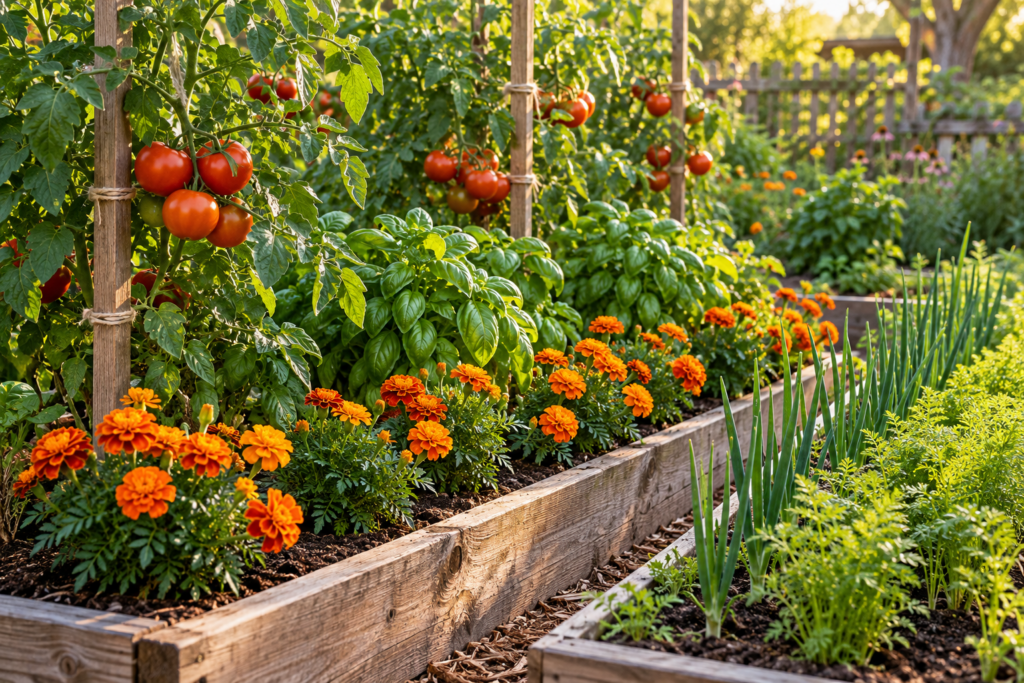
The list below covers the most common vegetables, herbs, and fruits, with widely recommended companions and combinations to avoid. Some suggestions are based on clear benefits, while others are traditional; use them as starting points and adjust based on your own results.
Tomatoes
Good companions: basil, parsley, marigolds, borage, nasturtiums, carrots, lettuce, onions, chives.
Keep apart: potatoes, eggplant (shared diseases and pests), fennel, corn (traditionally said to share pests), black walnut trees.
Peppers
Good companions: basil, onions, marigolds, carrots, parsley, spinach.
Keep apart: fennel, beans (a traditional recommendation).
Beans (bush and pole)
Good companions: corn, squash, cucumbers, carrots, potatoes, strawberries, marigolds, nasturtiums.
Keep apart: onions, garlic, leeks, and chives (a traditional belief that alliums slow legume growth), fennel.
Peas
Good companions: carrots, radishes, lettuce, spinach, cucumbers, corn, mint (in pots nearby).
Keep apart: onions, garlic, and other alliums (traditional).
Cabbage-family crops (cabbage, broccoli, kale, cauliflower, Brussels sprouts)
Good companions: dill, cilantro, thyme, rosemary, sage, onions, celery, nasturtiums, marigolds, sweet alyssum.
Keep apart: strawberries (traditional), tomatoes (traditional), and other cabbage-family crops in large blocks, since they share pests.
Carrots
Good companions: onions, leeks, chives, radishes, lettuce, peas, tomatoes, rosemary, sage.
Keep apart: dill and parsnips (related plants that may cross-pollinate or share pests).
Onions, garlic, and leeks
Good companions: carrots, beets, lettuce, tomatoes, peppers, cabbage-family crops, strawberries.
Keep apart: beans and peas (traditional).
Lettuce
Good companions: carrots, radishes, onions, chives, beets, strawberries, and tall crops that provide shade, such as tomatoes and pole beans.
Keep apart: no major conflicts; avoid overcrowding.
Cucumbers
Good companions: beans, peas, corn, dill, nasturtiums, radishes, sunflowers, marigolds, lettuce.
Keep apart: potatoes and aromatic herbs like sage (traditional).
Squash and zucchini
Good companions: corn, beans, nasturtiums, borage, radishes, marigolds.
Keep apart: potatoes (competition for space and nutrients).
Potatoes
Good companions: beans, corn, cabbage-family crops, marigolds, horseradish (traditional).
Keep apart: tomatoes, eggplant, peppers (shared diseases such as blight), squash, cucumbers, and sunflowers.
Beets
Good companions: onions, garlic, lettuce, cabbage-family crops, bush beans.
Keep apart: pole beans (traditional).
Spinach
Good companions: strawberries, peas, beans, lettuce, radishes, and tall crops that provide shade.
Keep apart: no major conflicts.
Corn
Good companions: beans, squash, pumpkins, cucumbers, peas, sunflowers.
Keep apart: tomatoes (traditional).
Strawberries
Good companions: borage, spinach, lettuce, onions, thyme, bush beans.
Keep apart: cabbage-family crops (traditional).
Basil
Good companions: tomatoes, peppers, lettuce, oregano.
Keep apart: rue and sage (traditional).
Fennel
Good companions: few; fennel is best grown on its own, away from most vegetables. Its flowers attract beneficial insects, so grow it at the edge of the garden or in a container.
Plants to Keep Apart
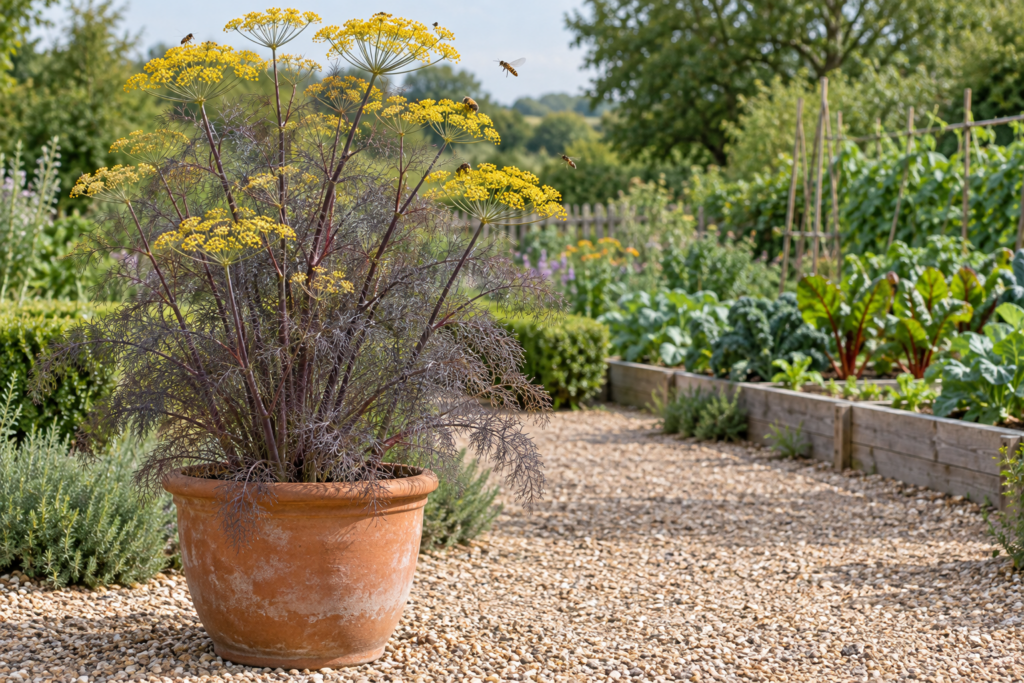
Just as some plants help one another, certain combinations can cause problems. The reasons vary from shared pests and diseases to competition for light and nutrients.
What Vegetables Should Not Be Planted Together?
Avoid planting tomatoes near potatoes, since both belong to the nightshade family and share diseases such as late blight. Keep large blocks of cabbage-family crops apart to limit shared pests, keep fennel away from most vegetables, and avoid planting vegetables beneath black walnut trees. Traditionally, gardeners also keep beans and peas away from onions and garlic.
Why Some Plants Don’t Mix
Shared pests and diseases. Closely related plants are vulnerable to the same problems. Tomatoes, potatoes, peppers, and eggplant all belong to the nightshade family, and planting them close together lets diseases like blight and pests like Colorado potato beetles move easily between them. Cabbage, broccoli, kale, and cauliflower all attract the same caterpillars, aphids, and flea beetles.
Competition. Large, vigorous plants can crowd out and shade smaller ones. Sprawling squash can smother low crops, and sunflowers shade anything planted too close to their north side.
Allelopathy. Some plants release chemicals that suppress the growth of others nearby. Black walnut trees are the clearest example; their roots, leaves, and husks release a compound called juglone that harms tomatoes, potatoes, peppers, and many other plants. Sunflowers have mild allelopathic effects on some plants, and fennel is often said to inhibit its neighbors, which is one reason gardeners grow it separately.
Traditional beliefs. Some recommendations, such as keeping beans away from onions and garlic, are long-standing traditions with limited research behind them. Many gardeners follow them anyway, since keeping these crops apart costs little.
Crop Rotation Still Matters
Companion planting works within a single season, but crop rotation works across seasons. Moving plant families to different beds each year prevents soil-borne pests and diseases from building up and balances nutrient use. A simple rotation groups crops into families, such as nightshades, cabbage-family crops, legumes, alliums, squash-family crops, and root crops, and moves each group to a new bed every year.
How to Plan a Companion Planted Garden
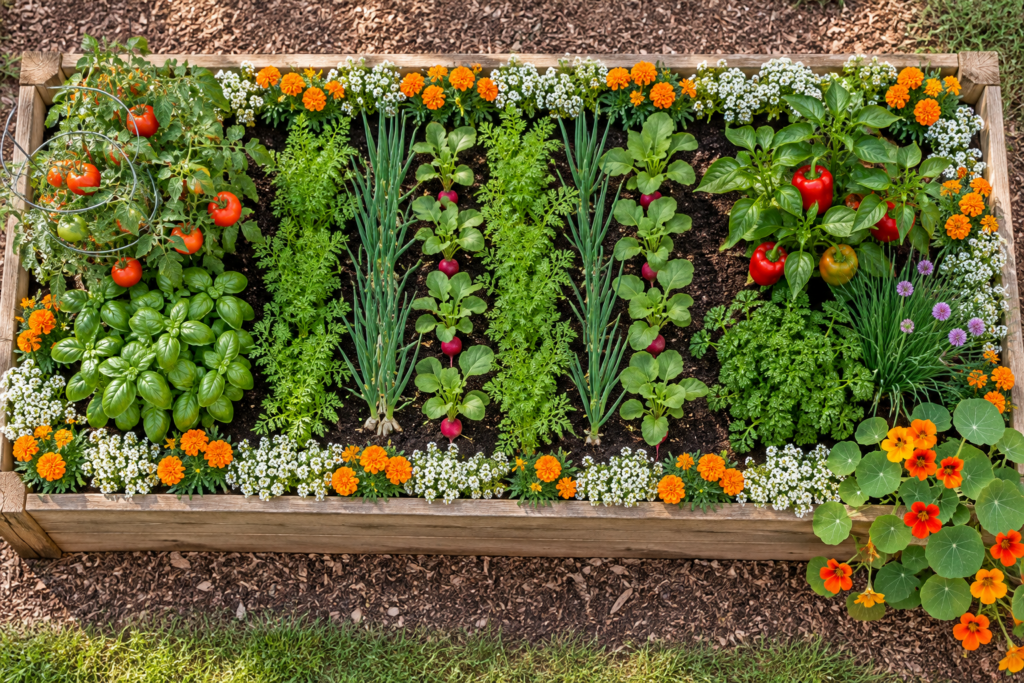
Putting companion planting into practice doesn’t require a complicated chart. A few straightforward steps help you build it into any garden, from a single raised bed to a large vegetable plot.
Start With Your Main Crops
Decide which vegetables you want most, then build companions around them. If tomatoes are your priority, plan basil, marigolds, and lettuce around them. If you’re growing cabbage-family crops, plan for dill, alyssum, and nasturtiums nearby.
Add Flowers and Herbs Throughout
Rather than keeping all flowers in one corner, scatter them through the garden. Plant sweet alyssum along bed edges, tuck marigolds and calendula between crops, and let a few dill and cilantro plants flower in each bed. Beneficial insects tend to stay close to their food sources, so spreading flowers across the garden spreads their benefits too.
Combine Plants by Growth Habit
The most practical companion planting pairs plants that use space differently:
- Tall with short: tomatoes, corn, or pole beans with lettuce, spinach, or herbs beneath.
- Deep roots with shallow roots: carrots and parsnips alongside lettuce, onions, and radishes.
- Fast with slow: radishes or lettuce between slow-growing carrots, parsnips, or cabbage.
- Upright with spreading: corn or trellised crops with ground-covering squash or nasturtiums.
Don’t Overcrowd
Companion planting often encourages dense planting, but crowding plants too closely reduces airflow, increases disease, and leads to competition for water and nutrients. Follow the recommended spacing for each crop and use companions to fill genuine gaps rather than squeezing in extra plants.
A Sample Companion Bed
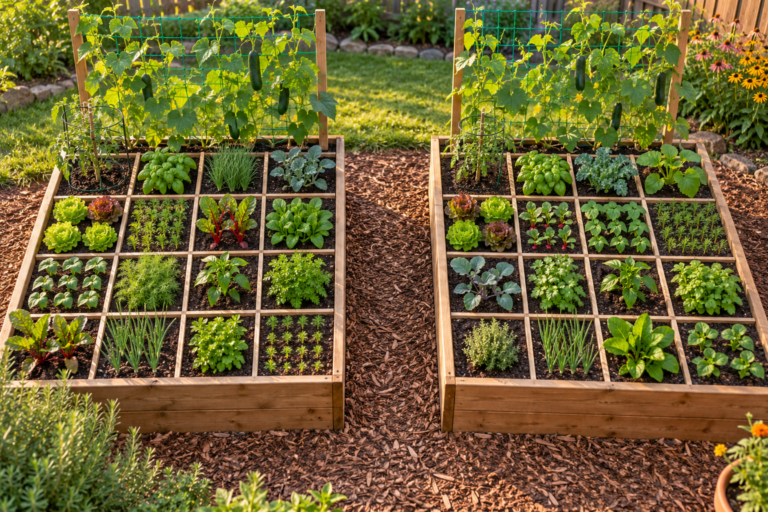
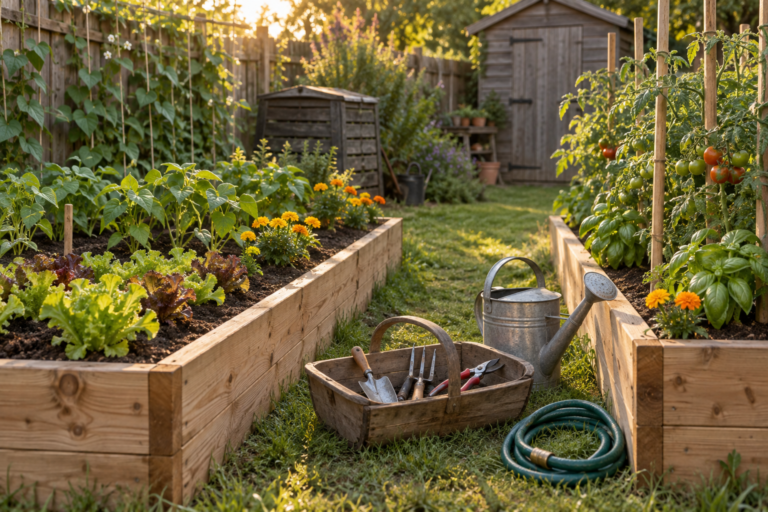
A 4 x 8 ft (120 x 240 cm) raised bed can be planted with companions like this:
- North end: two tomato plants on stakes, with basil planted between them and lettuce beneath.
- Center: a row of carrots interplanted with onions or leeks, with radishes sown between them to mark the rows.
- South end: a few pepper plants with parsley and chives around them.
- Edges: a border of sweet alyssum and French marigolds, with nasturtiums trailing over one corner as a trap crop.
Observe and Record
Companion planting results vary between gardens, climates, and seasons. Keep notes on what you plant together, which pests appear, and how well crops perform. Over a few seasons, you’ll learn which combinations work best in your conditions, which is far more reliable than any general chart.
Common Companion Planting Mistakes
Expecting complete pest control. Companions reduce pest pressure; they rarely eliminate pests. Keep checking plants.
Relying only on charts. Many recommendations are traditional rather than proven. Test combinations yourself.
Planting too few flowers. A single marigold won’t attract many beneficial insects. Plant flowers in groups and spread them throughout the garden.
Using pesticides that harm beneficial insects. Broad-spectrum insecticides kill the helpful insects companion planting is designed to attract.
Ignoring spacing and light. Companions that shade or crowd their partners can reduce yields.
Forgetting rotation. Companion planting doesn’t replace moving crops to new beds each year.
Treated as one part of good gardening practice, rather than a set of strict rules, companion planting brings more life into a garden. More flowers, more insects, more variety, and usually more food from the same patch of ground.
Frequently Asked Questions
Can you use companion planting in containers?
Yes. Container combinations work well when plants share similar light and water needs. A large pot can hold a tomato with basil and a marigold, or a pepper with parsley. Herbs like thyme and chives suit mixed containers, and a pot of sweet alyssum near vegetable containers attracts beneficial insects on patios and balconies.
Does companion planting work for roses and flower gardens?
Yes, many of the same principles apply. Flowers such as catmint, lavender, and alyssum planted near roses attract beneficial insects that feed on aphids. Garlic and chives are traditionally grown near roses to deter aphids, though evidence is limited. Mixed flower borders with a variety of plants generally have fewer severe pest outbreaks than single-species plantings.
What is the difference between intercropping and companion planting?
Intercropping is growing two or more crops in the same space at the same time, usually to make efficient use of space, light, and nutrients, and it’s widely used in agriculture. Companion planting is a broader term that includes intercropping but also covers planting specifically to attract beneficial insects, trap pests, or support other plants.
How close together should companion plants be?
It depends on the purpose. Plants meant to provide shade, support, or ground cover, such as lettuce under tomatoes, need to be grown close together. Flowers that attract beneficial insects work within the same bed or nearby, since many beneficial insects travel only short distances. Trap crops like nasturtiums usually go at the edges of beds or around the garden perimeter.
Can companion planting improve the flavor of vegetables?
Many gardeners believe companions such as basil improve the flavor of tomatoes, but there’s little scientific evidence for this. Flavor depends mostly on variety, sunlight, soil health, watering, and harvesting at the right time. Companion planting can indirectly help by producing healthier plants, which tend to produce better-tasting crops.
Do onions and garlic really repel pests?
The strong scent of onions, garlic, and other alliums may help mask nearby crops from some pests that find their hosts by smell, such as carrot flies. Research results are mixed, and the effect tends to be modest, strongest when alliums are planted in large numbers. They’re still useful companions, since they take up little space and fit easily between other crops.
Can companion planting replace pesticides?
Companion planting can significantly reduce the need for pesticides by attracting beneficial insects, trapping pests, and creating a more diverse, balanced garden. It rarely eliminates pest problems entirely. Combining companion planting with healthy soil, crop rotation, physical barriers such as insect netting, and hand-removing pests gives the best results without chemical sprays.
Keep Learning
For more beginner help, see How to Start a Garden: The Complete Beginner’s Guide, How to Start a Vegetable Garden: Step-by-Step Guide for Beginners, and Organic Fertilizer and Soil Amendments: A Complete Garden Guide.