Farmers’ Almanac Planting Calendar: How to Use It for Your Garden
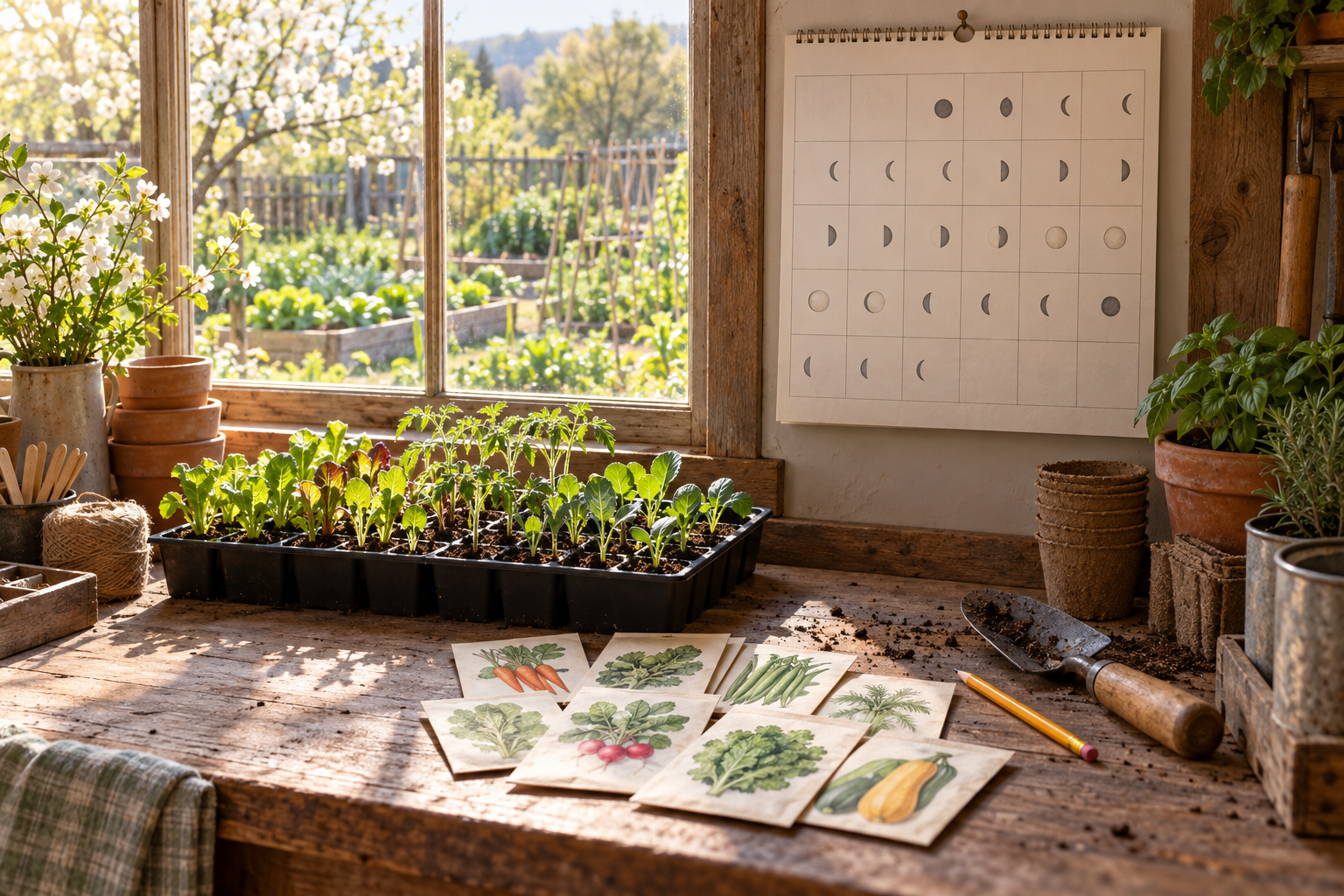
For generations, a well-thumbed almanac hung on a nail in farmhouse kitchens and garden sheds across America. Before sowing peas or setting out tomatoes, growers checked its pages for two things: how late the frosts were likely to linger, and which days the moon favored for planting. Plenty of gardeners still do exactly that, now…
For generations, a well-thumbed almanac hung on a nail in farmhouse kitchens and garden sheds across America. Before sowing peas or setting out tomatoes, growers checked its pages for two things: how late the frosts were likely to linger, and which days the moon favored for planting. Plenty of gardeners still do exactly that, now often on a phone rather than on paper.
An almanac planting calendar can be a genuinely useful planning tool, but only if you understand what it’s built on and how to fit it to your own garden. Some of its guidance rests on solid climate data. Some rests on centuries of tradition. And none of it knows about the cold hollow at the bottom of your yard or the late snowstorm forecast for next Tuesday.
This guide explains what an almanac planting calendar contains, the two systems most of them combine, how to read and apply the dates step by step, how to adjust them to local conditions, how to plan the whole gardening year around them, and how to build a personal calendar that eventually works even better than the printed one.
What an Almanac Planting Calendar Is
Almanacs have been part of American life since colonial times. They collected astronomical tables, tide times, weather predictions, recipes, folk wisdom, and farming advice into a single annual book. Planting guidance has always been one of their most popular features, and today many almanacs offer planting calendars in print and online.
What Is the Difference Between the Farmers’ Almanac and the Old Farmer’s Almanac?
They are two separate publications, often confused because of their similar names. The Farmers’ Almanac was first published in 1818, while The Old Farmer’s Almanac dates back to 1792 and is the older of the two. Both offer planting calendars, moon-based gardening dates, and long-range weather predictions, but they are produced independently and their dates and advice can differ.
When you see advice attributed to “the almanac,” it’s worth checking which one is meant, especially if you’re comparing dates from different sources.
What a Planting Calendar Contains
Most almanac planting calendars combine two kinds of guidance:
- Frost-date windows that tell you when to start seeds indoors, when to sow directly outdoors, and when to transplant seedlings, based on the average spring and autumn frost dates for your area.
- Moon-based “best days” that suggest specific dates within those windows for planting, weeding, harvesting, and other garden tasks, based on the moon’s phase and its position in the zodiac.
The two systems work very differently and deserve different levels of trust, so it helps to understand each one separately.
The Two Systems Inside Most Almanac Calendars
Frost-Date Planting Windows
The practical backbone of any planting calendar is the frost date. Your area’s average last spring frost date marks the point after which tender plants can usually go outdoors safely. Your average first autumn frost date marks the likely end of the growing season for frost-sensitive crops.
Planting windows are calculated by counting backward or forward from these dates:
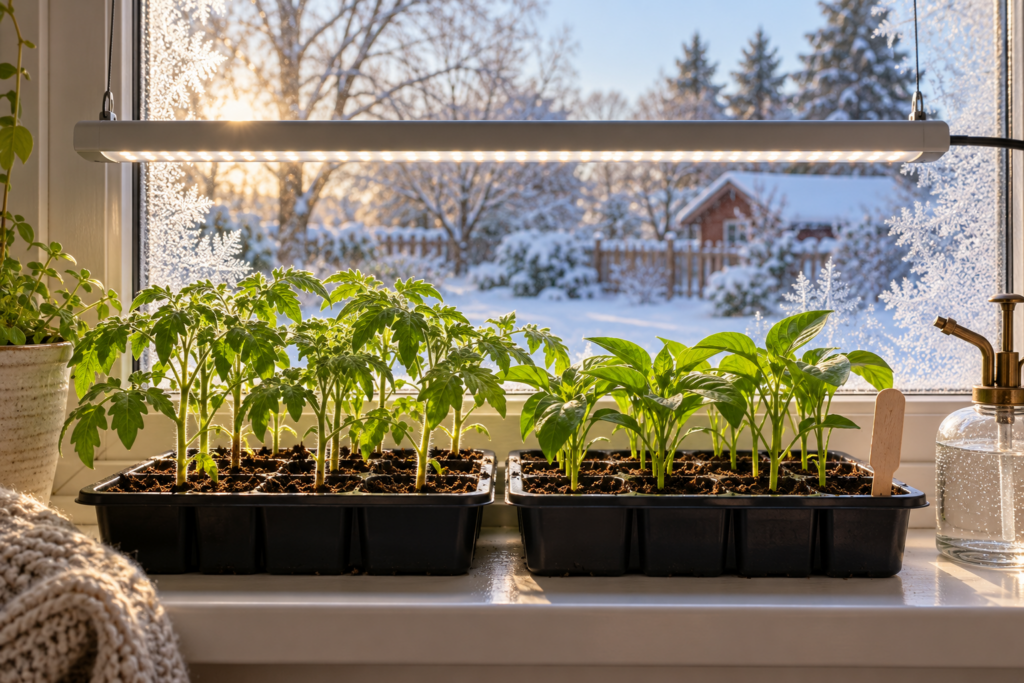
- Seeds started indoors are counted back from the last frost. Tomatoes are typically started about six to eight weeks before the last frost, peppers and eggplant about eight to ten weeks before, and fast growers like squash and cucumbers only three to four weeks before.
- Cool-season crops sown outdoors, such as peas, spinach, lettuce, radishes, and onion sets, can often go in several weeks before the last frost, since they tolerate light frost.
- Warm-season transplants and seeds, such as tomatoes, peppers, beans, squash, and corn, go outdoors after the last frost, once soil and nights have warmed.
- Autumn crops are counted back from the first autumn frost, using each crop’s days to maturity.
This part of the calendar is grounded in real climate records. Frost dates are drawn from historical weather data for your region, which makes them a reliable starting point.
Moon-Based Planting Days
The second layer is lunar gardening, a tradition found in almanacs for centuries. Almanac calendars often use two lunar factors.
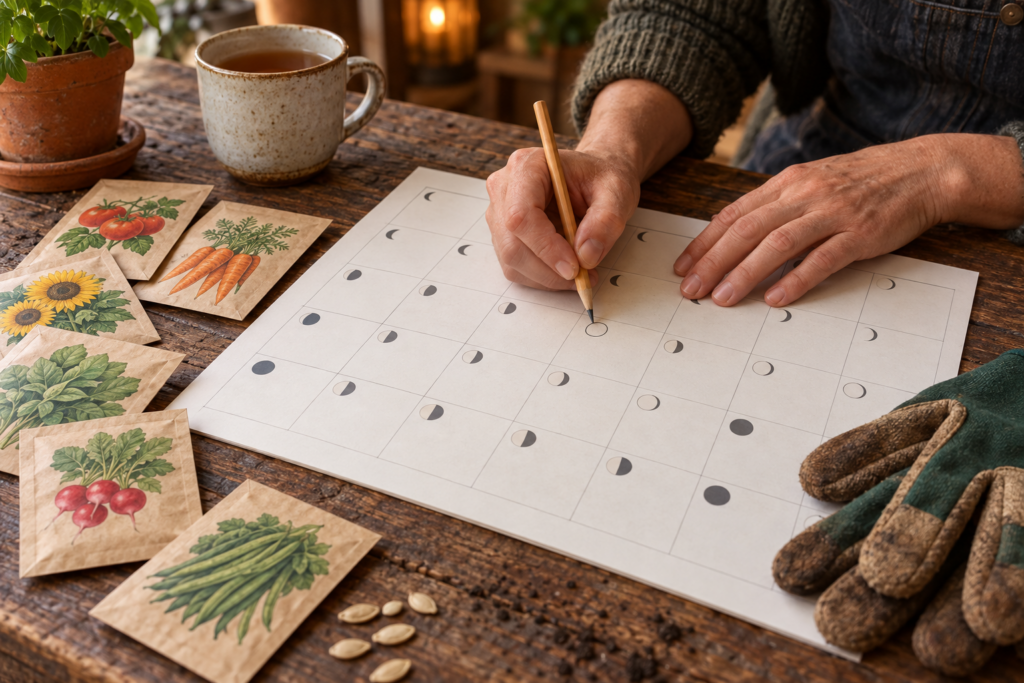
Moon phase. The traditional rule is to sow crops that produce their harvest above ground while the moon is waxing, between new moon and full moon, and to plant root crops, bulbs, and perennials while it’s waning, between full moon and new moon. The final days before the new moon are traditionally kept for weeding, pest control, and other maintenance.
Moon sign. Many almanacs also track which zodiac sign the moon is passing through, a cycle that repeats roughly every two and a half days. Traditional almanac gardening labels certain signs “fruitful,” considered good for planting and transplanting, and others “barren,” considered better for weeding, clearing ground, and harvesting crops for storage. The water signs, Cancer, Scorpio, and Pisces, are traditionally treated as the most fruitful, while signs such as Leo, Aries, and Gemini are traditionally treated as barren.
Combining phase and sign, an almanac might mark a particular few days in May as best for planting beans or tomatoes, and a different few days as best for planting potatoes or pulling weeds.
How Accurate Is the Almanac Planting Calendar?
The frost-date portion of an almanac planting calendar is generally reliable, since it’s based on historical climate averages for your area. The moon-based “best days” rest on tradition; there’s little scientific evidence that planting by the moon improves germination or yields. Treat frost windows as your main guide and moon days as an optional way to choose dates within them.
Almanac long-range weather forecasts are a separate matter from the planting calendar. They’re popular to read, but they aren’t dependable enough to plan planting dates around. Short-range forecasts from a local weather service are far more useful when deciding whether a particular week is safe for planting.
How to Read and Use the Planting Calendar Step by Step
Whether you use a printed almanac, an online planting calendar, or both, the process of turning its guidance into actual sowing dates follows the same steps.
Step 1: Confirm Your Frost Dates
Most online almanac planting calendars ask for a ZIP code or location, then calculate planting windows from the frost dates for the nearest weather station. Check that these dates match what local gardeners and your agricultural extension service report, since your garden may be warmer or colder than the station used.
Step 2: Choose Your Crops
List the vegetables, herbs, and flowers you want to grow. Note whether each is a cool-season or warm-season crop, and whether you’ll start it indoors, sow it directly outdoors, or buy transplants.
Step 3: Find Each Crop’s Window
Use the calendar to find the window for each task:
- The date range to start seeds indoors.
- The date range to transplant seedlings outdoors.
- The date range to sow seeds directly in the garden.
These windows are usually a few weeks wide, giving you flexibility to work around weather and your own schedule.
Step 4: Check the Seed Packet
Seed packets list important details the calendar may not: days to germination, days to maturity, planting depth, spacing, and sometimes the soil temperature needed for germination. A variety that matures quickly may fit a short season far better than one that takes much longer, even if the calendar gives the same window for both.
Step 5: Choose Specific Days
If you want to follow moon gardening, look at the calendar’s favorable days that fall within each crop’s window and pick one. If you don’t, choose any day in the window when the weather and soil are right. Either way, the window matters much more than the exact day.
Step 6: Write It Down
Mark each sowing, transplanting, and harvesting target on a wall calendar, garden planner, or phone reminder. A written plan makes it far easier to stay on schedule during the busiest weeks of spring.
When Should I Start Seeds Indoors?
Start most seeds indoors between four and ten weeks before your area’s average last spring frost, depending on the crop. Tomatoes typically need six to eight weeks, peppers and eggplant eight to ten weeks, and squash, cucumbers, and melons just three to four weeks. Starting too early produces leggy seedlings that outgrow their pots before it’s safe to plant outside.
A Worked Example
Suppose your average last spring frost date falls in mid-April. Working backward, you’d start peppers indoors around early to mid-February, and tomatoes around late February to early March. Peas, spinach, and radishes could be sown outdoors from about mid- to late March. Tomato and pepper transplants would go outside in late April or early May, once nighttime temperatures are reliably mild. Beans and squash would be sown directly once the soil has warmed, typically a week or two after the last frost.
If your last frost date is a month later, every one of those dates shifts roughly a month later too. That’s why a calendar tied to your own location is so much more useful than a general national chart.
Adjusting Almanac Dates for Your Local Conditions
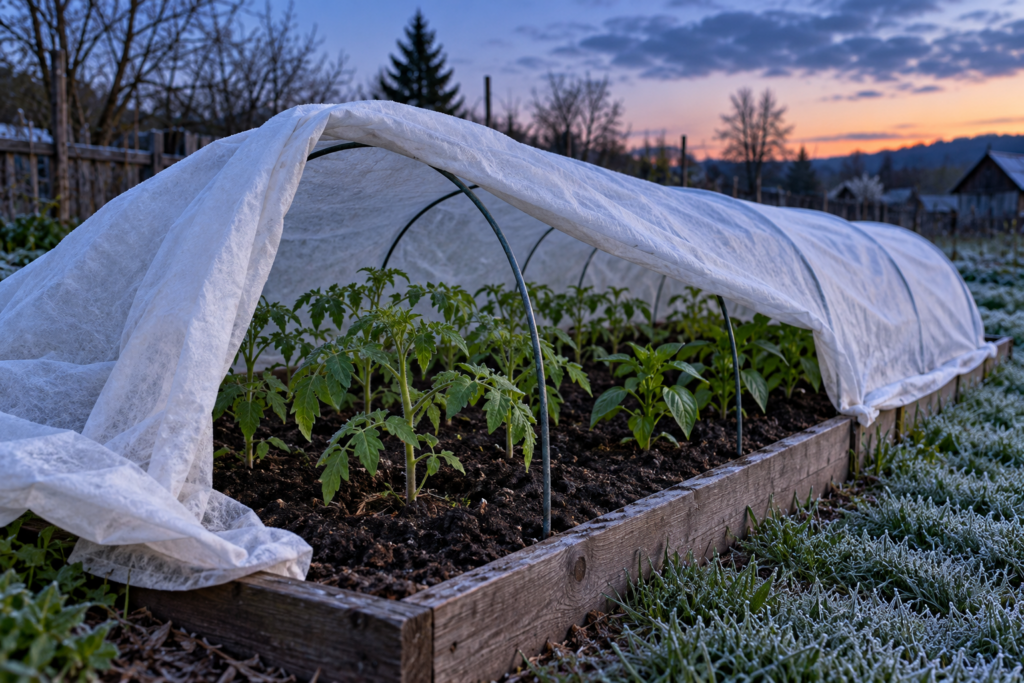
An almanac calendar is a starting point based on averages. Your garden’s actual conditions in any given year matter just as much.
Frost Dates Are Averages, Not Guarantees
An average last frost date means there’s still a real chance of frost after that date in any given year, often close to a coin flip on the average date itself. Many experienced gardeners wait a week or two past the average last frost before setting out tender plants like tomatoes, peppers, and basil, especially in regions known for late cold snaps.
Soil Temperature Matters More Than the Calendar
Seeds respond to soil temperature, not dates. Cool-season crops like peas and spinach germinate in cool soil, while beans, squash, corn, and cucumbers need noticeably warmer soil and may rot if sown into cold, wet ground. A simple soil thermometer pushed a few inches into the bed in the morning tells you far more about whether it’s time to sow than any printed date.
Microclimates
Conditions within your own yard can differ from the calendar’s assumptions. Low-lying areas collect cold air and frost later in spring and earlier in autumn. Beds beside sunny walls and paved areas warm faster. Elevation also matters: gardens at higher altitudes often have later spring frosts and earlier autumn ones than nearby lowland areas.
Check the Short-Range Forecast
Before planting out tender crops, check the local forecast for the next week to ten days. If a cold night is predicted, wait a few days or be ready to cover plants with frost cloth, buckets, or row covers.
What If the Almanac Date and the Weather Don’t Match?
When the calendar says plant but the weather says wait, trust the weather. Check the short-range forecast and soil temperature, and delay planting until conditions are right, even if it means missing a recommended moon day. Planting windows are usually several weeks wide, so a short delay rarely matters as much as protecting plants from frost or cold, waterlogged soil.
Regional and Hemisphere Differences
Almanac planting calendars are typically designed for particular regions and climates. Gardeners in hot, frost-free, or mild-winter regions may follow very different timing, often growing cool-season crops through winter and avoiding the hottest summer months. In the Southern Hemisphere, frost-based dates shift to the opposite seasons, while the moon’s phases occur at the same time worldwide.
A Season-by-Season Almanac Gardening Plan
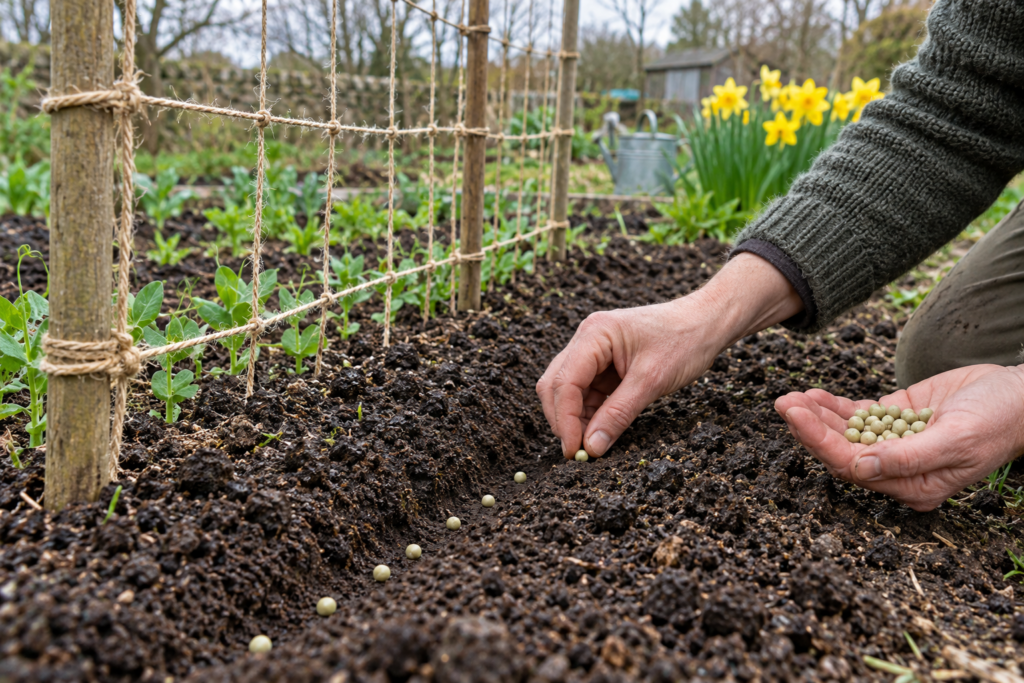
Putting frost dates, crop windows, and optional moon days together gives you a full-year plan. The timing below is described relative to frost dates, so it applies wherever you garden.
Late Winter
- Review last year’s notes and plan what to grow.
- Order seeds and check stored seed for viability.
- Start slow-growing crops indoors, such as onions, leeks, peppers, and eggplant, typically eight to twelve weeks before the last frost.
- Prepare seed-starting supplies, grow lights, and trays.
Early Spring
- Start tomatoes and other warm-season crops indoors about six to eight weeks before the last frost.
- Sow cool-season crops outdoors as soon as the soil can be worked, often several weeks before the last frost: peas, spinach, lettuce, radishes, carrots, beets, and onion sets.
- Plant potatoes, asparagus crowns, and early brassica transplants.
- Begin hardening off indoor-raised seedlings.
Late Spring
- Transplant tomatoes, peppers, eggplant, and basil after the last frost, once nights are reliably mild.
- Sow beans, squash, cucumbers, melons, and corn directly once soil has warmed.
- Plant annual flowers and warm-season herbs.
- Continue succession sowing of lettuce and radishes.
Summer
- Keep up succession sowings of fast crops like beans, lettuce, and carrots.
- Count back from your first autumn frost to plan autumn crops. Add each crop’s days to maturity to about two weeks of harvest time, then sow or transplant that many days before the first frost.
- Start autumn brassicas, such as broccoli, cabbage, and kale, in midsummer.
- Sow autumn carrots, beets, and turnips.
Autumn
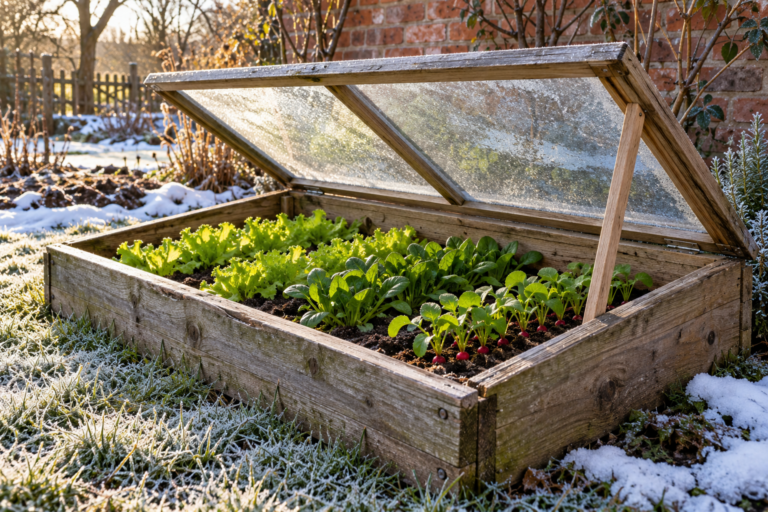
- Sow quick salad crops and spinach for autumn and winter harvests, using cold frames or row covers to extend the season.
- Plant garlic and spring-flowering bulbs a few weeks before the ground freezes.
- Harvest crops for storage, and sow cover crops in empty beds.
- Note your actual first frost date for next year’s calendar.
Winter
- Record what worked and what didn’t.
- Clean and sharpen tools, and organize seeds.
- Start planning next year’s calendar.
Building Your Own Garden Calendar
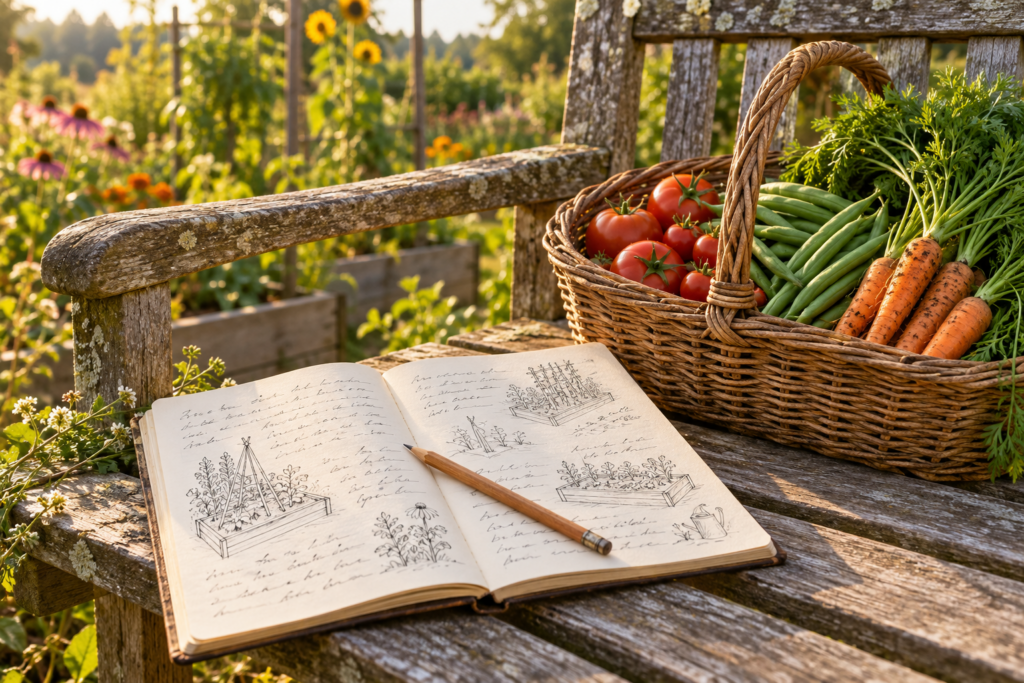
An almanac calendar is a helpful starting point, but the most accurate planting calendar is one built from your own garden’s history.
Why a Personal Calendar Works Better
Printed and online calendars rely on regional averages. Your garden has its own frost pockets, warm corners, soil, and weather patterns. After a few seasons of keeping records, you’ll know when your soil actually warms, when your last frosts usually happen, and which varieties perform best in your conditions.
What to Record
Keep a simple garden journal, spreadsheet, or calendar with:
- The dates you sowed, transplanted, and harvested each crop.
- Varieties grown, and how well each performed.
- How many days seeds took to germinate.
- Your actual last spring frost and first autumn frost each year.
- Unusual weather such as heat waves, cold snaps, droughts, and heavy rain.
- Pest and disease problems and when they appeared.
- Moon phase on sowing dates, if you want to test lunar planting for yourself.
Choosing a Format
A paper wall calendar is easy to see at a glance. A garden notebook allows more detail and sketches of bed layouts. A spreadsheet makes it easy to sort data and compare years. Many gardening apps let you set reminders for sowing and transplanting dates based on your frost dates. Use whichever format you’ll actually keep up.
Refining Your Calendar Each Year
At the end of each season, compare your notes with the almanac’s windows. If your tomatoes always struggle when planted at the start of the transplant window, shift your date later. If your autumn crops never mature before frost, sow them earlier. Over time, your personal calendar becomes tailored to your exact garden in a way no printed calendar can match.
Common Mistakes When Using Almanac Planting Calendars
Treating dates as exact rules. Planting windows are guides. Weather and soil conditions decide the right day.
Using frost dates for the wrong location. Make sure the calendar uses frost dates close to your garden, not a distant city.
Planting out on the average last frost date. There’s still a significant chance of frost on and after that date.
Ignoring soil temperature. Warm-season seeds sown in cold soil often rot or germinate poorly.
Starting seeds indoors too early. Leggy, root-bound seedlings struggle after transplanting.
Waiting for a moon day in bad weather. Missing a moon day matters far less than planting into frost or waterlogged soil.
Forgetting autumn planning. Autumn crops need to be sown in summer, often before the spring garden is finished.
Used as a flexible guide rather than a rulebook, an almanac planting calendar gives structure to the gardening year, and the notes you add to it become more valuable every season.
Frequently Asked Questions
Does an almanac planting calendar work for my region?
Almanac planting calendars that use your location or ZIP code base their windows on frost dates for your area, so they’re a reasonable starting point almost anywhere in the United States. Their accuracy depends on how closely your garden matches the nearest weather station, so adjust dates based on local frost patterns, elevation, and your own garden records.
Can I use an almanac planting calendar in the Southern Hemisphere?
Most almanac planting calendars are designed for North American seasons, so their frost-date windows don’t apply directly in the Southern Hemisphere. You can use the same counting method with your own local frost dates, shifted to your seasons. Moon phases occur at the same time worldwide, so lunar planting days still apply if you choose to follow them.
Can I use the planting calendar for flowers?
Yes. Annual flowers follow the same frost-based timing as vegetables. Hardy annuals like sweet peas and calendula can often be sown before the last frost, while tender annuals like zinnias, marigolds, and cosmos should be sown or planted after it. Seed packets list whether a flower is hardy or tender, which helps you place it in the right window.
What if I missed the recommended planting window?
You can often still plant. Choose faster-maturing varieties, buy transplants instead of starting from seed, or switch to crops that suit the current season. Many crops, such as beans, lettuce, and radishes, can be sown in succession well past their earliest window. For autumn crops, count back from your first frost date to see what still has time to mature.
Should I plan my garden around almanac weather forecasts?
Almanac long-range weather forecasts are interesting to read, but they aren’t reliable enough to base planting decisions on. Use frost dates for general planning, and rely on local short-range forecasts from a weather service in the days before planting tender crops or sowing seeds outdoors.
What is the difference between a planting calendar and a hardiness zone?
A planting calendar tells you when to sow and plant, based on frost dates and the length of your growing season. A hardiness zone tells you which perennials, trees, and shrubs can survive your winter, based on average extreme low temperatures. Gardeners use both: the zone to choose permanent plants, and the calendar to time vegetables and annuals.
When does almanac tradition say to plant garlic?
Garlic is traditionally planted in autumn, a few weeks before the ground freezes, so cloves can develop roots before winter. Moon gardening tradition favors planting garlic and other bulbs during the waning moon. For best results, time planting mainly by soil conditions and your local first frost, then choose a waning moon day if you follow lunar planting.
Keep Learning
For more beginner help, see How to Start a Garden: The Complete Beginner’s Guide, How to Start a Vegetable Garden: Step-by-Step Guide for Beginners, and Spring Gardening: What to Plant and How to Prep Your Garden.

One Comment