Personalized Home Decor: Custom Pieces to Make Your Space Feel Like You
Walk through a model home and something odd sinks in after a minute or two. Everything is pleasant, and nothing tells you who lives there. The sofa matches the rug, the art matches the pillows, and the whole room could belong to anyone at all. That anonymous feeling is exactly what personalized home decor is…
Walk through a model home and something odd sinks in after a minute or two. Everything is pleasant, and nothing tells you who lives there. The sofa matches the rug, the art matches the pillows, and the whole room could belong to anyone at all. That anonymous feeling is exactly what personalized home decor is meant to fix.
Personal doesn’t have to mean monogrammed towels or a wall of name signs. The rooms that feel most like their owners usually combine a few genuinely custom pieces with objects that carry a story: a recipe card in a grandmother’s looping handwriting, a dining table built to fit an awkward alcove, a print of the stretch of coastline where two people got engaged. These details do quiet work. Guests pick up on them, and you feel them every time you walk in the door.
What follows covers what personalization actually looks like, which custom pieces earn their price in each room, how to turn your own history into things you’d happily display, how to pull it off in a rental, how to work with a maker on a commission, and how to keep a personal home from sliding into clutter.
What Personalized Home Decor Really Means
Personalized home decor is any piece made, chosen, or altered to reflect the specific people who live in a space. It covers commissioned furniture and art, items customized with names, dates, or places, and objects with real personal history, such as heirlooms, travel finds, and things you’ve made with your own hands.
In practice, it helps to think about personal pieces in three loose groups, because each one plays a different role in a room.
Custom-made pieces are built from scratch to your specifications. A bookcase sized to the exact width of a chimney breast, a portrait commissioned from a painter, a quilt stitched from your late father’s shirts. These tend to cost the most and take the longest, and they’re usually the pieces people keep for decades.
Customized pieces start as something that already exists and get altered for you. Think of an engraved cutting board, a mass-produced armchair upholstered in a fabric you chose, or a stock print framed with a mat color pulled from your curtains. This is where most people start, since the cost and wait are far more manageable.
Curated personal objects weren’t made for you at all, but they mean something. The brass candlesticks from a flea market in Lisbon, the enamel pot your mother cooked in for thirty years, a child’s first clay pinch pot. Nobody else could replicate that part of your home, which is precisely why it matters.
The most convincing rooms use all three. A room built only from custom furniture can feel oddly sterile, like a very expensive showroom. A room built only from sentimental objects can feel like storage. The mix is what makes it read as a home.
Is personalized decor the same as themed decor?
No, and the distinction is worth holding onto. Themed decor commits a room to a single idea, like nautical or farmhouse, and everything bends toward it. Personalized decor follows the people, not a concept. A useful test: if a piece would make just as much sense in a stranger’s house with only the name swapped out, it’s a light touch of personalization at best. That’s fine in small doses, but it shouldn’t carry the room.
Custom Pieces Worth Investing In, Room by Room
Not everything in a home needs to be custom. The smartest place to spend is wherever fit matters, wherever you touch something every day, or wherever a piece becomes the focal point of the room. Here’s how that plays out space by space.
Living room
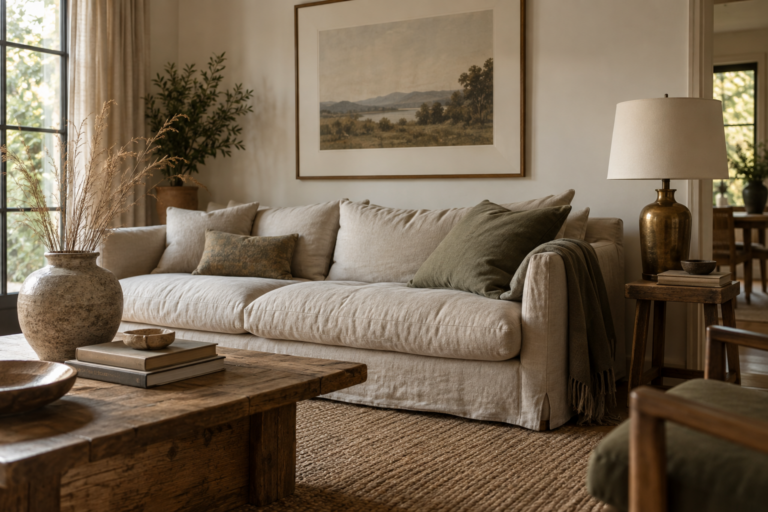
The sofa is the obvious candidate. Standard sofas are built for an average body, and if you’re very tall, very short, or like to curl up sideways, a made-to-order sofa with adjusted seat depth and arm height changes how the room feels to live in. Many upholstery workshops offer modular sizing without a fully bespoke price.
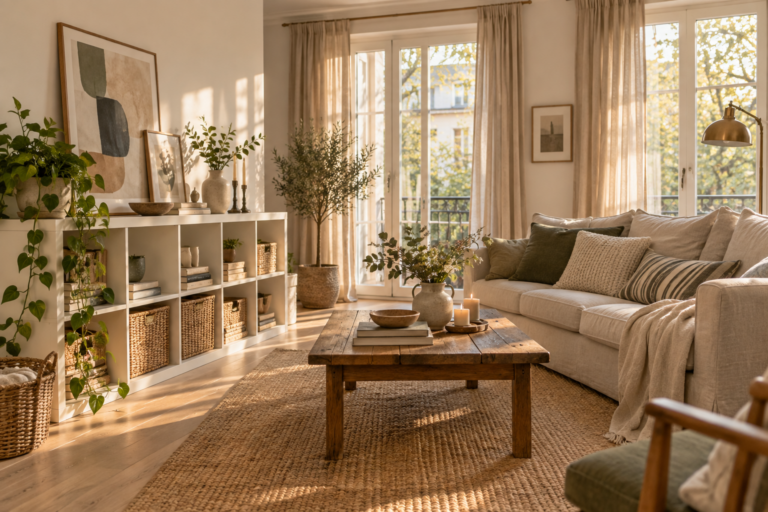
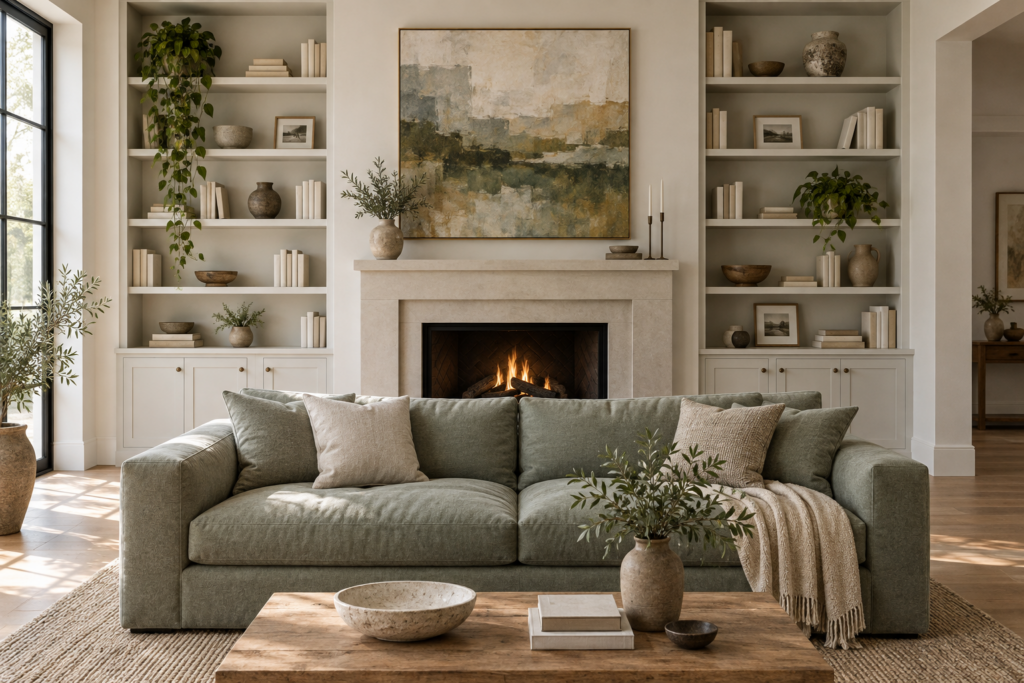
Built-in shelving is the other big one. Shelves that run floor to ceiling around a fireplace or television make a room look architecturally finished, and they give you a place to display the objects that make the room yours. If full built-ins aren’t possible, a carpenter can often add a crown molding and base trim to freestanding bookcases so they read as built in.
A single commissioned artwork, sized for the main wall, will do more than a scattering of small prints. Ask an artist to work from a photograph of a place you love or to use a palette taken from your furnishings.
Kitchen and dining area
A dining table built to the room avoids the most common mistake in dining spaces, which is a table that’s too big for comfortable movement. Designers generally recommend leaving roughly three feet between the table edge and walls or other furniture so chairs can pull out easily. A local woodworker can build a table to fit that clearance precisely, and in a wood that matches your floors or cabinets.
Smaller custom touches work well here too. An end-grain cutting board engraved with a family recipe in the original handwriting is both practical and sentimental. Open shelves can hold inherited dishes rather than a matched set from a big-box store. Even a hand-lettered sign for a pantry door can tie the space to the people who cook in it.
Bedroom
The bedroom is the most private room in the house, which makes it the easiest place to be personal without explaining yourself to anyone. An upholstered headboard in a fabric you picked, taller than a standard one, instantly turns a plain bed into a focal point. Custom-length curtains, hung high and wide so they just kiss the floor, make ceilings look taller and give the room a tailored finish that off-the-shelf panels rarely manage.
Embroidered pillowcases with initials, a framed star map showing the night sky over a meaningful date and place, or a small shelf of books you’ve actually loved all belong here more than in a public room.
Entryway
The entry sets the first impression, so a little personalization goes a long way. A custom house number plaque, a bench and hook rail built to the exact width of a narrow hallway, or a small painted mural on a single wall can all make the door feel like yours from the moment you step inside. A tray or dish from somewhere you’ve traveled, used to catch keys, is a small daily reminder.
Kids’ rooms and nurseries
Children’s spaces invite personalization, but they also outgrow it quickly. A wooden growth chart ruler with a child’s name lasts years and moves house with you. Framed artwork the child made will stay meaningful long after cartoon name decals stop being cool. If you want a big custom piece, choose something that adapts, such as a bookshelf or a bed frame, rather than something designed around one age.
Is custom furniture worth the cost?
Custom furniture is worth it when standard sizes don’t fit your room or your body, when you plan to keep the piece for ten years or more, or when you want construction quality that mass-produced pieces rarely offer. It’s usually not worth it for trend-driven pieces or if you’re likely to move soon into a differently shaped home.
Lead times are the other factor people underestimate. Made-to-order upholstery often takes several weeks, and fully bespoke woodwork from a small workshop can take several months, especially in busy seasons. If you need a piece by a specific date, raise that at the first conversation, not after the deposit.
Turning Your Own Story Into Decor
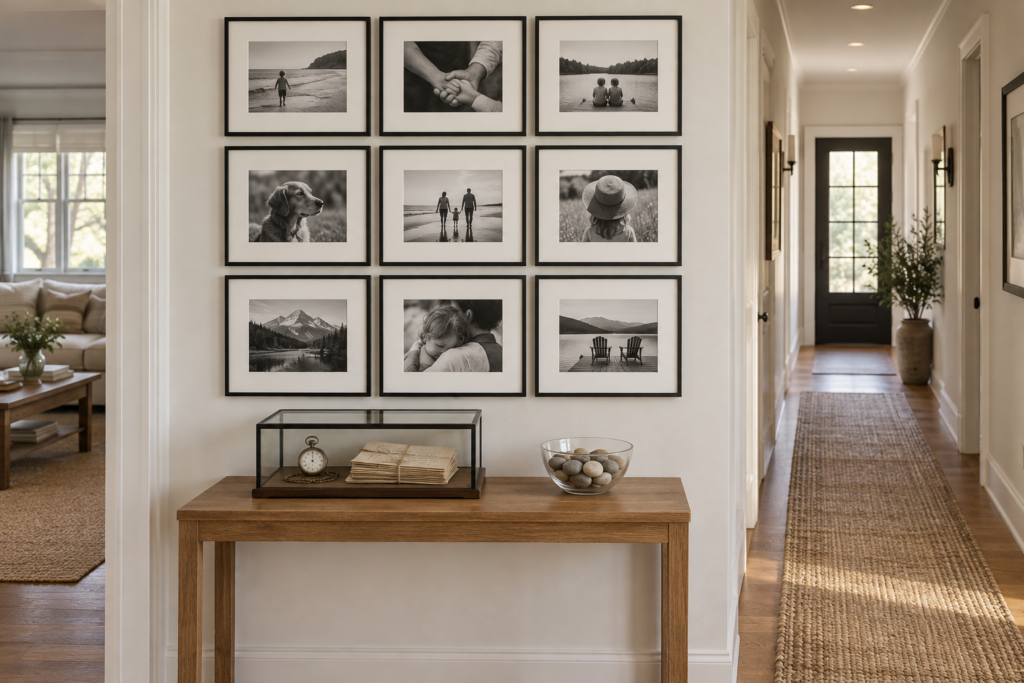
The most personal decor usually isn’t bought at all. It already exists in drawers, boxes, phones, and closets, waiting to be turned into something worth displaying.
How to display family photos without clutter
The cleanest way to display family photos is to impose consistency on the frames rather than the pictures. Use matching frames and mats in one or two finishes, print photos in black and white or a single tone, and group them into one intentional arrangement instead of scattering them across every surface in the house.
A grid of identical frames looks calm even when the photos inside span four generations. A looser salon-style arrangement works if you repeat one frame color. Before you hammer a single nail, trace each frame onto kraft paper, cut the shapes out, and tape them to the wall so you can adjust the layout for a day or two.
Height matters more than people think. Galleries commonly hang art so its center sits around 57 inches from the floor, roughly eye level for most adults, and treating a photo grouping as a single piece using that rule keeps it from floating too high. A picture ledge is a great alternative if you like swapping photos often, since frames just lean and nothing needs rehanging.
Finally, consider enlarging one exceptional photo instead of framing twenty ordinary ones. A single large print of a grandparent’s wedding day, or a candid shot from a family trip, often carries more feeling than a crowded wall.
Giving heirlooms a second life
Inherited furniture doesn’t have to stay in its original fabric or finish to stay meaningful. Reupholstering a grandmother’s armchair in a color that suits your room keeps the frame, and the memories, while making it fit your life. A dated wooden dresser can be refinished or given new hardware.
Smaller heirlooms often shine in a shadow box: military medals, a christening gown, a pocket watch, handwritten letters. A family quilt can hang from a simple wooden rod on a bedroom wall, where it’s protected from daily wear. Old tools from a grandparent’s workshop look striking mounted on a pegboard in a garage or utility room.
You don’t have to display everything you inherited. Choose the pieces you’d miss, store the rest properly, and rotate if you like.
Maps, places, and meaningful dates
Places are one of the easiest things to personalize around because they’re so specific. Custom map prints of a hometown, a college town, or the neighborhood of a first apartment work in almost any style of room. Coordinates engraved onto a small brass plaque or a wooden sign are subtler. A framed boarding pass, ticket stub, or hand-drawn route of a road trip adds a story that visitors tend to ask about.
Handwriting and children’s artwork
Handwriting is surprisingly powerful as decor. A scanned note from someone you’ve lost can be engraved into wood, embroidered onto linen, or etched onto glass. Recipe cards are a favorite because they’re already beautiful, stained and softened by years of use.
Children produce far more artwork than any wall can hold. A front-opening frame lets you swap the latest masterpiece in within seconds, so the display stays current. Many families photograph the rest each year and print it as a small hardbound book for the coffee table.
Travel finds and collections
Souvenirs work best when they’re useful or grouped. Textiles bought abroad can become cushion covers or a table runner. Beach stones or shells gathered over years look far better collected in one glass bowl than scattered along windowsills, and writing the place and year on the underside of each keeps the story attached.
How to Personalize a Rental Without Losing Your Deposit
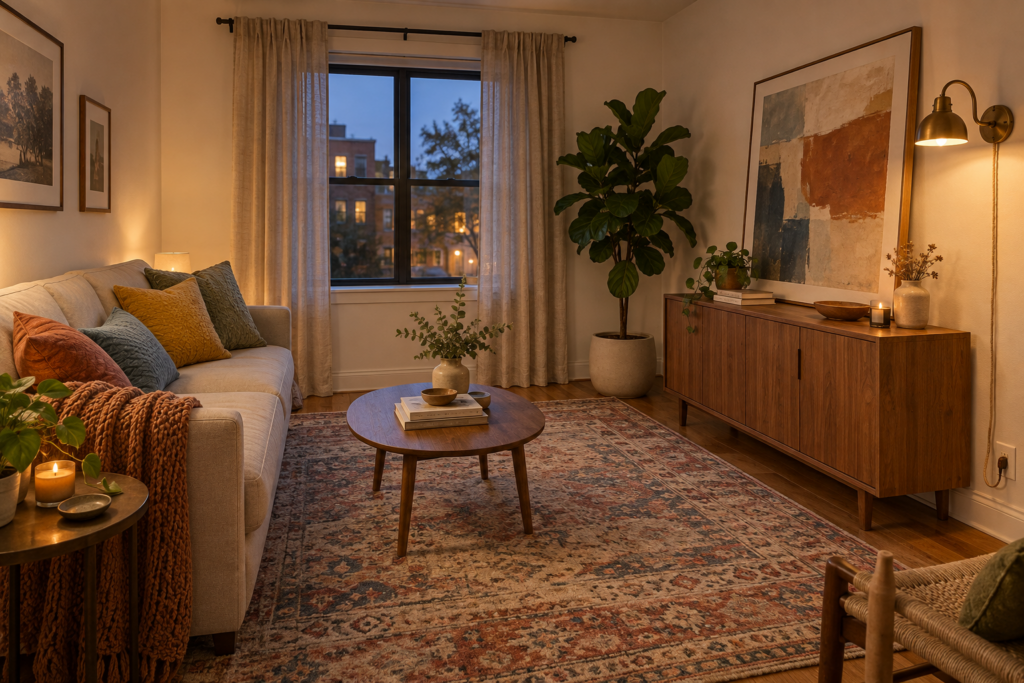
The safest way to personalize a rental is to focus on things that leave with you: art, textiles, lighting, rugs, and furniture. Lean large artwork instead of hanging it, use removable hanging strips carefully, and test any peel-and-stick wallpaper on a hidden patch first. Always get written permission before painting.
Renting doesn’t have to mean living with blank beige walls. It simply means shifting your personalization toward movable pieces and reversible changes.
Start with lighting, because rental lighting is almost always the weakest part of the space. Plug-in wall sconces with a cord cover mount with a couple of small screws and instantly add warmth. Swapping a harsh ceiling fixture for a fabric pendant is also usually reversible, as long as you keep the original fixture safely stored and have an electrician do the work if you aren’t confident.
Next, take on the walls without damaging them. An oversized mirror or artwork leaning on a dresser or the floor looks deliberate and needs no hardware. Picture ledges need only a few screw holes, which are generally treated as normal wear, though leases vary, so check yours. Removable adhesive strips work well on smooth, fully cured paint, but they can pull paint off textured walls or surfaces painted within the past few weeks.
Peel-and-stick wallpaper is a tempting option for an accent wall. Its removal depends heavily on the wall’s paint finish, so try a small sample behind a door or inside a closet, leave it for a couple of weeks, and peel it off before committing.
Kitchens and bathrooms can be personalized through swaps. Replace cabinet knobs and pulls with ones you love, then store the originals in a labeled bag to reinstall before you move out. A new shower head, a fabric shower curtain, and your own towels all change the feel of a bathroom completely.
Textiles do the heaviest lifting in rentals. A large rug covers an unfortunate carpet or floor, curtains in your chosen fabric soften a room, and slipcovers can refresh furniture that came with the apartment. When you commission custom pieces as a renter, favor things that are modular or freestanding, so they’ll still work in a home with different dimensions.
One last habit: photograph every room thoroughly when you move in. It protects you if any change you make is questioned later.
Commissioning Custom Work: How to Brief a Maker
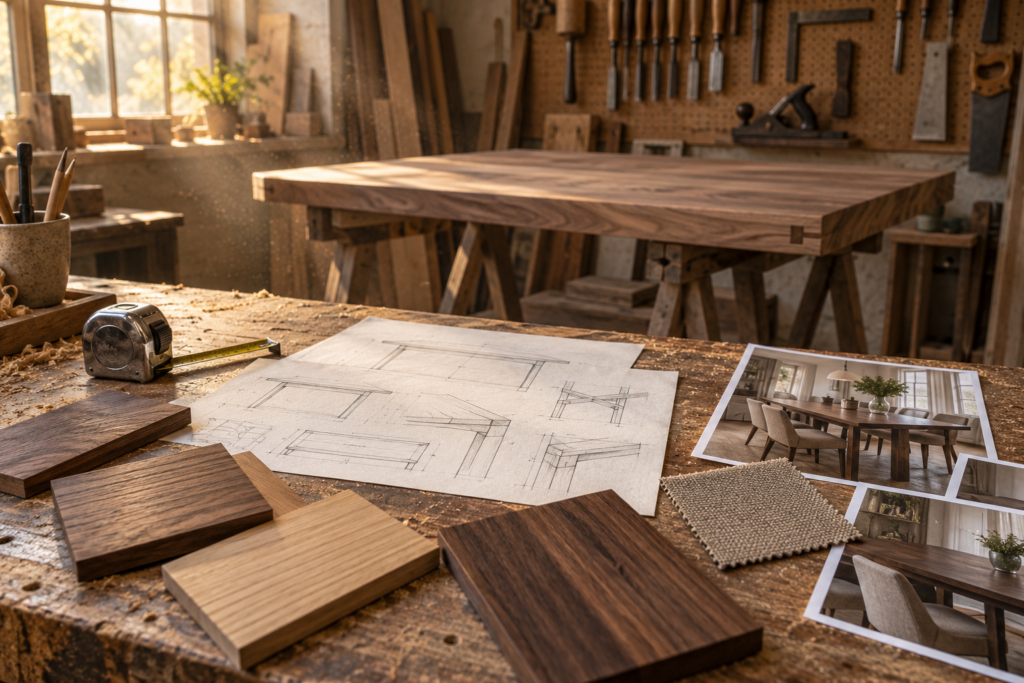
A strong brief covers the exact dimensions, where the piece will live, how it will be used, your budget range, your deadline, and reference photos showing what you like and what you don’t. The clearer this is from the start, the fewer revision rounds you’ll need and the closer the result will land to what you pictured.
Where to find makers
Good makers are often closer than you think. Local craft fairs and maker markets let you see work in person and talk to the person who made it. Upholstery shops, framing studios, and woodworking guilds are worth contacting directly. Art school graduate shows are an excellent place to find emerging painters and ceramicists whose prices haven’t yet caught up with their talent. Online handmade marketplaces and social media broaden the pool, but look for a portfolio showing pieces similar to what you want, not just good photography.
What to include in your brief
Measure the space twice and share the numbers along with photos of the room at different times of day, since light changes how colors and wood tones read. Include paint swatches or fabric samples from the room if color matching matters. Explain how the piece will actually be used: a coffee table that will hold feet and board games needs a different finish from one that will hold a vase. Share three or four images of things you love and one or two of things you don’t, because the dislikes often clarify more than the likes. Be upfront about your budget; a good maker will tell you what’s realistic within it rather than quietly designing past it.
Deposits, proofs, and timelines
Many independent makers ask for a deposit before starting, commonly somewhere between a third and half of the total. Before paying, get the agreement in writing, including the price, timeline, number of revision rounds, delivery or shipping terms, and what happens if either side cancels.
For anything with names, dates, or text, insist on a proof and check it slowly, letter by letter. A misspelled name engraved in walnut can’t be fixed with a quick edit. For larger pieces, ask to approve a sketch or material sample before production starts.
How far ahead should you order a personalized gift?
Give yourself more time than seems necessary. For simple customized items like engraved boards or embroidered linens, a few weeks is often enough outside peak seasons. For commissioned art or furniture, think in months. Many makers stop accepting holiday orders by late autumn, so for December gifts, early autumn is the safer time to reach out.
Keeping It Personal Without Making It Cluttered or Kitschy
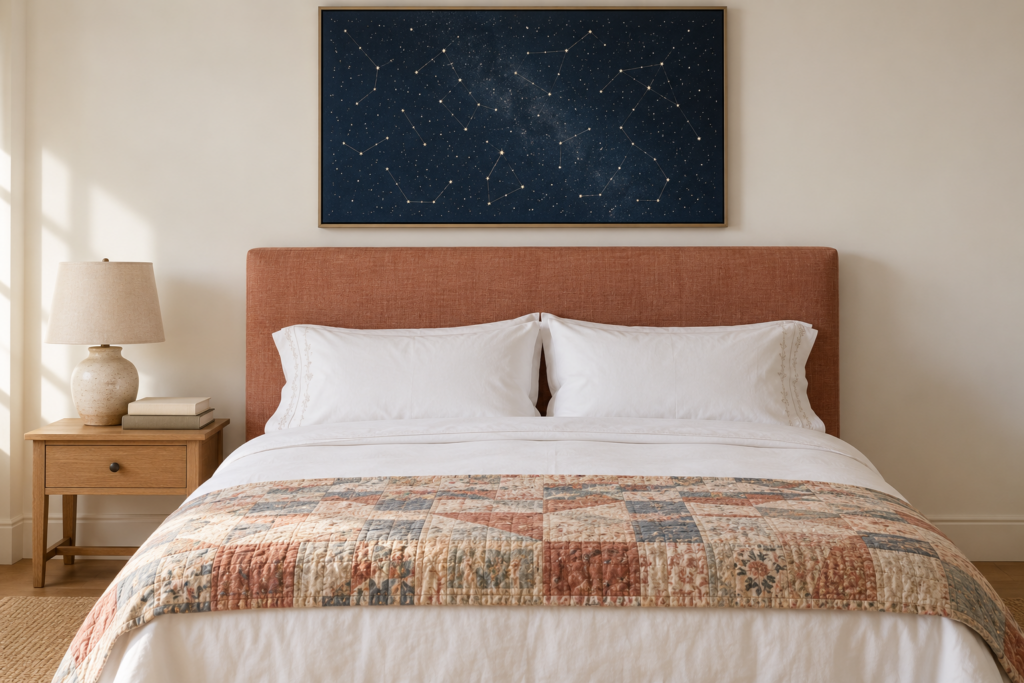
Personal rooms fail in two predictable ways. They get crowded, with every meaningful object competing for attention, or they get kitschy, with names and phrases stamped on everything. Both are easy to avoid once you know what to watch for.
Let one piece lead each room. Decide which personal piece is the star, perhaps the commissioned painting or the heirloom sideboard, and let everything else support it. When everything is special, nothing is.
Favor scale over quantity. One large framed map says more than ten small souvenirs. Grouping small items on a tray or in a single cabinet turns scattered objects into a collection.
Repeat a material or color. Personal objects come from different eras and places, so they rarely match. Repeating a wood tone, metal finish, or accent color throughout the room ties them together visually, even when the objects themselves are wildly different.
Leave empty space. Blank wall and clear surface give meaningful pieces room to be noticed. A shelf styled at roughly two-thirds full looks curated; a full one looks like storage.
Go easy on words. One monogram or one hand-lettered piece in a room feels charming. Names on the pillows, the doormat, the wall sign, and the mugs starts to feel like a gift shop. If you love text, choose handwriting from real people over generic phrases.
Rotate instead of adding. Keep a labeled box of personal pieces you love but aren’t displaying, and swap things seasonally. The room stays fresh, and objects you haven’t seen for months feel new again.
How do you make a new house feel like home quickly?
The fastest way to make a new home feel like yours is to unpack the few things that carry the most meaning first: a favorite artwork, familiar bedding, a lamp for warm light, and a handful of photographs. Personal textiles and lighting change the feel of a room within hours, long before furniture decisions are settled.
After that, resist the urge to fill every wall in the first month. Live in the space for a while, notice where your eye naturally lands, and place the most meaningful pieces there.
Frequently Asked Questions
What are some easy personalized home decor ideas for beginners?
Start with changes that need no special skills: frame a handful of favorite photos in matching frames, reupholster or recover a single chair or cushion in fabric you love, display a collection in one grouping, and have a meaningful recipe or note engraved onto a cutting board. These give a room a personal feel without a big budget or long wait.
How much does custom home decor usually cost?
Costs vary enormously by type. Customized items like engraved accessories or embroidered linens are often affordable, while commissioned original art and made-to-order furniture can cost many times more than mass-produced equivalents because of materials, skilled labor, and the time involved. Getting quotes from two or three makers is the best way to understand realistic prices in your area.
Will personalized decor hurt my home’s resale value?
Movable personal pieces have no effect on resale value, since they leave with you. Highly specific permanent features, such as built-ins engraved with family names or bold murals, may need to be neutralized before listing. Most agents recommend depersonalizing for showings by packing away family photos and name signs so buyers can picture themselves in the space.
What’s the difference between personalized, custom, and bespoke decor?
Personalized usually means an existing item has been altered with a name, date, or chosen detail. Custom generally refers to something made or modified to your specifications, like a sofa in a chosen size and fabric. Bespoke is the most involved, describing a piece designed and built from scratch for one client, often with several consultations along the way.
How can I personalize a small apartment without it feeling crowded?
Choose fewer, larger personal pieces instead of many small ones, and use vertical space with a single gallery grouping or tall shelving. Built-in style storage keeps sentimental items organized, and mirrors help the space feel open. Rotating displayed objects seasonally lets you enjoy more of your collection without ever showing all of it at once.
Are DIY personalized pieces as good as commissioned ones?
They can be, depending on the piece. Handmade items often carry more meaning precisely because you made them, and projects like painted planters, simple frames, or embroidered cushions are very achievable. For anything structural, like furniture that bears weight, or anything needing precise fit, a skilled maker usually delivers a safer and longer-lasting result.
How do I care for engraved wood and embroidered textiles?
Wipe engraved wood with a soft, slightly damp cloth and dry it immediately, then condition it occasionally with food-safe mineral oil if it’s used in the kitchen. Avoid dishwashers and long soaks. Embroidered textiles last longest when washed gently on a cool cycle or by hand, turned inside out, and dried flat away from direct sunlight.
Can I personalize a home that shares space with a partner or roommates?
Yes, and the best shared homes reflect everyone. Give each person one or two spaces or surfaces that are fully theirs, and choose shared pieces together, such as a map print combining places that matter to both of you. Agreeing on a common color palette makes different personal objects sit comfortably side by side.