Diwali Home Decoration Ideas: Diyas, Rangoli, Flowers, and More
Diwali changes the way a home looks and feels for a few glowing days each year. Weeks before the festival, cupboards get emptied, walls get scrubbed, and old brass gets polished until it shines. Then, on the evening of Lakshmi Puja, every doorway, window ledge, and balcony railing fills with small flames, and the whole…
Diwali changes the way a home looks and feels for a few glowing days each year. Weeks before the festival, cupboards get emptied, walls get scrubbed, and old brass gets polished until it shines. Then, on the evening of Lakshmi Puja, every doorway, window ledge, and balcony railing fills with small flames, and the whole street seems to light up at once.
The festival of lights is built around a simple idea: light pushing back darkness, and a clean, welcoming home ready to receive prosperity and good fortune. Good Diwali decorating follows that idea closely. It doesn’t need to be expensive or elaborate. A freshly cleaned entrance, a hand-drawn rangoli, a string of marigolds over the door, and rows of clay diyas already capture the spirit of the celebration better than any amount of store-bought glitter.
This guide covers how to prepare and plan, how to light your home safely and beautifully, how to create rangoli at any skill level, how to use flowers and torans, how to arrange a puja space, and how to decorate each room, including small apartments and balconies.
Preparing Your Home for Diwali: Cleaning, Planning, and Choosing a Color Scheme
Diwali decorating starts with deep cleaning, which is traditionally done in the days or weeks before the festival to welcome Goddess Lakshmi into a tidy home. Once the house is clean and decluttered, choose a color scheme, plan which areas to decorate, and gather supplies such as diyas, oil, wicks, rangoli colors, and flowers well ahead.
Rushing on the festival day is the most common reason Diwali decor feels stressful. Spreading the work across the preceding weeks makes the celebration itself far more enjoyable.
Why do people clean their homes before Diwali?
Cleaning before Diwali is rooted in the belief that Goddess Lakshmi, associated with wealth and prosperity, enters homes that are clean, bright, and well kept. Practically, it also marks a seasonal reset after the monsoon, when damp, dust, and clutter build up, so homes are repaired, repainted, and refreshed before the festive season begins.
Many families treat this as a full household project. Common tasks include:
- Washing curtains, cushion covers, and bedsheets
- Clearing out old newspapers, broken items, and clothes nobody wears
- Wiping fans, light fixtures, and window grilles
- Polishing brass and silver puja items with a paste of lemon and salt, or tamarind
- Touching up chipped paint or whitewashing walls
- Cleaning the entrance and threshold thoroughly, since this is where rangoli and diyas will go
Work room by room from the top down, starting with ceilings and fans and finishing with floors, so dust doesn’t settle on surfaces you’ve already cleaned.
Choosing colors and a decor theme
Traditional Diwali palettes are warm and saturated: marigold orange, turmeric yellow, vermilion red, deep pink, and gold. These colors look wonderful by lamplight and match marigolds, brass, and clay perfectly.
If you prefer a quieter look, a few alternatives work well:
- White, gold, and green. Jasmine, tuberose, mango leaves, and brass create an elegant, calm atmosphere.
- Ivory and blush with rose gold. Soft and modern, suitable for contemporary apartments.
- Emerald, magenta, and gold. Rich jewel tones that feel regal, especially with silk textiles.
- Earthy terracotta and cream. Natural clay diyas, jute, and dried flowers for an eco-conscious look.
Pick a palette and repeat it across cushion covers, flowers, lanterns, and rangoli so the home feels cohesive rather than scattered.
Making a simple Diwali decor plan
Decide on focal areas before buying anything. For most homes, these are the main entrance, the puja space, the living room, and the balcony or windows visible from outside. Note what you already own, such as brass lamps, urlis, fairy lights, and cushion covers, and buy only what fills the gaps.
Clay diyas often need soaking in water for a few hours before use so they absorb less oil, which is worth remembering when you plan your week. Fresh flowers should be bought the day before or the morning of the main puja so they stay fresh.
Diwali Lighting Ideas: Diyas, Lanterns, and String Lights
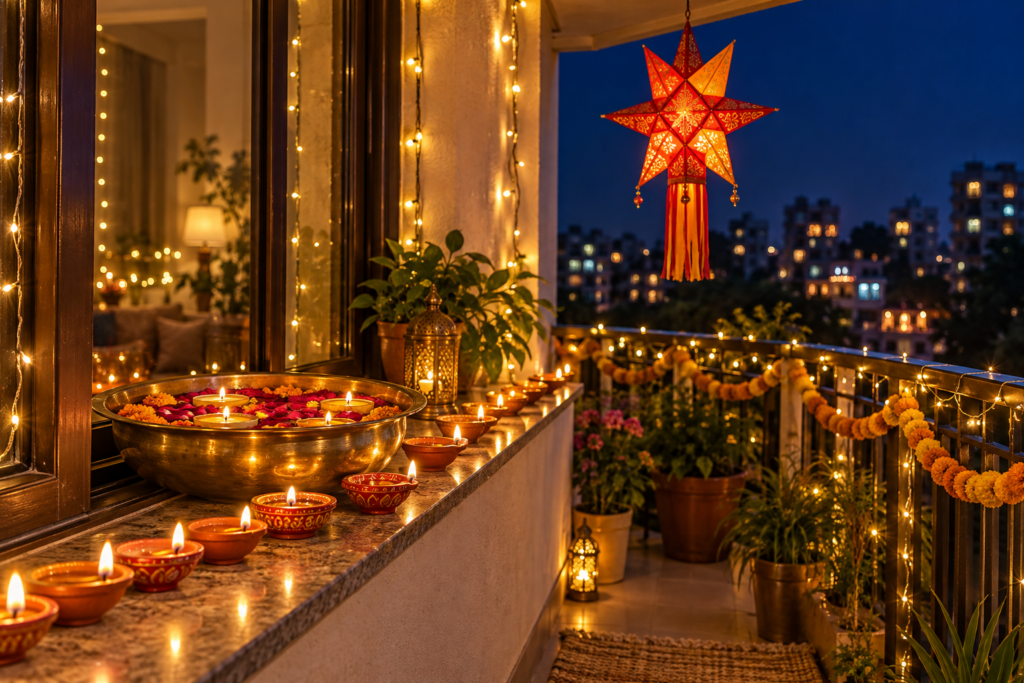
Lighting is the heart of Diwali decoration. Traditional clay diyas filled with oil or ghee are placed at entrances, windows, balconies, and around rangoli. Hanging lanterns, candles, and warm string lights add layers of glow indoors and outside. Mixing flame-based lamps with electric lights creates a festive look while keeping safety manageable.
Traditional clay diyas
Plain terracotta diyas are inexpensive, biodegradable, and deeply tied to the festival. To prepare them, soak them in water for a few hours, let them dry completely, then fill each with mustard oil, sesame oil, or ghee and add a cotton wick. Twisting your own wicks from cotton wool is easy and gives a steadier flame.
Place diyas in rows along the threshold, on the edges of steps, along balcony ledges, and around the base of a rangoli. An odd number, such as five, eleven, or twenty-one, is often preferred in many households, though customs vary from family to family.
For a decorative touch, paint unglazed diyas with acrylic paint in gold, red, or turquoise and add small mirrors, dots, or lace patterns. Paint only the outside, and let it dry fully before lighting.
Lanterns and akash kandils
Hanging lanterns bring height to Diwali decor. In Maharashtra, the akash kandil, a star-shaped paper or bamboo lantern, is a strong tradition and is hung outside homes where it can be seen from the street. Paper, fabric, and bamboo lanterns come in many shapes, and handmade versions sold in local markets usually look more characterful than mass-produced plastic ones.
Use LED bulbs inside paper and fabric lanterns. Traditional bulbs and flames can scorch or ignite them.
String lights and electric lighting
Warm white or golden fairy lights create the soft sparkle many people associate with Diwali. Drape them along window frames, balcony railings, staircase banisters, and the edges of the puja shelf. Curtain lights hung behind sheer fabric turn an ordinary window into a glowing backdrop.
Multicolored lights are traditional in many neighborhoods and look cheerful from outside, but warm white lights tend to look more refined indoors. Many homes use colored lights on the exterior and warm white inside.
Before hanging any electric lights, check the wires for fraying, avoid overloading one socket with several strings, and switch outdoor lights off overnight.
Floating candles and urlis
An urli, a wide, shallow bowl usually made of brass or bell metal, filled with water, flower petals, and floating candles makes a beautiful centerpiece for an entrance or coffee table. Add marigold, rose, or chrysanthemum petals, a few whole flower heads, and three to five floating tea lights. Change the water daily so it stays clear, and keep the urli out of reach of small children.
How do you use diyas safely at home?
Place diyas on stable, non-flammable surfaces away from curtains, dupattas, paper decorations, and dry flowers. Keep them out of reach of children and pets, never leave them burning in empty rooms, and have a bucket of water or sand nearby. Wear cotton rather than synthetic clothing when lighting lamps, since loose synthetic fabric catches fire easily.
Crowded doorways are a particular risk, because guests arrive in flowing festive clothes. Keep a clear walking path between diyas on the threshold, and move lit lamps slightly to the sides rather than directly where people step.
Rangoli Designs for Your Entrance and Floors
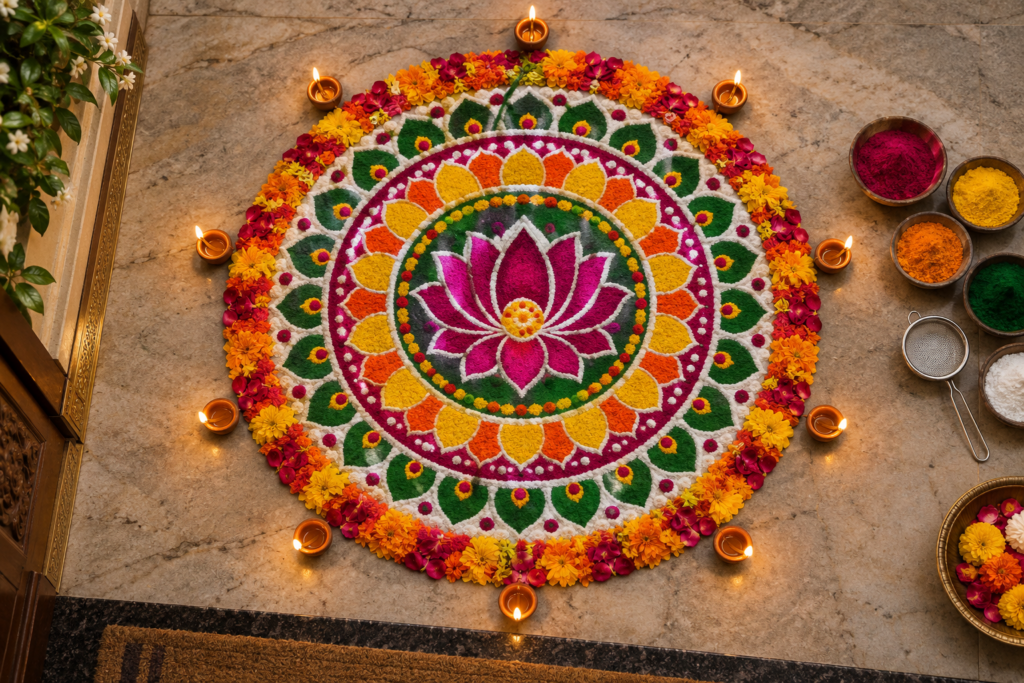
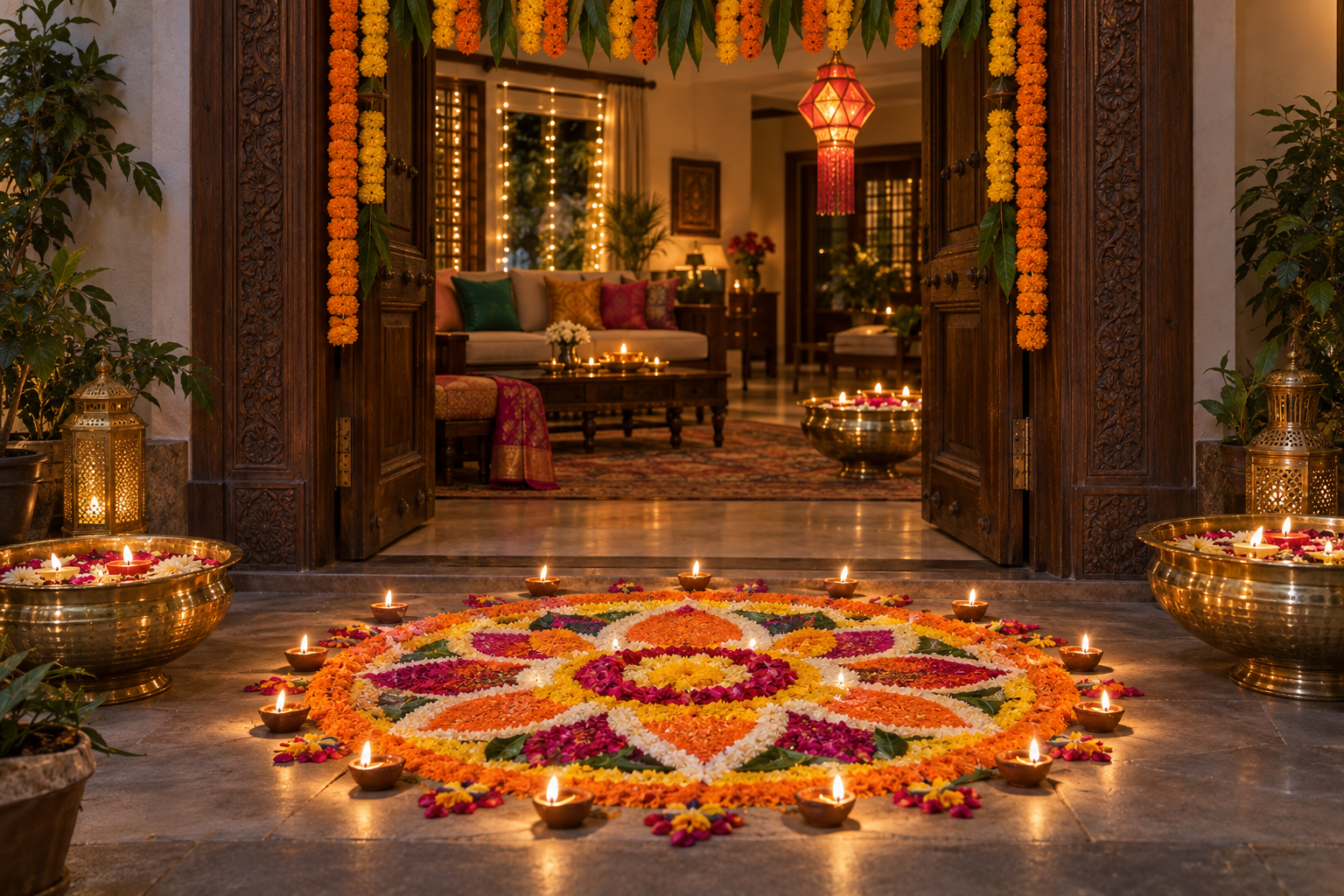
Rangoli is a decorative floor design created at the entrance of a home during Diwali to welcome guests and prosperity. It is made using colored powders, rice flour, flower petals, or chalk, and can range from simple dot patterns to intricate mandalas. Drawing it the morning of or before Lakshmi Puja is common in many households.
Regional names and styles differ. It’s known as kolam in Tamil Nadu, where designs are often drawn with rice flour in continuous lines, muggu in Andhra Pradesh and Telangana, and alpana in Bengal, where white rice paste is common. All share the same spirit of beautifying the threshold.
Choosing rangoli materials
- Colored rangoli powder gives bright, crisp designs and is the most common choice.
- Rice flour is traditional in South India and has an added meaning, as it feeds ants and birds.
- Flower petals from marigolds, roses, chrysanthemums, and leaves create rich, textured designs and are easy to sweep up and compost.
- Chalk or colored chalk works well for outlines and on surfaces where powder would blow away.
- Colored rice, dyed with food coloring and dried, adds texture and can be reused.
- Lentils and grains in natural shades, such as masoor dal, moong, and rice, suit earthy, eco-friendly designs.
Natural colors from turmeric, kumkum, beetroot powder, and dried leaf powder are gentler alternatives to synthetic powders, especially in homes with children and pets.
How to draw a rangoli step by step
- Clean and dry the surface. Sweep and mop the area, then let it dry completely so powder doesn’t clump.
- Mark the center. Use chalk to mark a small dot where the middle of the design will sit.
- Draw the outline in chalk. Sketch circles, petals, or a grid of dots first. A string tied to a piece of chalk works as a simple compass for even circles.
- Outline with white or a dark color. Pinch powder between your thumb and first two fingers, and let it fall in a thin, controlled line as you move your hand.
- Fill from the center outward. This stops you from smudging finished parts with your hands or wrists.
- Add details and diyas. Finish with dots, edges, petals, and a ring of diyas placed around, not on, the design.
A tea strainer is useful for sprinkling an even layer of fill color, and a spoon, cone, or plastic bottle with a small hole makes neat lines if hand pinching feels difficult.
Easy rangoli ideas for beginners
If you’re new to rangoli, keep the design small and symmetrical. A few approaches look impressive with little practice:
- Dot-grid kolam. Place dots in a grid, such as five rows by five, and join them with curved lines. Repeating the same loop around each dot quickly builds a pattern.
- Simple flower mandala. Draw a circle, add eight petals around it, then a second ring of larger petals, alternating colors.
- Diya motif. Draw a lamp shape with a flame in yellow and orange, framed by a circle of dots.
- Stencil rangoli. Place a plastic stencil on the floor, sprinkle color through a strainer, and lift carefully.
- Petal rangoli. Arrange marigold and rose petals in concentric circles, with a single lotus or a brass diya in the center.
Lakshmi footprints, small feet drawn or stamped with rice paste or kumkum leading from the entrance toward the puja room, are a traditional addition in many homes and are simple to make.
How can you make rangoli last longer?
Draw rangoli in a sheltered spot away from fans, wind, and heavy foot traffic, and use slightly thicker layers of powder. Sprinkling a light layer of fine sand or salt underneath helps colors stay put, and flower petal designs can be misted gently with water to stay fresh through the evening.
For tiled or marble floors, and for renters, reusable rangoli made from felt, acrylic, or mirror pieces or painted on a wooden board can be placed at the door each year and stored flat afterward.
Flowers, Torans, and Traditional Diwali Accents
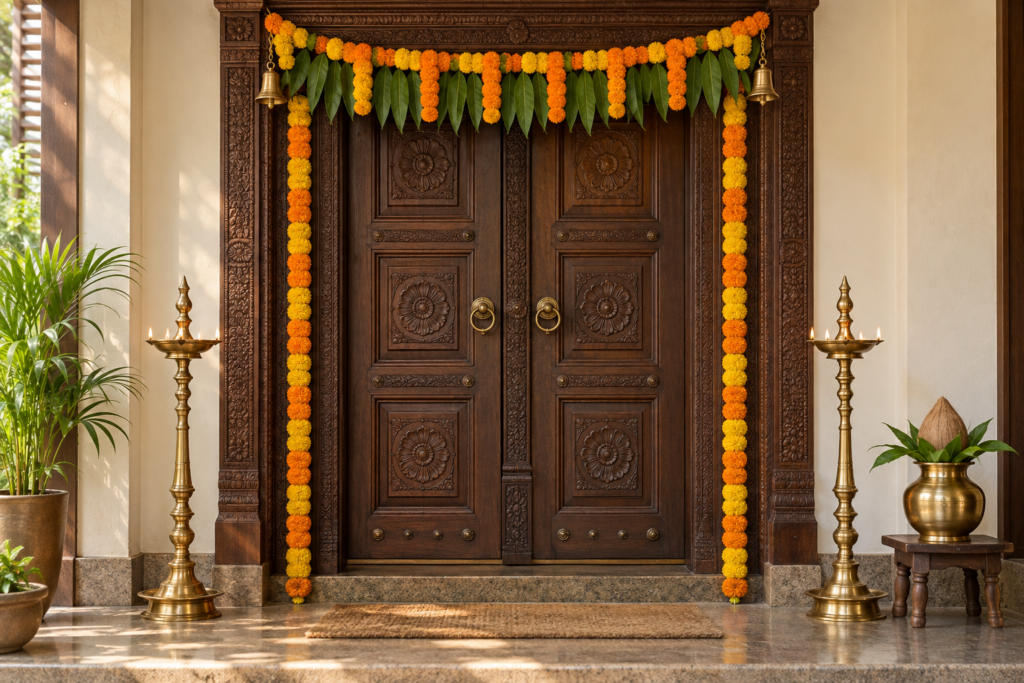
Fresh flowers are central to Diwali decor. Marigolds are the most traditional, strung into garlands and torans for doorways, while roses, jasmine, chrysanthemums, and tuberose add color and fragrance. Mango and ashoka leaves, brass urlis, bells, and silk textiles complete the festive look and carry auspicious meaning in many households.
Marigolds and fresh flower garlands
Marigolds are strongly associated with Diwali because they’re bright, hardy, affordable, and last well once strung. Orange and yellow varieties are traditional, and alternating the two in one strand is a classic look.
Hang marigold strings in vertical strands along a doorway, a blank wall behind the puja area, or a window, where they create an instant festive backdrop. Knotting them at different lengths looks more natural than a uniform curtain. For extra richness, weave in rose petals or small bunches of mogra jasmine.
Keep fresh garlands in a cool, shaded place until you hang them, and sprinkle them lightly with water in the morning and evening. Marigolds usually stay fresh for a few days, though they fade faster in direct sun and heat.
Torans and bandhanwars
A toran or bandhanwar is a decorative hanging placed above the main door to welcome guests and prosperity. Traditional torans use fresh mango leaves strung with marigolds. Mango leaves are considered auspicious and hold their color for several days.
To make a simple mango leaf toran, cut a length of sturdy cotton string to the width of your door plus some extra for tying. Fold each leaf and pierce it with a large needle, sliding it onto the string with the tips all pointing downward. Alternate groups of leaves with a few marigold heads, and tie tassels or small bells at each end.
Fabric, beaded, and embroidered torans last for years. Gujarati and Rajasthani styles with mirror work, applique, and bright thread are especially striking and can be reused for weddings and other festivals.
Brass, textiles, and traditional details
Diwali is a good time to bring out family brass and copper: urlis, bells, kalash pots, diya stands, and small idols. Polish them a day or two in advance so they catch the light.
Textiles help rooms feel festive without clutter. Change cushion covers to silk, brocade, or block-printed cotton in jewel tones, drape a festive dupatta or a length of fabric over a console table as a runner, and use a bright block-printed tablecloth for the sweets and snacks you’ll serve guests.
Small accents such as hand-painted wooden elephants, decorative coconuts, embroidered wall hangings, and handmade paper lanterns add character when used sparingly on shelves and side tables.
Which flowers are traditionally used for Diwali decoration?
Marigolds are the most widely used flowers for Diwali, followed by roses, jasmine, chrysanthemums, and tuberose. Lotus flowers are especially associated with Goddess Lakshmi and are often offered during Lakshmi Puja. Mango leaves, though not flowers, are traditionally added to torans and kalash arrangements because they are considered auspicious.
If lotuses aren’t available fresh, a lotus-shaped diya, brass lotus bowl, or lotus motif in the rangoli is a common and meaningful alternative.
Setting Up a Beautiful Puja Space for Lakshmi Puja
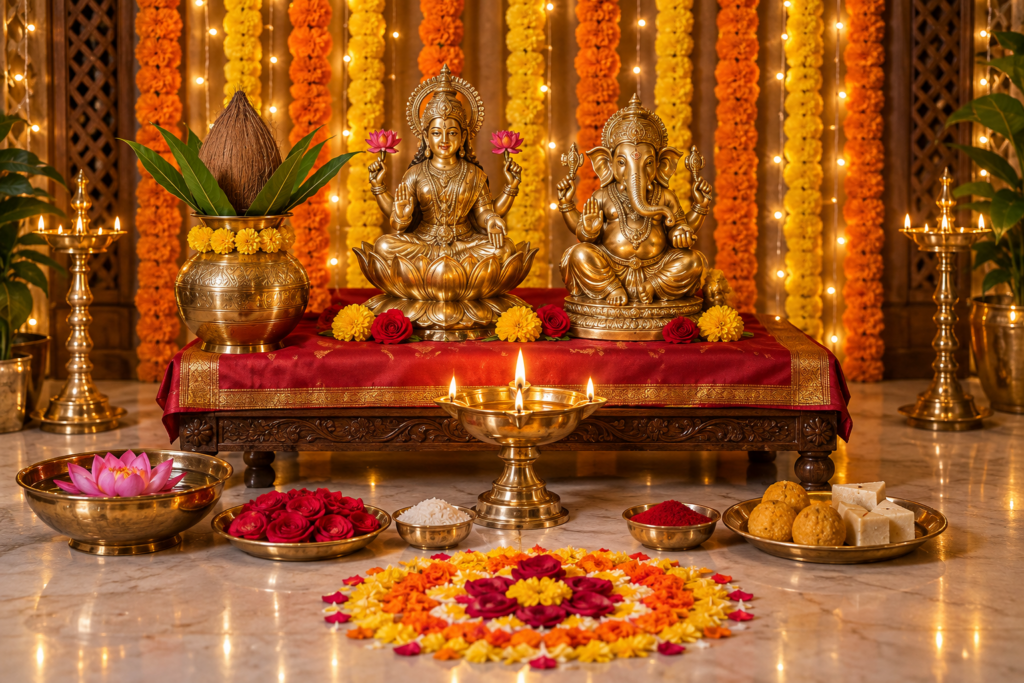
The puja space is the spiritual center of Diwali decor. Clean the area thoroughly, place a low wooden platform or chowki covered with red or yellow cloth, arrange idols or images of Goddess Lakshmi and Lord Ganesha, and decorate with fresh flowers, diyas, a kalash, and a small rangoli in front. Keep it uncluttered so the offerings stand out.
Traditions around Lakshmi Puja vary widely by region and family, so follow what your household or community practices. The ideas below focus on arranging and decorating the space beautifully.
Arranging the puja area
Choose a clean, calm corner or a dedicated puja room. Many families prefer placing the puja area in the northeast part of the home, but a quiet, respectful spot that suits your space matters most.
A typical arrangement includes:
- A low wooden chowki or stool covered with red, yellow, or gold cloth
- Idols or framed images of Goddess Lakshmi and Lord Ganesha, with Ganesha usually placed to Lakshmi’s left from the devotee’s point of view in many traditions
- A kalash, a metal or clay pot filled with water, topped with mango leaves and a coconut
- A large brass diya or akhand diya meant to burn through the evening
- Plates holding flowers, rice, kumkum, turmeric, sweets, and coins or new silver items
- Incense and a small bell
Keep sweets and fruit on separate plates rather than scattered, and leave clear space in front for people to sit.
Decorating around the puja space
A backdrop instantly makes the puja area feel special. Vertical strings of marigolds, a draped silk saree or dupatta, or a panel of fairy lights behind sheer fabric all work. Frame the chowki with a small arch of flowers or leaves, and place a compact rangoli or a ring of petals just in front of it.
Flower arrangements should stay low so they don’t block the idols. Small brass bowls of rose petals, jasmine strings wrapped around the chowki’s edges, and a lotus in a shallow dish keep the focus where it belongs.
Decorating a small puja corner in an apartment
A wall-mounted wooden shelf or a narrow console table can serve as a lovely puja space when floor space is limited. Cover it with a festive cloth, keep the arrangement to the essentials, and decorate the wall behind it with a marigold hanging or a string of warm lights.
Place the diya well away from overhead shelves and hanging fabric. An LED diya can stand in for an open flame near curtains or in homes where lamps can’t be supervised, with a single real diya lit only during the puja itself.
Diwali Decoration Ideas for Every Room, Balcony, and Budget
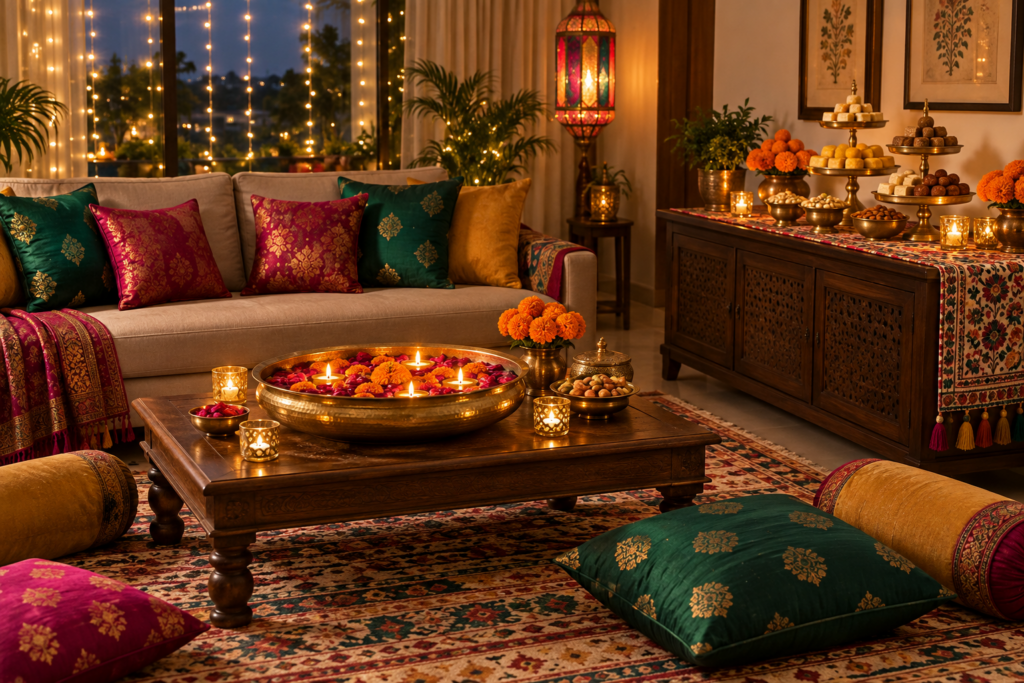
Focus Diwali decor on the areas guests see and where the family gathers: the entrance, living room, dining area, and balcony. Use lights and flowers outside for visibility, silk textiles and urlis indoors for warmth, and a festive snack table for entertaining. Small spaces benefit from concentrating decor in one or two striking spots.
Main entrance
The entrance matters most, because Diwali traditions center on welcoming prosperity and guests. Clean the door and threshold, hang a toran, draw a rangoli, and place diyas on either side. Brass or clay lamps on stands at the doorway add height. A nameplate wrapped with a small marigold string, or bells hung beside the door, are charming extras.
If you live in a building with a shared corridor, keep rangoli and diyas within your own threshold, and check whether your society has rules about open flames in common areas.
Living room
Swap cushion covers to silk or brocade in your chosen palette, lay a colorful dhurrie or block-printed rug, and place an urli with floating flowers and candles on the coffee table. Low seating with floor cushions and bolsters gives extra space for visitors during festive gatherings.
Group candles and lanterns on side tables and bookshelves rather than spreading single items around the room. A hanging lantern in one corner and fairy lights along a window are usually enough to make the whole space glow.
Dining area and snack table
Diwali means guests, sweets, and gift boxes, so a well-decorated serving area is both practical and festive. Use a bright tablecloth or runner, brass or copper serving bowls, and a small arrangement of marigolds and roses in the center. Line the edges with tea lights in glass holders so plates can’t knock them over.
Arrange sweets such as laddoos, barfi, and kaju katli on tiered stands or thalis, and keep a separate station for dry fruits and namkeen. Small bowls of rose petals scattered between dishes finish the look.
Balcony and windows
Balconies are what neighbors and passersby see, so this is where lighting really counts. Wrap the railing in string lights, line the ledge with diyas in holders that won’t tip, and hang an akash kandil or paper lanterns from the ceiling hook. Potted plants look festive with a string of lights wound loosely through their leaves or a marigold garland tied around the pot.
Firecracker debris and sparks can reach balconies, so remove dry leaves, cardboard, and anything flammable during the celebration, and bring hanging fabric and paper decorations indoors when crackers are being burst nearby.
Easy DIY Diwali decorations
A few simple projects make decor more personal:
- Painted diyas. Coat clay diyas in acrylic paint, then add dot patterns with a cotton bud or the back of a brush.
- Glass jar lanterns. Wrap old jars with lace, mehendi-style drawings in glass paint, or colored tissue paper, and place a tea light inside.
- Paper lanterns. Fold colored chart paper in half, cut parallel slits from the fold, open it into a cylinder, and glue the edges, adding a handle strip at the top.
- Bottle lamps. Push a short string of battery fairy lights into a clean glass bottle for a flameless glow.
- Flower wall hangings. Tie marigold and rose strands onto a bamboo stick or embroidery hoop and hang them on a bare wall.
- Kalash decoration. Paint a clay or steel pot with a swastika, Om, or simple patterns in kumkum and turmeric, then top it with mango leaves and a coconut wrapped in red thread.
These are also good activities for children in the days before the festival.
How can you decorate for Diwali on a budget?
Rely on inexpensive traditional materials: clay diyas, marigolds bought from local markets, mango leaves, and rice flour or flower petal rangoli. Reuse fairy lights, brass items, and fabric torans each year, and make lanterns and painted diyas yourself. Concentrating decor at the entrance and one main room creates impact without spending on every space.
Buying flowers from a wholesale flower market early in the morning is often cheaper than neighborhood stalls, especially if you’re decorating a large doorway or backdrop.
How can you make Diwali decorations eco-friendly?
Choose clay diyas over plastic, natural rangoli colors from turmeric and flowers, fresh flowers that can be composted, and reusable fabric torans and LED lights. Avoid thermocol, plastic garlands, and glitter. Compost used flowers and leaves after the festival, and store reusable lanterns and lights carefully so they last many years.
Used clay diyas can be washed, dried, and reused, or crushed and added to garden soil and planters. Leftover rice flour rangoli can simply be left for birds and ants, which is part of the tradition in many places.
Frequently Asked Questions
When should you start decorating your home for Diwali?
Most families begin cleaning one to three weeks before Diwali and start decorating around Dhanteras, the first day of the five-day festival. Lights and torans often go up a few days early, while fresh flowers, rangoli, and diyas are usually prepared on or just before the main Lakshmi Puja day so they look their best.
How many diyas should you light on Diwali?
There is no fixed number, and customs vary between families and regions. Many households light diyas in odd numbers, such as 5, 11, 21, or more, placing them at the entrance, windows, balcony, puja area, kitchen, and other corners of the home so that no part of the house is left in darkness.
What is the significance of rangoli during Diwali?
Rangoli is drawn at the entrance to welcome guests and invite prosperity and good fortune into the home, particularly Goddess Lakshmi. It is also considered a sign of a happy, well-cared-for household. Traditional designs made from rice flour additionally feed ants and small birds, reflecting the value of sharing with other living beings.
Which colors are considered auspicious for Diwali decor?
Red, yellow, orange, gold, and green are widely considered auspicious and festive for Diwali. Red represents energy and good fortune, yellow and orange reflect marigolds and brightness, gold symbolizes prosperity, and green, seen in mango leaves, signifies new beginnings. White and pink are also common, especially in elegant, modern decor schemes.
How do you keep marigold garlands fresh for longer?
Buy marigold garlands as close to the festival day as possible and store them in a cool, shaded place wrapped in a damp cloth until you hang them. Once hung, lightly sprinkle them with water in the morning and evening, and keep them away from direct sunlight, heat from lamps, and strong breezes.
Are LED diyas and candles acceptable for Diwali?
Yes, LED diyas and candles are widely used and are a sensible choice near curtains, in children’s rooms, on paper lanterns, and in homes with pets. Many families combine them with traditional oil diyas, lighting real lamps for the puja and at the entrance, and using LED versions in places where open flames would be unsafe.
What should you do with Diwali decorations after the festival?
Compost fresh flowers, leaves, and flower petal rangoli, and sweep powder rangoli away once the celebrations end. Wash and dry clay diyas for reuse, polish and store brass items, fold fabric torans flat, and coil string lights carefully in labeled boxes. Many families keep decorations up through Bhai Dooj, the final day of the festival.