After-Christmas Winter Decor: A Cozy January Reset
There is a specific kind of letdown that hits on January 2. The tree is on the curb, the ornaments are back in their boxes, and the living room looks suddenly, starkly bare. After a month of twinkle lights and garlands, the house feels like it is missing something, and the instinct is either to…
There is a specific kind of letdown that hits on January 2. The tree is on the curb, the ornaments are back in their boxes, and the living room looks suddenly, starkly bare. After a month of twinkle lights and garlands, the house feels like it is missing something, and the instinct is either to leave the Christmas decor up too long or to strip everything and live in a beige box until spring. Neither is the answer.
The answer is a January reset: a deliberate restyle of your home for winter itself, not for the holidays. Think cozy neutrals, layered textures, candlelight, and greenery that has nothing to do with Christmas. This guide walks you through taking down the holiday decor without the post-holiday blues, then rebuilding each room with warm, calm, winter styling that carries you comfortably through January and February. If you want the holiday-specific side of winter decorating, our winter home decor ideas guide covers Christmas-through-winter styling; this article picks up where that one leaves off, for the weeks after the ornaments come down.
Why January Deserves Its Own Decor Moment
Most people treat January as a decorating dead zone, and it shows in how the month feels. But consider the facts: January and February are the months you spend the most time indoors, the light is at its lowest, and the days are at their shortest. This is exactly when your home should be working hardest to feel warm and inviting. A January reset is not about buying a lot of new things; it is about editing what you have and adding the textures and light that winter demands.
- It fights the post-holiday slump. Restyling gives you a project with a visible payoff during the grayest weeks of the year.
- It is cheap. The January reset mostly uses what you already own, rearranged, plus a few texture additions like throws and candles.
- It lasts two months. Unlike Christmas decor with its four-week lifespan, winter styling stays relevant from early January through late February.
- It sets up spring. A calm, neutral winter base makes the transition to spring decor effortless: just add fresh flowers and lighter textiles.
The January mindset shift
Stop decorating for an event and start decorating for a feeling. Christmas decor says “celebrate.” January decor should say “rest.” Every choice below filters through one question: does this make the room feel calmer and warmer? If yes, it stays. If it is just filling space, it goes. This editing mindset is the same one behind our minimalist home decor principles, applied to winter: fewer things, better chosen, each one earning its place.
Taking Down Christmas: The Declutter Phase
Before you add a single winter touch, the holiday decor has to come down properly. Rushing this step is why January living rooms feel chaotic: half the Christmas stuff is gone, the rest lingers, and nothing looks intentional.
A room-by-room takedown order
Work in this order so the house never looks half-decorated: first, remove all Christmas-specific items (tree, ornaments, stockings, Santa figures, red bows, advent calendars). Second, remove holiday-only textiles (Christmas throw pillows, holiday table runners, themed kitchen towels). Third, decide what stays: white string lights, plain greenery, candles, lanterns, and winter-scented items can all transition. Fourth, clean as you go: dust the surfaces that were hidden behind decor, vacuum up the pine needles, and wipe down windows. A clean, empty room is the correct starting point, not a depressing one. Think of it as a blank canvas, not a loss.

What to keep out for winter
Not everything Christmas has to disappear. Keep anything that reads as “winter” rather than “Christmas”: plain evergreen garlands (remove the ornaments and bows), white or warm-white string lights, pillar candles and lanterns, faux fur throws, pinecones in bowls, bare branch arrangements, and winter-scented candles like pine, cedar, or balsam. These are your January foundation pieces. What goes: anything red-and-green specific, Santa or reindeer figures, “Merry Christmas” signage, and novelty items. The test is simple: would this look odd in February? If yes, box it.
Storage that makes next December easier
Future-you will thank present-you for 30 minutes of organized packing. Wrap ornaments in tissue and store by color or by tree zone. Coil string lights around cardboard to prevent tangles. Label every box on two sides with its contents and the room it belongs in. Take a phone photo of each decorated room before takedown; next December, you will have a reference for what worked. Store wreaths in wreath bags or pillowcases to keep their shape. This is unglamorous work, but it is the difference between a joyful decorating day next year and a frustrating one.
The January Palette: Cozy Neutrals That Are Not Boring
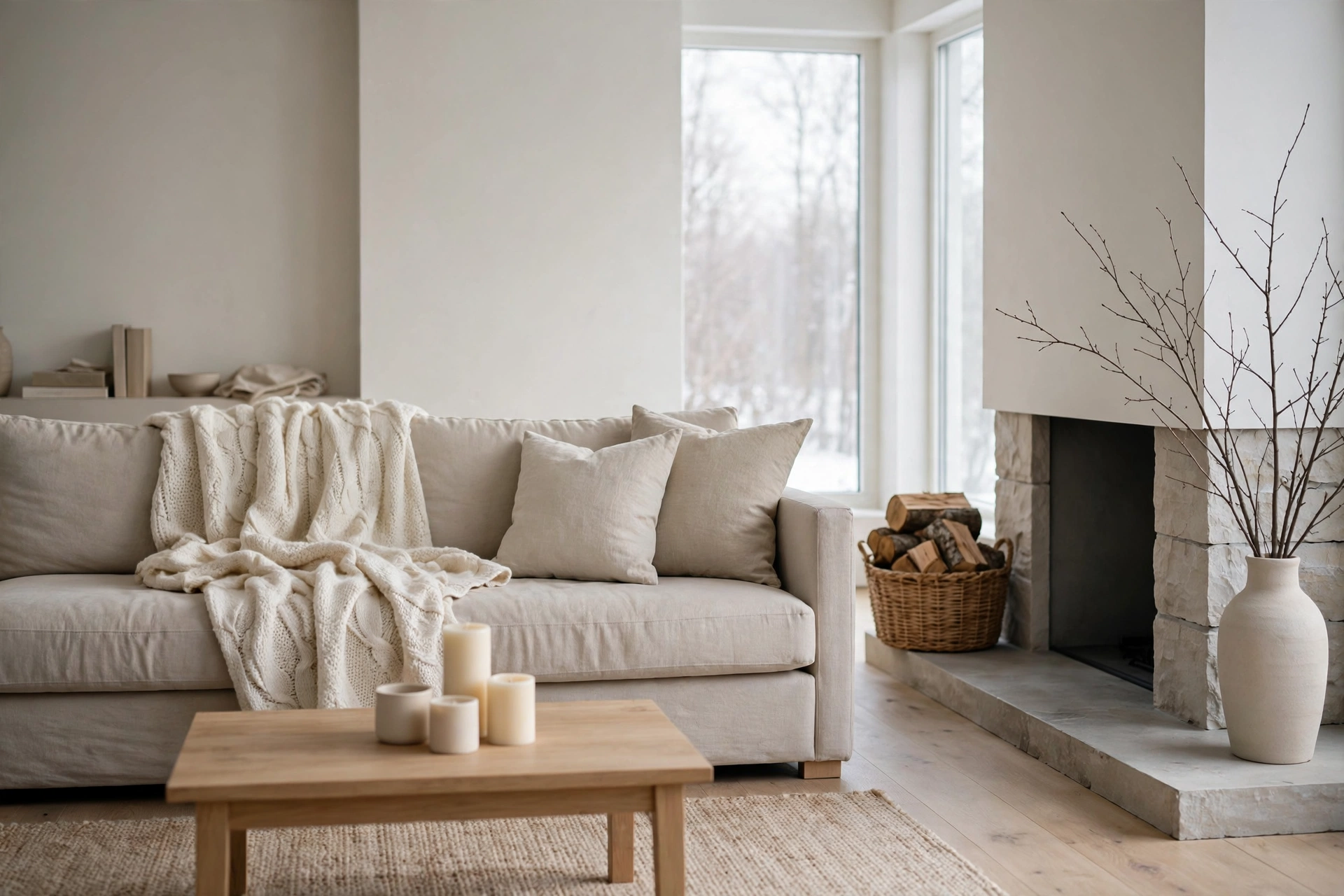
January color should feel like a deep breath: warm whites, soft grays, oatmeal, camel, and touches of deep green or warm brown. This is not about going all-white and stark; it is about warm neutrals with enough depth to feel cozy in low winter light.
Building a warm neutral base
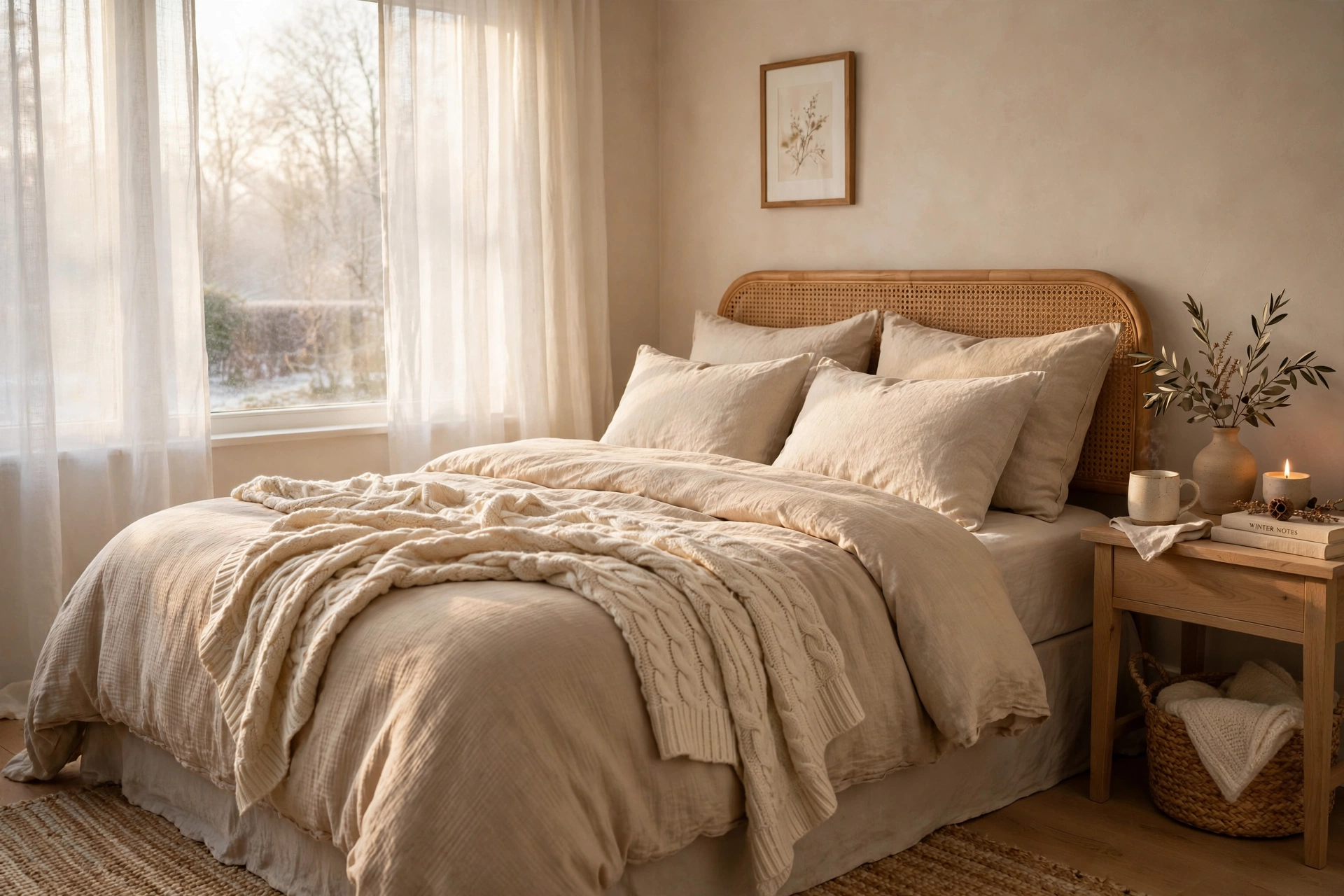
Start with your largest surfaces: sofa throws, bedding, curtains, and rugs. Swap cool-toned or holiday-specific textiles for warm neutrals. Cream, ivory, and oatmeal reflect the limited winter daylight and make rooms feel brighter; camel, taupe, and warm gray add the depth that keeps neutrals from feeling flat. If your walls are already neutral, you are halfway there. If they are a strong color, lean into it with complementary neutrals rather than fighting it; a sage green wall looks beautiful with cream and oatmeal textiles.

One accent color for depth
An all-neutral room can feel unfinished without one deeper note. Good January accents: deep forest green (from plants), warm cognac or saddle brown (leather, wood, baskets), charcoal (pillows, frames), or muted terracotta. Use the accent in three to five places around the room for cohesion: a green plant, a brown leather basket, a charcoal throw pillow. This is restraint, not absence of color, and it is what makes the difference between “cozy” and “washed out.”
What to avoid in January
Retire the Christmas reds and bright jewel tones; they will fight the calm you are building. Avoid cool grays and stark whites without warm layers, which read as cold rather than cozy in winter light. And resist the urge to buy spring pastels in January; they will look out of place against the gray skies outside and you will be tired of them by April. Patience now means your spring refresh will actually feel fresh.
Texture: The Secret Weapon of Winter Decor
When color goes quiet, texture has to carry the room. A January living room with five different textures feels rich and layered; the same room in flat, smooth fabrics feels empty. This is the single most important principle of the whole reset.
The five-texture rule
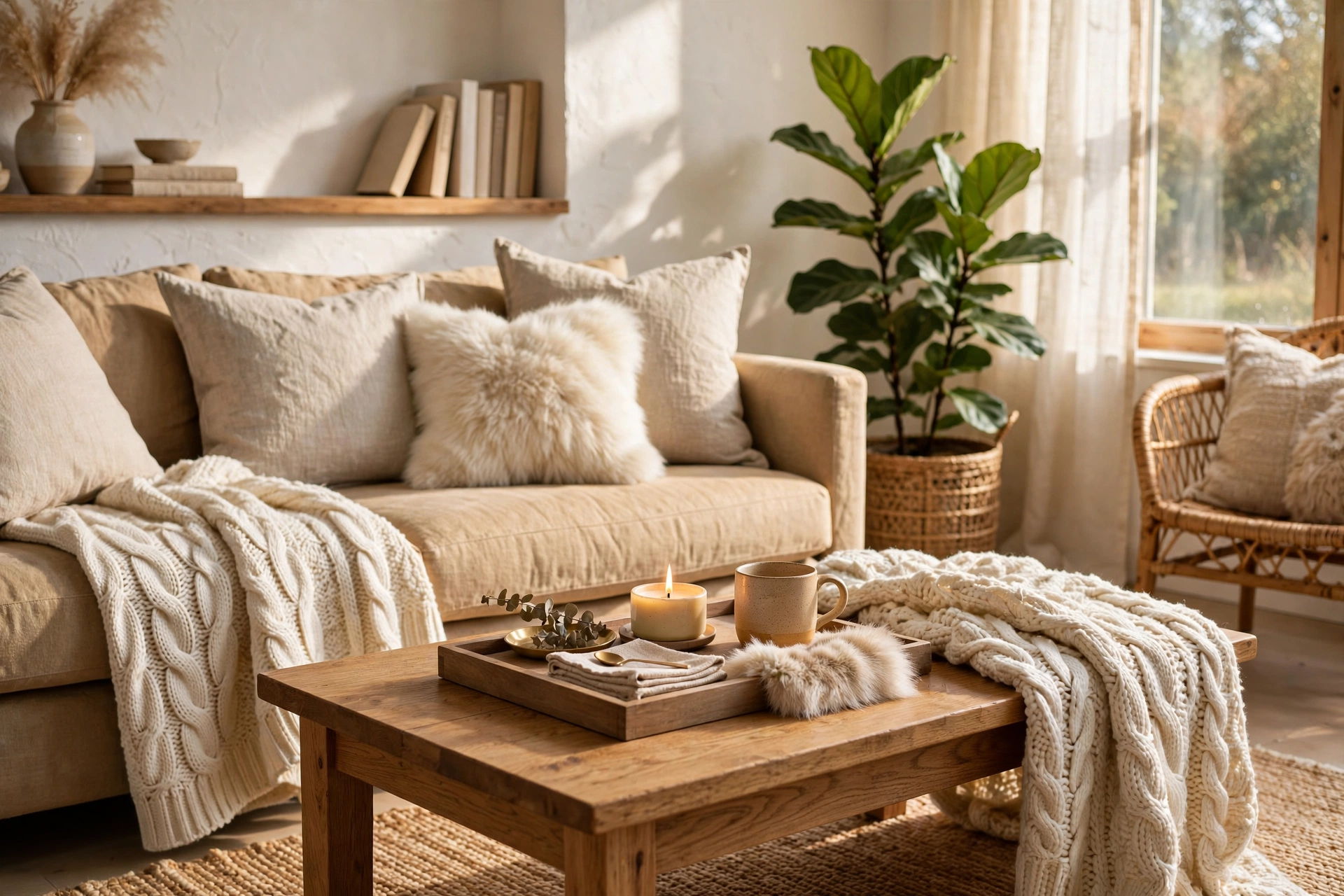
Aim for at least five distinct textures in each main room. A working combination: chunky knit (throw blanket), nubby linen (pillow covers), faux fur or sherpa (accent throw), natural wood (tray, frames, basket), and something living (plant, branches, bowl of pinecones). Run your hand across the room mentally: if everything feels the same, add the missing textures. Thrift stores are full of knit throws and baskets for a few dollars each, which makes this the cheapest high-impact change in the guide. Our budget-friendly home decor guide has more strategies for this kind of high-impact, low-cost layering.
Textiles: throws, pillows, and rugs
Winter is the season to double up. Add one more throw blanket than you think you need: one draped over the sofa arm, one folded on the ottoman or a basket of rolled throws by the fireplace. Swap pillow covers to winter textures rather than buying new pillows; 18×18 and 20×20 covers in knit, boucle, or washed linen run $10 to $15 each and completely change a sofa. If your rug is thin or cool-toned, layer a smaller faux-sheepskin or flatweave rug on top; layered rugs are a designer trick that adds instant warmth underfoot during the coldest months.
Natural materials that say winter
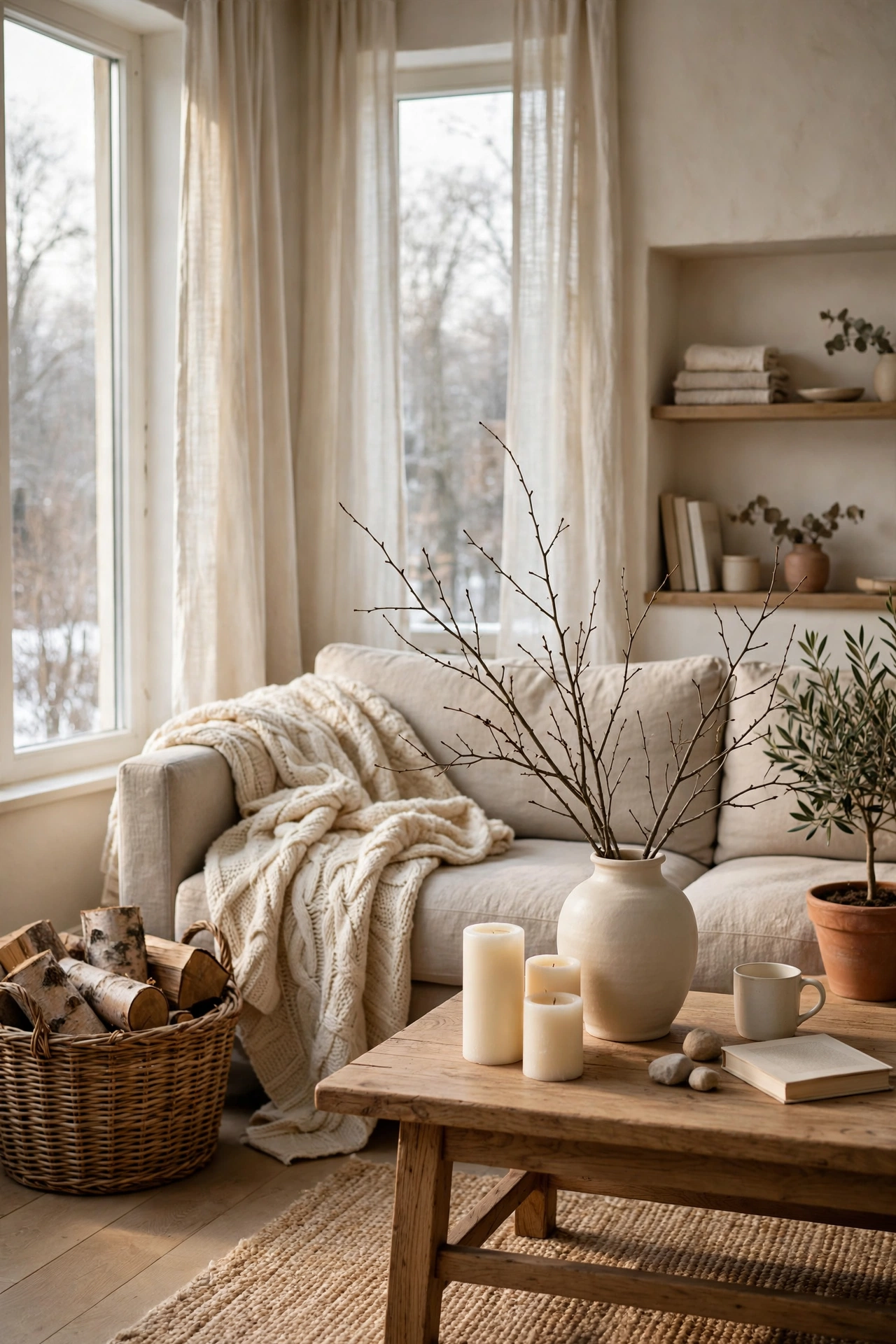
Wood, stone, wool, and dried botanicals are the material language of January. A wooden dough bowl of pinecones on the coffee table, a stack of birch logs by the fireplace (even a non-working one), dried lunaria or pampas grass in a floor vase, and a wool runner in the hallway all signal winter without a single holiday reference. Bare branches in a tall vase are the ultimate January arrangement: sculptural, free if foraged, and they last for months. Swap the branches out when buds appear in spring and you have a free seasonal transition.
Light: Fighting the January Gloom
January has the least daylight of the year, so your lighting plan matters more now than in any other month. The goal is warm, layered light that makes 5 p.m. feel cozy instead of bleak.
Layer three light sources per room
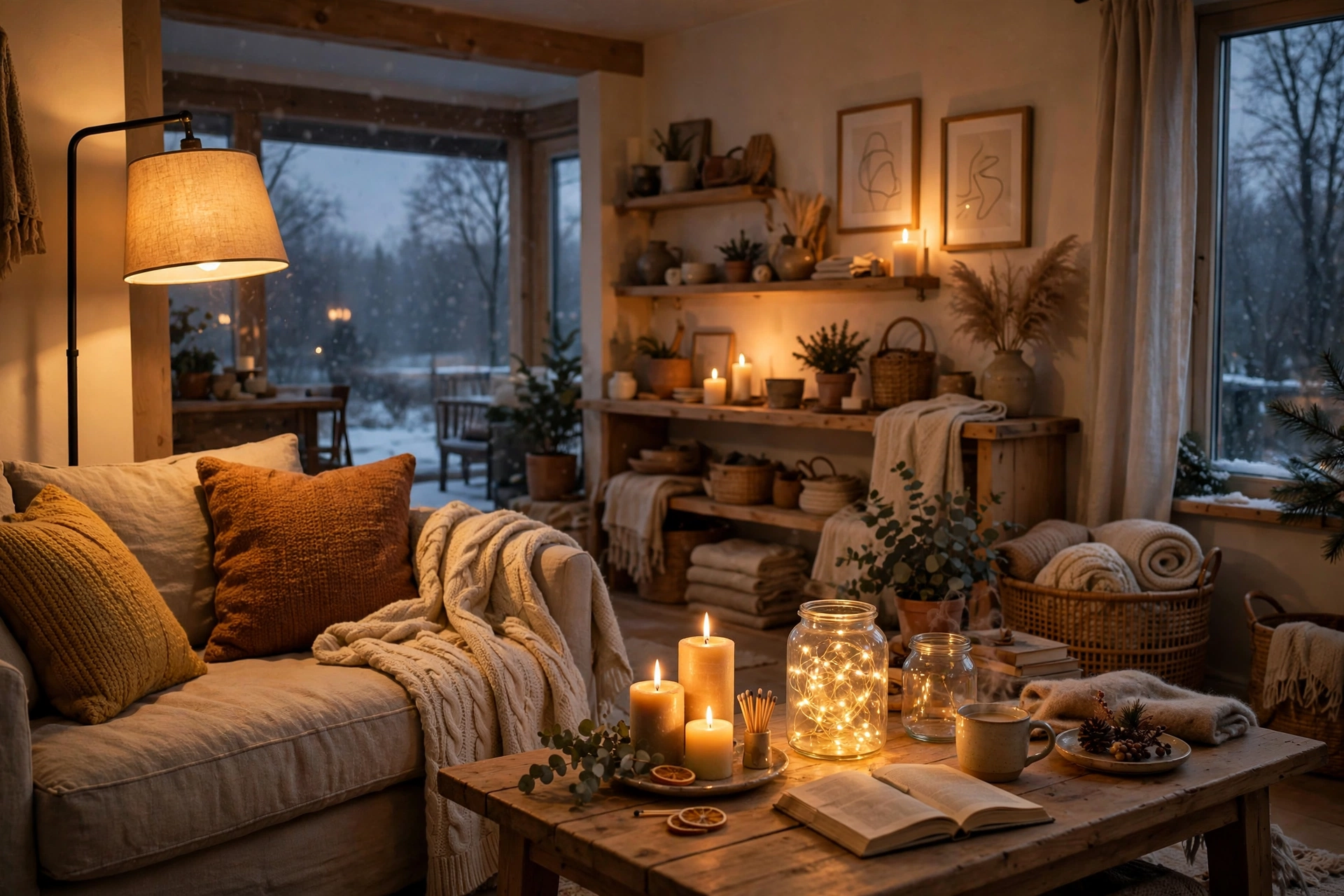
Every room you spend evenings in needs ambient light (overhead or a bright floor lamp), task light (a reading lamp, under-cabinet lights), and accent light (candles, fairy lights, a small lamp on a shelf). Most living rooms only have the first, which is why they feel flat. Add the missing layers: a $25 floor lamp in a dark corner, battery-operated fairy lights in a glass jar on the bookshelf, a cluster of pillar candles on the coffee table. Keep all bulbs warm white (2700K); cool daylight bulbs in January feel institutional.
Candles and firelight
Candles are non-negotiable in a January reset. Group pillar candles in odd numbers (three or five) at varying heights on trays to contain wax and create a composed look. Use unscented or subtly winter-scented candles (cedar, fir, amber) rather than sweet holiday scents you are tired of. If you have a fireplace, use it; if you do not, a cluster of large pillar candles in the firebox creates a convincing glow. Always follow basic candle safety: trim wicks to 1/4 inch, keep flames away from textiles and drafts, and never leave them burning unattended.
Maximizing the daylight you get
Clean your windows inside and out in early January; winter grime can cut incoming light noticeably. Keep curtains open during the short daylight hours, and consider swapping heavy drapes for lighter linen panels that diffuse light while keeping privacy. Place a mirror opposite or adjacent to windows to bounce daylight deeper into the room. These are free changes that make a measurable difference in how bright the house feels at 3 p.m.
The 15-minute evening reset ritual
The January reset is not a one-time project; it is a daily rhythm. Every evening, spend 15 minutes resetting the main rooms: fold the throws, fluff the pillows, light the candles, and clear the surfaces. This tiny ritual is what keeps the house feeling like the calm, styled version of itself instead of sliding back into clutter by mid-month. I do it while dinner heats up, and it has changed how the house feels more than any single purchase. A home that is reset daily stays reset; a home that is styled once and ignored does not.
Greenery for January (None of It Christmassy)
Plants are the life in a winter room. After the Christmas greenery comes down, replace it with living plants and non-holiday botanicals that thrive indoors through winter.
Houseplants that love winter indoors
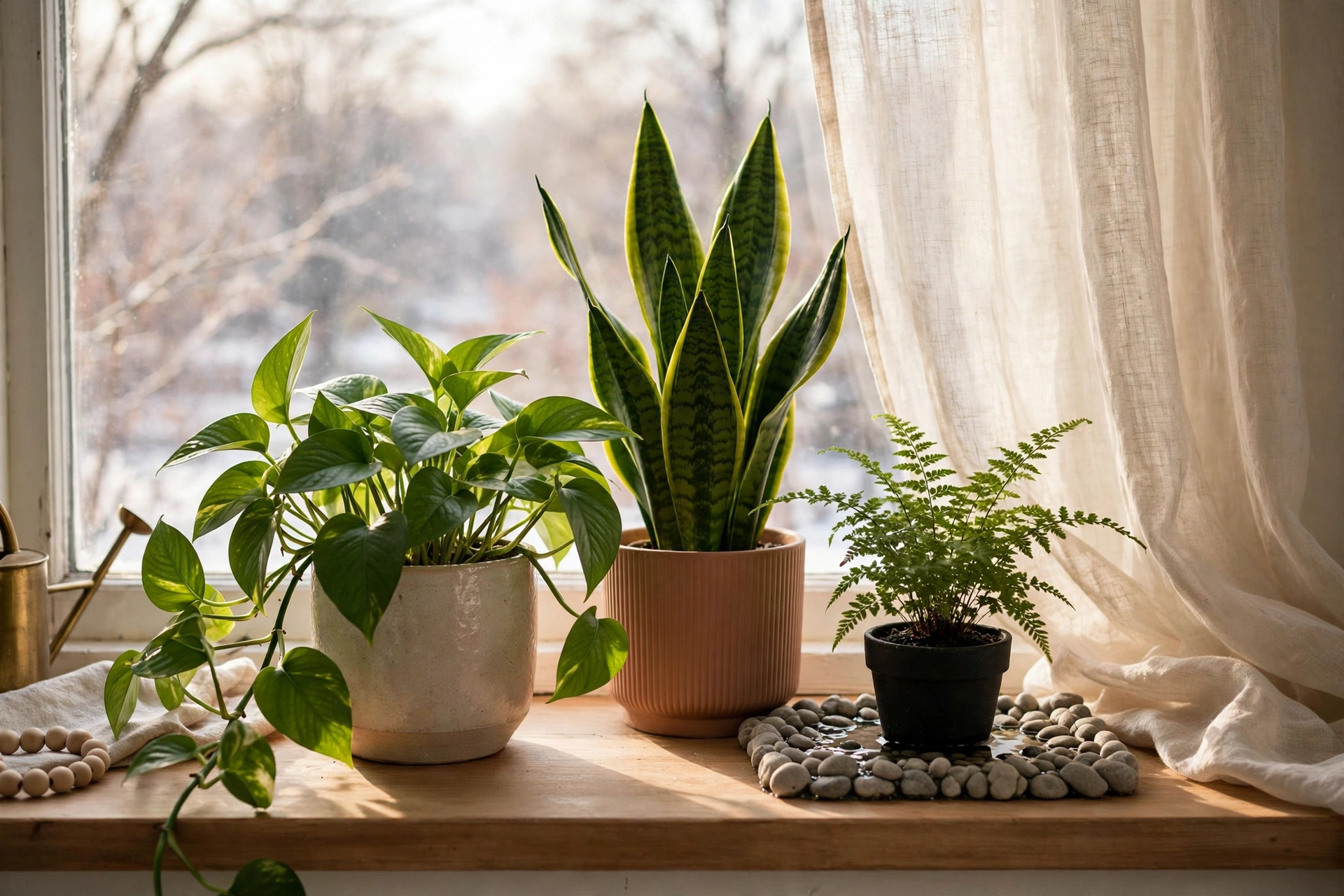
Snake plants, pothos, ZZ plants, and peace lilies all tolerate the lower light and dry air of heated homes. Group plants together on a plant stand or windowsill; grouping raises the humidity around them slightly and looks intentional. The University of Minnesota Extension’s winter houseplant tips recommend pebble trays, grouping plants, and supplemental light for humidity-lovers like ferns, which is exactly the kind of practical care that keeps January plants alive rather than just decorative. Check soil moisture before watering; most houseplants need less water in winter, and overwatering kills more January plants than neglect.
Non-holiday botanical arrangements
Bare branches, dried grasses, pampas plumes, dried lunaria, and eucalyptus stems all read as winter without reading as Christmas. A tall vase of curly willow or birch branches on the dining table, a bundle of dried lavender in the bedroom, and eucalyptus in the bathroom (the steam releases its scent) bring nature indoors in a calm, seasonal way. These arrangements last for months with zero maintenance, which is exactly what you want in January.
The one “fresh” thing to buy weekly
If your budget allows one recurring purchase, make it fresh eucalyptus or a small bunch of grocery-store flowers in white or cream. A $5 bunch of white carnations or alstroemeria in a simple vase on the kitchen counter is a small weekly ritual that keeps the house feeling alive. It is the cheapest mood intervention I know, and it photographs beautifully against all those cozy neutrals.
Room-by-Room January Reset Guide
You do not have to do the whole house in a day. Work through these rooms in order over a weekend, about two hours per room, and the house will feel transformed by Sunday night.
Living room: the cozy core
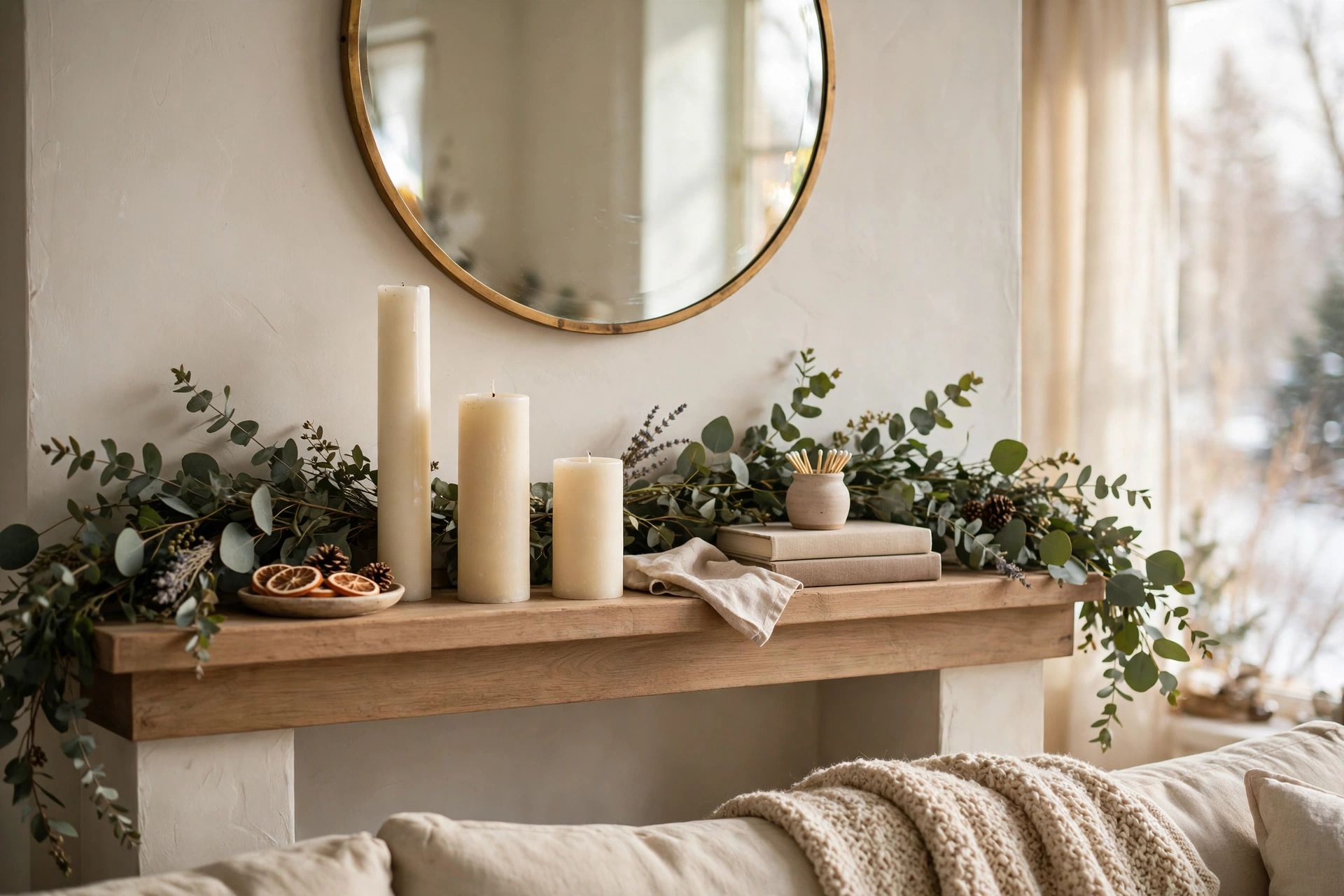
This is where you will spend most of January, so start here. Remove holiday pillows and throws, then rebuild with the five-texture rule: knit throw on the sofa arm, linen pillow covers, a faux-fur accent, a wooden tray on the coffee table styled with candles and pinecones, and a plant in the corner. Restyle the mantel (if you have one) with a simple garland of eucalyptus or bare branches, three pillar candles in varying heights, and one piece of art or a mirror. Keep the coffee table styling low and clear enough for actual use: a tray that corrals remotes, coasters, and one candle is both pretty and practical.
Bedroom: the restful retreat
January bedrooms should feel like a exhale. Swap to the warmest bedding you own: flannel or brushed cotton sheets, a duvet in cream or oatmeal, and a chunky knit throw folded across the foot of the bed. Clear nightstands down to a lamp, one book, and a small candle or bud vase with dried stems. If holiday clutter migrated to the bedroom (gift wrap, new gadgets in boxes), deal with it now; visual calm in the bedroom measurably improves how restful it feels. A small rug or sheepskin on each side of the bed is a luxury on cold mornings that costs very little.
Small Spaces, Rentals, and Real-Life Constraints
Not everyone has a fireplace, a mantel, and a dining room. The January reset scales down beautifully; in fact, small spaces often feel cozier faster because every change is visible.
The studio or one-bedroom reset
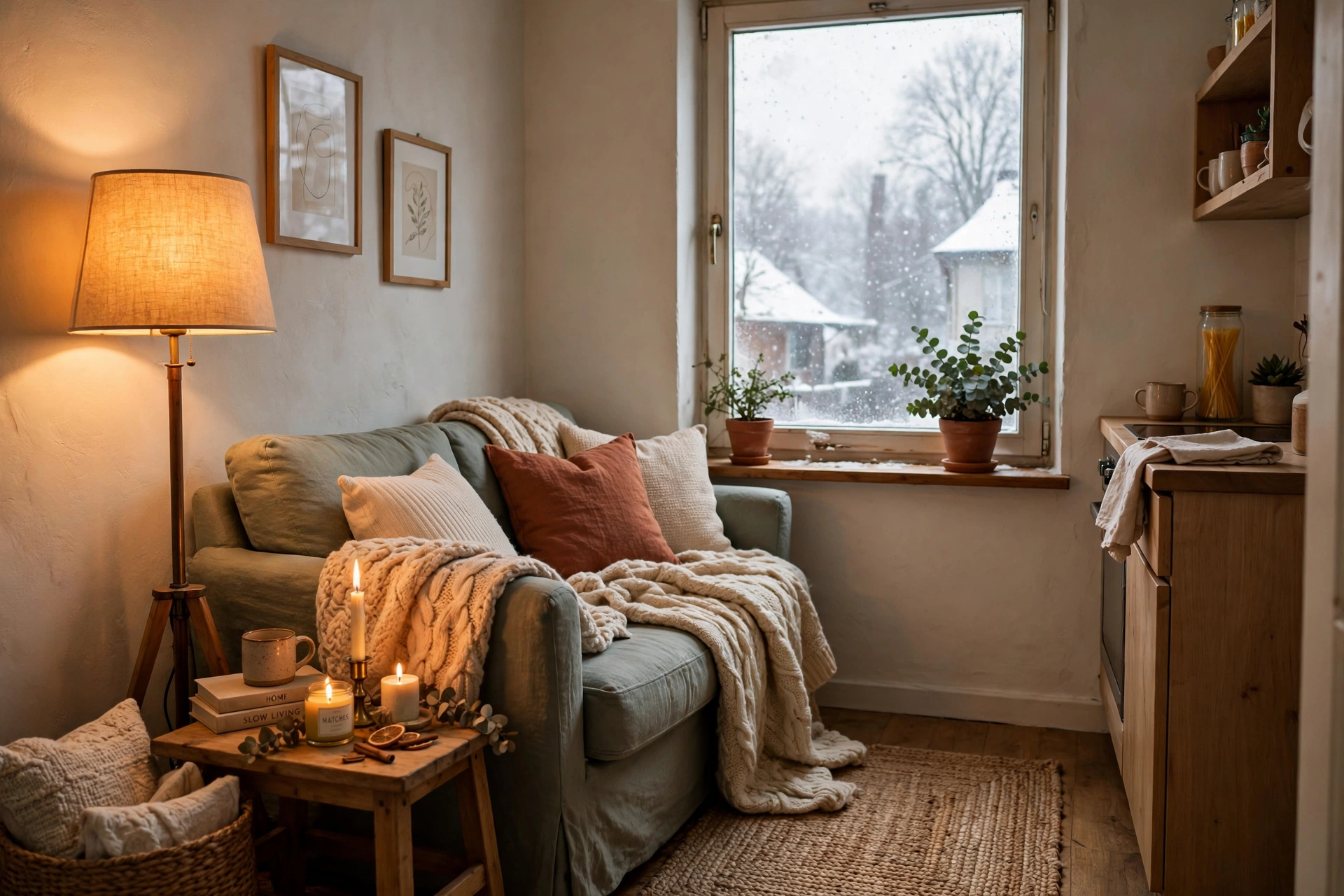
In a small space, do three things and stop: upgrade the textiles (one knit throw, textured pillow covers), fix the lighting (one warm floor lamp, candles on the coffee table), and add one plant. That is the whole reset, and it takes an afternoon. Avoid adding furniture or large decor items; in small rooms, editing matters more than adding. If your bed is in the main living area, the bedding upgrade does double duty as room decor.
Renter-friendly winter changes
Everything in this guide is renter-friendly except possibly nothing; there is no painting, no drilling, and no permanent change involved. The most impactful renter moves: layered lighting with plug-in lamps, removable hooks for a winter wreath on the door, and textiles, which change a room more than any wall treatment. If your rental has harsh overhead lighting, plug-in wall sconces or a torchiere floor lamp with a warm bulb solves it for $25 without touching the wiring.
Resetting with kids or pets
Choose washable everything: throw blankets that survive the washing machine, pillow covers you can zip off, and rugs with low piles that vacuum easily. Use battery-operated candles instead of real flames if toddlers or curious pets are in the mix; the flicker effect versions look remarkably real now. Keep breakables above tail-wagging height, and embrace the lived-in look: a January home with kids should feel cozy, not precious.
Kitchen and dining: warm and functional
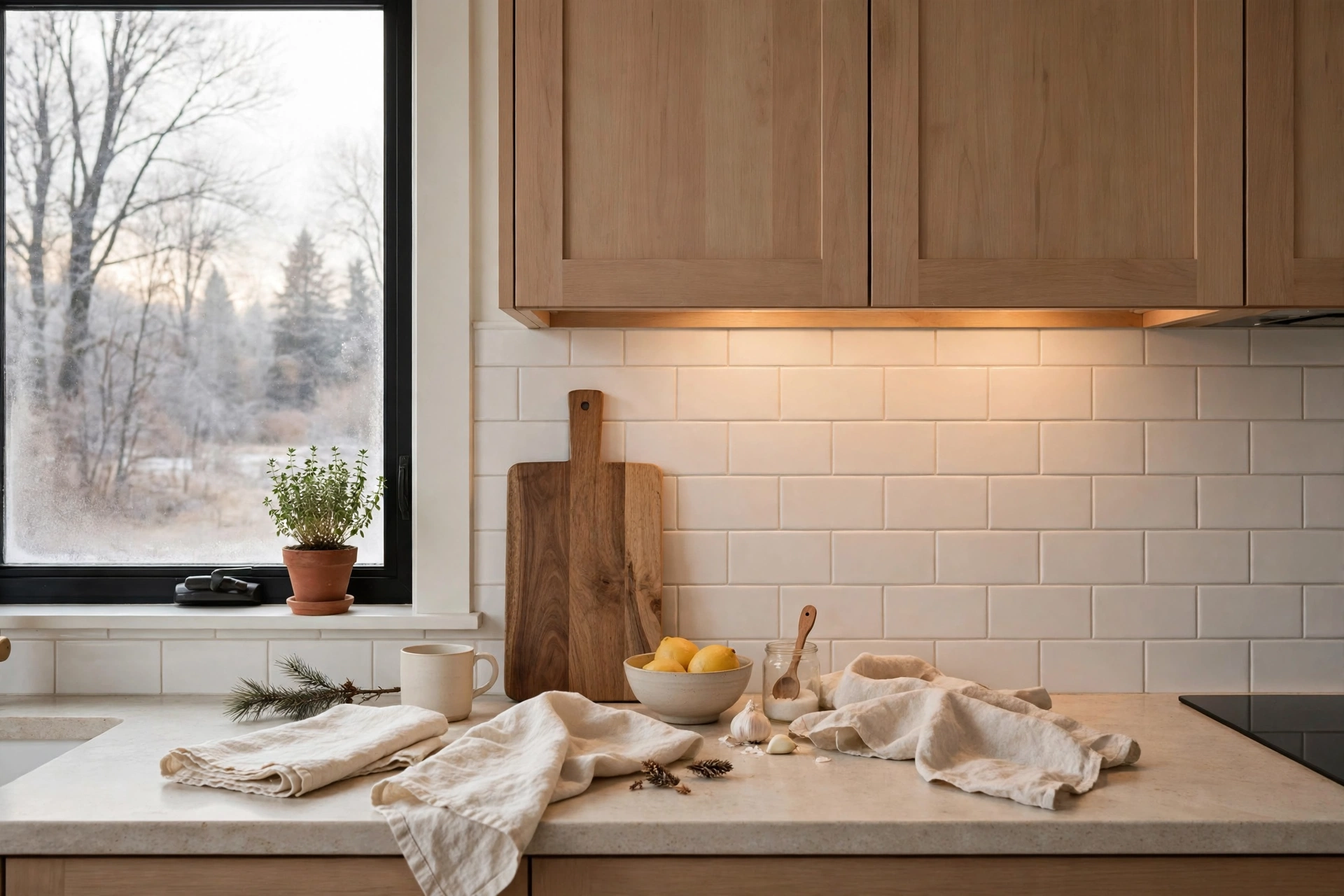
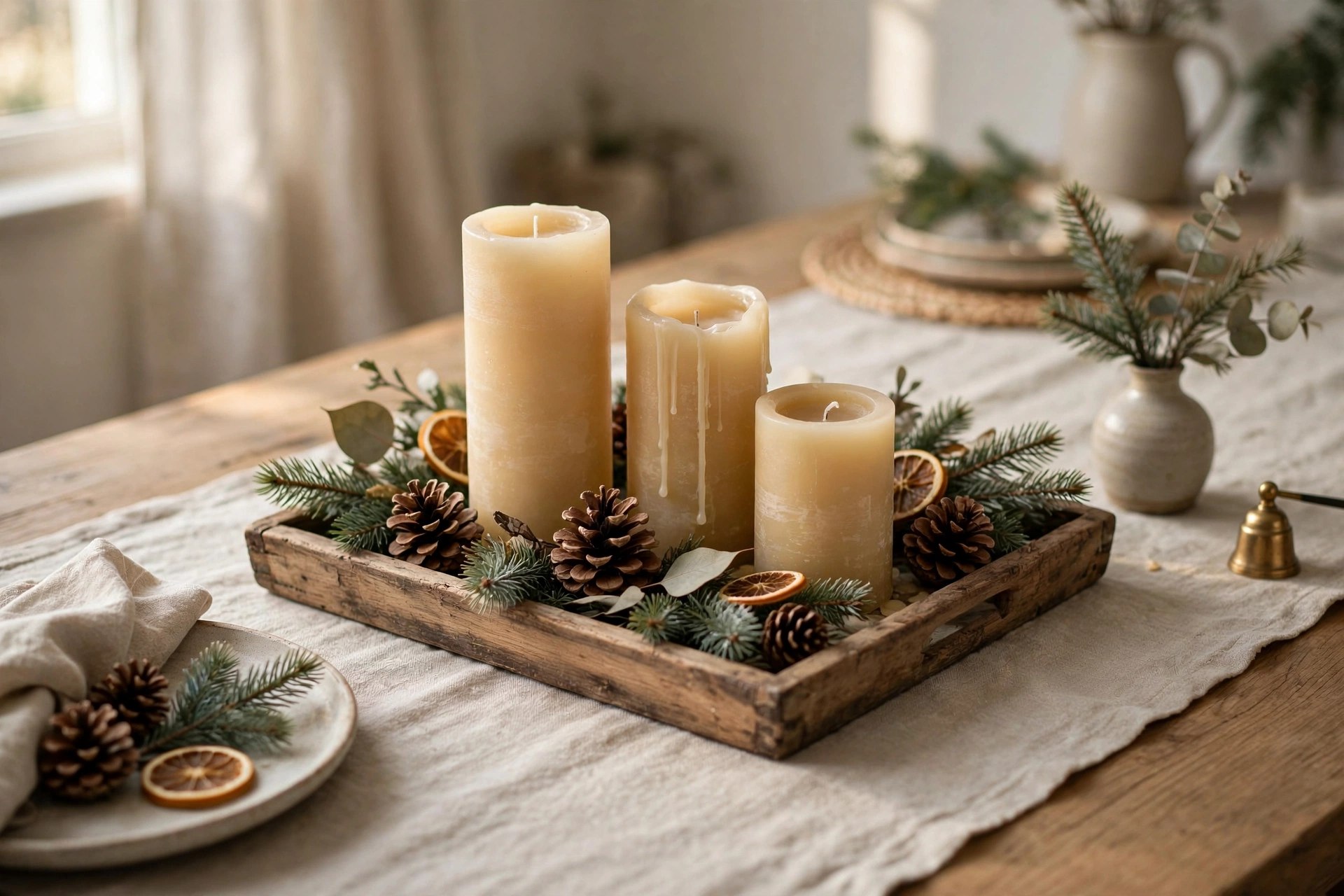
Remove holiday dish towels, themed soap dispensers, and Christmas table runners. Replace with plain linen or cotton textiles in cream or oatmeal. Style the dining table with a simple winter centerpiece that can stay for weeks: a wooden tray with pillar candles and pinecones, or a low bowl of seasonal fruit like pomegranates and pears. Clear one counter completely; an empty stretch of counter makes the whole kitchen feel calmer. Keep a wooden cutting board, a small plant, and your most-used items out, and put the rest away.
Entryway: the first impression
The entry sets the tone for the whole house. Swap the Christmas wreath for a simple winter one: eucalyptus, bare branches, or a plain grapevine wreath with a linen bow. Add a boot tray for wet winter shoes, a basket for scarves and gloves, and a candle or lantern on the console table. If your entry is dark, this is the place for that extra lamp or a mirror to bounce light. A calm, organized entry makes coming home on a gray January evening feel like relief instead of just more gray.
Bathroom: the small luxury
Small rooms show the biggest transformation for the least effort. Swap to thick white or cream towels, add a small eucalyptus bundle to the showerhead (secured with twine; the steam releases the scent), and place a candle on the vanity. Decant everyday products into simple containers if you are feeling ambitious; if not, just corral them on a small tray. A bathroom that feels like a spa for $20 in towels and a $4 eucalyptus bunch is the best value in this entire guide.
January Reset on a Budget
The whole point of the January reset is that it costs almost nothing. Here is how to keep it under $100, or even under $50.
Shop your own home first
Before buying anything, walk through every room with a laundry basket and collect: throws and pillows from other rooms, baskets, trays, vases, candles, books, and plants. Redistributing what you own is free redecorating. That basket of throws in the guest room might be exactly what the living room needs. Move art between rooms for a fresh eye. You will be surprised how different familiar objects look in new contexts.
The $50 priority shopping list
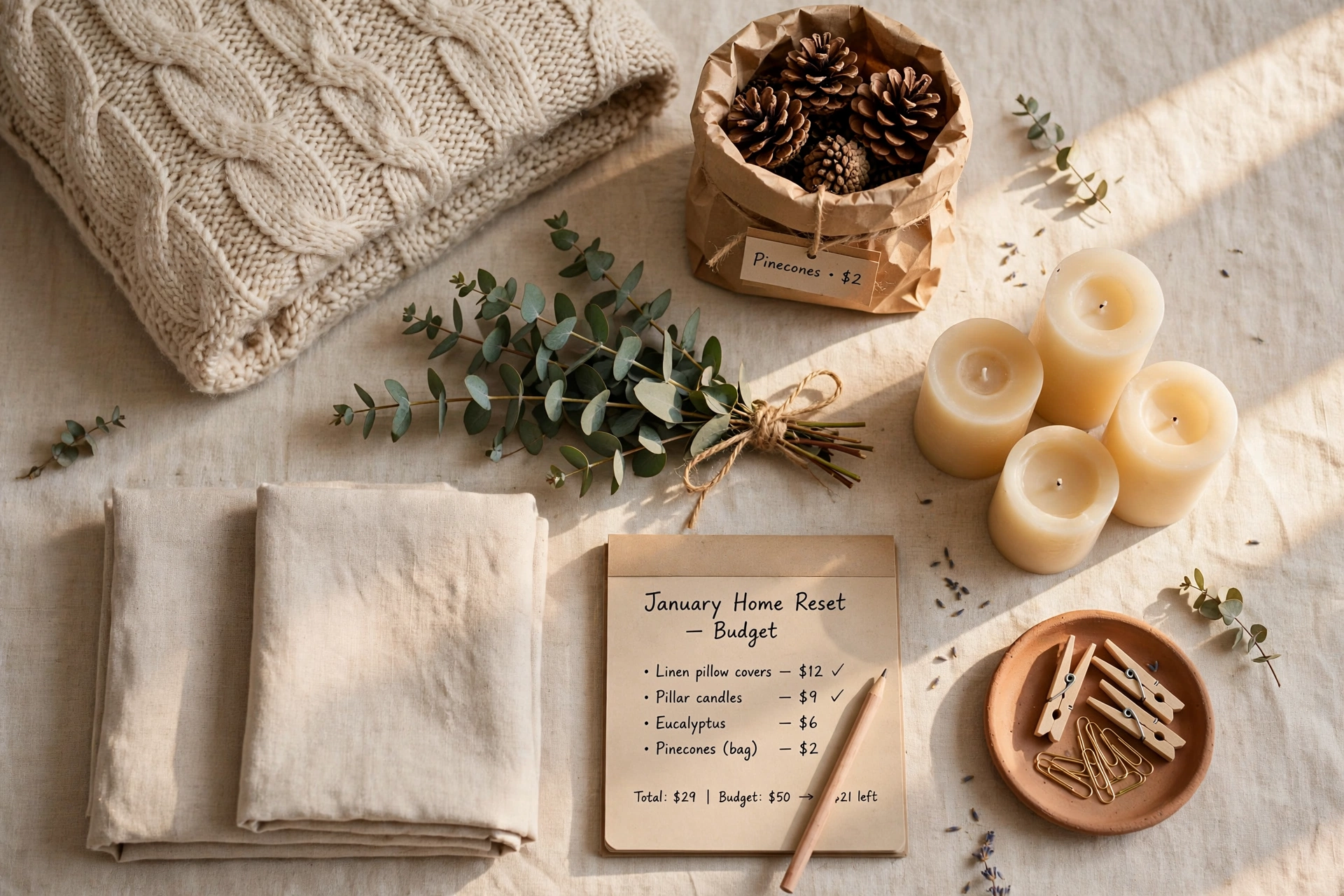
If you buy only a few things, buy these in order of impact: one chunky knit throw ($20 to $30), a set of pillar candles in varying heights ($12 to $15), one bunch of eucalyptus or a bundle of bare branches ($5 to $10), and pillow covers in a winter texture ($10 for two). Total: $47 to $65. These four purchases touch every principle in this guide: texture, light, nature, and warmth.
Free changes with the biggest payoff
Decluttering costs nothing and changes everything. Cleaning windows, rearranging furniture for better light, grouping plants together, and editing surfaces down to three to five objects per surface are all free. The most impactful free change: remove one item from every surface in the main living areas. Negative space is what makes the remaining objects look intentional, and it is the core lesson of our minimalist home decor approach applied to winter.
Frequently Asked Questions
1. When should I take down Christmas decorations?
Most people take decorations down in the first week of January, often on or just after New Year’s Day. There is no rule, but leaving them up past mid-January tends to make the house feel stale rather than festive. Take them down when you have a free half-day to do it properly, then do the January reset immediately so the house never sits in that bare, in-between state.
2. How is January winter decor different from Christmas decor?
Christmas decor is event-specific: red and green, Santa figures, ornaments, and holiday signage. January winter decor is seasonal but not holiday-specific: cozy neutrals, natural textures, candles, bare branches, and houseplants. The winter look stays relevant through February, while Christmas decor has a firm expiration date. Think “rest” instead of “celebrate.”
3. What colors work best for January home decor?
Warm neutrals: cream, ivory, oatmeal, camel, taupe, and warm gray, with one deeper accent like forest green, cognac brown, or charcoal. These colors reflect limited winter daylight, feel cozy in the evenings, and create a calm base that transitions easily to spring. Avoid Christmas reds and cool, stark whites without warm layers. If you are unsure where to start, pull the palette from a single inspiration piece you already own, like a favorite throw or a piece of art, and build outward from its tones.
4. How do I make my house feel cozy in January without spending much?
Layer textures you already own: add every throw blanket and textured pillow you have to the living room and bedroom, group candles together for impact, and bring in natural elements like pinecones and branches for free. Clean your windows to maximize daylight, and switch all bulbs to warm white. These changes cost little or nothing and completely change how the house feels.
5. What should I do with Christmas greenery and lights?
Keep anything that reads as winter rather than Christmas: plain evergreen garlands (minus ornaments), white string lights, pillar candles, lanterns, and pinecones. These transition seamlessly into January styling. Pack away anything explicitly holiday: red bows, ornaments, Santa figures, and themed signage. White lights plus neutrals reads as winter calm, not leftover Christmas.
6. How do I keep houseplants alive in January?
Give them more light and less water. Move plants closer to windows, dust their leaves so they can photosynthesize, and water only when the top inch of soil is dry since most plants grow slowly in winter. Group plants together or use pebble trays to raise humidity around them, and keep them away from heating vents and cold drafts. The University of Minnesota Extension notes that supplemental light and grouping are the two most effective winter interventions for houseplants.
7. My house feels dark in January. What helps most?
Clean windows, keep curtains open during daylight hours, and add mirrors opposite windows to bounce light. Then layer warm artificial light: every evening room needs at least three light sources, all warm white (2700K). A floor lamp in the darkest corner and a cluster of candles on the coffee table together can transform how a room feels at 5 p.m.
8. Can I leave my Christmas tree up through January?
A plain green tree with white lights and no ornaments can work as winter decor in some homes, but most Christmas trees look tired by mid-January and shed constantly. A better move: take the tree down and replace it with a tall vase of bare branches or a large houseplant in the same spot. You keep the vertical interest and life in the corner without the sad, shedding tree. If you have a high-quality faux tree, consider leaving it up undecorated with white lights as a winter tree; it reads as seasonal rather than leftover, and many families now keep one styled this way straight through February.
9. How long should January winter decor stay up?
Through February. Winter styling is seasonally appropriate until spring arrives, which for most of the country means late February or early March. When you start seeing buds and the daylight stretches past 6 p.m., swap the heavy knits for lighter linens, add fresh spring flowers, and lighten the palette. The neutral base you built in January makes this transition easy.
10. What is the cheapest way to do a January reset?
Shop your own home first: redistribute throws, pillows, baskets, and candles from room to room for a free refresh. Then spend $50 or less on the highest-impact additions: one chunky throw, pillar candles, eucalyptus or branches, and textured pillow covers. Declutter every surface, clean the windows, and switch to warm-white bulbs. For even more no-spend ideas, our budget-friendly home decor guide is full of strategies for making the most of what you already own. Total transformation, minimal spending.