Winter Home Decor Ideas: Cozy Ways to Style Your Home Past the Holidays
The weeks after the holidays are when a home has to work hardest. The tree comes down, the lights go back in their bins, and suddenly the living room feels bare just as the coldest, darkest stretch of the year settles in. Good winter decorating fills that gap. It isn’t about snowmen or ornaments. It’s about making your rooms feel warm, textured, and calm from late November all the way to the first real thaw.
The best winter home decor ideas share a few traits. They rely on materials you can touch, light that flatters dark evenings, and natural elements that echo what’s happening outside. Most of them cost very little, and many use things you already own, rearranged or layered differently. What follows is a practical guide to building that kind of home, from choosing a palette to deciding which room gets the sheepskin and which gets the forced bulbs.
Winter Decor vs. Holiday Decor: Building a Look That Lasts Until March
Winter decor is the seasonal styling that stays up after holiday decorations come down. It focuses on warmth, texture, soft light, and natural materials rather than festive symbols like Santa, ornaments, or red-and-green themes, so it feels appropriate from late November through early March without looking dated after December 25.
The distinction matters because many people decorate heavily for Christmas or Hanukkah and then feel their home looks stripped once January arrives. If you plan your winter base layer first, holiday items become an add-on you can remove in an afternoon, leaving a finished, cozy room behind.
What colors are best for winter home decor?
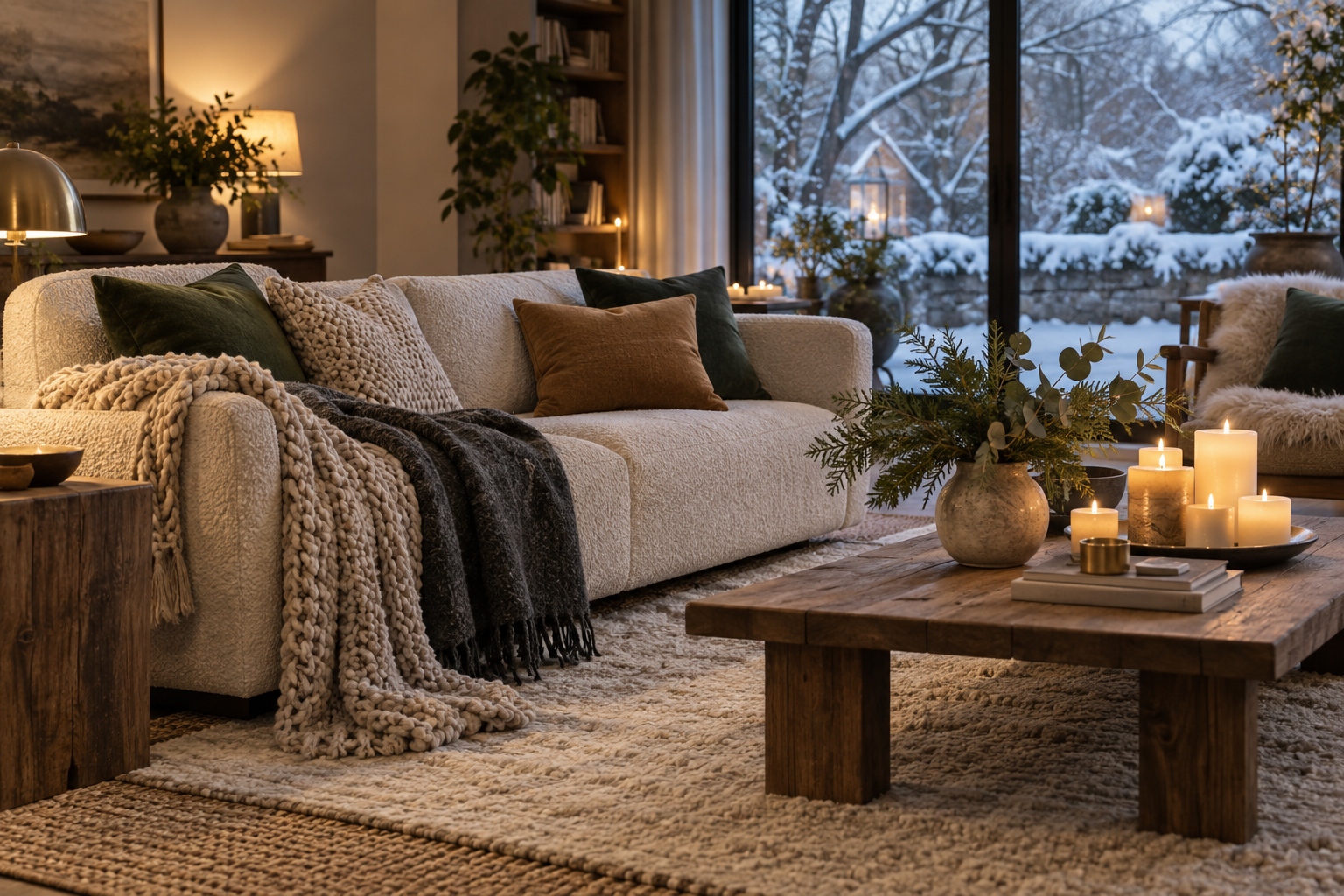
Winter palettes work best when they borrow from the landscape. Think snow, bark, stone, evergreen, and the pale gray of a January sky. Warm whites and creams form a strong foundation, especially on large surfaces like throws and slipcovers. From there, add depth with one or two richer tones.
A few combinations that work reliably:
- Cream, oatmeal, and camel with walnut wood, for a soft Scandinavian feel
- Charcoal, forest green, and brass, which reads moody and elegant in the evening
- Navy, ivory, and cognac leather, a classic cabin-inspired mix
- Rust, deep plum, and warm gray, for something less expected that still feels seasonal
Metallics are useful, but choose the tone deliberately. Brass and antique gold feel warm under lamplight, while pewter and silver lean icy and crisp. Mixing both in one room tends to look accidental, so pick one to lead.
How do you decorate for winter after Christmas?
Start by taking down anything tied to a specific holiday: ornaments, stockings, nativity scenes, menorahs, and anything printed with seasonal greetings. Then look at what’s left. Plain evergreen garlands, white string lights, pine cones, wooden bowls, candles, and neutral throws can all stay.
Next, fill the gaps the holiday pieces left. The mantel is usually the most obvious one. Replace the stocking row with a long, loose run of cedar or eucalyptus, a few pillar candles in glass hurricanes, and one larger object with height, such as a tall vase of bare birch branches or a framed winter landscape. On the coffee table, a wooden tray with a candle, a small bowl of pine cones, and a couple of books looks intentional without trying too hard.
A useful test: if a stranger walked in on February 10th, would anything make them think you forgot to finish cleaning up after the holidays? If not, you’ve made the switch.
Layer Textiles and Texture for Instant Warmth
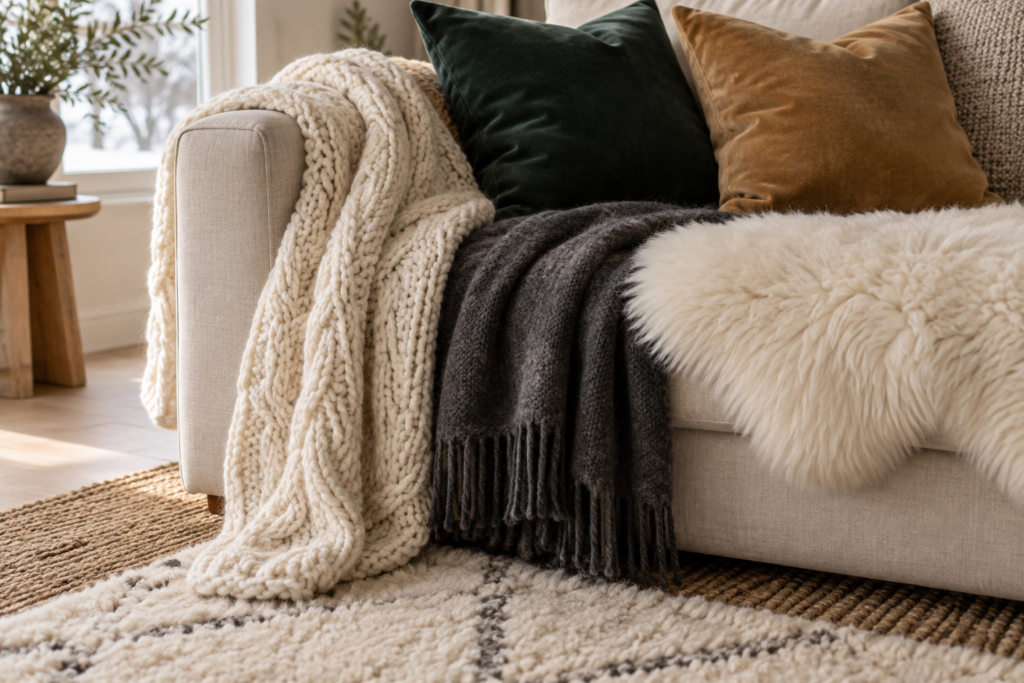
Textiles do more to make a room feel warm in winter than any other change. Swapping lightweight cottons and linens for wool, knits, velvet, faux fur, and flannel changes both the look and the physical comfort of a space, and it’s easy to reverse when spring arrives.
The trick is variety. A room with a single chunky knit throw looks nice. A room where that knit sits against a smooth velvet pillow, a nubby bouclé chair, and a flat-woven wool rug feels genuinely inviting, because your eye reads the contrast as depth.
Throws, pillows, and slipcovers
Keep at least two throws in the main living area and store them where people can actually reach them. A large lidded basket beside the sofa or a simple ladder leaning against the wall works better than folding them neatly over the back of a chair where nobody wants to disturb them.
For pillows, the most economical approach is to buy covers rather than whole pillows. Keep the inserts year-round and change only the covers each season. Winter covers in velvet, wool, corduroy, or a knit texture can be packed flat in a single storage box when you swap back to linen in spring. If your inserts are polyester, consider feather-blend inserts for winter; they slump into a softer, more relaxed shape that suits the season.
If your sofa is pale and sits under a window that gets hard winter sun, or you simply want a heavier look, a textured slipcover or a large blanket tucked over the seat cushions changes the whole piece for very little cost.
Rugs and flooring
Cold floors make a room feel colder than it is. Layering rugs is one of the most effective winter home decor ideas because it solves a comfort problem and adds visual weight at the same time. A large, inexpensive jute or sisal rug makes a good base. Lay a smaller wool, shag, or vintage-style rug on top, offset slightly so both show.
Sheepskin or faux sheepskin rugs are especially useful in small doses: beside a bed, in front of a reading chair, or draped over a wooden bench. In an entryway, a washable wool-blend runner handles wet boots better than anything plush.
Curtains and window treatments
Windows are where much of a room’s heat escapes, so heavier curtains serve a real purpose in winter. Lined curtains in velvet, wool-blend, or thick cotton help block drafts at night. Hang them wider than the window frame so you can open them fully during the day and let every bit of low winter sunlight in, then close them once the sun sets.
If you rent or don’t want to change curtains seasonally, adding a thermal lining behind existing panels is a practical middle ground. A fabric draft stopper along the bottom of an exterior door is unglamorous but makes a noticeable difference in entryways.
Use Light to Counter the Short, Dark Days
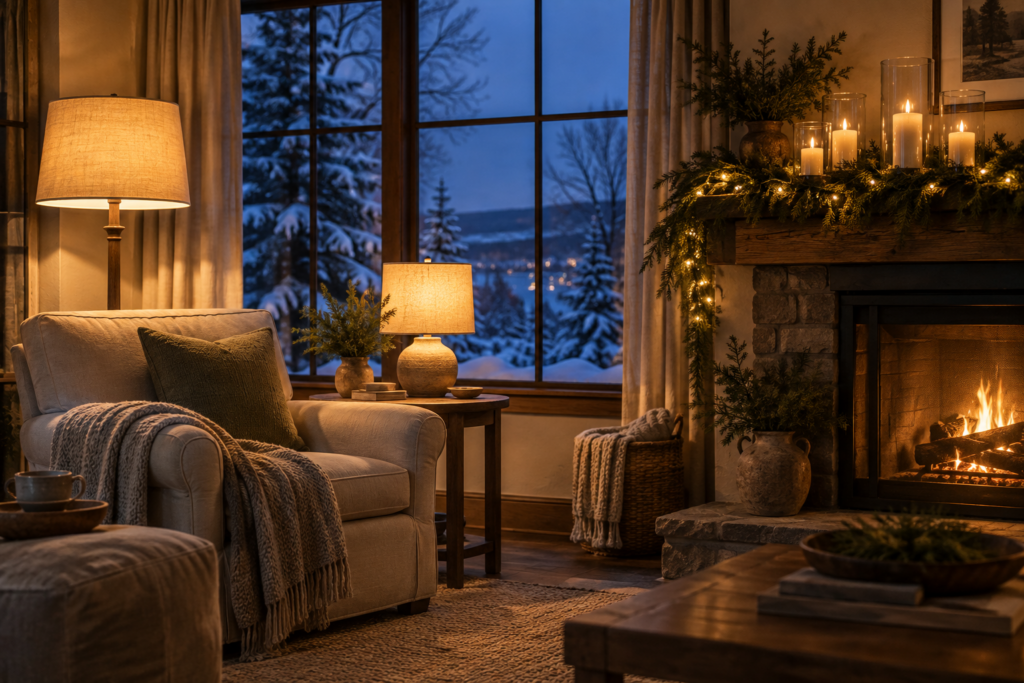
Lighting matters more in winter than in any other season, since many people spend their evenings indoors after dark. Use several low, warm light sources at different heights rather than one bright overhead fixture, and choose warm white bulbs to create a soft, golden atmosphere that feels restful.
Overhead lighting on its own flattens a room and makes it feel clinical, which is exactly the opposite of what you want at 5 p.m. in January. Aim for at least three separate light sources in a living room: a floor lamp by the seating, a table lamp on a side table or console, and a lower glow such as candles or a small accent lamp on a bookshelf.
Choosing bulbs and fixtures
Look for bulbs labeled “warm white” or “soft white,” typically in the lower color temperature range, which gives off a yellowish, candlelight-like tone. Cool daylight bulbs are useful in a home office or over a kitchen counter, but they make living spaces feel stark in winter.
Dimmers are worth the small effort to install, and plug-in dimmer switches for lamps require no electrician at all. Being able to bring the light down gradually through the evening changes how a room feels far more than buying new furniture would.
Lampshades matter too. Linen, pleated fabric, and rattan shades diffuse light warmly. Clear glass shades with exposed bulbs can look striking but produce glare, so pair them with lower-wattage bulbs.
Candles, string lights, and fireplaces
Candles are the most traditional winter decor element for good reason. Group pillar candles of different heights on a tray or in the fireplace if you don’t use it for fires. Unscented candles are the safer choice on a dining table, where strong fragrance competes with food.
Flameless LED candles have improved considerably and are a sensible choice for windowsills, bookshelves near curtains, children’s rooms, and homes with pets. Look for ones with a warm, flickering glow rather than a bright white light, and ideally a built-in timer so they switch on automatically each evening.
Plain white string lights don’t have to come down with the Christmas tree. Wound through a garland on the mantel, tucked inside a large glass jar, or draped along a headboard, they read as simply cozy rather than festive. Avoid multicolored strands, which keep a room looking like it’s still December.
If you have a working fireplace, make it the focal point. A basket of split logs beside it, a sturdy set of tools, and a simple mantel arrangement are all you need. For a non-working fireplace, fill the firebox with birch logs, a cluster of candles, or a large lantern.
Always keep real candles away from curtains, dried greenery, and paper decor, and never leave them burning in an empty room.
Bring Winter Nature Indoors

Natural materials connect your home to the season outside and add life when gardens are dormant. Fresh evergreen branches, bare twigs, dried seed heads, pine cones, and forced flowering bulbs all make inexpensive winter decor that feels calm and seasonal without relying on holiday themes.
This is where a gardener’s eye really pays off, because many of the best materials can be gathered from your own yard or bought cheaply at a garden center.
Evergreen and branch arrangements
Cedar, pine, fir, juniper, and eucalyptus all work well indoors. Cedar drapes beautifully on a mantel, while pine and fir have stiffer, more upright branches suited to vases. Magnolia leaves, with their glossy green tops and brown velvety undersides, make a sophisticated garland that dries in place and still looks good weeks later.
To keep fresh greenery looking good as long as possible:
- Cut stems at an angle and put them in water right away if you’re using a vase
- Keep arrangements away from heating vents, radiators, and fireplaces, which dry them out quickly
- Mist garlands every couple of days if they aren’t in water
- Refresh vase water every few days to prevent a sour smell
Bare branches offer a very different look. Birch, curly willow, and cherry or dogwood stems with interesting shapes look sculptural in a tall floor vase and last almost indefinitely. Red twig dogwood adds color without any hint of Christmas. Winterberry holly branches, with their bright red berries on bare stems, are stunning but should be kept out of reach of children and pets.
If you’re cutting from your own garden, prune carefully and take branches from the back or inside of shrubs where the gap won’t show.
Forcing bulbs for indoor winter blooms
Forced bulbs give you something growing and changing through the gloomiest weeks. Paperwhites are the easiest to start. Set the bulbs pointed-side up in a shallow bowl of pebbles or gravel, add water just to the base of the bulbs, and put the bowl in a bright, cool spot. They typically bloom within about four to six weeks. Paperwhites grow tall and can flop, so a few twigs pushed into the pebbles give them something to lean on.
Amaryllis bulbs take a little longer, often six to eight weeks, and produce enormous trumpet flowers on thick stems. Plant them in a pot just slightly wider than the bulb, leaving the top third exposed. Staggering your planting by two or three weeks keeps blooms coming from January into March.
Hyacinths can be forced in special glass vases where the bulb sits just above the water, but they need a period of cold first, often several weeks in a refrigerator away from fruit. Their fragrance is strong, so a single vase is plenty in most rooms.
Both amaryllis and paperwhites are toxic to cats and dogs if eaten, so place them somewhere pets can’t reach.
Dried citrus, pine cones, and other natural accents
Dried orange slices have a warm, glowing look when light shines through them and suit the whole winter, not just the holidays. Slice oranges about a quarter inch thick, pat them dry with a towel, and bake them on a rack at a low oven temperature for several hours, turning occasionally, until completely dry. String them into garlands with twine or scatter them in a bowl with cinnamon sticks.
Pine cones collected outdoors can carry insects and sap. Brush them clean and bake them on a foil-lined tray at a low temperature for about half an hour to an hour, keeping a close eye on them since they’re flammable. Once they cool, pile them into a wooden bowl, a wire basket, or a glass hurricane around a candle.
Other easy natural pieces include dried hydrangea heads, lotus pods, cotton stems, and bundles of dried lavender or wheat.
Room-by-Room Winter Decorating Ideas
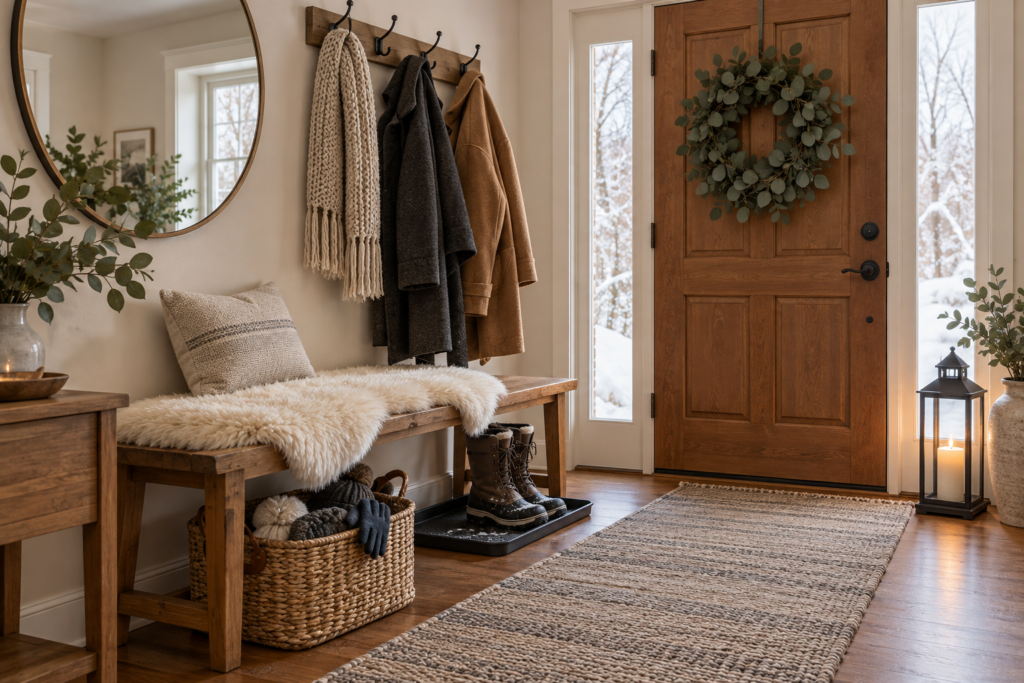
Each room in a home serves a different purpose in winter, so decorate according to how the space is actually used. Entryways need practicality for wet weather, living rooms need warmth and gathering spots, bedrooms need softness, and kitchens and dining rooms benefit from scent, candlelight, and seasonal table styling.
Entryway
The entryway sets the tone for the whole house, and in winter it also takes the most punishment. Start with function: a boot tray or a shallow basket lined with a waterproof mat, hooks for heavy coats, and a basket or bin for hats, gloves, and scarves. Once that’s handled, decoration fits in naturally.
A small bench topped with a sheepskin, a lantern with an LED candle, and a wreath of plain eucalyptus or olive branches on the inside of the door make the space welcoming. A mirror hung opposite or beside the door bounces what little daylight there is and makes a narrow hall feel less cramped.
Living room
The living room is where most of the texture and lighting advice above comes together. Pull furniture slightly closer together to create a more intimate conversation area; wide gaps between seats that feel airy in summer can feel cold and empty in winter. If you have a fireplace, orient seating toward it.
Create a dedicated reading nook if you have space: a comfortable chair, a floor lamp with a warm bulb, a small side table for a hot drink, and a throw within reach. Even a corner of a larger room can do this.
Seasonal books are a nice touch. Stack a few with wintry covers or natural spines on the coffee table, and put brighter summer reads back on the shelf.
Bedroom
Switching to flannel or brushed cotton sheets is the single biggest winter upgrade for a bedroom. Add a heavier duvet or a quilt folded at the foot of the bed, plus a chunky knit or faux fur throw for extra weight and texture.
Keep the palette quiet here. Creams, soft grays, oatmeal, and muted greens support rest better than dramatic contrasts. A sheepskin rug where your feet land in the morning, a small lamp with a dimmer on each nightstand, and a single vase of evergreen stems or dried grasses round it out without clutter.
Kitchen and dining room
In the kitchen, winter decor can be edible and aromatic. A large wooden bowl of seasonal fruit such as oranges, pears, pomegranates, and apples looks beautiful and gets used. A simmer pot on the stove with orange peel, cinnamon sticks, cloves, and a sprig of rosemary fills the house with a warm scent at almost no cost; just keep topping up the water and don’t leave it unattended.
Pots of herbs on a sunny windowsill, like rosemary, thyme, and parsley, bring green into the room and remain useful for cooking.
For the dining table, a long, low runner of greenery with candles set between stems works for everything from weeknight meals to dinner parties. Keep centerpieces low enough that people can see each other across the table. Swap placemats for linen or wool-felt versions in a darker neutral, and use cloth napkins in a winter color.
Bathroom
Bathrooms get overlooked, but a few small changes help on cold mornings. Thick, plush towels in a warm neutral, a soft bath mat, and a eucalyptus bundle hung from the showerhead (the steam releases its scent) make the room feel spa-like. A small candle or a diffuser with pine or cedar notes finishes it.
How can I make a small apartment feel cozy in winter?
In a small space, choose a few high-impact textures instead of filling every surface. One large, soft throw, two or three textured pillows, a layered rug, and a couple of warm lamps usually create more warmth than lots of small accessories, which quickly look cluttered in a compact room.
Prioritize lighting above everything. A small apartment with good lamps will feel cozy even with minimal decor, while an overlit one will feel cold regardless of how many blankets you add. Use vertical space for greenery, such as a single tall branch arrangement in a corner, rather than crowding tabletops. Mirrors and pale textiles help rooms feel bigger even when the daylight hours are short.
How do you decorate for winter on a budget?
Shop your own home first. Move throws, pillows, lamps, and baskets from other rooms to where they’ll be used most, and look through closets for wool scarves or blankets that could double as decor. Then gather what nature provides for free: branches from your yard, pine cones, and fallen evergreen boughs after storms.
Beyond that, spend where it counts. Pillow covers, a few warm-white bulbs, a plug-in lamp dimmer, and a bag of paperwhite bulbs cost relatively little but change a room’s feel substantially. Thrift stores are reliable sources of wool blankets, brass candlesticks, glass hurricanes, and wooden bowls.
Easing From Winter Into Early Spring
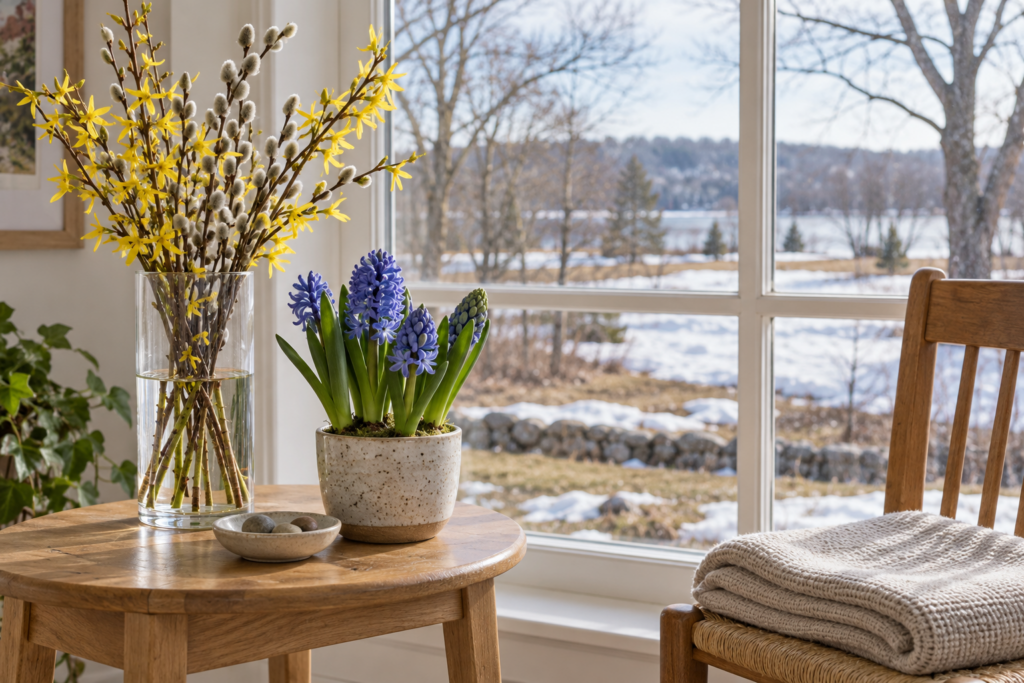
Late winter decor should gradually lighten rather than switching straight to spring. By February, begin removing the heaviest textiles, replacing dark evergreens with budding branches or forced bulbs, and introducing slightly brighter colors while keeping warm lighting in place for the still-dark evenings.
Winter tends to drag on in February and early March, and a home that looks exactly as it did in December can start to feel heavy. A gradual transition keeps rooms comfortable while acknowledging that longer days are coming.
Signs it’s time to start transitioning
Fresh evergreens that have dried and turned brittle should be the first thing to go, both for appearance and because dry greenery is a fire risk near candles and heat sources. If you notice the sun setting noticeably later and more natural light coming through your windows in the afternoon, that’s a good cue to begin editing.
Late-winter swaps that bridge the seasons
Forcing branches is one of the loveliest ways to bridge the gap. In late winter, cut stems from forsythia, pussy willow, flowering quince, or cherry, bring them inside, and put them in a vase of water in a bright room. Within a couple of weeks, many will leaf out or bloom, giving you spring color while snow is still on the ground.
Other gentle swaps include replacing faux fur throws with lighter cotton knits, trading velvet pillow covers for wool or textured cotton in paler shades, and moving from pine and cedar scents toward something fresher like citrus or herbs. Keep the lamps and candles, though. Evenings stay dark for a while yet.
Storing winter decor so it’s ready next year
Wash throws and pillow covers before storing them, since moths are attracted to natural fibers with any residue on them. Store wool and cashmere pieces in breathable cotton bags or sealed bins with cedar blocks rather than plastic bags, which can trap moisture. Dried citrus garlands, pine cones, and dried flowers keep for another season if wrapped loosely in tissue paper and stored in a cool, dry place. Label boxes by room so next year’s setup takes an afternoon rather than a weekend.
Frequently Asked Questions
When should you put up winter decor?
Most people begin adding winter decor in mid to late November, often alongside or just before holiday decorations. Because winter styling relies on neutral, seasonal pieces rather than festive symbols, it can go up as soon as autumn decor comes down and stay in place until late February or early March.
How long can winter decor stay up?
Winter decor can comfortably stay up until the weather begins to warm, usually late February through March depending on your climate. Fresh greenery should be removed once it dries out, but textiles, candles, branches, and neutral accents can remain until you’re ready to transition to spring.
How do you decorate for winter without it looking like Christmas?
Avoid red-and-green color combinations, ornaments, and anything with holiday symbols or greetings. Focus instead on neutral palettes, natural materials like wood, wool, and evergreens, soft white lighting, and textures such as knit and faux fur. These elements feel seasonal without tying your home to a specific holiday.
Is it okay to keep pine cones and evergreen garlands up after Christmas?
Yes, pine cones, plain evergreen garlands, and branches are part of the natural winter landscape rather than holiday decorations, so they fit well through January and February. Remove any ribbons, bells, or ornaments attached to them, and replace fresh garlands with new stems or faux versions if they become dry and brittle.
What winter plants are safe to have around pets?
Many common winter plants are toxic to cats and dogs, including amaryllis, paperwhites, holly, and mistletoe. Christmas cactus, rosemary, spider plants, and Boston ferns are generally considered safer options. If you have pets, keep any plant you’re unsure about out of reach and check with your veterinarian before bringing new plants home.
Are faux or real materials better for winter decorating?
Both have a place. Real evergreens, wool, and natural fibers offer authentic scent and texture but require more care and last only a season in some cases. Good faux greenery and faux fur are reusable, pet-friendly, and safer near heat sources. Many homes mix the two, using real stems in vases and faux garlands near fireplaces.
How can renters make their homes cozy in winter?
Renters can create warmth without permanent changes by using textiles, lamps, and removable elements. Layered rugs, thermal-lined curtains on tension rods or existing hardware, plug-in dimmers, flameless candles, and draft stoppers all add comfort and style, and they move easily to the next home when your lease ends.