Artificial Plants for Home Decor: Best Ways to Use Them
Faux plants used to be an admission of defeat. Dusty silk ficus in a hotel lobby, plastic ivy trailing along the top of a kitchen cupboard, that specific shade of green that exists nowhere in nature. The category earned its reputation honestly. The good ones now are genuinely hard to identify from a few steps…
Faux plants used to be an admission of defeat. Dusty silk ficus in a hotel lobby, plastic ivy trailing along the top of a kitchen cupboard, that specific shade of green that exists nowhere in nature. The category earned its reputation honestly.
The good ones now are genuinely hard to identify from a few steps back. Real-touch manufacturing gives leaves the weight and slight tackiness of actual foliage. Colour variation runs through a single stem instead of one flat green. Some trees are built on real wood trunks. The difference between convincing and obviously fake has become much more about how you use them than about what you buy, though buying well still matters.
And the honest case for them is stronger than plant people usually admit. Some places in a house simply cannot keep a living plant alive: a windowless bathroom, a bookshelf three metres from the nearest daylight, a high ledge nobody can reach with a watering can, a holiday home empty for ten weeks. A faux plant in those spots is not a compromise. It is the only option that works.
What follows covers how to tell a good one from a bad one, where fakes earn their place and where they never will, the potting and styling that does most of the convincing, and how to keep them from turning grey and shiny in two years.
When Artificial Plants Are the Right Call
Artificial plants make sense in low light, at unreachable heights, in rooms with humidity or temperature extremes, in homes with pets or small children where certain real plants are a hazard, in rental or holiday properties that sit empty, and anywhere the specific plant you want simply will not survive the conditions. Anywhere else, a real plant will usually look better.
Worth being clear about the trade-off. Real plants clean nothing dramatically, despite the persistent belief that a few pots meaningfully filter indoor air, but they do move, grow, respond to light and change across a year. That movement is most of what makes a room feel alive. A faux plant is static, and a room where every plant is static reads as slightly staged no matter how good the individual pieces are.
The places where fakes genuinely win:
Dark corners and windowless rooms. Interior bathrooms, basement rooms, hallways and the dead corner of a large living room more than a couple of metres from a window. Most plants that look good in photographs, including the fiddle leaf fig everyone wants, need bright indirect light and sulk without it.
High shelves and tops of cupboards. Anything you would need a ladder to water will eventually be neglected. Trailing foliage on a high shelf is one of the most effective and most forgiving uses of a fake.
Bathrooms without windows. Humidity suits some real plants, but darkness does not, and a bathroom with only a light fitting is a losing battle.
Holiday homes, rentals and second properties. A house that stands empty for weeks cannot keep anything alive, and the alternative is arriving to a row of dead pots.
Homes with cats, dogs or toddlers. Many popular houseplants are toxic if chewed, and the practical solution is often not to have them at reach level. A faux plant well out of reach, or one chosen because it will not be eaten, solves this cleanly. Note that a fake plant with small parts is its own hazard with a curious toddler or a determined cat, so secure the pot and check nothing detaches.
Allergies and mould concerns. Damp potting soil can harbour mould, which matters to some people, and a faux plant in a dry pot avoids it.
Specific plants that will not thrive where you want them. An olive tree indoors in a cold northern climate. A large fern in a dry, centrally heated room. Sometimes the right answer is to want that exact plant in that exact spot and accept a good fake.
The honest counterargument is cost. A good artificial tree costs considerably more than a small real one, and the cheap versions are the ones that look cheap. If the budget will only stretch to a poor fake, a real plant that suits the conditions will look better, even if it is a less glamorous species.
Do artificial plants look cheap?
The bad ones do, and the tells are consistent: uniform flat colour across every leaf, a glossy plastic sheen, visible mould seams along leaf edges, exposed wire at stem joints, perfectly symmetrical growth, and a bare, obviously artificial base sitting in a visible foam block.
The good ones avoid all of that, and most of those failures are fixable even on a mid-priced plant. Repot it. Cover the base properly. Bend and separate the stems so the shape is irregular. Cut a few leaves out if it is too dense. Place it somewhere the eye passes rather than lingers.
The two things that most reliably give away a fake are the base of the plant and the position. A visible foam block or moulded plastic soil disc reads as artificial instantly, and a bright green plant sitting in a dim corner where nothing could photosynthesise triggers the same suspicion even if people cannot articulate why.
How to Tell a Good Fake From a Bad One
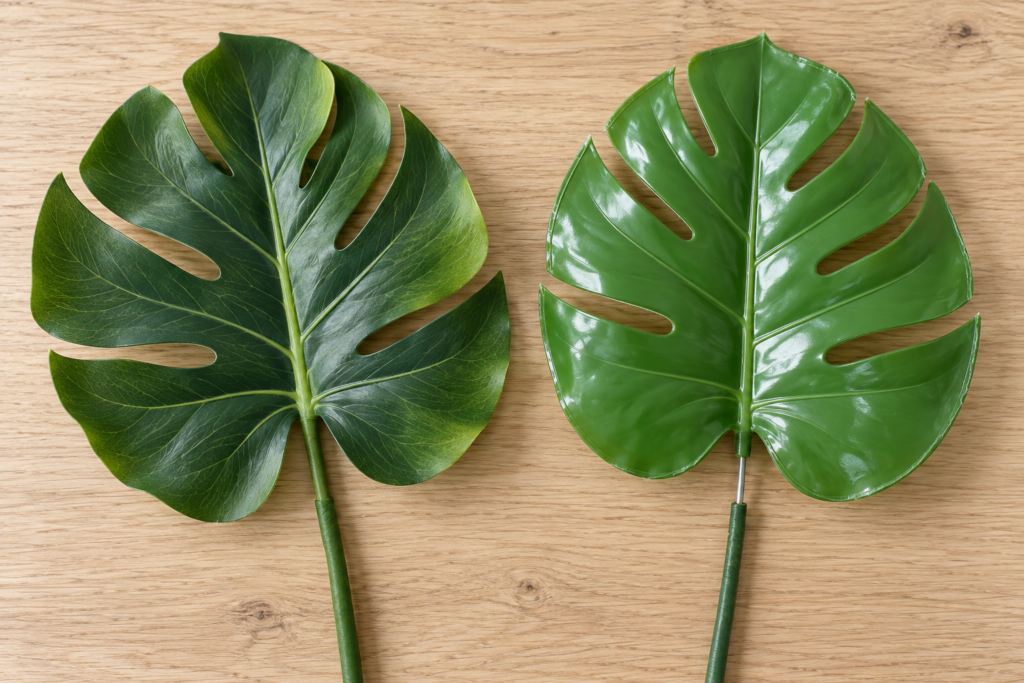
The single best indicator is colour variation. Look at whether one stem contains several shades of green, whether the undersides differ from the tops, and whether any leaves show the slight browning, yellowing or irregularity that real foliage has. Uniform colour is the clearest sign of a cheap plant, and it is visible from across a room.
The construction checks, in the order they matter:
Leaf material and finish. Real-touch or latex-coated leaves have a slight weight and a matte, faintly waxy feel. Cheap polyester silk leaves are thin, floppy and often shiny. Hold a leaf if you can. If it feels like fabric or like a carrier bag, it will read that way in the room.
Veining and texture. Good leaves have moulded veins, a visible midrib and some surface texture. Flat leaves with printed-on veins look wrong under any direct light.
Stems and trunks. Better trees use real wood trunks or moulded trunks with bark texture, and better stems have a slight flex with no visible wire protruding at the joints. Bend a branch. It should hold a position rather than spring back or feel brittle.
Symmetry. Real plants are irregular. A plant with evenly spaced, identically sized leaves radiating in a perfect circle is a giveaway, and the fix is to reshape it yourself, which is normal practice.
Seams. Run a finger along a leaf edge. A hard ridge where the mould closed is a mark of cheaper production, though it can often be trimmed off with small scissors.
Density. Overly dense, bushy plants look artificial. Real plants have gaps, visible stems and space between leaves. Thinning a too-perfect faux plant is one of the easiest improvements you can make.
UV resistance, if anything is going near a window or outdoors. Without it, greens fade toward grey or yellow within a season or two of direct sun. This is worth paying for on anything in a bright room.
Weight and pot. Many faux plants arrive in a flimsy nursery pot set in foam. That is expected and fine, since you will repot anyway, but a plant with some heft in the stems and root ball is generally better made.
Which species read as convincing matters too, and some are far more forgiving than others. The easiest to fake well are those with thick, waxy, structural leaves: rubber plants, monstera, snake plants, ZZ plants, fiddle leaf figs, bird of paradise, olive, eucalyptus and most succulents. Their real versions have firm, glossy, regular foliage anyway, so the manufacturing gap is small.
The hardest to fake convincingly are plants whose beauty is in fine, delicate or translucent foliage: ferns, especially maidenhair, air plants, most flowering plants, orchids with their distinctive waxy blooms and visible aerial roots, and anything with very thin leaves that should catch light through them. Faux versions exist and some are good, but the bar is far higher. Flowers in particular are the category most likely to look artificial, which is why many well-styled rooms use faux foliage and real or dried flowers rather than the reverse.
The Potting and Placement That Does Most of the Convincing
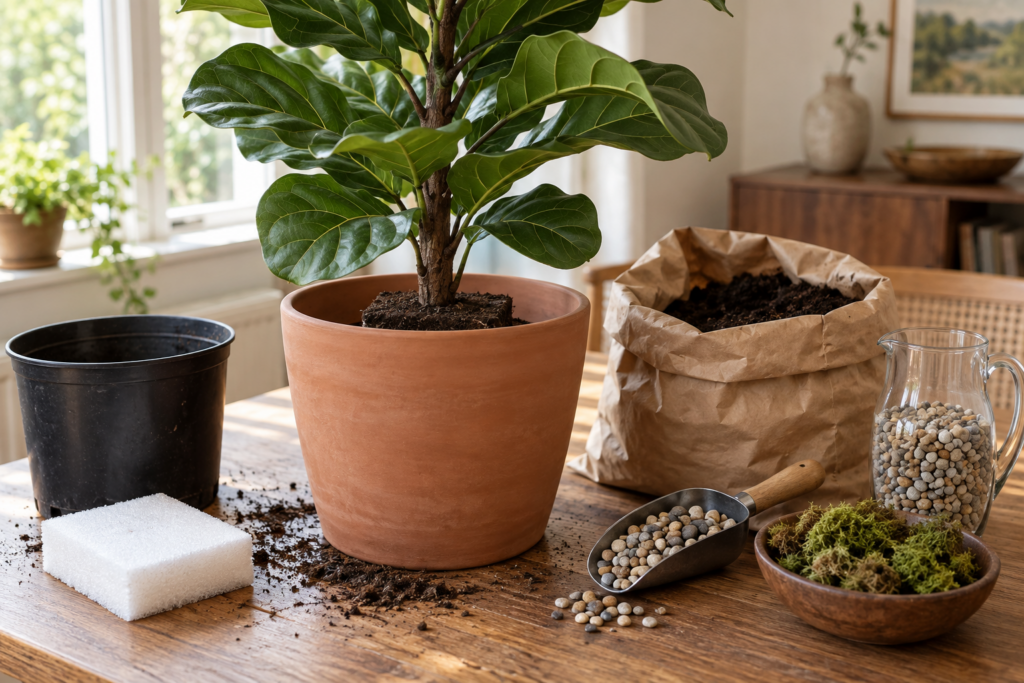
More than half the realism comes from what is below the leaves. The single highest-impact thing you can do with any artificial plant is remove the plastic nursery pot, put it in a real ceramic, terracotta, concrete or woven planter, and cover the base with genuine material so no plastic or foam is visible.
The full method, which takes about ten minutes per plant:
Choose a real pot in terracotta, glazed stoneware, concrete or a woven basket with a liner. Match the pot size to what the plant would actually need if it were alive, since an obviously undersized or oversized pot reads as wrong. Matte finishes beat glossy ones here.
Weight the base. Artificial plants are light and top-heavy, so fill the bottom of the pot with sand, gravel, stones or a bag of dry soil. This stops the plant tipping and makes it feel substantial when someone brushes past it.
Hide the mechanics. Whatever the plant arrived in goes down inside the new pot, packed so it cannot shift. Foam, bunched newspaper or packing material fills the gap.
Top with real material. This is the step people skip and the one that matters most. Real potting soil is the most convincing, and it works perfectly well in a pot with no drainage since nothing is being watered. Alternatives that look good: preserved moss, small pebbles, gravel, bark chips or coarse sand. A mix of two, such as soil with a scatter of small stones and a little moss at the edges, looks more natural than any single material.
Leave the soil slightly uneven. Perfectly level, evenly spread topping looks arranged. Real soil is lumpy, with a few stones and an uneven surface.
Reshape the foliage. Bend the stems so they lean in different directions rather than radiating symmetrically. Let a few reach further than the rest. Separate leaves that are clumped together. If a branch crosses awkwardly, bend it, since that irregularity is exactly what real plants do.
Thin it if necessary. Cut stems out with wire cutters if the plant is implausibly dense. Almost every mass-produced faux plant benefits from losing ten to twenty percent of its foliage.
Placement is the other half. Put artificial plants where the light makes sense. A bright green plant thriving in a dark corner is a logical contradiction that people register subconsciously, which is why a fake in a dim spot often works better in a muted or darker-leaved species, or in a spot where it reads as shadowed rather than sunlit.
Keep the most convincing plants in the places people get close to, and put the less convincing ones high, far, or where they are partly obscured. A trailing plant on top of a tall bookcase is seen from two metres below at an angle, which is the most forgiving viewing position there is. A plant on a coffee table is inspected from thirty centimetres, and it needs to survive that.
How do I make my artificial plants look more real?
Five changes, in order of impact. Repot into a real container with weight in the base and real soil or moss on top, which fixes the most common giveaway. Reshape the stems so the plant is irregular and asymmetrical rather than evenly distributed. Thin out excess foliage so there are visible gaps and stems, since real plants are not solid balls of leaves. Dust it regularly, because dust is what turns a decent fake into an obvious one. And place it in a spot where the light makes sense for a living plant of that type.
Two smaller tricks help. Mixing a real plant or two in among the fakes raises the credibility of the whole group, since the eye calibrates on the real one. And using a few dried elements, such as dried grasses, eucalyptus or branches, adds genuine organic material to a display at almost no cost.
Styling Artificial Plants Room by Room
Faux plants work differently depending on how close people get and what else is happening in the room.
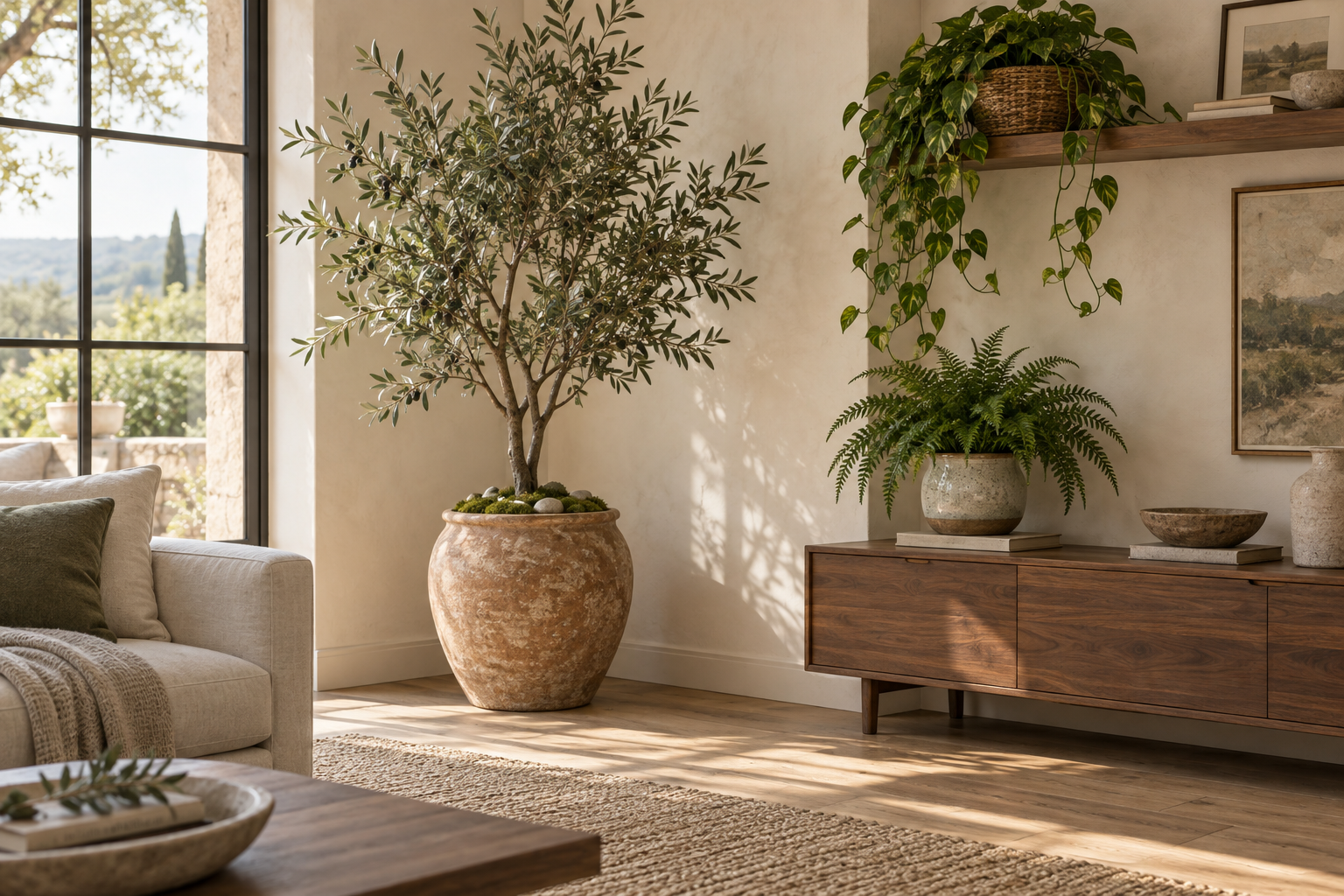
Living rooms take the largest pieces. A tall tree in a corner, typically 120 to 180cm, is the highest-impact single purchase in the category, and it fills the awkward vertical gap that most living rooms have beside a sofa or between a window and a wall. Trailing foliage on a high shelf or the top of a bookcase softens hard edges. Keep smaller faux plants off the coffee table, which is the highest-scrutiny surface in the house, and use a real plant or a vase of dried stems there instead.
Kitchens are where faux earns its keep on tops of cabinets, which get hot, dry and dusty and are impossible to water. Trailing ivy or pothos running along the top of wall units is one of the oldest uses of artificial foliage and still one of the best, provided it is cleaned. Herbs on a windowsill are the exception: real herbs get used, they suit the light, and faux herbs on a kitchen sill read as slightly odd because the whole point of them is that you cook with them.
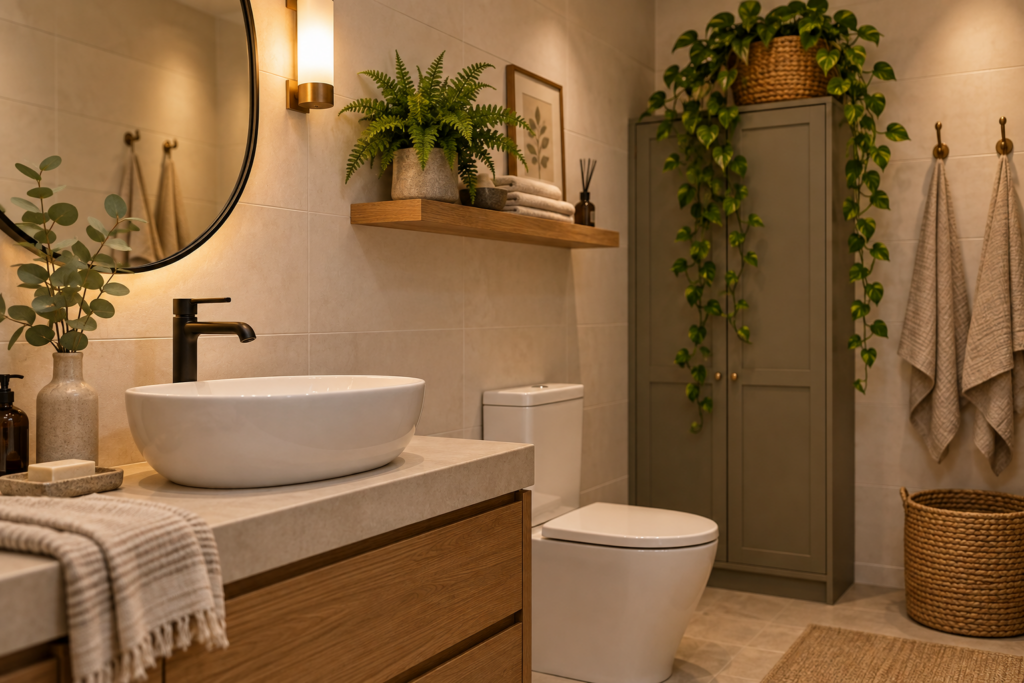
Bathrooms are strong territory, particularly those without windows. Humidity and low light kill most real plants slowly. A faux fern on a shelf, trailing foliage on top of a cabinet or a small plant beside the basin works well, and there is no watering to do in a room where watering is awkward anyway. Ferns are one of the harder species to fake convincingly, so buy carefully here.
Bedrooms suit softer, smaller pieces: a small trailing plant on a chest of drawers, a stem or two of eucalyptus in a vase, a plant on a high shelf. Bedrooms are low-traffic and lower-light, which favours faux.
Home offices benefit from greenery for the same reason every workspace does, and the practical advantage is that a desk plant that needs nothing will not die during a busy month. Keep it small and put it slightly off to the side rather than directly under a desk lamp, which highlights any plastic sheen.
Hallways and entryways are usually dark, narrow and used as thoroughfares, which is a losing combination for real plants. A tall narrow faux plant or a trailing one above a console does the job.
Outdoor and covered spaces need UV-resistant specifications without exception. Even then, expect fading over time, and keep faux plants to covered porches, balconies and shaded patios rather than full sun.
The arrangement principles are the same as for real plants. Group in odd numbers, vary the heights so there is a tall, a medium and a low in each cluster, and mix leaf shapes rather than repeating the same silhouette. Vary the pots too, since three identical pots in a row reads as a display and three different ones reads as a collection.
Should I mix artificial and real plants together?
Yes, and mixing is one of the most effective realism tricks available. Placing one genuine plant among two or three fakes calibrates the eye toward real, and people register the group as plants rather than scrutinising each one.
The practical version of this: put the real plants where the light is good and the eye goes first, meaning near windows and at seated eye level, and put the fakes in the dark corners, the high shelves and the awkward spots. This is not a compromise so much as sensible allocation, since it gives each type the position where it performs best.
The easiest real plants to keep alive alongside fakes, if you want low commitment, are snake plants, ZZ plants and pothos, all of which tolerate neglect and low light far better than the popular photogenic species. Add dried stems, preserved eucalyptus or branches for a third texture, and a plant display starts to look genuinely layered.
Cleaning, Care and Making Them Last
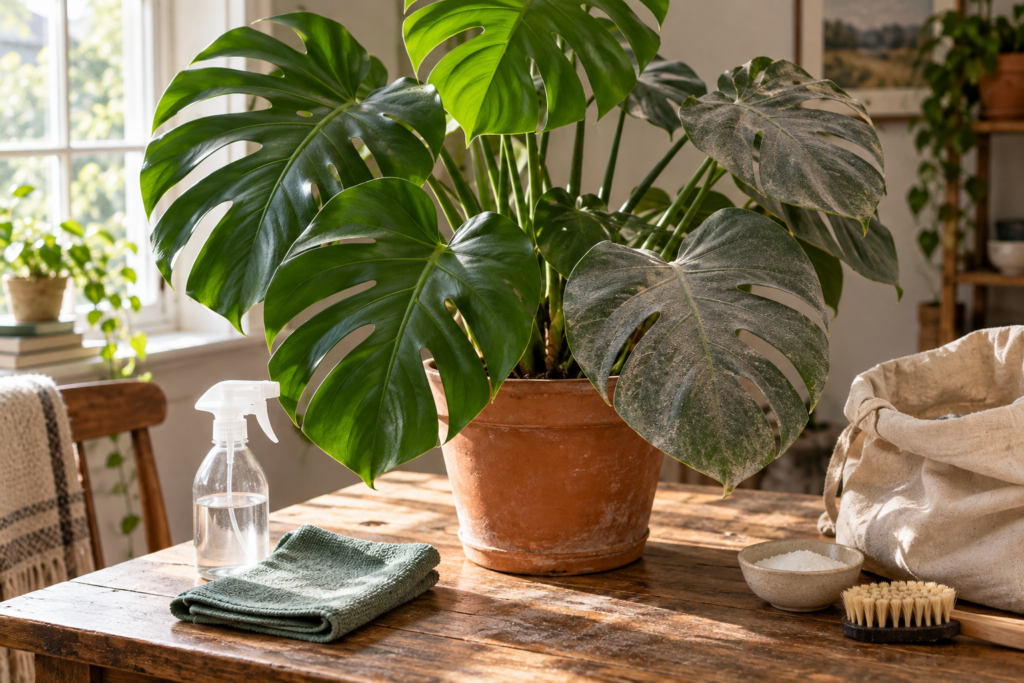
Dust is what destroys artificial plants, and it does it gradually enough that people stop noticing. A grey film over green leaves is the single most common reason a fake that looked convincing on day one looks obvious two years later.
A realistic maintenance rhythm:
Every two to four weeks, dust with a microfibre cloth, a soft brush, a feather duster or a hairdryer on a cool setting, which is fast and works well on dense foliage. A can of compressed air also works for intricate plants.
Every few months, clean properly. For most plants, wipe leaves individually with a damp cloth. For sturdy plastic and latex foliage, a light spray of water with a drop of washing-up liquid, wiped and then dried, removes the greasy film that builds up in kitchens. Let everything dry fully before it goes back, since trapped moisture at stem joints can cause mould.
For small, dense or delicate plants, the bag method is quicker: put the plant in a large bag with a couple of tablespoons of salt or cornflour, shake gently, then remove and shake off the residue outdoors. The abrasive lifts dust out of crevices without touching each leaf.
Never put real-touch or latex-coated plants in a dishwasher or soak them, and avoid harsh cleaners, alcohol and bleach, all of which degrade coatings and strip colour.
For longevity, the main enemy after dust is ultraviolet light. Direct sun fades non-UV-treated plants noticeably within a year or two, shifting greens toward grey, yellow or blue depending on the pigment. Keep anything without UV protection out of direct sunbeams, and rotate plants occasionally so fading is even rather than one-sided.
Heat is the other issue. Radiators, heating vents and fireplaces dry and warp plastic foliage over time, so keep plants clear of direct heat sources. Kitchens produce an airborne grease that bonds with dust and forms a sticky film, which is why kitchen plants need washing rather than dusting.
When a plant does fade, there are limited fixes. Faded stems can be trimmed out and the plant reshaped around the gap. Floral sprays and leaf-safe paints exist for touching up colour, though results vary. In most cases the honest answer is that a badly faded plant looks worse than no plant at all, and it is time to replace it.
Storing seasonal pieces, particularly faux garlands and wreaths, works best in breathable containers rather than compressed in plastic. Hang wreaths or store them flat rather than stacking heavy items on them, and fluff the foliage back into shape when they come out.
Two other practical notes. Check for any small parts that could detach if you have young children or pets, and secure top-heavy pots so a curious animal cannot pull a tree over. And if a plant ever develops an odd smell, which occasionally happens with cheap materials in a warm room, airing it outdoors for a day usually clears it.
Where People Go Wrong With Faux Plants
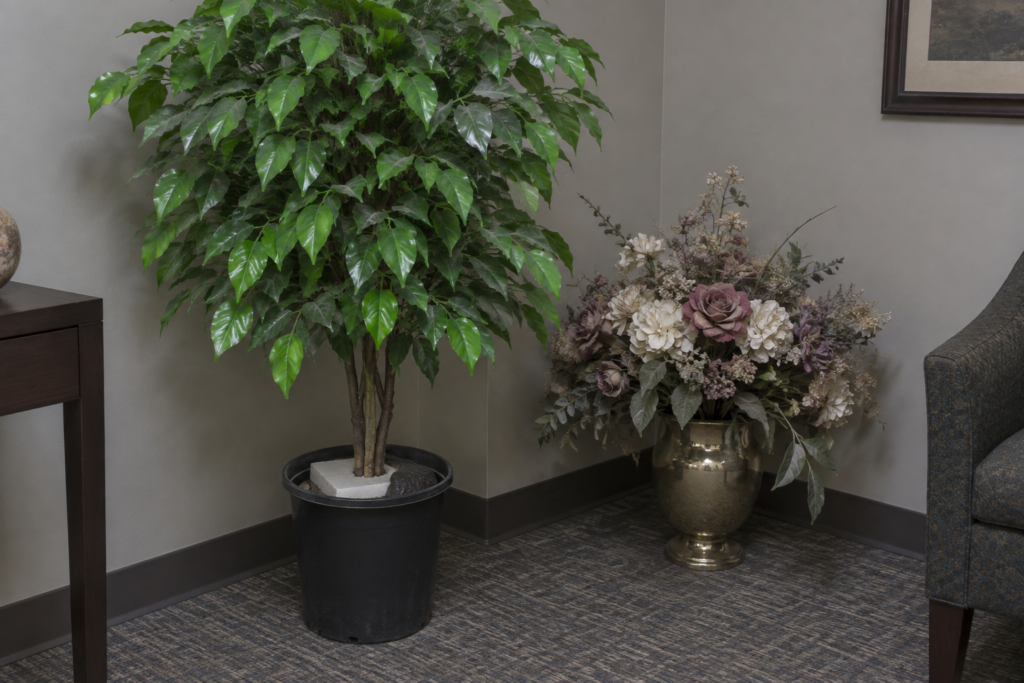
The failures are consistent and almost all of them are fixable.
Leaving the plastic pot visible. The nursery pot, the foam block and the moulded plastic soil disc are the three clearest giveaways in the category, and covering them takes ten minutes.
Buying the cheapest available. This is the one category where price genuinely correlates with realism, because leaf material, colour layering and construction all cost money. One good plant beats four poor ones.
Never cleaning them. A dusty fake plant is worse than no plant, and it is the most common state of artificial foliage in occupied homes.
Using too many. A room where every plant is artificial reads as staged, however good the individual pieces. A ratio weighted toward real, with fakes in the spots that cannot support life, is far more convincing.
Faux flowers everywhere. Flowers are the hardest thing in the category to fake and the fastest to look dated. Foliage, dried stems and branches are all more forgiving. If you want flowers, dried arrangements, preserved stems or a few real ones in a jug will beat almost any artificial bouquet.
Perfect symmetry. Unreshaped plants straight from the box are evenly distributed in a way nothing living ever is. Bend, thin and rearrange.
Ignoring light logic. A sun-loving species thriving in a windowless hallway is a contradiction people notice without knowing why. Choose species that suit where the plant is going, or accept that the spot calls for something that reads as shade-tolerant.
Putting the least convincing plant in the most scrutinised place. Coffee tables, dining tables and desks get close inspection. Save those for real plants, dried stems or the very best fake you own.
Frequently Asked Questions
Are artificial plants tacky in home decor?
Poorly made or badly styled ones are, but the category itself is not. What makes a faux plant read as tacky is a small set of specific things: a visible plastic nursery pot, flat uniform colour, glossy sheen, symmetrical arrangement and dust. A well-made plant, repotted into a real container with soil or moss over the base, reshaped to be irregular and kept clean, will pass almost unnoticed in most rooms.
Which artificial plants look the most realistic?
Species with thick, waxy, structural leaves fake best, including rubber plants, monstera, snake plants, ZZ plants, fiddle leaf figs, bird of paradise, olive and eucalyptus, along with most succulents. The hardest are ferns, particularly maidenhair, air plants, orchids and anything with fine or translucent foliage, since real versions of those catch light through the leaf in a way plastic cannot replicate. Flowers of any kind are the most difficult category and the one most likely to look artificial.
How do you clean artificial plants?
Dust every two to four weeks with a microfibre cloth, soft brush, feather duster or a hairdryer on a cool setting. Every few months, wipe leaves with a damp cloth, or for sturdy foliage use a light spray of water with a drop of washing-up liquid and dry thoroughly afterwards. For small, dense plants, shaking them in a bag with salt or cornflour lifts dust from crevices quickly. Avoid soaking, dishwashers, bleach and alcohol-based cleaners, which damage coatings.
Do artificial plants fade in sunlight?
Yes, unless they are specifically manufactured with UV resistance. Without it, direct sunlight shifts greens toward grey or yellow within a season or two, and the fading is usually uneven, appearing first on the side facing the window. If a plant is going anywhere that catches direct sun, including a conservatory or a covered balcony, choose a UV-rated one. Rotating plants occasionally makes any fading more even and less noticeable.
How long do good artificial plants last?
With regular cleaning and no direct sun, a well-made artificial plant will hold its appearance for many years, and the limiting factor is usually fading or accumulated grease rather than physical breakage. Cheap plants decline much faster, since thin polyester leaves fray, colours are less stable and stems lose their shape. The two habits that extend life most are keeping them out of direct sunlight and away from heat sources, and cleaning them before dust builds into a film.
Are artificial plants safe around pets and children?
They remove the toxicity risk that comes with many popular houseplants, which is a genuine advantage in homes with cats, dogs or toddlers. They introduce a different risk, though, since small leaves, berries and decorative parts can detach and be swallowed. Check any plant for loose components before placing it within reach, secure top-heavy pots so they cannot be pulled over, and treat faux berries and small decorative fruit as you would any small object in a home with young children.
What should I put on top of the soil in a fake plant pot?
Real potting soil is the most convincing option and works fine in a pot with no drainage, since nothing will ever be watered. Preserved moss, small pebbles, gravel, bark chips and coarse sand all work too, and a combination of two materials looks more natural than one. Whatever you use, keep the surface slightly uneven rather than perfectly level, and make sure no foam, plastic or packing material remains visible at the edges of the pot.