Dining Room Decor Ideas: From Everyday to Dinner Party
The dining room has an identity crisis in most homes. Eleven months a year it is the room where mail piles up and kids do homework. Then Thanksgiving and Christmas arrive, and suddenly it has to transform into the setting for the most important meals of the year. If your dining room only looks good…
The dining room has an identity crisis in most homes. Eleven months a year it is the room where mail piles up and kids do homework. Then Thanksgiving and Christmas arrive, and suddenly it has to transform into the setting for the most important meals of the year. If your dining room only looks good twice a year, this guide is for you.
Here is the approach that actually works: style the dining room for everyday life first, then learn the five or six swaps that turn it into a dinner-party room in under an hour. Below you will find dining room decor ideas for 2026 that cover both modes, from the foundational pieces (table, lighting, seating) to tablescape basics, holiday entertaining for Thanksgiving and Christmas, and the small details that make guests feel welcome. A dining room that works every day and shines on holidays is not twice the work; it is the same work, done in the right order.
What Makes a Dining Room Work in 2026?
Dining rooms in 2026 are less formal and more flexible than the dining rooms of a decade ago. The trends that matter are not about specific colors; they are about how the room functions. Here is what good dining room design looks like right now:
- Everyday-first styling. The room should look finished on a random Tuesday, not just on holidays. A simple, styled centerpiece that stays put year-round is the foundation.
- Flexible seating. A mix of seating types (upholstered host chairs, simple side chairs, maybe a bench) looks collected and handles extra guests better than six identical chairs.
- Statement lighting. The chandelier or pendant is the jewelry of the room. Oversized, sculptural lighting is the defining dining room trend of 2026.
- Warm, layered materials. Wood, linen, brass, and natural textures dominate; cold, all-white dining rooms are fading out.
- Easy holiday transformation. The best dining rooms have a “party mode”: a set of swaps (linens, centerpiece, candles) that elevate the room in under an hour.
How to use this guide
Read the first three sections to get the foundation right: the table, the lighting, and the seating. Then use the tablescape and holiday sections as your entertaining playbook. If your dining room opens into the living room, coordinate the two spaces using our living room decor ideas so the sightline from one room to the other feels intentional.
The Table: Getting the Foundation Right
Everything in a dining room orbits the table. Get the size, shape, and styling right, and the rest of the room is easy. Get it wrong, and no amount of decor fixes it.
Size and shape: the measurements that matter
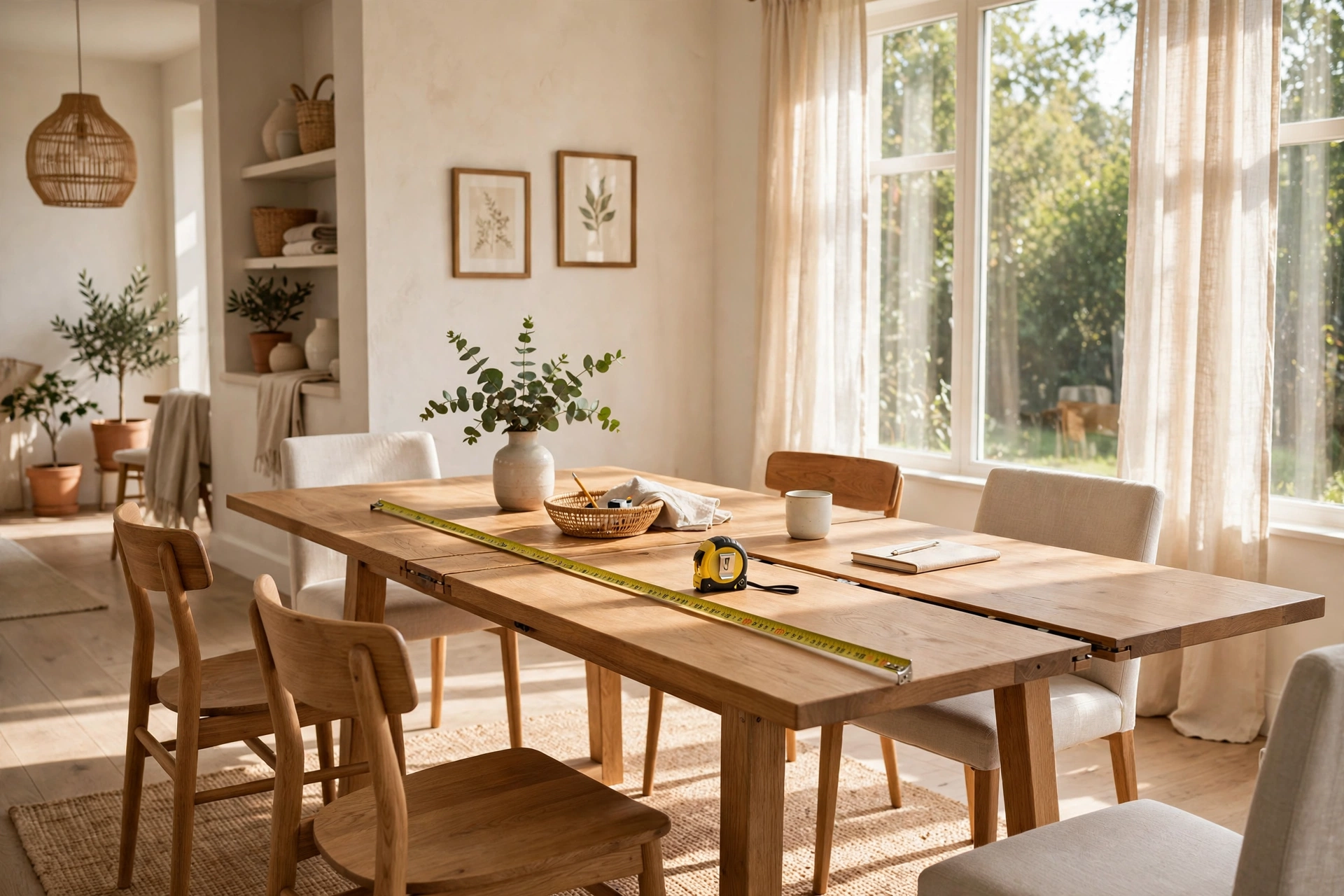
Allow 24 inches of table width per person and at least 36 inches of clearance between the table edge and the wall (48 inches if you want guests to walk behind seated diners). A 60-inch round table seats six comfortably; a 72×36-inch rectangle seats six to eight. Round tables are best for conversation and small rooms; rectangles handle holiday crowds and buffet-style serving better. If you regularly host 10 or more, consider an extendable table: a 60-inch table that extends to 84 or 96 inches gives you everyday scale with holiday capacity. Measure your room before falling in love with a table; the number one dining room regret is a table that is too big for the space.
Everyday centerpieces that stay put
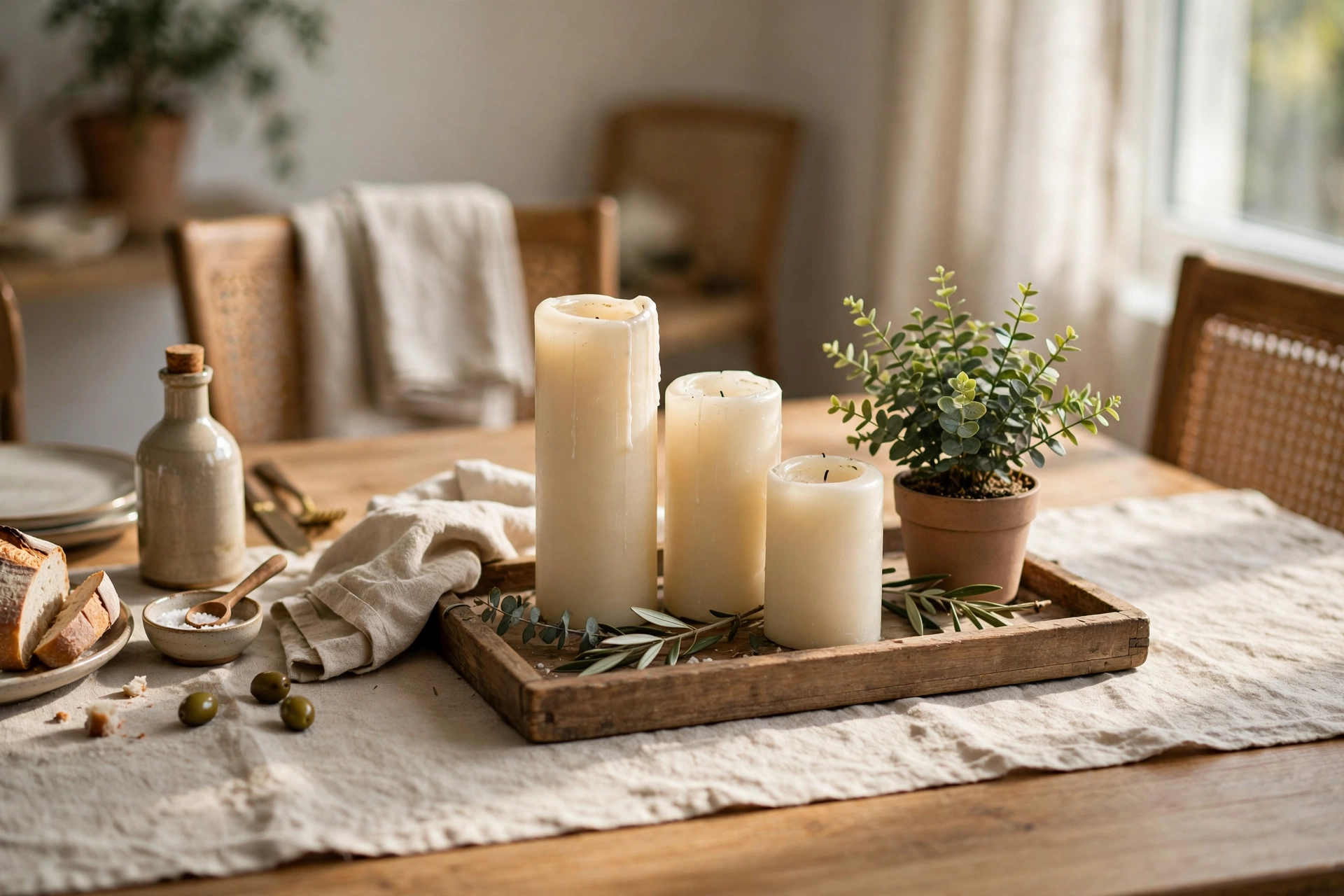
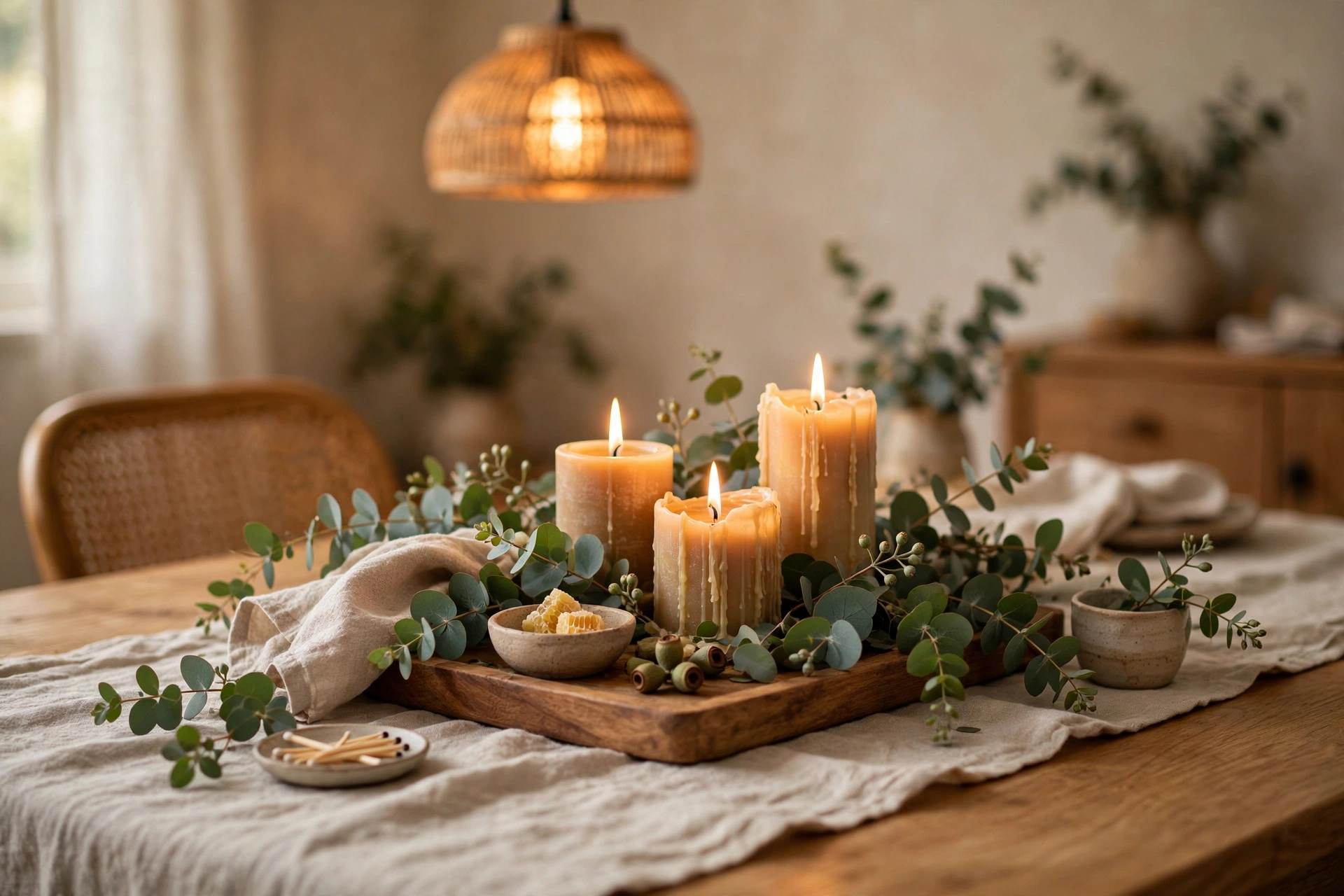
Your everyday centerpiece needs to survive daily life: low enough to leave on the table during meals, sturdy enough to move for homework or bills, and pretty enough to make the room look finished. The best options: a wooden tray with three pillar candles and a small plant, a low bowl of seasonal fruit, or a simple vase with eucalyptus or dried stems. Keep it under 12 inches tall and within a tray or defined footprint so it reads as one composed object, not clutter. Change the contents seasonally (pinecones in winter, fresh flowers in spring) and the room refreshes itself four times a year with almost no effort.
Table finishes and protection
A dining table that you are afraid to use is a failed dining table. Protect wood tables with felt pads under the centerpiece tray, use placemats or a runner for daily meals, and keep a table pad or thick tablecloth for big cooking projects and kids’ crafts. For holiday meals, a full tablecloth protects against the red-wine-and-gravy gauntlet while instantly formalizing the room. Linen and cotton tablecloths in neutral tones are the most versatile; buy one good one in a size that fits your extended table, and it will serve for a decade.
Lighting: The Chandelier and Beyond
Lighting is the single most transformative element in a dining room. A great fixture makes an average room look designed; bad lighting makes a beautiful room look flat. And since dining rooms are used mostly in the evening, this matters more here than anywhere else in the house.
Choosing the right chandelier or pendant
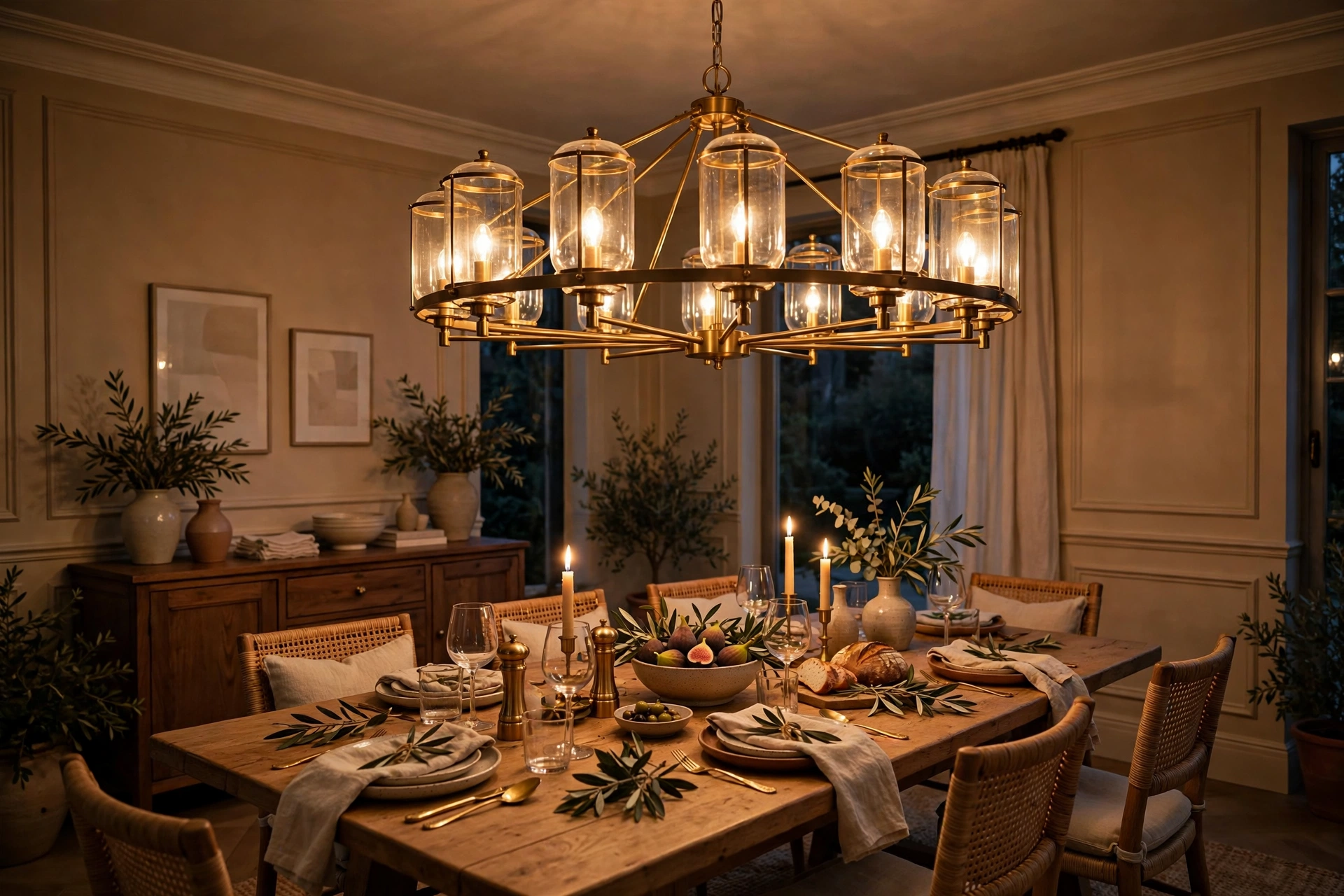
Size the fixture to the table, not the room: the fixture’s diameter should be about half to two-thirds the width of the table. Hang it 30 to 34 inches above the tabletop (36 inches if your ceilings are over 9 feet). In 2026, the strongest looks are oversized sculptural pendants, mixed-material chandeliers (brass and glass, wood and metal), and linear pendants over rectangular tables. A dimmer switch is non-negotiable; the ability to take the light from bright (for homework) to low (for dinner parties) is what makes one fixture serve both modes. Budget $150 to $400 for a good-looking fixture; this is the room’s jewelry, and it is worth the investment.
Layering light for dinner parties
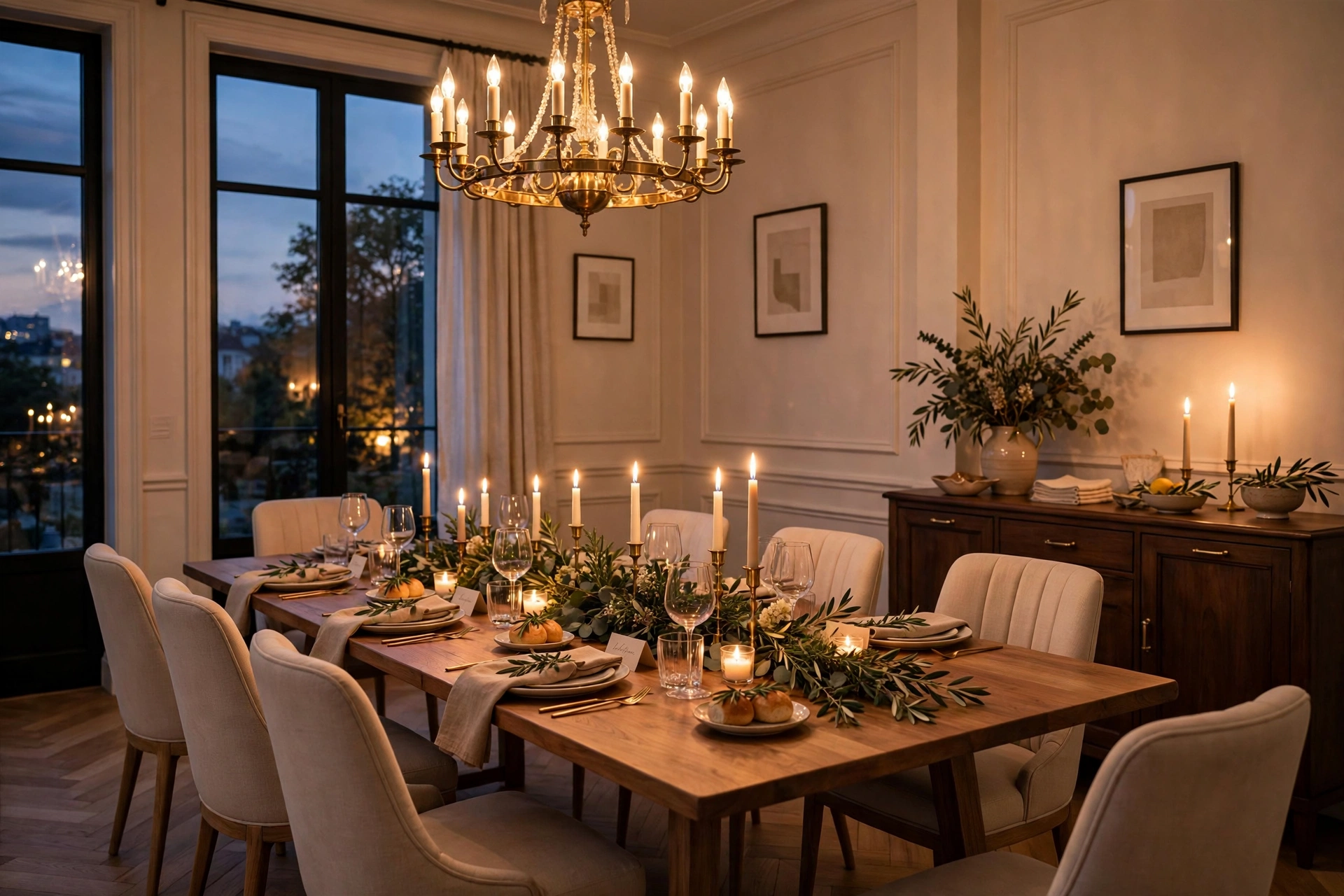
For entertaining, the chandelier should be dimmed to about 30 percent, with candles providing the rest of the light. Add taper candles or tea lights on the table, a small lamp or candles on the sideboard, and if you have a hutch or shelves, a tiny picture light or fairy lights inside. This layered, low light is what makes dinner parties feel intimate and makes everyone look good. Test it before guests arrive: sit at the table and check that faces are lit warmly without harsh shadows. Our home decor ideas collection has more on layering light throughout the house for entertaining.
What to avoid
Recessed can lights alone, with no fixture and no dimmer, are the fastest way to make a dining room feel like an office. Cool-white bulbs (4000K and up) make food look unappetizing and skin look tired; use warm white (2700K) everywhere in the dining room. And do not hang the chandelier too high: a fixture floating near the ceiling lights the ceiling, not the table. When in doubt, hang it lower; you can always raise it.
Seating: Comfort, Style, and Extra Guests
Uncomfortable chairs end dinner parties early. Seating is where function matters most, and it is worth getting right.
The case for mixed seating
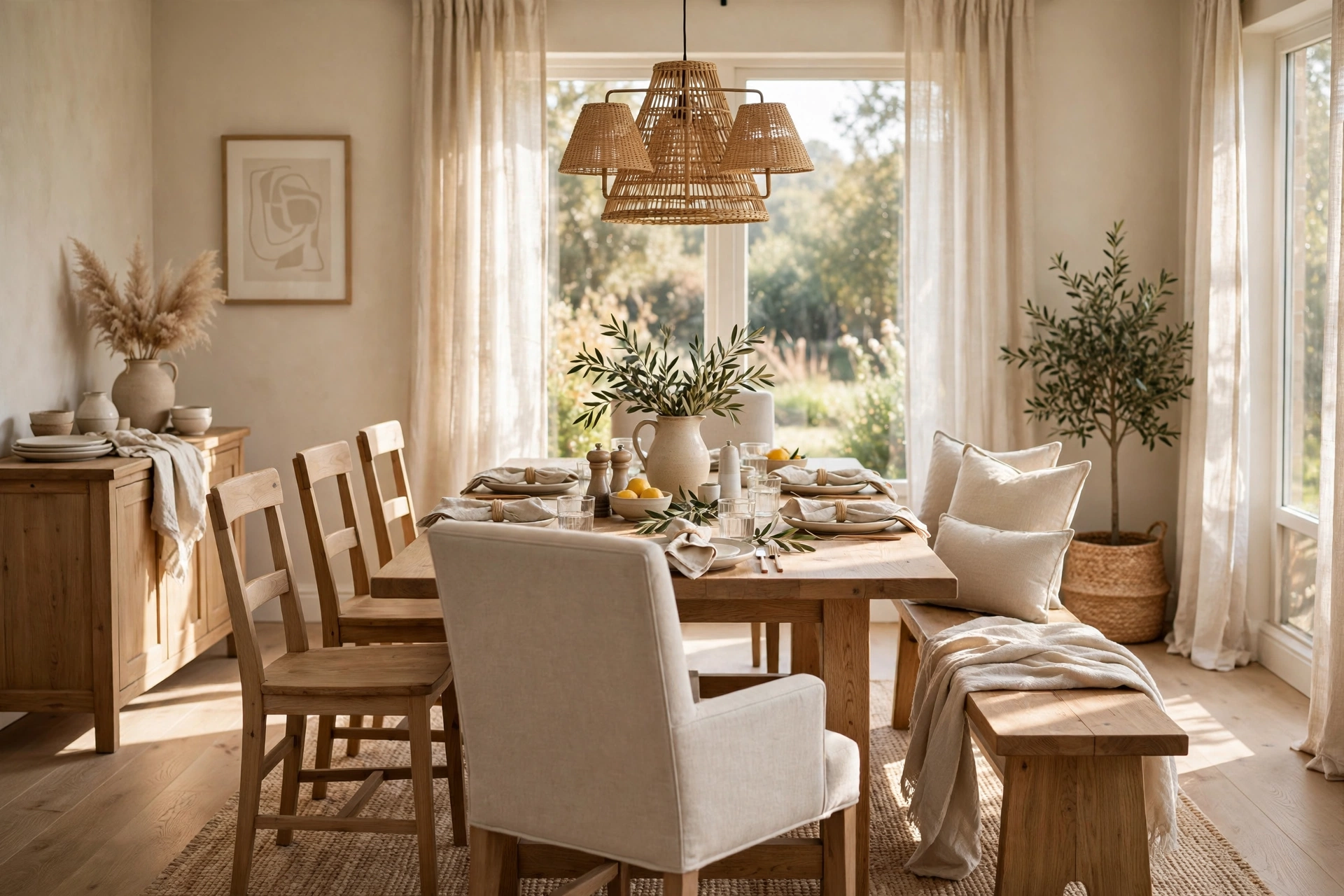
Two upholstered host chairs at the ends plus four to six simple side chairs is the most practical and best-looking arrangement. The host chairs add comfort and a sense of occasion; the side chairs keep the look light and are easier to move. A bench on one side is a great space-saver for families with kids and slides under the table when not in use. Mixed seating also makes it easy to add chairs for holidays: pull in dining chairs from other rooms or use folding chairs dressed with a throw or cushion, and the mix looks intentional rather than desperate.
Chair comfort checklist
Seat height should be 17 to 19 inches, with about 12 inches between the seat and the tabletop. Upholstered seats or seat cushions make a real difference for meals over an hour; tie-on cushions in a washable fabric are a $10-per-chair upgrade. Chairs with arms are comfortable but take up 6 extra inches of width each, so reserve them for the host positions. Test chairs by sitting for 20 minutes, not 20 seconds; showroom comfort and dinner-party comfort are different things.
Seating for holiday crowds
For Thanksgiving or Christmas dinner, plan one seat per guest plus one spare. Borrow chairs from around the house: desk chairs, accent chairs, and even sturdy ottomans work when dressed with a throw. Children’s seating can be a separate small table if you have more than four kids; they prefer it, and the main table stays civilized. Set up holiday seating the day before so you are not dragging furniture while the turkey rests.
Tablescape Basics: From Tuesday to Dinner Party
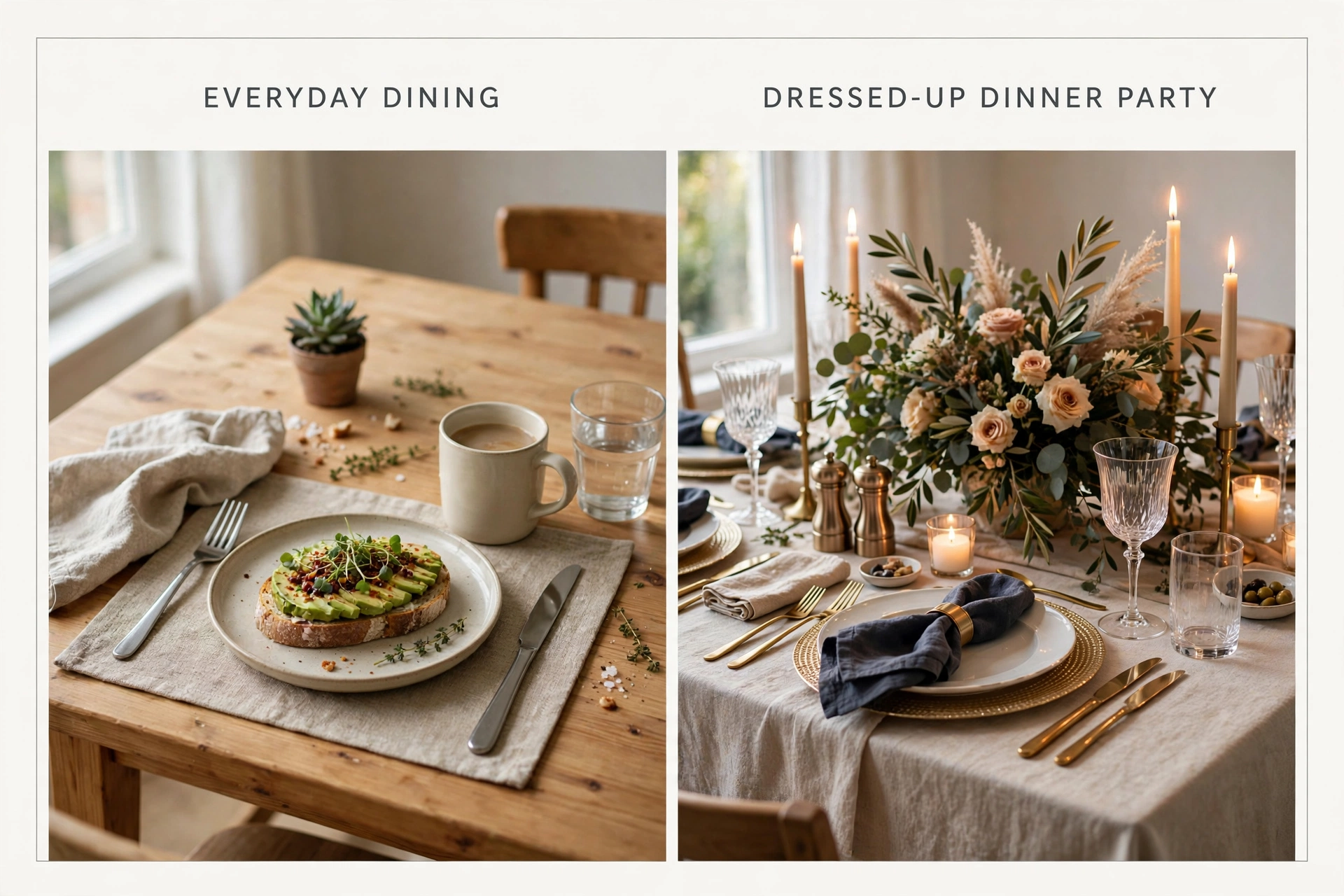
The difference between an everyday table and a dinner-party table is about six swaps and 45 minutes. Here is the system.
The everyday place setting
For daily meals, keep it simple and durable: placemats (wipeable), everyday dishes, a folded napkin or paper napkins in a holder, and one glass per person. The goal is a table that looks tidy and intentional without any fuss. A runner can stay on the table full-time if it is washable; it adds color and protects the surface. This baseline means the room never looks abandoned, and it gives you a starting point for party mode. Even five minutes of resetting the table after each meal keeps the room feeling cared for rather than merely used.
Sideboards, Hutches, and Dining Room Storage
Dining rooms need storage more than most rooms admit: table linens, candles, serving pieces, and the party box all have to live somewhere. The right storage piece doubles as decor.
Choosing the right piece
A sideboard 60 to 72 inches wide fits most dining rooms and holds a full set of serving pieces plus linens. Look for closed storage rather than open shelving; dining rooms look calmer when the clutter is hidden. A hutch or china cabinet works if you have the wall space and want to display pretty dishes, but style the shelves with restraint: group items in odd numbers, leave breathing room, and keep everyday items behind closed doors. Vintage sideboards are widely available secondhand for $100 to $300 and add the collected character that new furniture lacks.
Styling the top without clutter
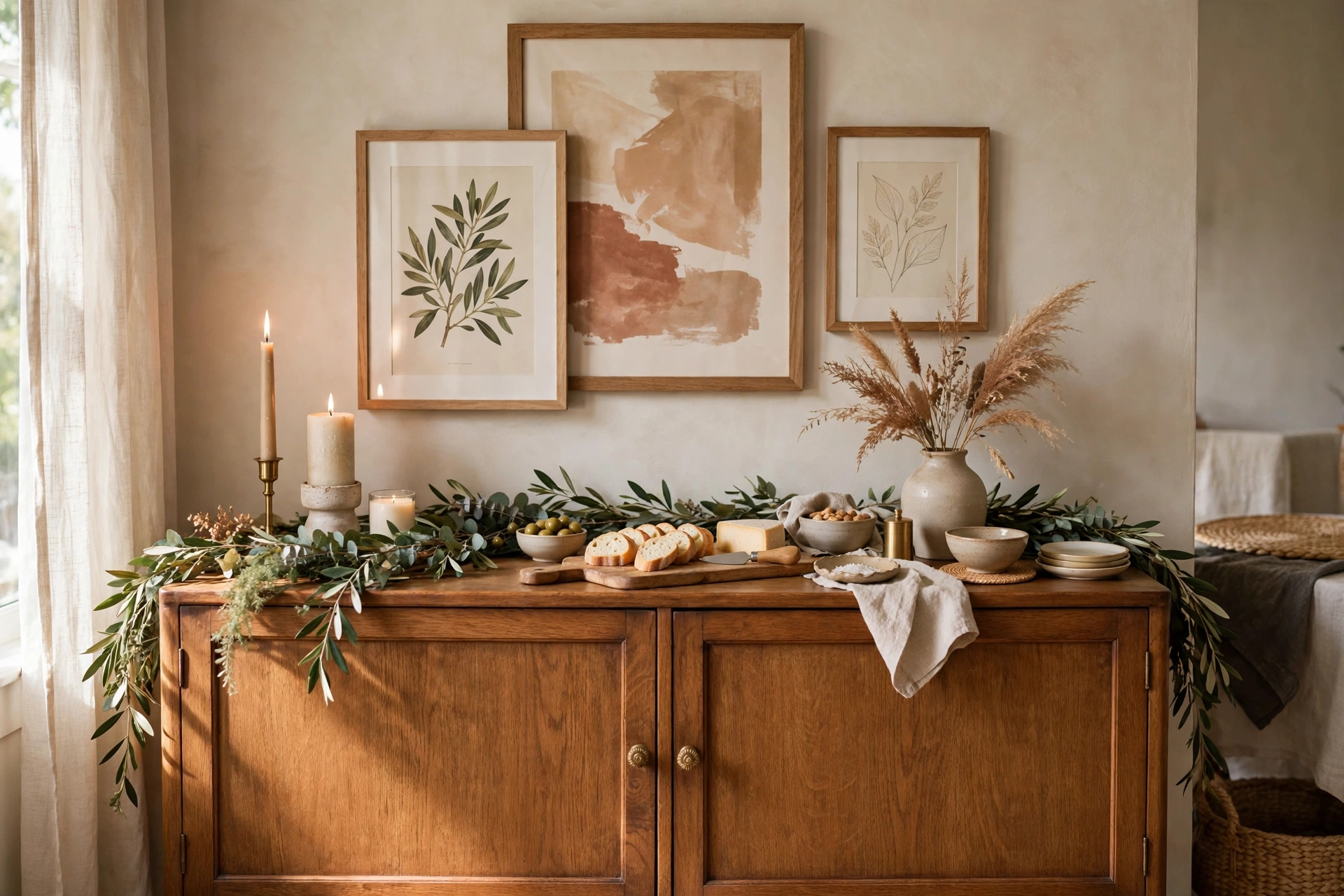
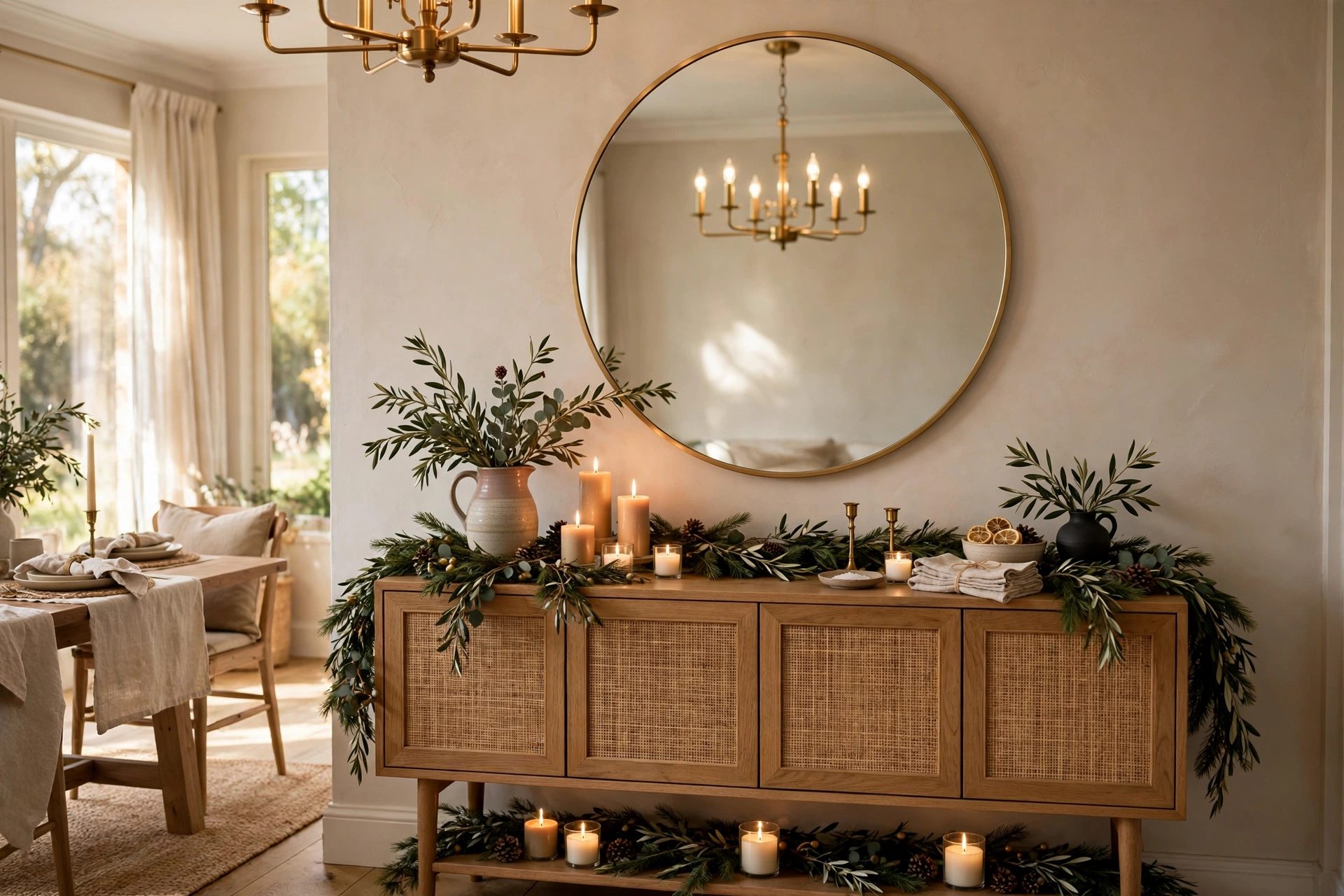
Treat the sideboard top like a mantel: one larger anchor (art, mirror, or a tall vase), then smaller objects in groups of three at varying heights. Leave at least a third of the surface clear so it can handle serving duty during parties. Corral small items on a tray to keep them looking intentional. And keep the inside organized with dividers: a sideboard whose interior is chaos will slowly leak that chaos onto its top.
The six dinner-party swaps
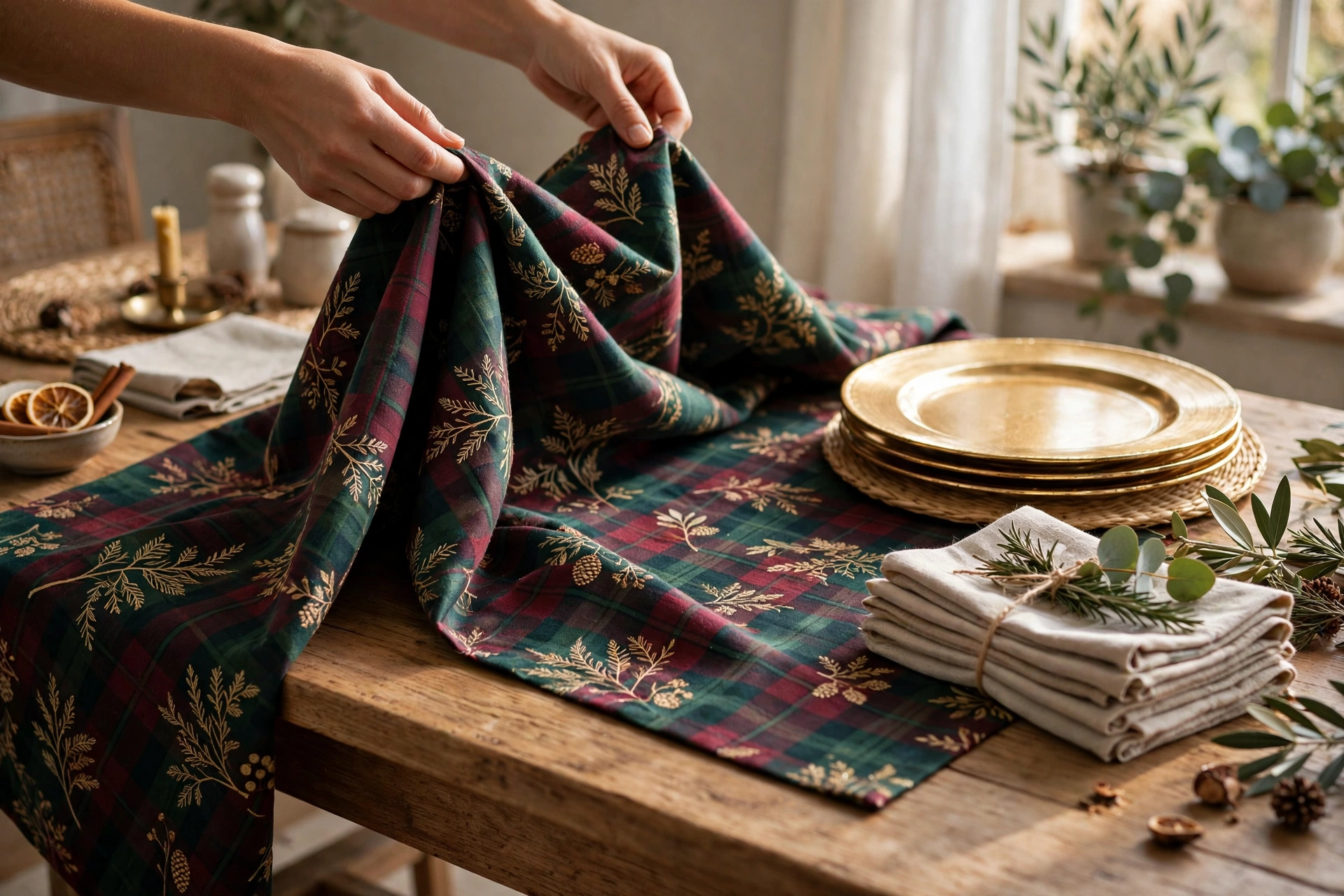
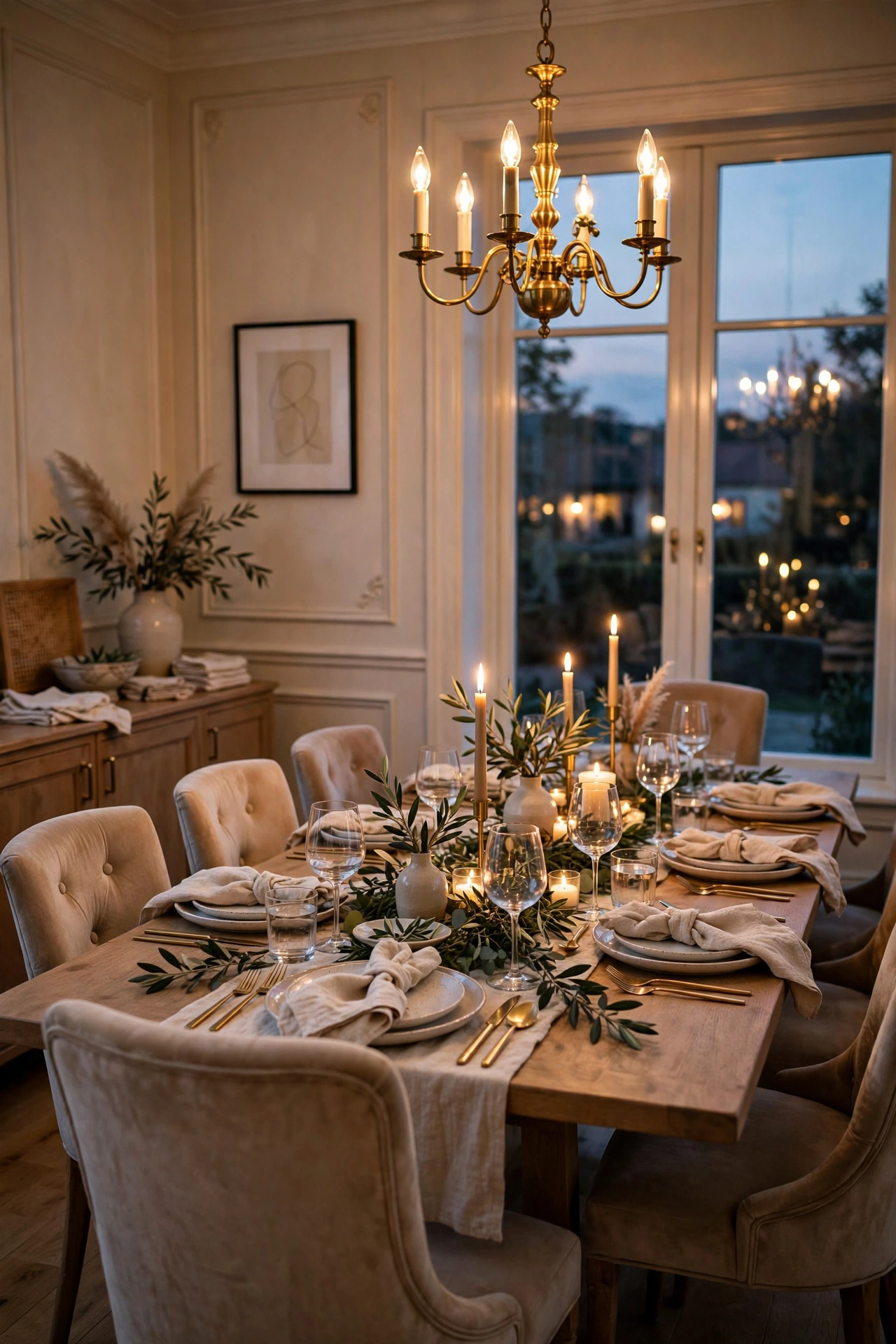
When guests are coming, make these six changes: swap placemats for a full tablecloth or a dressier runner; add chargers under the dinner plates; upgrade to cloth napkins with a simple fold; add a second glass (wine or water goblet); build up the centerpiece with candles and height; and dim the chandelier while lighting every candle. Each swap takes five to ten minutes. Done together, they transform the room. Keep a “party box” with the tablecloth, chargers, cloth napkins, and extra candles stored together so the transformation is grab-and-go rather than a scavenger hunt.
Centerpiece formulas for entertaining
Three reliable formulas cover almost every dinner party. The garland: a 6-foot faux or fresh greenery garland down the center with taper candles interspersed every 12 inches. The trio: three vessels of varying heights (12, 9, and 6 inches) with simple stems or candles. The tray: a large tray holding candles, a small plant, and seasonal objects like pinecones or fruit. All three stay under the sightline rule (nothing bulky above 12 inches except thin tapers) and all three can be assembled in 20 minutes. For holiday-specific tablescape ideas, our Christmas home decorating ideas guide has table styling that pairs with these foundations.
Holiday Entertaining: Thanksgiving and Christmas Mode
The holidays are why most people care about their dining room at all. Here is how to make the room rise to the occasion without redecorating from scratch.
Thanksgiving: warm and abundant
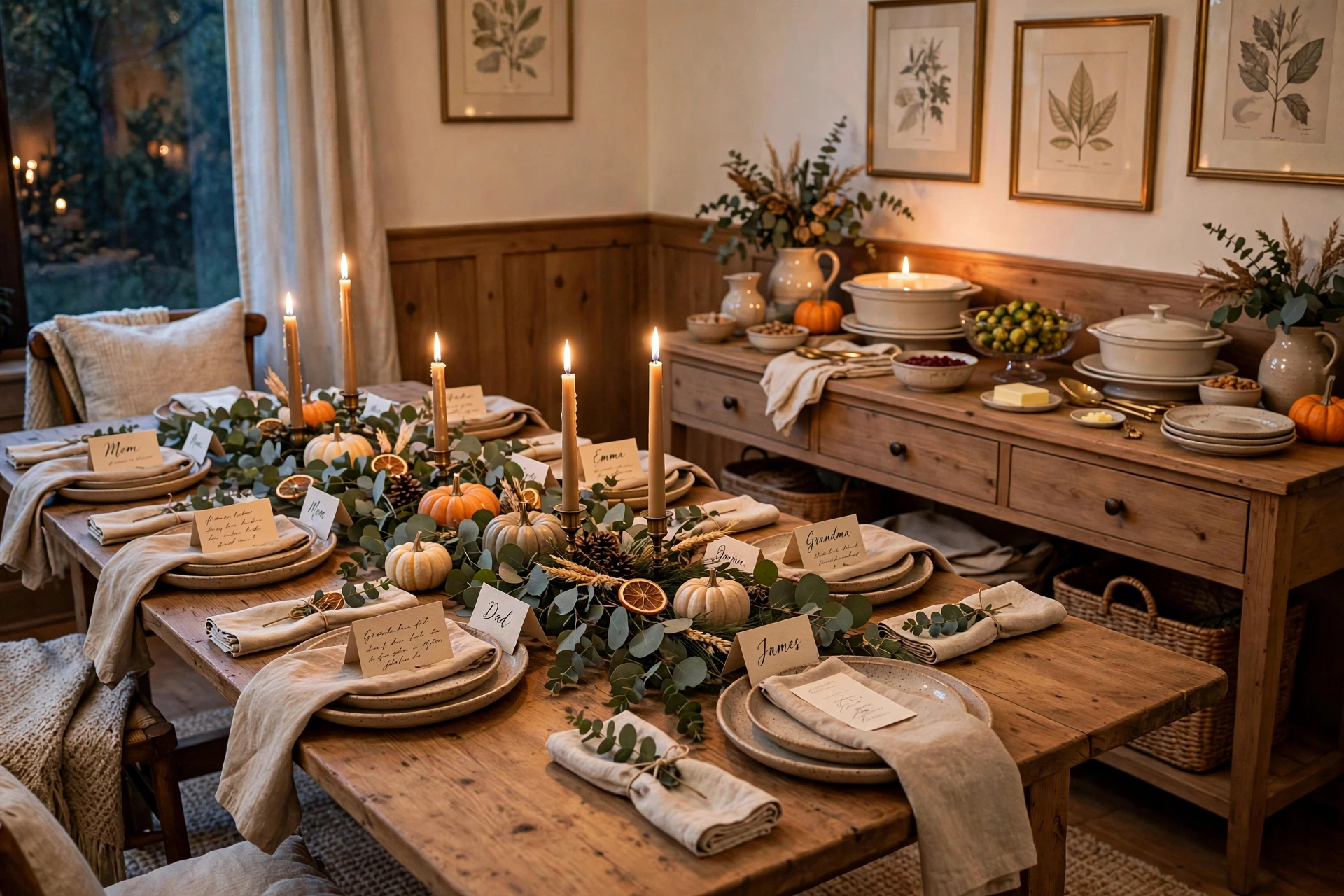
Thanksgiving tables want warmth, texture, and a sense of harvest abundance. Layer a tablecloth with a textured runner, use the garland centerpiece formula with eucalyptus and taper candles, and add natural elements: mini pumpkins, pears, or pomegranates tucked along the runner. Place cards are worth the effort for Thanksgiving since groups are large and mixed; kraft tags with handwritten names tied to a sprig of rosemary take minutes and look thoughtful. Keep serving space in mind: if dishes will sit on the table, keep the centerpiece narrow (under 14 inches wide) and modular so it can shift.
Christmas: festive and layered
Christmas allows more drama: deeper colors, more sparkle, and taller elements. Swap the everyday centerpiece for a Christmas arrangement: evergreen garland with ornaments or fairy lights, a trio of red or gold vessels, or a collection of bottle-brush trees in varying heights. Add a Christmas runner over the tablecloth, switch to your best napkins, and bring out the good glassware. Extend the decor beyond the table: a wreath on the wall or window behind the sideboard, garland on the chandelier (battery fairy lights woven in, kept clear of bulbs), and candles on every surface. The dining room should feel like the festive heart of the house.
The sideboard: your holiday command center
A sideboard or console is the hardest-working piece of holiday furniture: it holds serving dishes, the drink station, and extra decor. Style it in layers: a mirror or art on the wall above, then a garland or runner on the surface, then candles and small decor at varying heights. During the party, clear one section for serving and keep the styled section as decor. After the holidays, the sideboard returns to everyday duty holding the party box, extra linens, and candles, ready for the next dinner party.
Walls, Windows, and the Finishing Layers
Once the big pieces are right, these finishing layers make the dining room feel complete rather than just furnished.
Art and mirrors
One large piece of art or a mirror on the main wall anchors the room. Hang it so the center is 57 to 60 inches from the floor, or 6 to 8 inches above the sideboard. Mirrors are especially valuable in dining rooms: they bounce candlelight and chandelier glow, making evening meals feel luminous. A large mirror opposite a window doubles the daylight. Avoid gallery walls in small dining rooms; one confident piece looks better than many small ones competing for attention.
Window treatments
Dining room windows need treatments that provide privacy for evening meals without blocking daylight. Linen curtains in a neutral tone, hung high and wide (rod 4 to 6 inches above the frame, extending 3 to 4 inches beyond each side), make windows look larger and the room more finished. For a tailored look, add woven wood shades underneath for daytime privacy. Avoid heavy, dark drapes that make the room feel closed; dining rooms want light.
Rugs: size and practicality
A dining room rug should extend at least 24 inches beyond the table on all sides so chairs stay on the rug when pulled out. For a 72×36-inch table, that means a rug around 8×10 feet minimum. Choose low-pile, patterned rugs in forgiving colors; solid light rugs show every crumb. Indoor-outdoor rugs and washable rugs are the practical choice for dining rooms with kids or frequent entertaining. If your floors are beautiful, skipping the rug is fine too; a rug is a choice, not a requirement.
Dining room scents and sound
The last layer is invisible. Before a dinner party, simmer a pot of water with orange slices, cloves, and a cinnamon stick for 30 minutes, then turn it off; the house will smell like the holidays without any competing candle fragrance at the table. Keep table candles unscented so they do not fight the food. And do not forget music: a low background playlist started 20 minutes before guests arrive fills the silence that makes early arrivals awkward. Scent and sound are the difference between a decorated room and an experience.
The 2026 color direction
Dining rooms in 2026 lean warm and enveloping: deep greens, warm terracottas, rich browns, and creamy whites. If you are considering paint, a deep, moody wall color with warm white trim makes a dining room feel intimate and dinner-party-ready every night. For a lower-commitment update, bring the color in through the rug, curtains, and art. Hallmark’s Christmas decorating ideas showcase how warm, layered holiday styling builds on exactly this kind of rich base, which is worth seeing if you are planning a holiday-ready room.
Small Dining Rooms and Awkward Layouts
Not every dining room is a gracious rectangle. Here is how to handle the tricky ones.
The small dining room
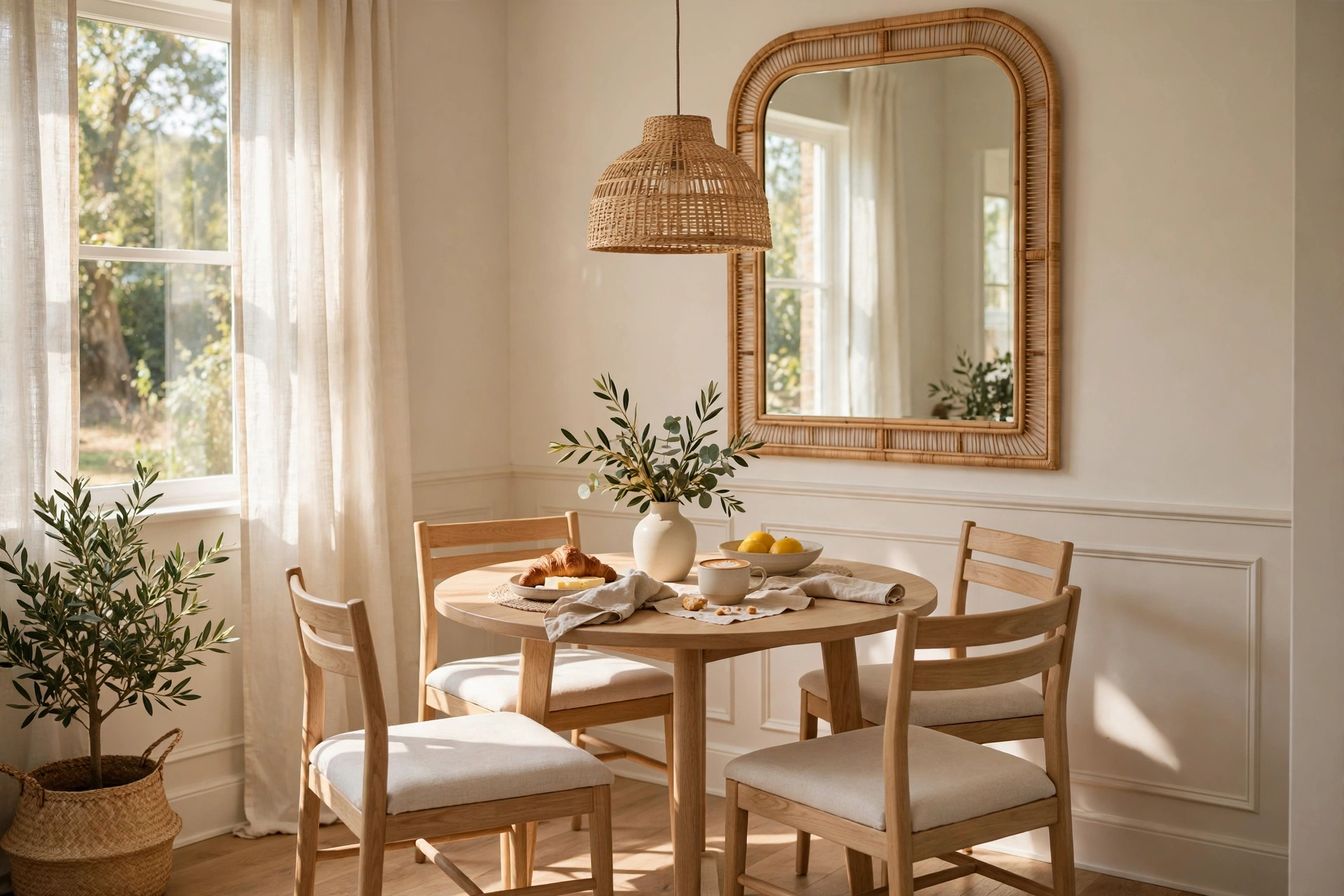
In a room under 10×10 feet, choose a round 48-inch table (seats four to six) or a drop-leaf table that expands for guests. Use a mirror to double the sense of space, keep the palette light, and choose chairs that tuck fully under the table. A bench on one side saves 12 inches of clearance versus chairs. Skip the rug if it makes the room feel cramped; bare floors with a clear walkway feel larger. One statement pendant instead of a wide chandelier keeps the scale right.
The open-plan dining area
When the dining area flows into the living room or kitchen, define it without walls: a rug under the table, a pendant light centered over it, and a consistent color thread connecting to the adjacent space. Keep sightlines clean; the dining area is viewed from the living room constantly, so its everyday styling matters more. Coordinate, do not match: the dining chairs can echo the living room’s accent color without being identical.
The dining room that does double duty
If the dining room is also the home office or homework station, design for the switch. A console or lidded basket holds work supplies that vanish before dinner. The everyday centerpiece tray lifts off in one motion. Choose a table finish that handles laptops and crafts, and keep the party box ready for the 45-minute transformation. The room works hardest when it is designed for both lives, not apologizing for either.
Dining Room Decor Mistakes to Avoid
Buying the table before measuring
The most expensive dining room mistake is a table that overwhelms the room. Measure twice, tape the footprint on the floor with painter’s tape, and live with the outline for a day before ordering. Include chair pull-out space in your mental picture; the table alone always looks smaller than the table plus six pulled-out chairs.
One overhead light with no dimmer
A single bright ceiling light makes every meal feel like an interrogation. If you do nothing else, add a dimmer switch ($15 and 20 minutes) and a few candles. The difference between full-bright and dimmed is the difference between a cafeteria and a restaurant.
Decorating only for holidays
A dining room that sits bare and sad for ten months and gets a frantic makeover twice a year never feels like part of the home. The everyday styling (runner, tray centerpiece, art, rug) is what makes the room belong to your daily life, and it is also what makes the holiday transformation easy: you are adding to a finished room, not rescuing an empty one. Guests can feel the difference immediately, even if they cannot name it.
Ignoring the chairs
Wobbly, uncomfortable, or mismatched-without-intent chairs undermine the whole room. Tighten screws annually, add cushions where needed, and if the chairs are truly done, replace them before you buy another decor item. Guests remember comfort longer than they remember centerpieces.
Frequently Asked Questions
1. How do I decorate my dining room for everyday use?
Start with a washable runner, a low tray centerpiece with candles and a plant that stays put year-round, and one piece of art or a mirror on the main wall. Keep place settings simple: placemats, everyday dishes, and a napkin holder. The goal is a room that looks finished on a random Tuesday without any daily effort, which also gives you a base to build on for parties.
2. What is the best chandelier size for my dining table?
Choose a fixture with a diameter about half to two-thirds the width of your table, hung 30 to 34 inches above the tabletop. For rectangular tables over 72 inches, consider a linear pendant or two smaller pendants spaced evenly. Always add a dimmer switch; it is the cheapest upgrade with the biggest impact on how the room feels. If you are replacing an existing fixture, turn off the breaker (not just the wall switch) before you start, and budget 45 minutes for the swap if the mounting box is already in place.
3. How can I make my dining room look good for Christmas dinner?
Layer holiday elements onto your everyday foundation: swap in a festive runner and cloth napkins, build up the centerpiece with evergreen garland and candles, bring out the good glassware, and extend decor to the sideboard and chandelier. Add candles on every surface and dim the overheads. The transformation takes about an hour if your everyday styling is already in place.
4. What size rug goes under a dining table?
The rug should extend at least 24 inches beyond the table on all sides so chairs remain on the rug when pulled out. For a standard 72×36-inch table, choose at least an 8×10-foot rug. Pick low-pile, patterned, forgiving colors, and consider washable or indoor-outdoor options if you have kids or entertain often.
5. How do I seat extra guests for Thanksgiving?
Plan one seat per guest plus a spare, and borrow chairs from around the house: desk chairs, accent chairs, and ottomans all work when dressed with a throw or cushion. Mixed seating looks intentional, so do not stress about matching. Set up the extra seating the day before, and consider a separate kids’ table if you have more than four children.
6. Should the dining room match the living room?
Coordinate, do not match. In open-plan spaces, carry one or two colors or materials between the rooms so the sightline feels intentional, but let each room have its own character. The dining chairs can echo the living room’s accent color, or the dining art can pick up the living room’s wood tones. Matching sets across rooms look like a showroom; coordination looks like a home.
7. What is the best everyday dining room centerpiece?
A low tray holding three pillar candles and a small plant or a bowl of seasonal fruit. It stays under 12 inches tall, survives daily life, moves in one piece when you need the table, and looks finished year-round. Swap the seasonal contents four times a year (pinecones, flowers, fruit, greenery) for an effortless refresh.
8. How do I decorate a small dining room?
Use a round or drop-leaf table, a mirror to expand the space, and a light palette. Choose chairs that tuck fully under the table and consider a bench on one side to save clearance. Skip the rug if the room feels cramped, and use one right-sized pendant instead of a wide chandelier. Keep decor minimal: one art piece, one centerpiece, done.
9. How do I quickly transform my dining room for a dinner party?
Make the six swaps: tablecloth or dressier runner, chargers, cloth napkins, a second glass per setting, a built-up candlelit centerpiece, and dimmed overheads with candles lit. Keep a party box with all the pieces stored together so the transformation takes 45 minutes, not an afternoon of hunting through closets.
10. What dining room colors are trending in 2026?
Warm and enveloping tones: deep greens, warm terracottas, rich browns, and creamy whites. Moody wall colors with warm white trim are the boldest version of the trend, but you can get the same feeling through the rug, curtains, and art. The overall direction is away from cool grays and stark whites toward rooms that feel intimate and welcoming, especially in evening light.