90s Nostalgia Christmas Decor: Tinsel, Color & Kitsch Comeback
Most living rooms do not fail at Christmas because of one bad purchase. They fail because they followed the rules too well — the beige garland, the tasteful warm-white lights, the color palette borrowed from a furniture catalog. Somewhere along the way, Christmas decorating became an exercise in restraint, and a lot of us started…
Most living rooms do not fail at Christmas because of one bad purchase. They fail because they followed the rules too well — the beige garland, the tasteful warm-white lights, the color palette borrowed from a furniture catalog. Somewhere along the way, Christmas decorating became an exercise in restraint, and a lot of us started wondering why our childhood holidays felt more magical than our carefully curated adult ones.
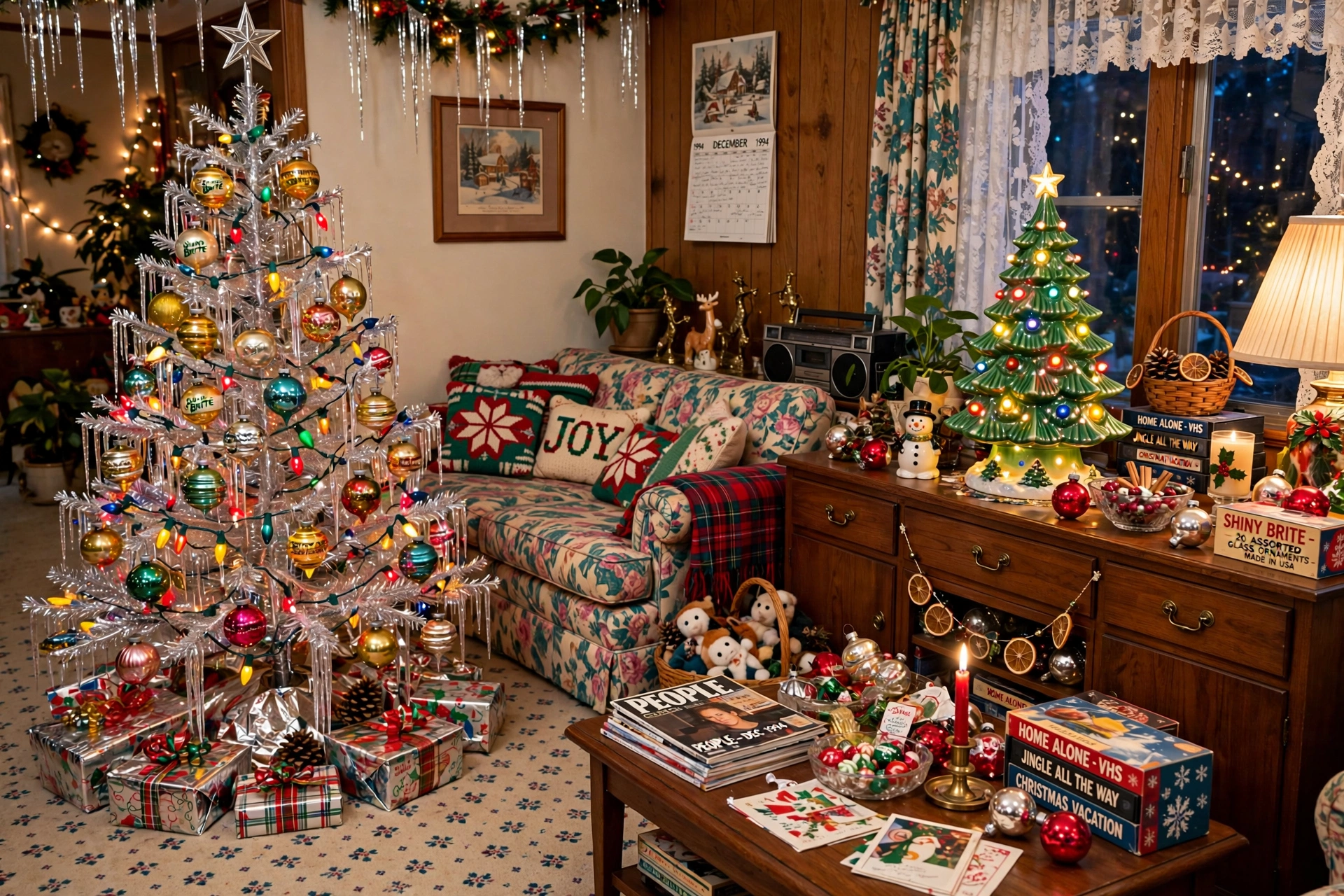
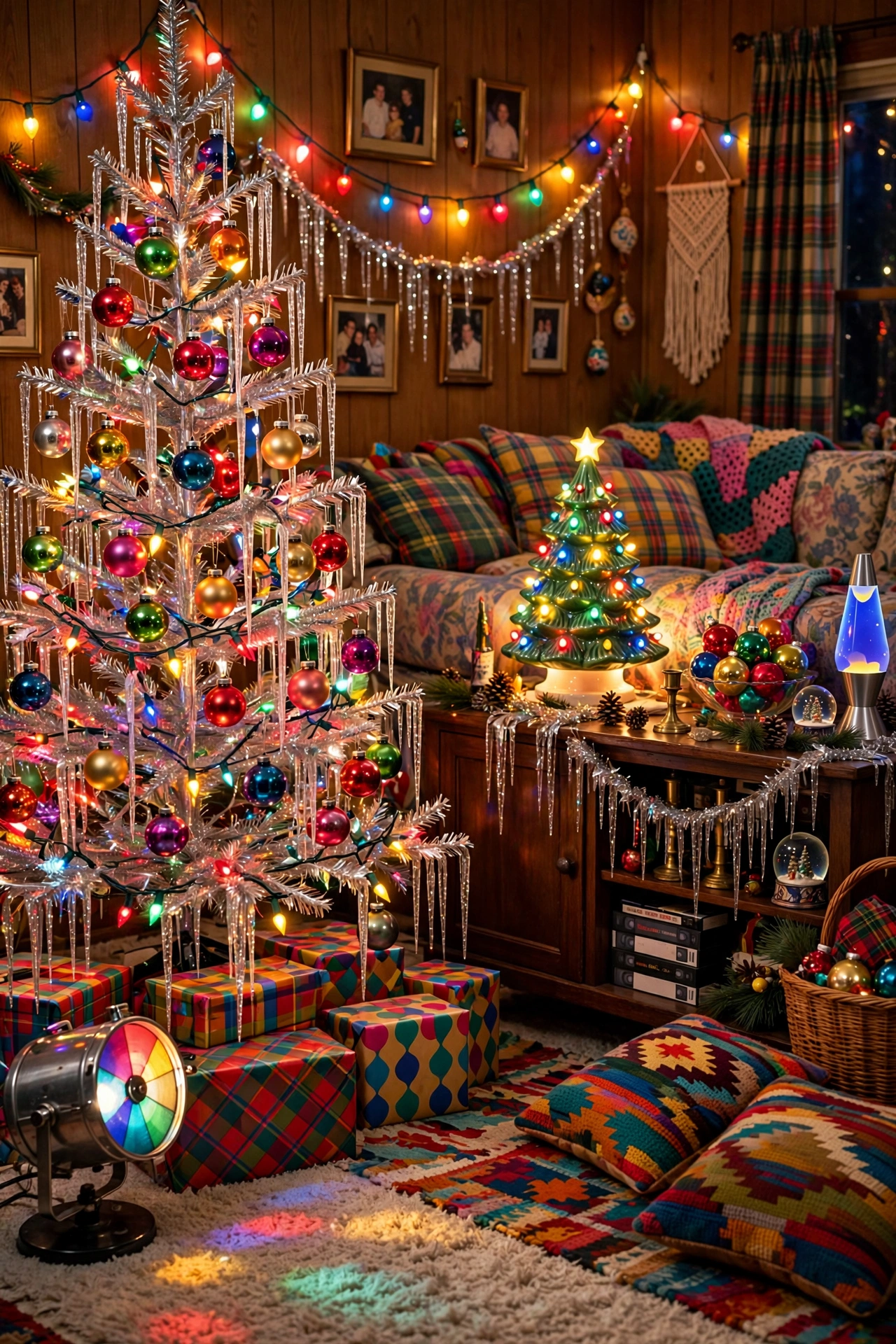
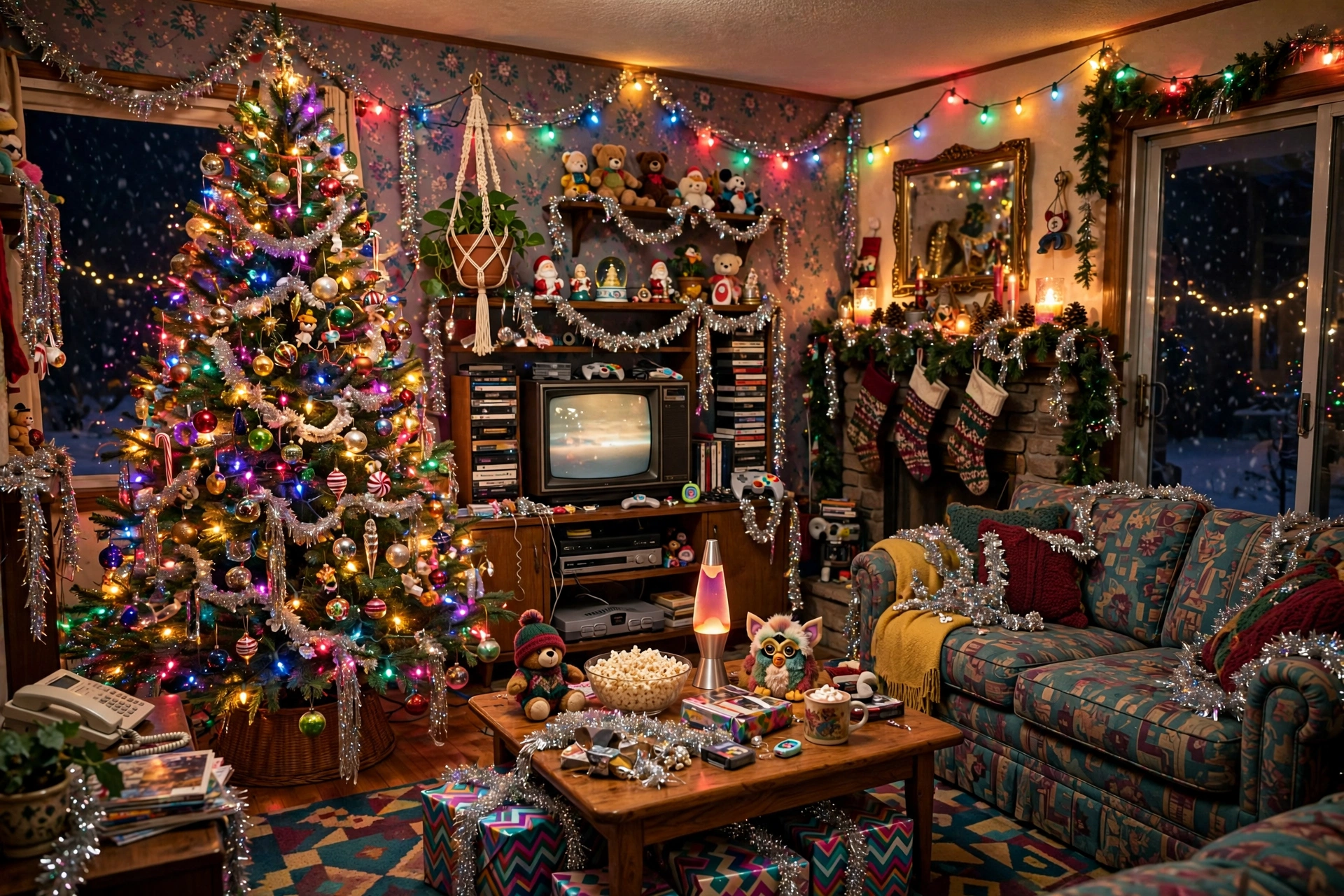
The answer is hanging in millions of TikTok videos right now: tinsel. Multicolor lights. Shiny Brite ornaments in unapologetic red, blue, and gold. Ceramic trees glowing on sideboards. The 90s Christmas aesthetic — maximalist, shiny, sentimental, and just a little bit tacky — is back, and it is the most joyful decorating trend in years.
This is not about irony or kitsch for kitsch’s sake. The 90s nostalgia Christmas look works because it is rooted in real memory: the tree your grandmother over-decorated, the colored lights you begged your parents not to replace with white ones, the tinsel you threw on by the handful. This guide breaks down the whole trend the way a designer would — why it came back, the signature elements (tinsel, colorful lights, kitsch ornaments, the aluminum tree), how to style it so it reads as intentional rather than chaotic, where to source the real vintage pieces, and how to blend it with the home you already have.
Why the 90s Christmas Look Came Back
The direct answer: the 90s Christmas revival is driven by TikTok nostalgia content, a backlash against a decade of beige minimalism, and a generation now decorating their own homes with the visual language of their childhoods. It is emotion-led decorating, and that is why it spreads so fast.
The mechanics are familiar from every nostalgia cycle. Millennials and elder Gen Z, who were kids in the 90s, are now in their prime decorating years — buying homes, hosting holidays, and making the aesthetic calls. When they reach for Christmas decor, they reach for what Christmas felt like at age eight: abundance, shine, color. TikTok accelerated it because the look is made for video — tinsel and multicolor lights move, sparkle, and read beautifully on camera in a way that a tasteful neutral garland never will.
There is a deeper design logic too. After years of “sad beige” interiors and the pressure to make every corner photograph like a showroom, maximalist nostalgia is a permission slip. It says the point of Christmas decor is delight, not discipline. Homes and Gardens covered tinsel’s comeback as a full-fledged trend, noting that stylists now treat it as a legitimate texture rather than a guilty pleasure — which tells you how far the pendulum has swung.
Tinsel: The Comeback Kid
The direct answer: tinsel is the single most 90s Christmas element, and the modern way to use it is deliberately — draped, looped, and layered as a texture, not flung at the tree in frustration. There are three types worth knowing, and they do different jobs.
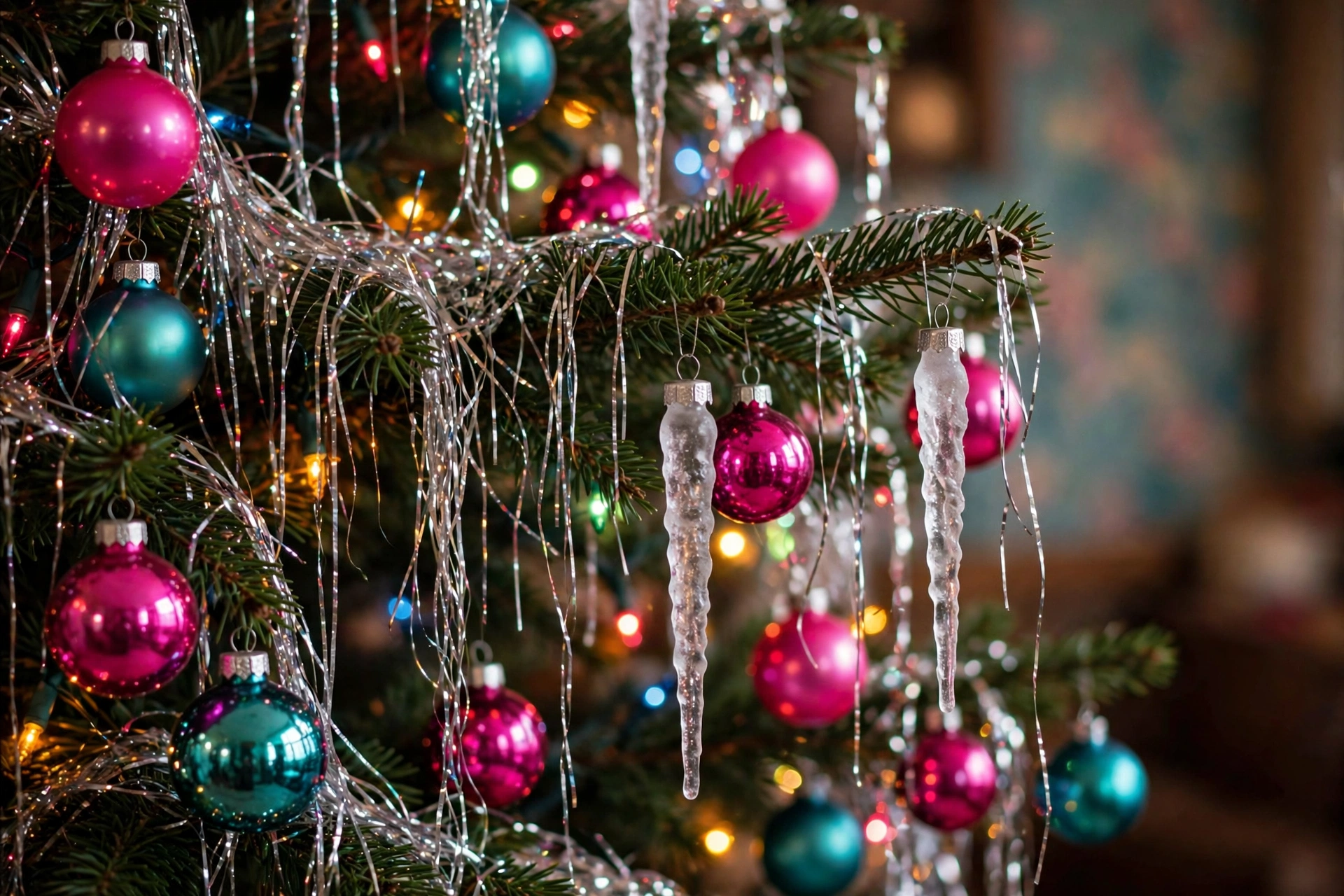
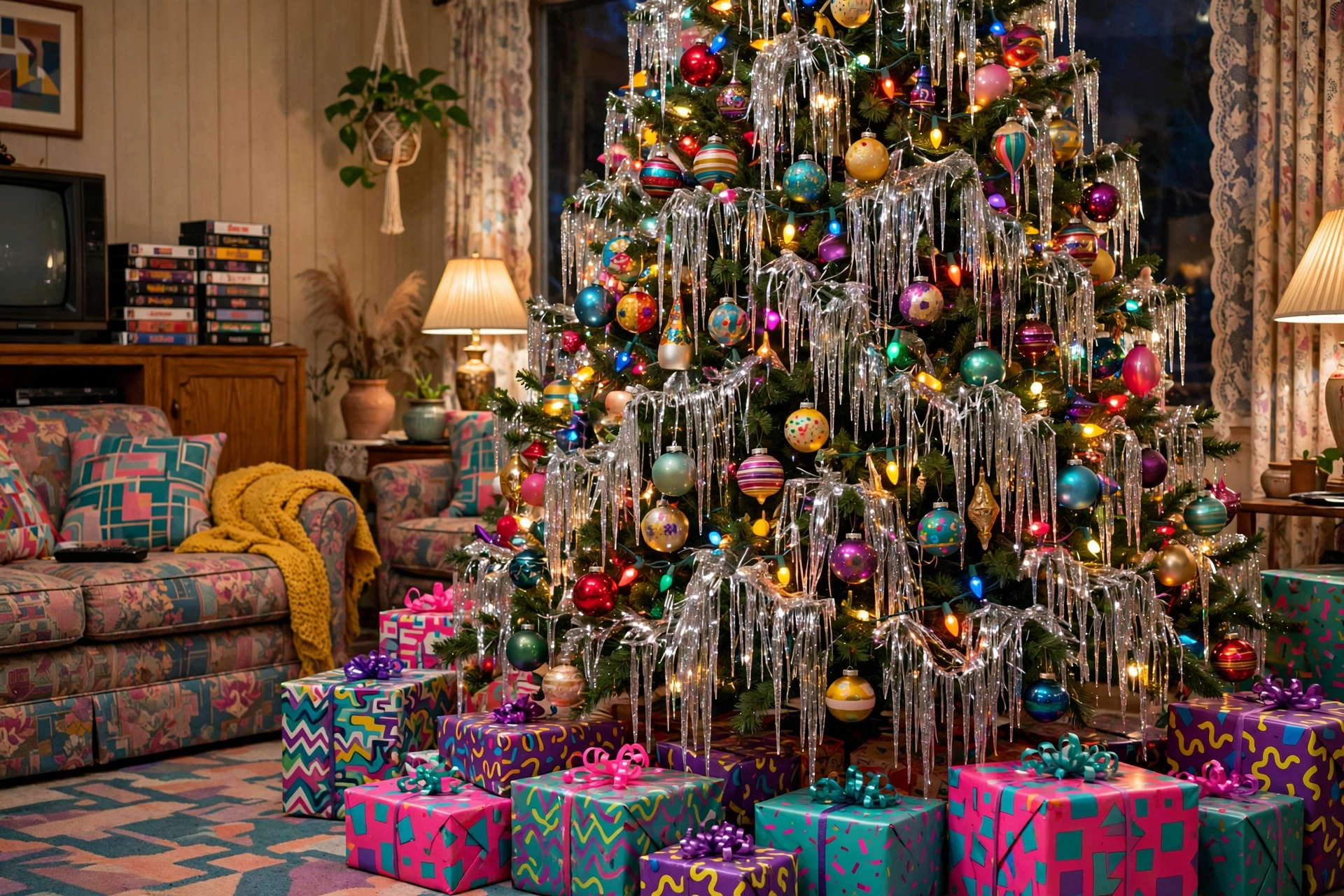
- Icicle tinsel (lametta): the classic individual strands, 18 inches long, hung one at a time over branches. This is the 90s memory in its purest form. Use 500-1,000 strands for a full-size tree, draping them over the outer third of the branches so they catch light. The trick is restraint in placement but abundance in quantity — strands spaced 2-3 inches apart look lush; a sparse scattering looks like you gave up.
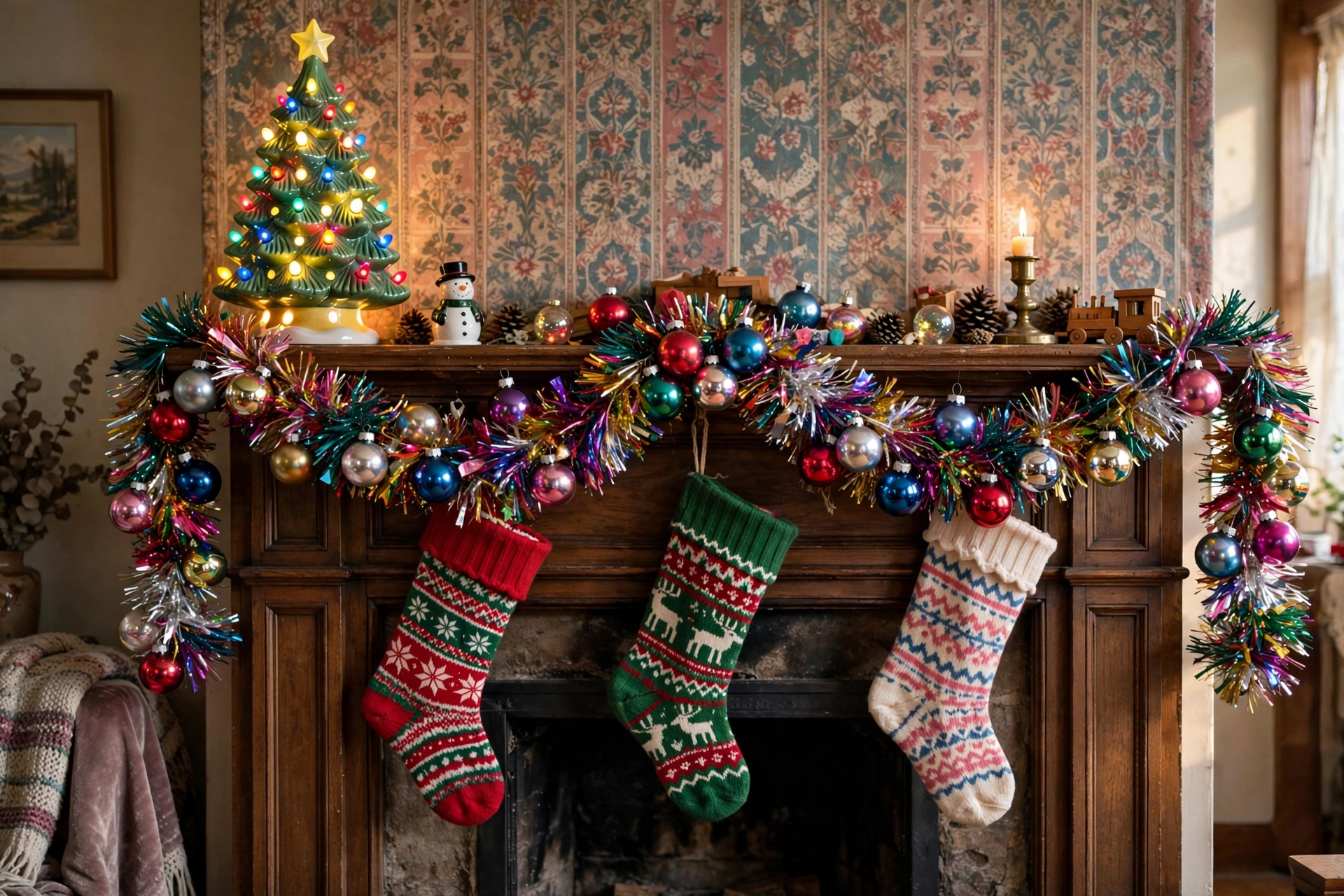
- Tinsel garland: the chunky twisted strands in silver, gold, red, or multicolor. Wrap it around the tree in a spiral (one 12-foot garland per 2 feet of tree height), drape it across mantels, or loop it through wreaths. Chunky garland is the easiest entry point — it delivers maximum 90s energy with minimum effort.
- Tinsel stems and sprays: individual wired picks you stick into wreaths, garlands, and vase arrangements. A $5 bundle of gold tinsel stems tucked into a plain green wreath transforms it instantly.
How Much Tinsel Is Too Much?
The honest answer depends on your commitment level. For “90s-inspired” — tinsel as an accent — one garland on the tree plus icicle strands on the lower third reads as a nod. For full “Christmas at Grandma’s in 1994” — layer all three types: garland spiral, icicle strands throughout, and tinsel stems in every wreath and arrangement in the room. The look only fails in the middle zone, where there is enough tinsel to notice but not enough to commit. Pick a lane.
One practical note: keep tinsel away from real candles and hot incandescent bulbs — vintage tinsel was famously flammable, and while modern mylar versions are safer, the rule stands. LED lights run cool and are the right pairing.
Colorful Lights: The Great Debate, Settled
The direct answer: multicolor lights are correct for the 90s look, full stop. Warm-white lights belong to the minimalist era this trend is reacting against. If the colored lights feel like too much, the compromise is multicolor on the tree and warm white everywhere else.
The 90s light canon has specific varieties, and getting them right is what separates authentic nostalgia from generic “colorful”:
- C9 multicolor bulbs: the big old-fashioned bulbs, 2 inches tall, in red, green, blue, orange, and yellow. One 25-foot strand of 25 bulbs per 2 feet of tree. These are the lights of memory — nothing else reads as 90s as fast.
- Mini multicolor strands: the smaller 100-count strands for garlands, wreaths, and windows. Same five colors, finer texture.
- Bubble lights: the liquid-filled tubes that bubble when warm — the single most evocative 90s Christmas object. They need real warmth to bubble, so they work best as an accent strand rather than the main tree lighting. Modern LED versions mimic the look without the heat.
- The color wheel: for aluminum trees (more below), a rotating color wheel spotlight is non-negotiable. It is the whole effect.
PureWow’s holiday decor trend roundup flagged the tinsel-and-colored-light pairing as one of the defining looks of the current season, which means this is not a fringe internet aesthetic anymore — it is mainstream enough that major retailers are stocking for it.
Kitsch Ornaments Worth Hunting For
The direct answer: the 90s ornament canon is specific — Shiny Brite glass balls, ceramic light-up trees, blow-mold figures, and figural ornaments with genuine personality. These are thrift-store gold right now, so knowing exactly what to look for saves you from buying generic “vintage-style” reproductions at triple the price.
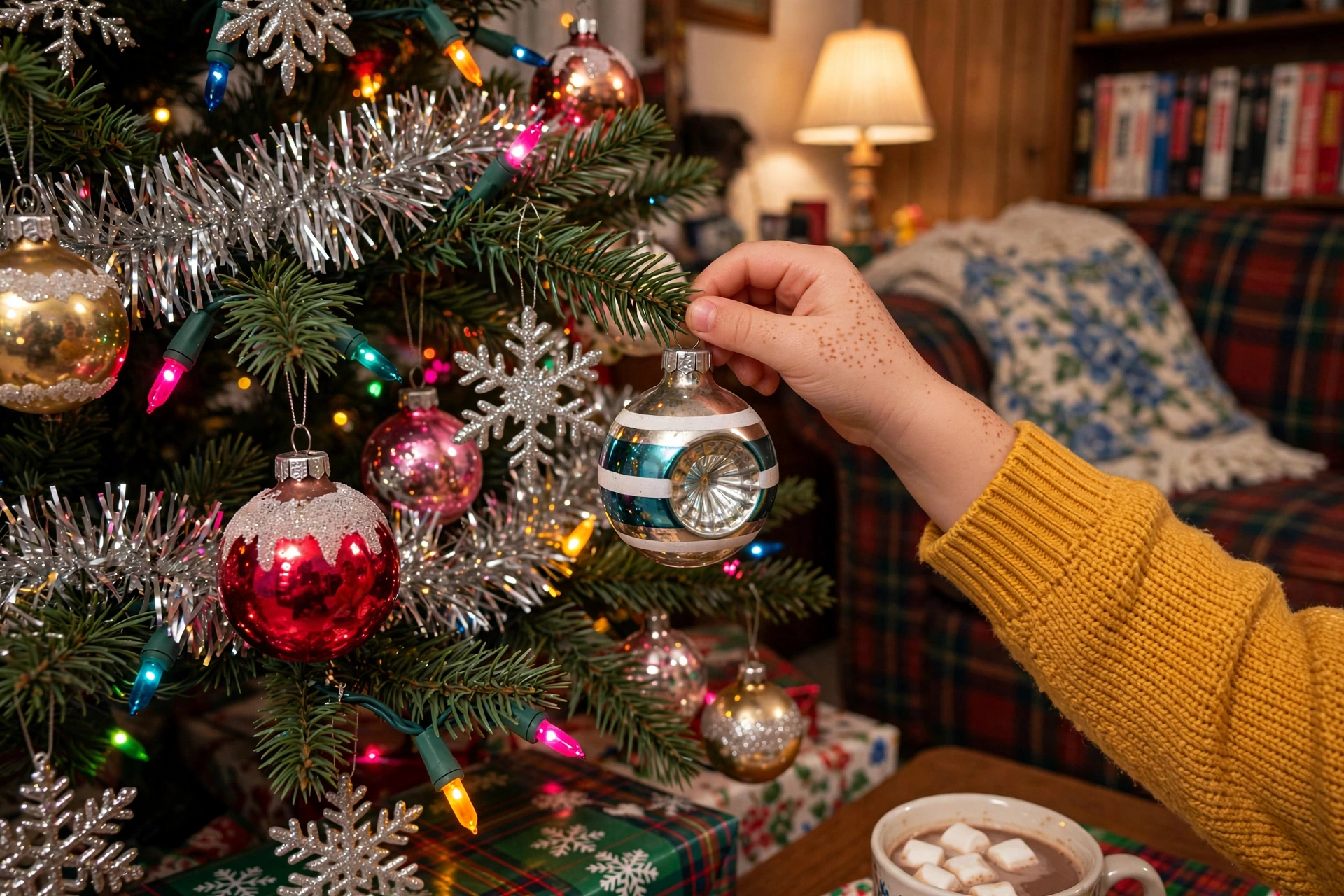
Shiny Brite Ornaments
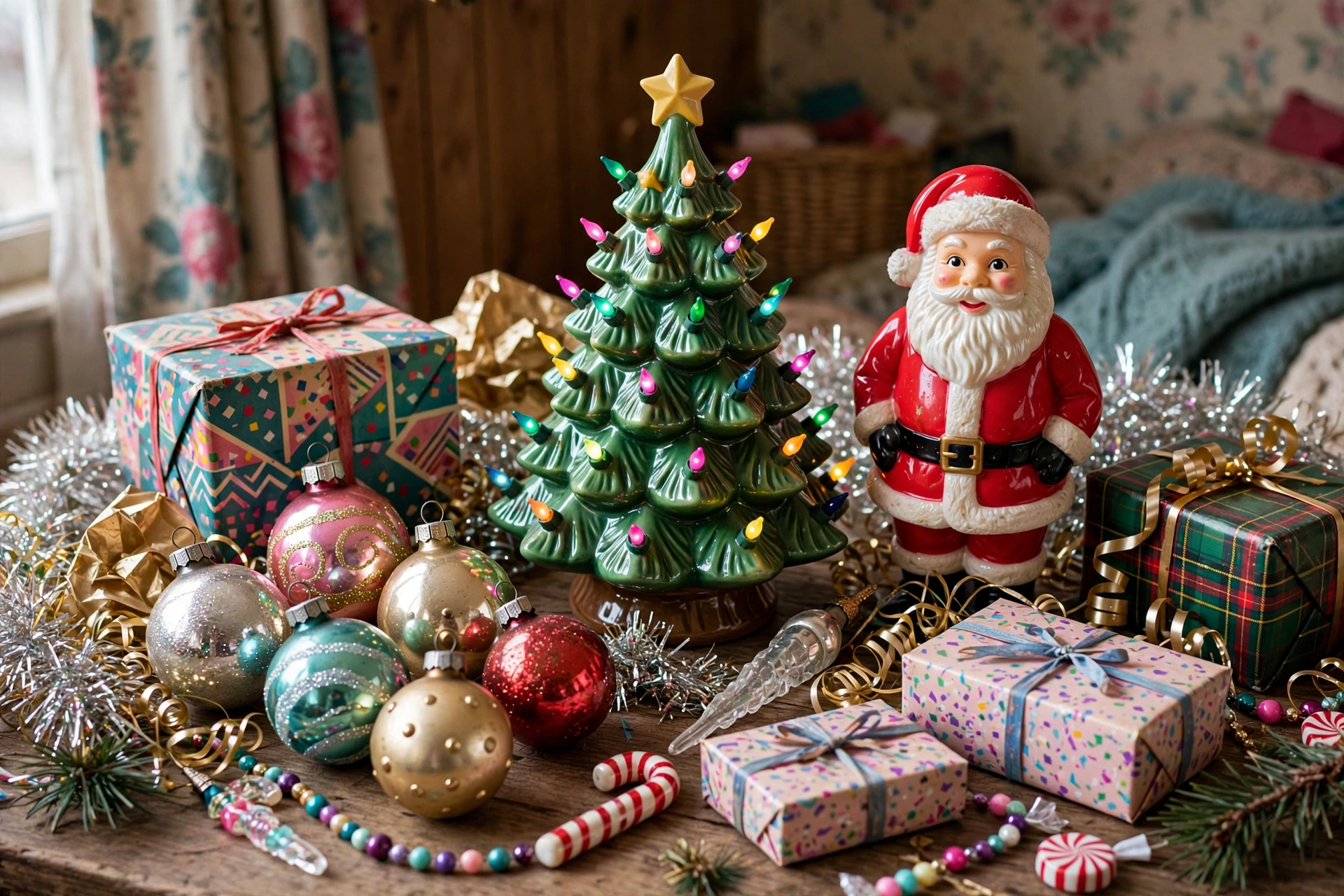
The American-made glass ornaments from the 1940s-60s that every 90s kid saw on their grandparents’ tree: reflective silver, gold, red, blue, and pink balls, often with stenciled designs or indented “reflector” shapes. Genuine vintage boxes show up at estate sales and flea markets for $10-25 per dozen — check for the Shiny Brite marking on the cap and intact silvering inside. The Christopher Radko company revived the brand, so new-production Shiny Brites are also available if you want the look without the hunt.
Ceramic Christmas Trees
The 12-18 inch ceramic trees with colored plastic peg lights — green, white, or occasionally pink — that sat on every sideboard in America. Vintage ones in working condition run $30-80 at antique malls; new reproductions cost $25-45 and look nearly identical. One on the mantel, one on a bookshelf, and the room is 40 percent more 90s instantly.
Blow Molds and Figural Pieces
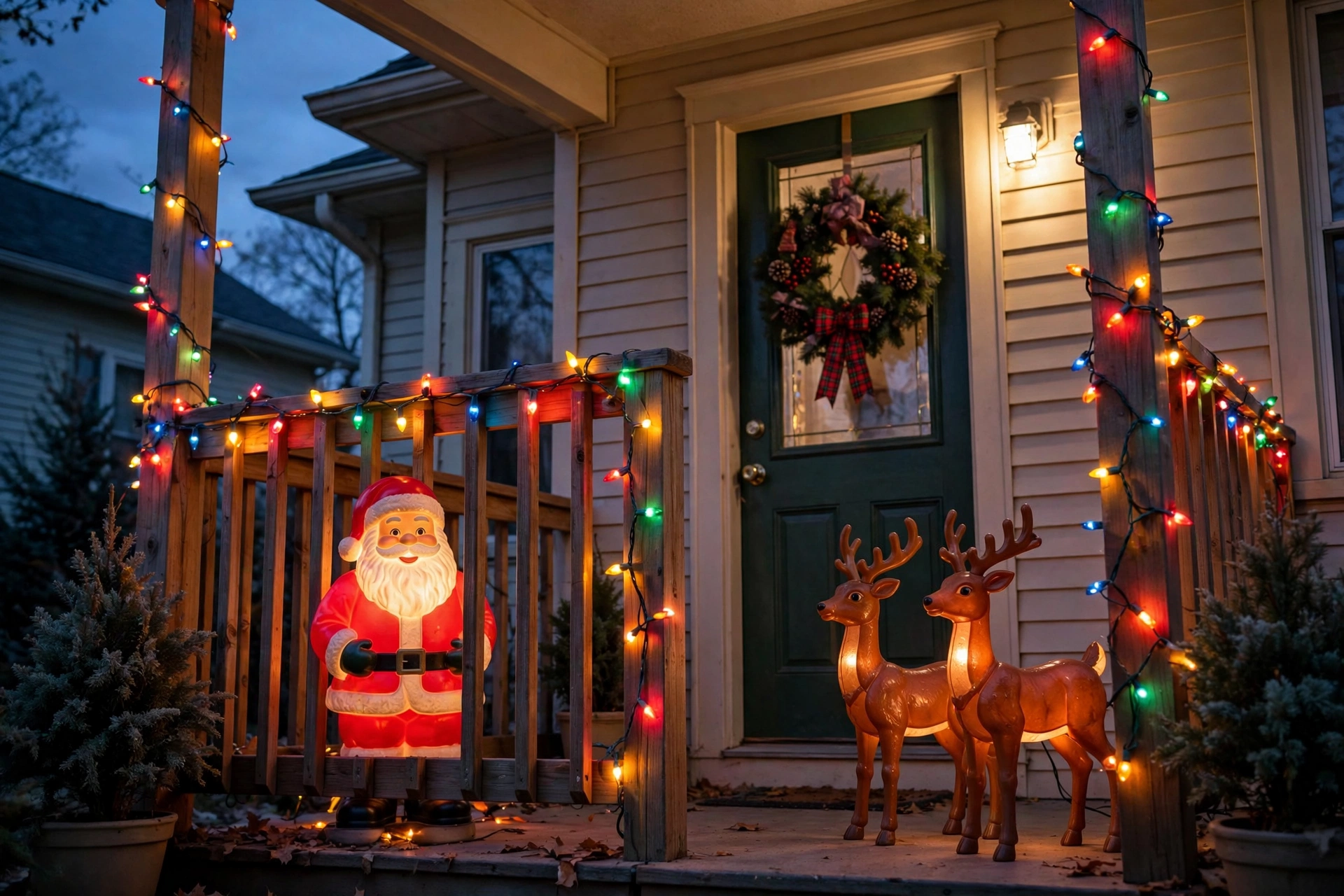
Blow-mold Santas, snowmen, and carolers — the hollow plastic lawn figures — are the outdoor face of 90s Christmas. A 3-foot lighted blow-mold Santa by the front door is a statement of allegiance. Indoors, look for figural ornaments with character: the 90s loved ornaments shaped like food, cartoon characters, and tiny household objects. The rule for figural ornaments is the same as for tinsel: commit. Five quirky ornaments scattered on a tasteful tree look like mistakes; thirty of them are a collection.
The Aluminum Tree Gets Its Revenge
The direct answer: the silver aluminum tree — the mid-century icon that the 90s ironically revived and Gen Z has now earnestly embraced — is the ultimate 90s-nostalgia statement tree. It needs no ornaments to work, just a rotating color wheel.
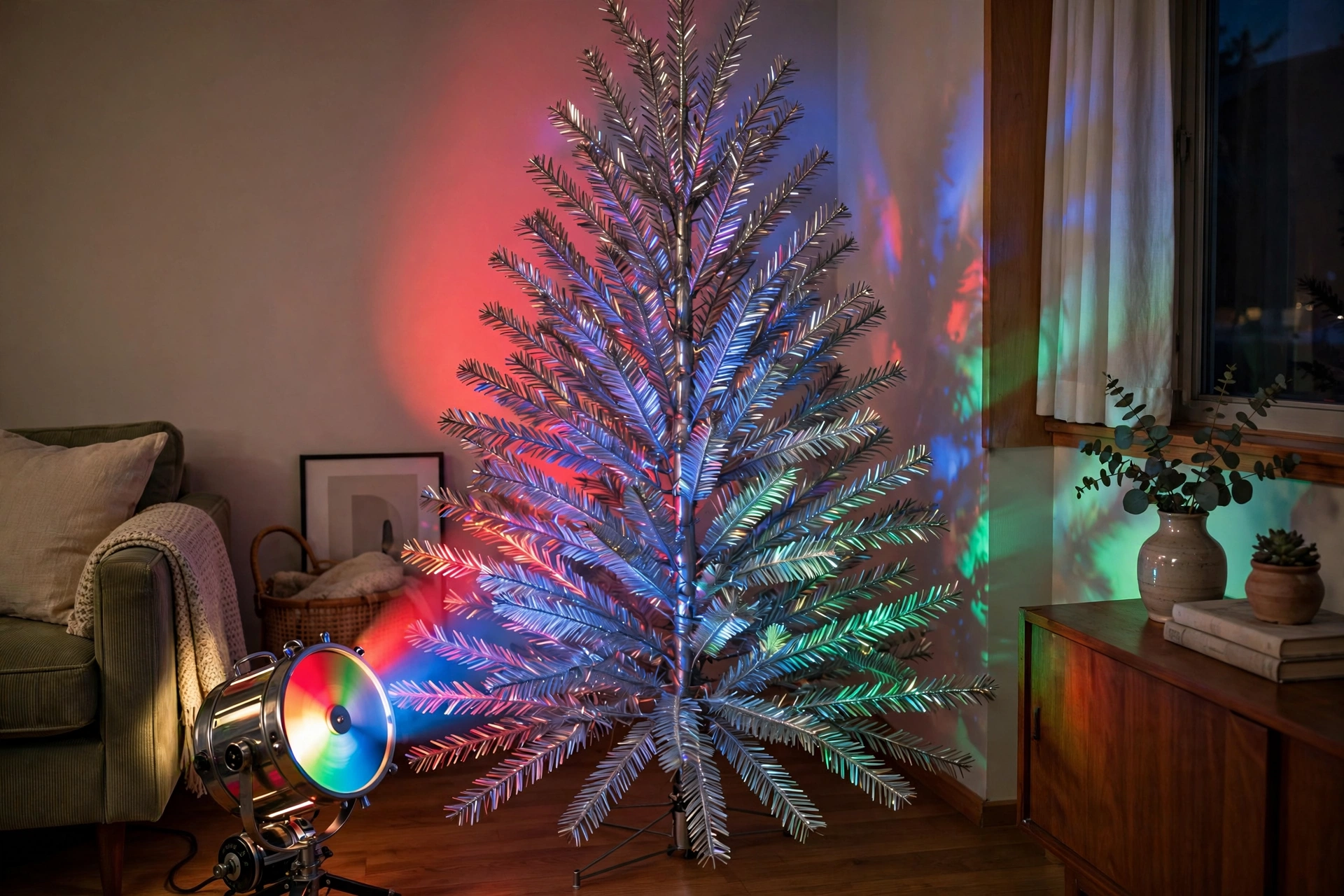
The aluminum tree peaked in the early 1960s, got mocked for decades, then came roaring back in the 90s as retro-cool — which is exactly why it reads as 90s nostalgia rather than 60s nostalgia. A 6-7 foot silver aluminum tree with a four-color rotating wheel spotlight ($60-120 for the tree, $25-40 for the wheel) is a complete decorating scheme in one purchase. The wheel cycles red, green, blue, and gold across the silver branches, and the effect is pure time travel.
Styling rules for aluminum trees are inverted from real trees: fewer ornaments is better, because the branches are the star. Hang 15-25 glass ornaments in saturated single colors — all red, or all blue — spaced widely so the silver shows through. Never put string lights on an aluminum tree (the metal conducts, and vintage guidance warned against it; modern LED strands are safer but visually redundant anyway). Top with a star or leave the top bare — the 90s often left it bare, and it looks intentional.
Placement matters for aluminum trees: they need darkness around them to shine. Put the tree in a corner away from competing light sources, aim the color wheel from 6-8 feet away at a slight upward angle, and turn off nearby lamps in the evening. In a bright room the effect washes out; in a dim room it is pure theater. A tree skirt is optional — many 90s displays left the tripod stand exposed, and the industrial base is part of the charm.
How to Do 90s Maximalism Without Looking Tacky
The direct answer: 90s maximalism looks intentional — not tacky — when you control the color palette, repeat elements in groups, and give the eye places to rest. Chaos with rules reads as style; chaos without rules reads as clutter.
This is the section that separates a Pinterest-worthy 90s Christmas from a storage-unit explosion. Five rules:
- Pick a palette and enforce it. True 90s Christmas used the full rainbow, but the curated version picks 3-4 colors and repeats them everywhere: classic red-green-gold-blue, or candy pink-red-silver-white, or jewel tones. Every ornament, ribbon, and light should belong to the chosen family.
- Group, do not scatter. Cluster ornaments in odd-numbered groups (3, 5, 7) on branches rather than distributing them evenly. Group the ceramic trees together on one surface. A collection displayed together is decor; the same items spread across the house is clutter.
- Repeat one signature element at least three times. Tinsel on the tree, tinsel in the wreath, tinsel stems in the mantel garland — repetition is what makes a theme read as deliberate. This is straight out of the maximalist playbook, and if the layered-more-is-more approach appeals to you beyond Christmas, our maximalist home decor guide applies the same principles year-round.
- Give the eye rest stops. Between maximalist moments, leave some surfaces plain. A fully tinselled tree next to a clean-lined sofa with one plaid throw looks curated; tinsel on every surface in the room looks like a craft store exploded.
- Light it like you mean it. Maximalism dies in bad lighting. Multicolor lights need dim ambient light to glow — turn off the overheads in the evening and let the tree be the light source. This single change elevates the whole look more than any purchase.
Where to Find the Real Vintage Pieces
The direct answer: estate sales and flea markets beat thrift stores for 90s Christmas specifically, because entire decorated-tree lots get sold intact. Go in the first two weeks of December for Christmas-specific estate sales, and always check the ornament boxes — not just the display shelves.
A sourcing hierarchy, from best value to most convenient:
- Estate sales: the mother lode. A full tree’s worth of 90s ornaments — Shiny Brites, figural pieces, beaded garlands — often sells as one lot for $20-40. Search estate sale listings for “Christmas” in November and December.
- Flea markets and antique malls: best for ceramic trees and blow molds. Prices run 20-30 percent below Etsy because there is no shipping or platform fee baked in.
- Thrift stores: hit-or-miss since resellers picked them over, but tinsel garlands, beaded garlands, and ornament hooks still show up regularly for $1-3.
- Etsy and eBay: the reliable option for specific pieces — a pink ceramic tree, a particular Shiny Brite pattern. Expect to pay 2-3x flea market prices for the convenience and searchability.
- Family attics: free and the most meaningful. Ask relatives before buying anything — the box of ornaments from your own childhood tree is sitting in someone’s garage right now.
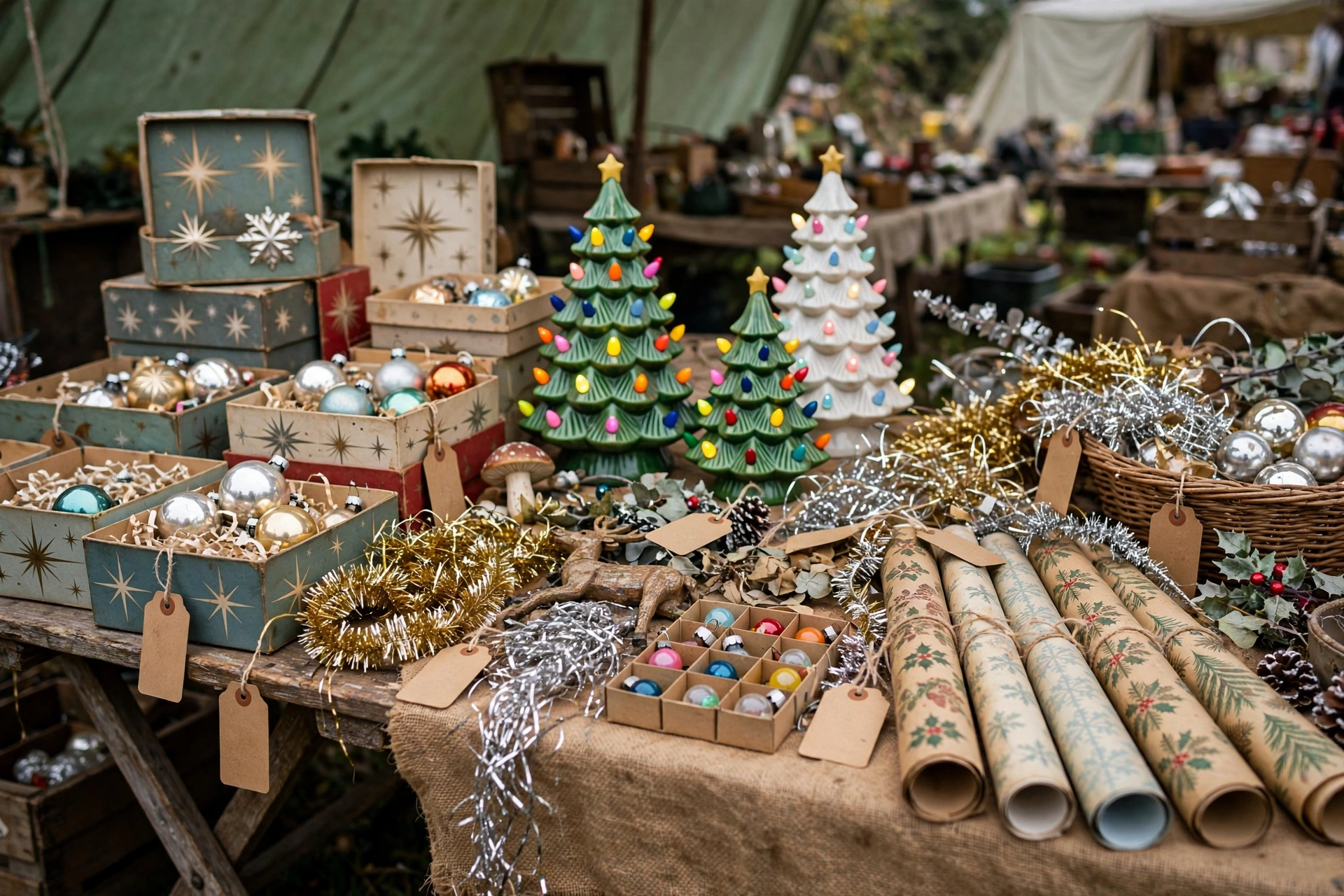
What to inspect before buying vintage: plug in lighted pieces and let them run for 10 minutes, check glass ornaments for intact silvering (hold them up to light — dark patches mean the reflective coating is failing), and sniff ceramic trees for musty storage smell, which usually airs out but can indicate cracked glaze. For beaded garlands, tug gently — 30-year-old string breaks, and restringing 9 feet of beads is a project.
DIY 90s Touches That Cost Almost Nothing
The direct answer: the 90s Christmas look is unusually DIY-friendly because its signature crafts — paper chains, popcorn garlands, handmade ornaments — are the aesthetic, not a budget compromise. Making them is more authentic than buying them.
Paper Chains and Popcorn Garlands
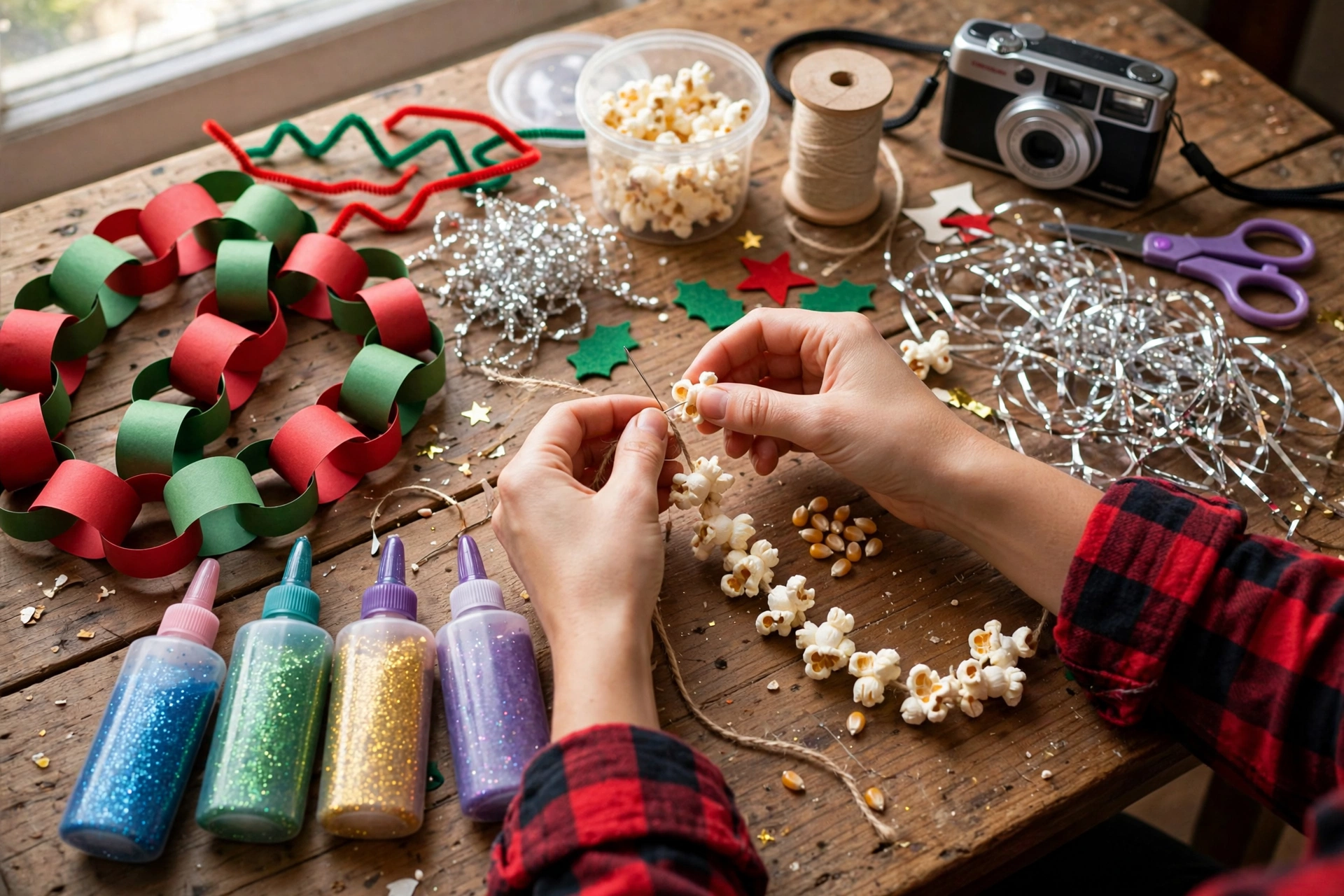
Paper chains from red and green construction paper: cut 1 x 8 inch strips, loop and glue or staple, 100 links makes about 12 feet of garland. Drape across the tree, doorways, or the mantel. Popcorn garlands: pop plain popcorn (no butter, no salt — grease stains and attracts pests), let it go stale for a day so it is less fragile, and string on heavy thread with a needle. A 6-foot popcorn garland takes about 45 minutes and looks exactly like 1994.
Salt-Dough and Shrink-Plastic Ornaments
Salt-dough ornaments (2 cups flour, 1 cup salt, 1 cup water, baked at 200F for 2-3 hours) painted in bright 90s colors with puffy paint details are the craft-table centerpiece of the aesthetic. Shrink-plastic (Shrinky Dinks) ornaments — draw, bake, watch them shrink to hard charms — were peak 90s kid craft and make genuinely charming tree ornaments. Both projects are ideal for involving kids, and handmade ornaments are the emotional core of the nostalgia look. Our DIY home decor ideas collection has more handmade projects in the same spirit if you catch the crafting bug.
Mixing 90s Nostalgia With the Home You Already Have
The direct answer: you do not need to redecorate your house to do 90s Christmas — you need one dedicated nostalgia zone (usually the tree and mantel) plus small echoes elsewhere. Containment is what makes the mix work.
The most successful blended approach I have seen: keep your existing furniture and wall colors exactly as they are, and let the Christmas decor be the time machine. A modern neutral living room with a fully committed 90s tree — tinsel, multicolor C9s, Shiny Brites — looks incredible precisely because of the contrast. The tree becomes an installation, a deliberate maximalist moment inside a calm room.
Echoes elsewhere tie it together without overwhelming: a ceramic tree on the bookshelf, tinsel stems in the entryway wreath, multicolor mini lights on the bedroom garland. Three to five small echoes, all in your chosen palette, and the whole house feels intentional. What does not work is half-committing on the tree itself — a tasteful tree with three vintage ornaments just looks confused. If the tree is going 90s, let it go all the way.
Color bridging helps too. If your year-round palette is warm neutrals, lean your 90s Christmas toward the warm side of the nostalgia spectrum: gold tinsel instead of silver, amber and red lights dominant, warm-toned Shiny Brites. Our trending home decor colors guide can help you find the overlap between your everyday palette and the 90s brights — there is almost always a bridge.
The 90s Christmas Color Palettes: Pick Your Era
The direct answer: “90s Christmas” is not one palette — it is three distinct ones, and picking yours is what makes the look feel curated. The early-90s jewel rainbow, the mid-90s country-craft red-green-gold, and the late-90s pastel candy look each tell a different nostalgia story.
The jewel rainbow (early 90s): saturated red, cobalt blue, emerald green, and gold — the Shiny Brite box palette. This is the boldest version and the most associated with the classic 90s tree. It demands multicolor C9 lights and silver tinsel. Best for: people whose core memory is a big family tree absolutely loaded with ornaments.
Country-craft red, green, and gold (mid 90s): the Pottery Barn-catalog-meets-craft-fair look — plaid ribbons, wooden ornaments, dried florals, and gold accents over a traditional red-green base. Tinsel here is gold rather than silver, lights are multicolor but leaning warm. Best for: blending with traditional or farmhouse decor you already own.
Pastel candy (late 90s): pink, baby blue, lavender, and silver — the “ice princess” tree that showed up in every 1998 holiday catalog. White or silver tinsel, pastel ornaments, and cool-toned lights. This one photographs beautifully and feels surprisingly modern. Best for: small spaces and anyone who finds the jewel rainbow overwhelming.
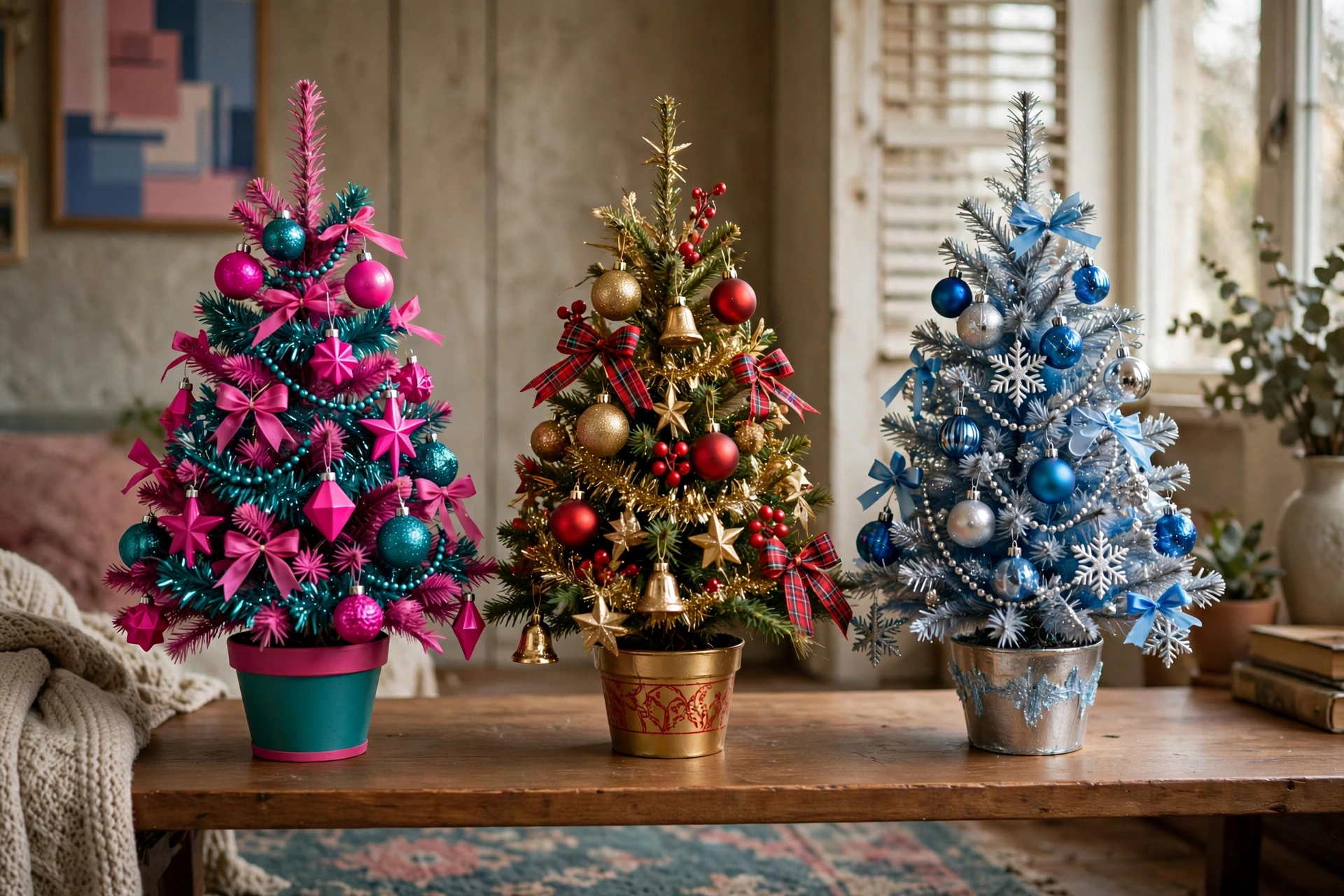
Whichever palette you choose, buy your lights first and match everything to them — lights are the hardest element to coordinate after the fact, and they set the color temperature for the whole scheme. One strand of the wrong white can undermine an otherwise perfect palette.
The Blow-Mold Porch: Taking 90s Nostalgia Outside
The direct answer: the outdoor 90s Christmas look is built from three elements — blow-mold figures, C9 string lights along rooflines and railings, and one wreath with chunky tinsel garland on the door. It is simple, it is bright, and from the street it is unmistakable.
Blow molds are the stars. A 3-foot Santa, a snowman, and a caroler grouped near the front door or along the walkway read as 90s from a block away. Vintage blow molds in working condition run $40-100 each at antique malls; reproductions cost $30-60 new. Check that the internal light socket works and the cord is intact — replacement C7 bulbs are still sold, but a cracked socket means rewiring.
For the house itself, run C9 multicolor strands along the roofline using plastic gutter clips (never staples — they damage shingles and create fire risk). Outline one architectural feature only — the porch railing, the front windows, or the roofline — rather than all three; the 90s look was abundant but even it had a focal hierarchy. Finish with the tinsel-garland wreath on the door and a lighted garland swag on the mailbox. The whole outdoor scheme takes an afternoon and, thanks to LED C9s, costs pennies a day to run.
Making It Yours: The Personal Layer
The direct answer: the difference between a 90s-style display and a real 90s Christmas is the personal layer — your ornaments, your crafts, your family’s weird traditions. The trend gives you the visual language; your history gives it meaning.
Every family had its version: the pickle ornament hidden for kids to find, the handmade monstrosity from third grade that still goes on the tree front and center, the specific brand of candy in the stockings. These are not imperfections in the aesthetic — they are the aesthetic. A 90s nostalgia Christmas with no personal ornaments is just a theme party; with them, it is a time machine.
So as you build the look, reserve the prime real estate — eye-level on the tree, the center of the mantel — for the pieces with stories. Let the Shiny Brites and tinsel be the supporting cast. Years from now, when this trend cycles out again, those are the pieces you will still be hanging.
Frequently Asked Questions
1. What defines 90s Christmas decor?
Four signature elements: tinsel (icicle strands and chunky garland), multicolor lights (especially big C9 bulbs), kitsch ornaments (Shiny Brite glass, figural pieces, ceramic trees), and maximalist abundance. The look is shiny, colorful, sentimental, and deliberately over-the-top — the opposite of minimalist neutral Christmas styling.
2. Is the 90s Christmas trend just on TikTok, or is it mainstream?
It started on TikTok but has gone fully mainstream — major decor publications now cover tinsel’s comeback as a legitimate trend, and big retailers stock aluminum trees, C9 light strands, and Shiny Brite-style ornaments each season. It is past the “internet micro-trend” stage and into established seasonal style.
3. How do I decorate a 90s Christmas tree without it looking tacky?
Control the palette (3-4 colors, repeated everywhere), group ornaments in clusters rather than scattering them, repeat one signature element at least three times around the room, and light it dramatically with the overheads off. Commitment plus rules reads as style; half-measures read as clutter.
4. Where can I buy Shiny Brite ornaments?
Vintage Shiny Brites show up at estate sales ($10-25 per dozen in original boxes), flea markets, and antique malls. For new production, the revived Shiny Brite brand sells through major retailers and online. Check the cap marking on vintage pieces to confirm authenticity, and hold them to light to check the silvering is intact.
5. Are aluminum Christmas trees actually from the 90s?
They originated in the late 1950s and peaked in the early 60s, but the 90s revived them as retro-cool — which is why they read as 90s nostalgia today. Pair with a rotating four-color wheel spotlight and sparse saturated-color ornaments. Never put string lights on an aluminum tree; the wheel is the entire lighting scheme.
6. How much tinsel should I put on my tree?
For an accent look, one 12-foot tinsel garland spiraled around the tree plus icicle strands on the lower third. For full commitment, layer all three types: garland spiral, 500-1,000 individual icicle strands spaced 2-3 inches apart, and tinsel stems in surrounding wreaths. Avoid the middle zone — enough to notice but not enough to commit looks accidental.
7. Can I mix 90s Christmas decor with my modern furniture?
Yes — and the contrast is part of the appeal. Keep furniture and walls as they are, make the tree and mantel the dedicated nostalgia zones, and add three to five small echoes (ceramic tree on a shelf, tinsel in the wreath) in the same palette. Bridge the color temperature by leaning warm if your home runs warm.
8. What are bubble lights, and are they safe?
Bubble lights are liquid-filled tubes that bubble when heated — the most evocative 90s Christmas light. Vintage ones run hot by design, so use them as accent strands, keep them away from tinsel and paper, and never leave them unattended. Modern LED versions mimic the bubbling look without the heat and are the safer choice for households with kids or pets.
9. How do I store tinsel and vintage ornaments so they last?
Store icicle tinsel hanging or loosely coiled — never crumpled — to avoid tangling; a garment bag works perfectly. Wrap glass Shiny Brites individually in tissue and store in divided ornament boxes, not loose in a bin. Keep everything in a climate-controlled space; attics and garages with temperature swings degrade silvering and adhesives.
10. What is the cheapest way to get the 90s Christmas look?
DIY the crafts (paper chains, popcorn garlands, salt-dough ornaments cost under $10 total), buy tinsel garland and C9 strands new ($20-30 total), and thrift the ornaments at estate sales and flea markets. A fully committed 90s tree can come together for $50-75 — the aesthetic was never about expensive pieces, it was about abundance.
The 90s Christmas revival is really about giving yourself permission to love the loud, shiny, sentimental version of the holiday — the one you actually remember. So dig out the tinsel, plug in the multicolor lights, and let the tree be too much. It was always supposed to be too much. That was the whole point. And if anyone calls it tacky, just point at the ceramic tree glowing on the sideboard and remind them that joy was never meant to be tasteful.