Seasonal Home Decor: Tips for Every Time of Year
A home that looks the same in July as it does in January rarely feels quite right in either month. The light changes, the temperature changes, and the way you use your rooms changes with them. Seasonal decorating is simply the practice of letting your home respond to that rhythm, so it feels fresh and…
A home that looks the same in July as it does in January rarely feels quite right in either month. The light changes, the temperature changes, and the way you use your rooms changes with them. Seasonal decorating is simply the practice of letting your home respond to that rhythm, so it feels fresh and open when the days are long and warm and sheltering when they turn short and cold.
It doesn’t require four complete sets of furniture or a basement full of plastic bins. The most successful seasonal home decor starts with a neutral, lasting foundation and changes only a handful of things each quarter: textiles, a few accent colors, natural elements, and scent. Done this way, a full seasonal refresh can take an afternoon and cost very little.
This guide walks through how to set up that foundation, what to change in spring, summer, fall, and winter, and how to store everything so the next swap is easy.
How Seasonal Decorating Works: A Fixed Base and a Rotating Layer
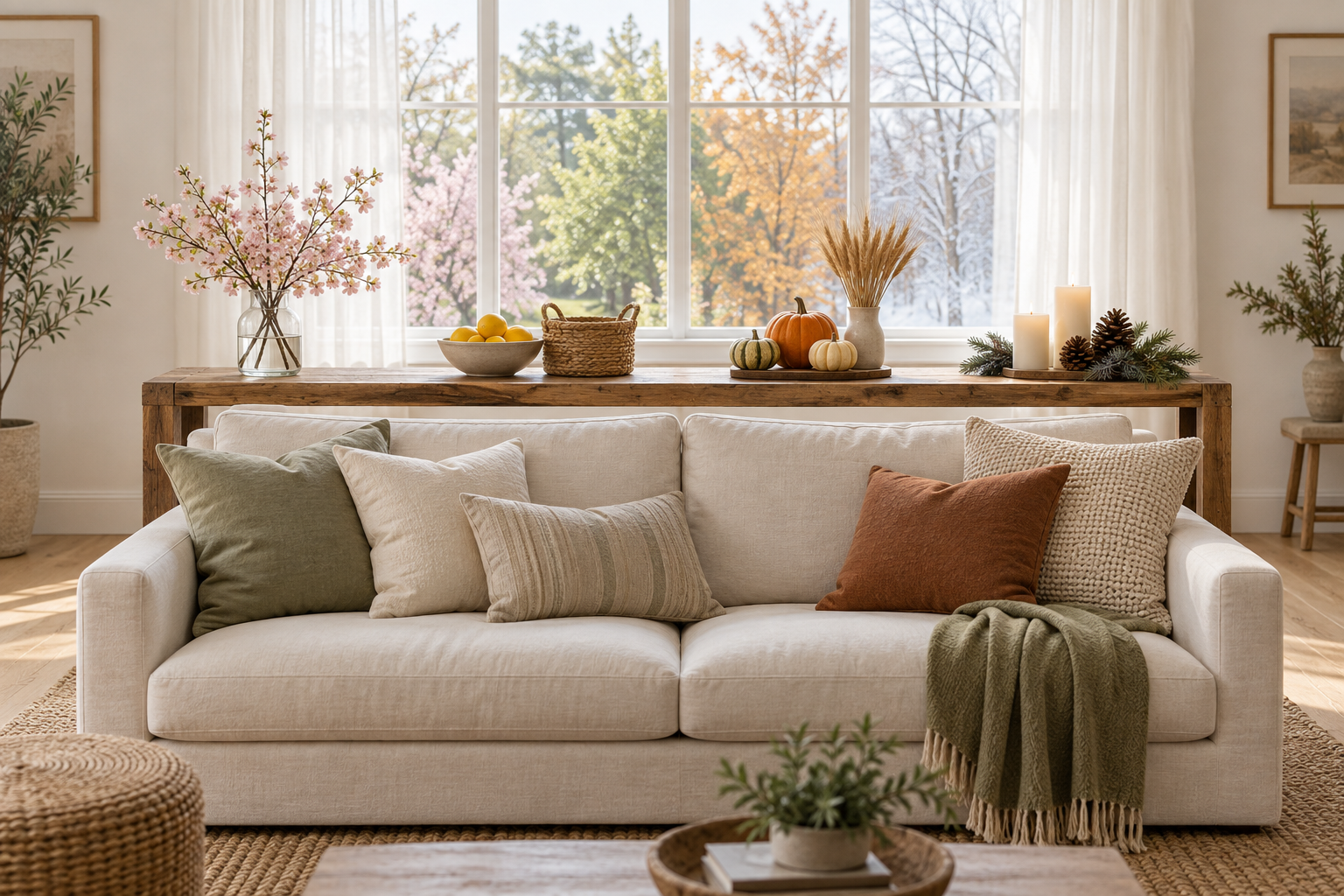
Seasonal home decor works best when you divide your belongings into two groups. The base layer is the furniture, rugs, wall color, and large pieces that stay all year. The seasonal layer is the smaller, easily swapped items, such as pillow covers, throws, table linens, greenery, and accessories, that change a few times a year.
Thinking in layers keeps you from buying things that only suit one month, and it stops a room from becoming cluttered as each new season’s pieces get added on top of the last. When the base is calm and neutral, almost any seasonal accent looks deliberate.
What decor should stay the same all year?
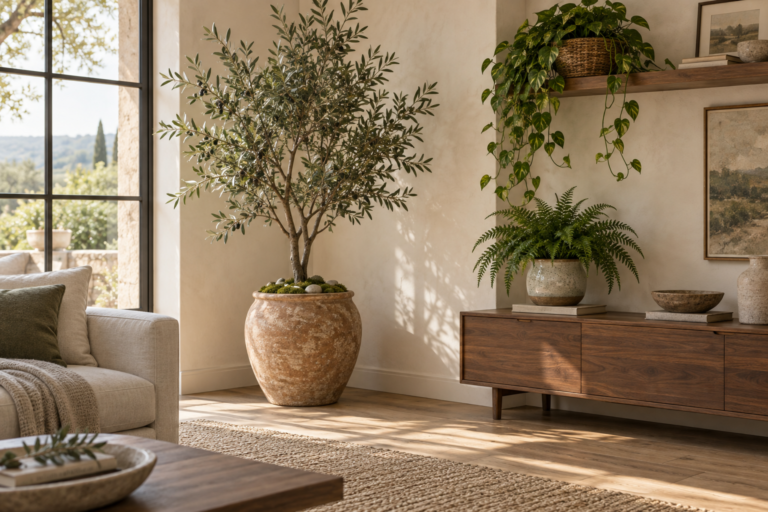
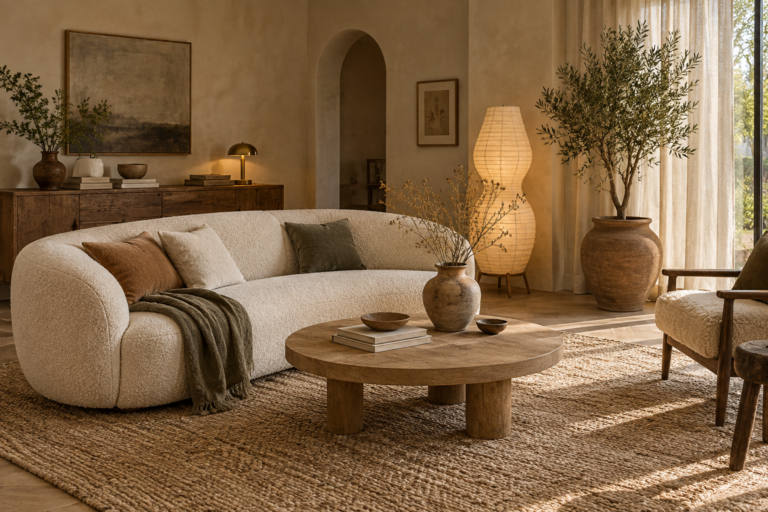
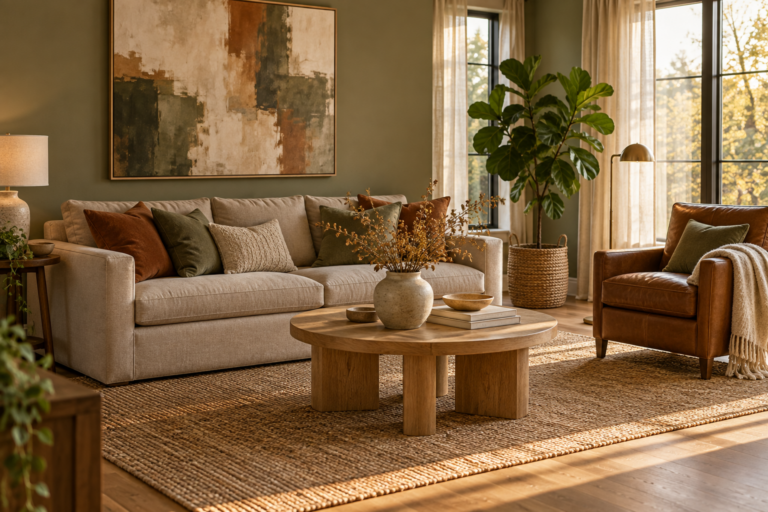
Large, expensive, or hard-to-move items belong in the base. That usually means the sofa, beds, dining table, main area rugs, curtains or blinds, lamps, and major artwork. Choose these in versatile tones like warm white, greige, oatmeal, wood, charcoal, or muted green, because they need to support both a bright spring palette and a deep autumn one.
Texture helps the base age well. A linen sofa, a wool-blend rug, and natural wood furniture read as neutral but still have enough character that the room doesn’t look flat when the seasonal layer is packed away between swaps.
A few versatile accessories can also stay put: wooden bowls, glass hurricanes, plain ceramic vases, woven baskets, and a sturdy tray on the coffee table. What goes inside them changes. The vessels themselves don’t.
How often should you change your home decor?
Most people refresh their decor four times a year, in line with the seasons, with an extra holiday layer added and removed in December. If that feels like too much, two larger swaps work well: a warm-weather look from spring through summer and a cool-weather look from fall through winter.
Your climate should guide the timing more than the calendar does. In places with mild winters and long, hot summers, the “summer” look might run from April into October, with only a short cozy season. Where autumn arrives early and snow lingers, the heavier layer might stay out for half the year. In the Southern Hemisphere the whole cycle flips, so a December refresh means lightening up rather than bundling in.
A practical cue is to notice when your home stops feeling comfortable. When you reach for a throw every evening, it’s time for fall. When the velvet pillows start feeling sticky in the afternoon, it’s time to swap them out.
Which items give the biggest change for the least effort?
Some swaps transform a room far more than others. Ranked roughly by impact:
- Pillow covers and throws, which change color and texture across your largest visible surfaces
- Natural elements, such as flowers, branches, fruit, and potted plants, which signal the season instantly
- Table linens and bedding, since the dining table and bed are focal points in their rooms
- Scent, through candles, simmer pots, or fresh herbs
- Small accessories, such as candleholders, a seasonal print, or a change of books on the coffee table
If you only have an hour, change the pillow covers and bring in something alive from outside. That combination alone makes a room feel like it belongs to the current month.
Spring Home Decor: Lighten, Clear, and Bring in Blooms
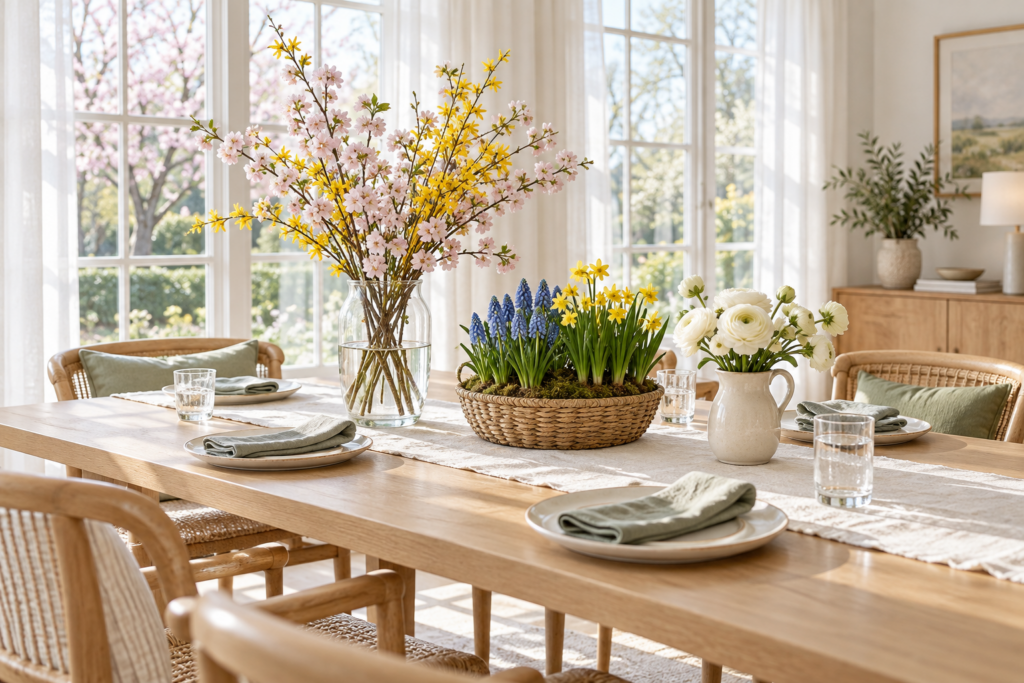
Spring decor is about removing weight. Pack away heavy wool and velvet, open up windows and surfaces, and introduce soft greens, blush, pale yellow, and sky blue alongside fresh flowers and flowering branches. The goal is a room that feels airy, clean, and full of new growth after winter.
Spring is also the natural moment for a deeper reset, because the extra daylight shows every dusty shelf and fingerprinted window. Decorating and cleaning go hand in hand here.
Start with an edit
Before adding anything, take things away. Remove winter throws, dried evergreens, heavy candle arrangements, and anything in deep jewel tones. Clear the coffee table, mantel, and kitchen counters down to almost nothing, then wash windows inside and out if you can. Clean glass lets in noticeably more of the spring light you’re decorating around.
This is a good time to take down or wash heavy curtains and switch to lighter panels or sheers, which soften daylight without blocking it.
Colors and fabrics
Spring palettes borrow from new leaves and early flowers. Sage, celery green, blush, soft butter yellow, lavender, and pale blue all work against a neutral base. You don’t need all of them. Pick two, plus white, and repeat them in a few places around the room.
For fabrics, move to cotton, linen, and light cotton-knit throws. Floral prints feel natural in spring, but small-scale or watercolor-style patterns tend to look more grown-up than large, bright ones. Gingham, fine stripes, and botanical prints are good alternatives if florals aren’t your style.
Flowers, branches, and plants
Nothing says spring faster than something blooming. Tulips, ranunculus, daffodils, hyacinths, and sweet peas all make easy indoor arrangements. Tulips keep growing in the vase and bend toward light, so trim them and turn the vase every day or two to keep them upright.
Flowering branches give more height and last longer than cut flowers. Forsythia, cherry, quince, magnolia, and pussy willow can be cut in late winter and forced indoors in a vase of water in a bright room, where they typically bloom within a few weeks. Once they open, a single tall arrangement on a console or dining table carries a whole room.
Potted spring bulbs are another good option. A shallow basket of grape hyacinths, miniature daffodils, or primroses on a kitchen table looks cheerful, and once the blooms fade, the bulbs can often be planted in the garden to flower again next year.
Bring houseplants out of darker corners and closer to windows now that the light is stronger, and wipe their leaves so they look fresh.
How do you make a home feel fresh for spring on a budget?
Begin with cleaning and editing, which cost nothing and change a room more than any purchase. Then add a few inexpensive seasonal touches: grocery store tulips, branches cut from your own garden, lemons in a glass bowl, and lighter pillow covers. Rearranging furniture to face the windows also helps a room feel new.
Thrift stores often have linen napkins, glass bud vases, and small ceramic pitchers, all of which suit spring styling. A single pack of seeds, like basil or pea shoots, started in small pots on a windowsill adds green at almost no cost.
Summer Home Decor: Airy Fabrics, Cool Tones, and Outdoor Living
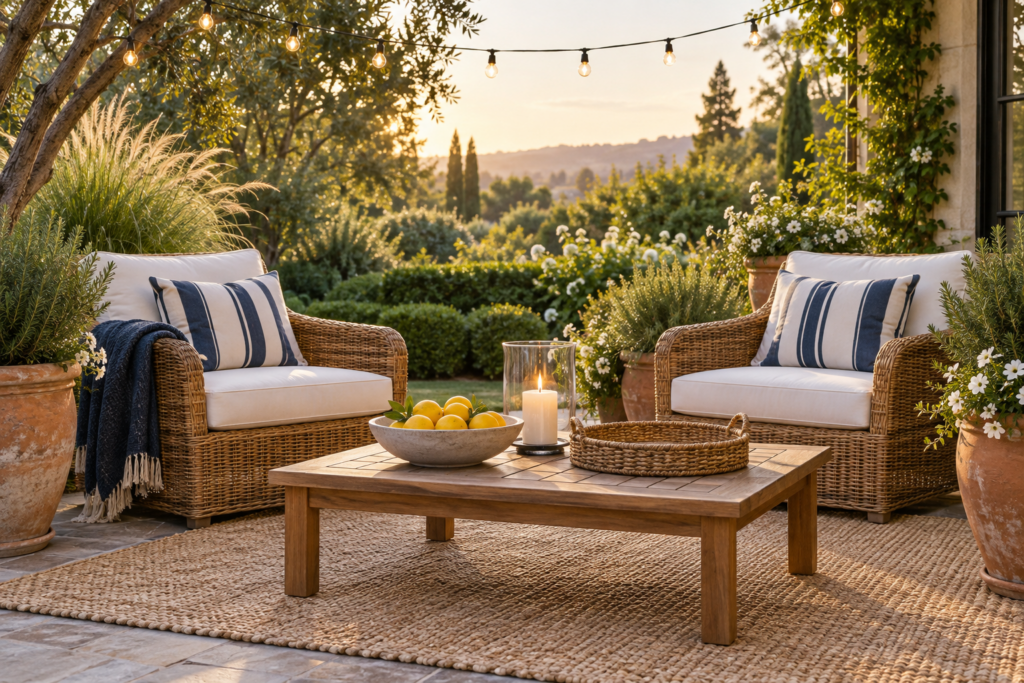
Summer decor keeps rooms feeling cool and relaxed. Use breathable linen and cotton, pale or cool colors like white, sand, blue, and green, and natural materials such as rattan, jute, and seagrass. Keep surfaces sparse and extend your decorating outdoors to patios, porches, and balconies where summer life happens.
Where spring decor celebrates growth, summer decor is about ease. Rooms should feel uncluttered and comfortable on the hottest afternoons.
Keeping rooms visually and physically cool
Heat affects how a room feels as much as color does. During the hottest part of the day, close blinds or curtains on sun-facing windows, then open them in the evening. Pale, light-filtering curtains in linen or cotton do this well while still looking soft.
Swap heavy area rugs for flat-woven cotton, jute, or sisal, or roll the rug up entirely and enjoy bare wood or tile underfoot. In bedrooms, change to percale or linen sheets, which feel cooler than sateen or flannel, and store the duvet in favor of a light quilt or coverlet.
Blues and greens genuinely read as cooler to the eye. Navy and white stripes, soft aqua, eucalyptus green, and sandy neutrals work in almost any home. Coastal styling fits naturally here, but you don’t need seashells everywhere. A bowl of smooth stones, a piece of driftwood, or a blue-and-white ceramic is usually enough.
Natural textures
Summer is the season for woven materials. Rattan chairs, seagrass baskets, jute rugs, and wicker trays add warmth and texture without heaviness. Swap wooden or metal candleholders for glass, and replace wool pillow covers with cotton or linen in pale solids or simple stripes.
Fruit makes lovely summer decor. A wide bowl of lemons or limes on a kitchen island stays fresh for a good while and looks bright. Peaches, cherries, and tomatoes from the garden are just as decorative, if not as long-lasting.
Cut flowers from a summer garden, like hydrangeas, zinnias, dahlias, cosmos, and sunflowers, fill vases easily. Hydrangeas drink heavily, so check their water daily, and recut the stems if the heads start to wilt.
Decorating outdoor spaces
For many households, summer decorating happens mostly outside. A few changes turn a patio or balcony into a real room:
- An outdoor rug made from polypropylene or another weather-resistant material defines the seating area
- Cushions and pillows in outdoor fabric resist fading and dry quickly after rain
- String lights or solar lanterns make the space usable after dark
- Large planters of herbs, grasses, or flowering annuals soften hard edges and add privacy
- A small side table or tray gives drinks and citronella candles somewhere to sit
Bring outdoor cushions inside or store them in a deck box during heavy rain to extend their life, and choose planters with drainage holes so plants don’t rot.
Fall Home Decor: Warm Colors, Harvest Texture, and a Cozier Mood
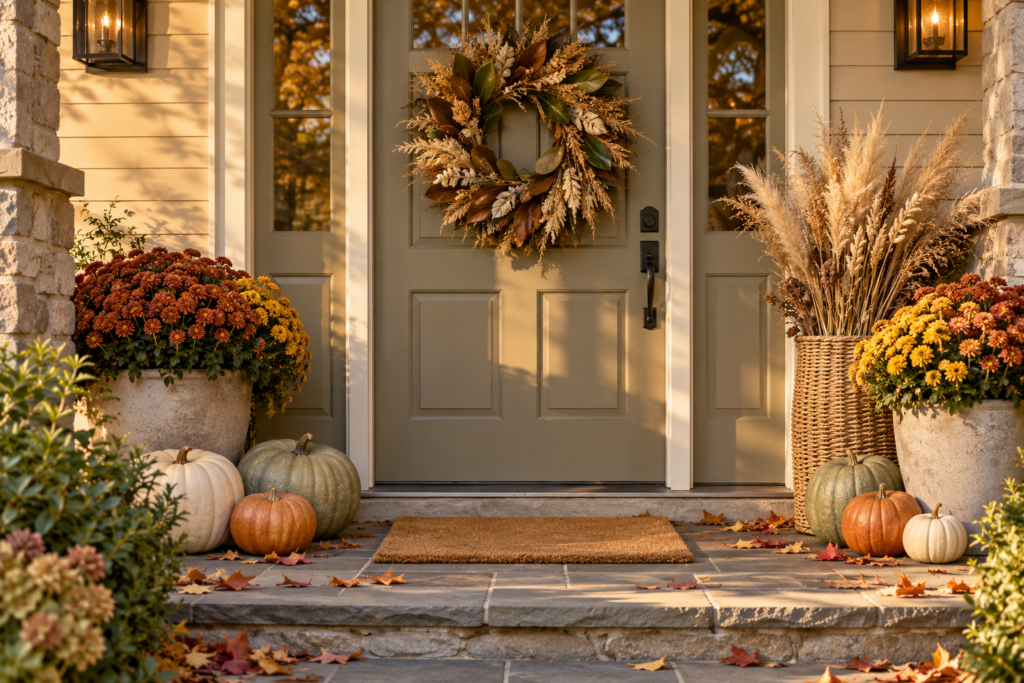
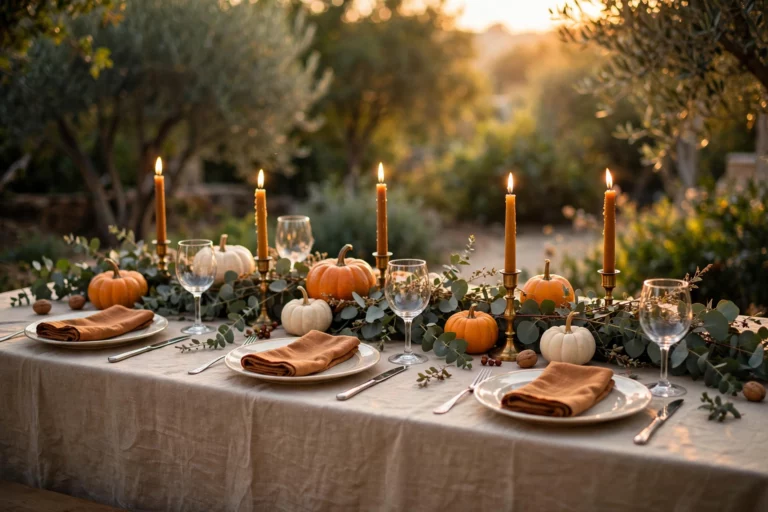
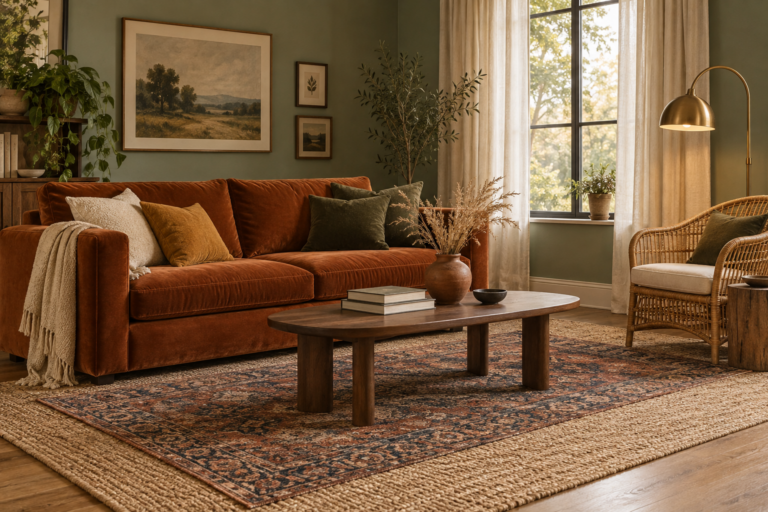
Fall decor reintroduces warmth after summer. Bring back medium-weight textiles like cotton knits, wool, and corduroy, and add rich colors such as rust, mustard, olive, burgundy, and brown. Pumpkins, gourds, dried grasses, branches with autumn leaves, and warm candlelight complete the seasonal look without needing Halloween or Thanksgiving themes.
Fall tends to be the season people most look forward to decorating, and it’s easy to overdo. A few well-chosen harvest elements look better than every surface crowded with pumpkins.
Transitioning from summer to fall
Early fall can still be warm, so move gradually. In September, start with color: switch a couple of pillow covers to ochre or terracotta, and replace summer flowers with sunflowers, dahlias, or seeded eucalyptus. Keep linen and cotton for now.
As evenings cool, bring back heavier throws, lay a wool rug over the summer jute, and switch to warmer bulbs if you used cooler ones over the summer. Once the clocks change and it’s dark by early evening, candles and lamps become the most important decor in the house.
Natural fall elements
Small pumpkins and gourds in cream, pale green, and muted orange look more refined than a single bright orange carving pumpkin, and they last for weeks indoors if they’re kept away from heat and direct sun and never sit on a damp surface. Heirloom varieties with warty or striped skins add interest.
Other fall materials worth using:
- Dried wheat, oat stems, pampas grass, and bunny tail grass in tall vases
- Branches with changing leaves, such as oak or maple, which dry beautifully in place
- Acorns, chestnuts, and seed pods scattered in a wooden bowl
- Apples and pears in a basket on the kitchen counter
- Bundles of dried herbs like sage or rosemary tied with twine
Faux leaves and pumpkins have improved a great deal and make sense for pieces you want to reuse, especially on mantels near a fire or on porches where squirrels treat real pumpkins as a buffet.
Porches and front doors
A fall porch is often the first seasonal decor people see. Mums in pots, a couple of pumpkins in graduated sizes, a straw or doormat in a natural fiber, and a wreath made from dried grasses, eucalyptus, or magnolia leaves are plenty. Group the pots and pumpkins on one side of the door or up the steps rather than spreading them thinly.
Garden mums last longest when bought with plenty of unopened buds, watered regularly, and placed where they get morning sun.
How do you decorate for fall without Halloween decorations?
Leave out bats, skeletons, ghosts, and orange-and-black color schemes, and lean on harvest and nature instead. Cream and heirloom pumpkins, dried grasses, autumn leaves, warm wood, rust and olive textiles, and candlelight all read as fall without any holiday reference, so they can stay up from September through Thanksgiving.
If you enjoy Halloween, add a small spooky layer in October on top of this base, then remove just that layer on November first.
Winter Home Decor: Warmth, Soft Light, and Texture Beyond the Holidays
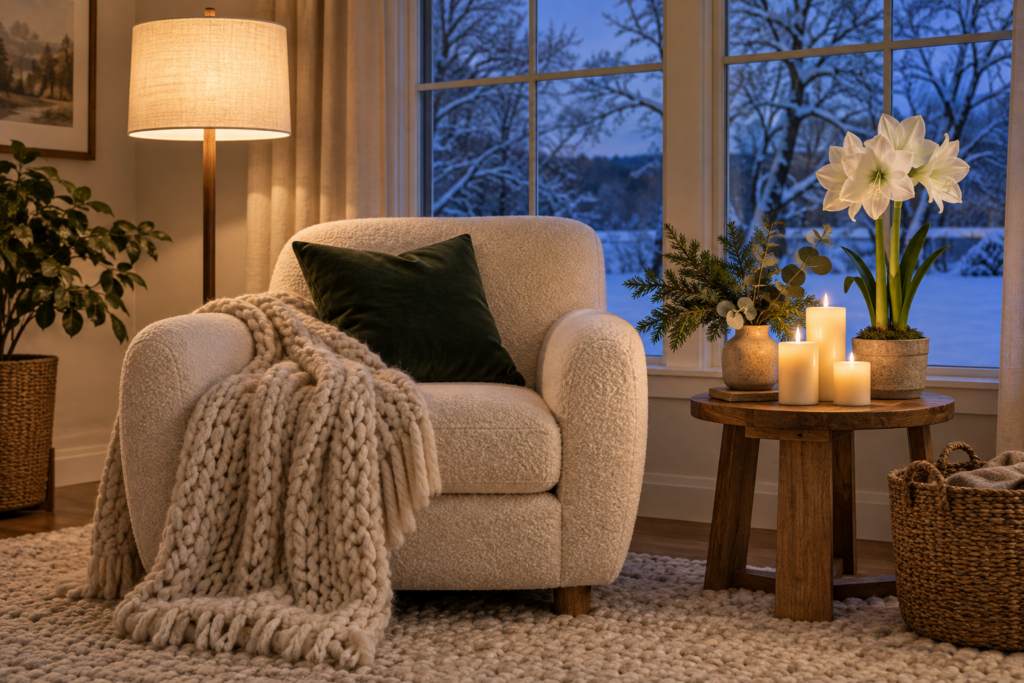
Winter decor centers on warmth and comfort through the coldest, darkest months. Layer heavy textiles like wool, faux fur, and velvet, use several warm, low light sources instead of harsh overhead lighting, and bring in evergreens, bare branches, pine cones, and forced bulbs. Keep holiday items as a removable add-on so your home still looks finished in January.
The most common winter problem is the empty feeling after the holidays end. The fix is planning a winter base first, then adding festive pieces on top.
Building the cozy layer
Winter is when the rotating layer gets its heaviest. Replace fall’s cotton knits with chunky wool throws and faux fur. Choose pillow covers in velvet, bouclé, or wool in cream, charcoal, forest green, navy, or deep plum. Layer a thick wool or shag rug over the base rug to warm cold floors, and switch to flannel or brushed cotton sheets on the beds.
Thermal-lined or heavier curtains help block drafts on cold nights. Open them wide during the day to catch whatever winter sun there is.
Lighting through dark evenings
Lighting matters more in winter than in any other season. Aim for several sources at different heights in each main room: a floor lamp, a table lamp, and a lower glow from candles or a small accent lamp. Warm white bulbs and plug-in dimmers make evenings feel restful rather than stark.
Plain white string lights can stay out long after the holiday tree comes down. Tucked into a garland or a large glass jar, they simply look cozy.
Evergreens and winter blooms
Cedar, pine, fir, and eucalyptus garlands work all winter as long as they’re free of ornaments and ribbons. Keep fresh greenery away from heating vents and fireplaces, and replace it once it dries and turns brittle, since dry greenery is a fire risk.
Paperwhites and amaryllis are the easiest bulbs to force indoors and bloom in the gloomiest weeks. Stagger plantings a couple of weeks apart to keep flowers coming from January into March. Both are toxic to pets, so place them out of reach.
Adding and removing a holiday layer
Keep December decorations in their own labeled bins, separate from general winter items. When the holidays end, remove only stockings, ornaments, menorahs, nativity scenes, and anything printed with greetings. What remains, the throws, candles, greenery, and pine cones, should still look complete. If it doesn’t, fill the mantel or table with a longer garland, a tall vase of bare birch branches, or a cluster of candles.
Storing and Switching Seasonal Decor Without the Hassle
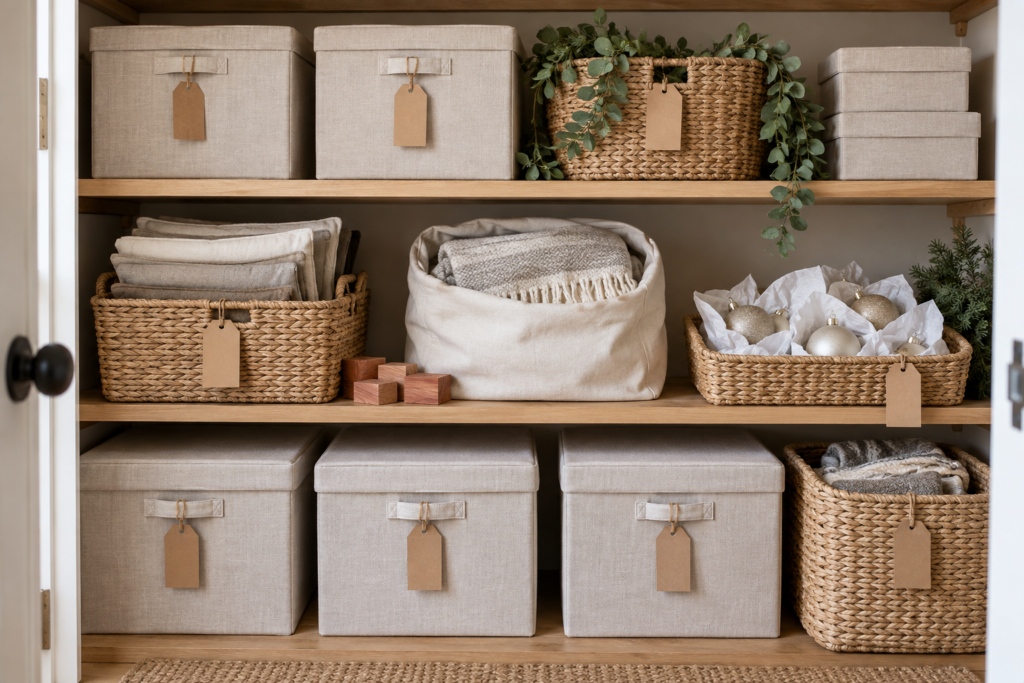
Good storage is what makes seasonal decorating sustainable. Clean every item before packing it away, sort by season rather than by object type, use clearly labeled bins, and protect natural fibers and fragile pieces properly. When each season has its own boxes, a full swap takes an hour or two instead of a whole weekend.
Many people give up on seasonal decor not because they dislike it, but because finding and switching everything becomes a chore. A little organization fixes that.
How do you store seasonal decor?
Store decor by season in sturdy, lidded bins, one or two per season plus a separate one for major holidays. Label each bin on at least two sides with the season and the rooms it serves. Clean textiles first, wrap breakables in tissue or towels, and keep bins somewhere cool and dry, such as a closet shelf or under a bed.
Clear bins help you see contents at a glance, but opaque ones protect fabrics from light if they’re stored near a window. Whichever you choose, keep the same size bins where possible so they stack neatly.
Protecting textiles and natural materials
Wash or dry-clean throws, blankets, and pillow covers before storing them. Moths and other pests are drawn to natural fibers like wool and cashmere, especially when there’s any food residue or body oil on them. Use breathable cotton storage bags or sealed bins with cedar blocks or lavender sachets for wool, rather than plastic bags, which can trap moisture and cause mildew.
Pillow covers store flat, which takes up far less space than whole pillows. Keep one set of neutral inserts in the house year-round and only rotate the covers.
Dried materials such as orange slices, pine cones, dried hydrangeas, and grasses can often be reused if they’re wrapped loosely in tissue and kept in a dry place. Toss anything that has softened, molded, or crumbled.
Faux greenery, garlands, and wreaths hold their shape best when laid flat or hung in a closet. Wreath storage boxes are worth it for larger pieces, since crushed faux stems rarely recover completely.
Making each swap quicker
A few habits save real time over the years:
- Take a photo of each room once it’s decorated for a season and store it on your phone or tape a print inside the bin lid, so next year’s setup doesn’t require rethinking
- Put the next season’s bin at the front of storage when you pack the current one away
- Keep a small “refresh” list inside each bin for items that wore out and need replacing
- Edit ruthlessly every time you pack up. If something wasn’t used this season, donate it rather than storing it for another year
How can you decorate seasonally in a small home or apartment?
In small spaces, rotate fewer items and choose ones that do more. Change pillow covers, one throw, a table runner or tray arrangement, and a single vase of seasonal flowers or branches. This keeps the room fresh without clutter, and everything for each season can fit in one bin under a bed or on a closet shelf.
Choosing a consistent set of vessels, like one large vase, one tray, and one bowl, helps even more. Their contents change with the season: blossoms in spring, lemons in summer, mini pumpkins in fall, and pine cones with a candle in winter. No new storage required.
Frequently Asked Questions
When should you change your decor for each season?
Many people refresh their decor around the start of each season: early March for spring, early June for summer, early September for fall, and late November for winter. Your local weather is a better guide than the calendar, so change things when your home starts to feel too warm or too cool for its current styling.
What is the easiest way to decorate for every season?
The easiest method is to keep a neutral base of furniture, rugs, and walls, then swap only pillow covers, throws, and natural elements each season. Reusing the same vases, bowls, and trays with seasonal contents inside them keeps costs and storage needs low while still making each season feel distinct.
What colors work for seasonal decorating all year?
Warm white, cream, oatmeal, greige, natural wood, and soft charcoal work as a year-round foundation. They pair easily with pastels in spring, blues and sandy tones in summer, rust and olive in fall, and deep greens or navy in winter, so the seasonal accents always look intentional rather than clashing.
How much should you spend on seasonal home decor?
There is no required amount, and many effective changes cost very little. Shopping your own home, gathering branches and cones from outside, and buying pillow covers instead of new pillows keep costs low. Investing gradually in a few quality, reusable pieces each year usually works better than buying lots of inexpensive items every season.
Is it better to use real or faux seasonal decor?
Each has advantages. Real flowers, greenery, pumpkins, and fruit look and smell authentic but need replacing within days or weeks. Quality faux pieces are reusable, safer near heat sources, and better for homes with pets or allergies. Many people combine them, using real stems in vases and faux garlands or wreaths where longevity matters.
Can you decorate seasonally if you rent?
Yes, seasonal decorating suits renters well because nearly everything involved is portable and removable. Pillow covers, throws, rugs, table linens, plants, candles, and freestanding vases require no changes to walls or fixtures. Command-style hooks, tension rods, and over-the-door wreath hangers let you add seasonal touches without damaging the rental.
Do you need separate decor for holidays and seasons?
It helps to keep them separate. Seasonal decor, such as autumn textiles or winter evergreens, can stay up for months, while holiday items like Halloween decorations or Christmas ornaments usually come down right after the date. Storing holiday pieces in their own bins lets you remove them quickly without undoing your whole seasonal look.