Home Coffee Bar & Bar Cart Ideas: Style a Drink Station Anywhere
There is a moment at every good holiday party when someone drifts away from the crowd, finds the drink station, and just stands there happily making themselves a perfect cup of something. A well-styled coffee bar or bar cart does that: it gives guests a place to land, it gives the host a break from…
There is a moment at every good holiday party when someone drifts away from the crowd, finds the drink station, and just stands there happily making themselves a perfect cup of something. A well-styled coffee bar or bar cart does that: it gives guests a place to land, it gives the host a break from playing bartender, and it makes the whole house feel more pulled together. And unlike most holiday projects, a drink station is useful every single day of the year, not just in December.
This guide covers both sides of the drink-station world: home coffee bars for everyday rituals and holiday hosting, and bar carts styled for Christmas and New Year’s Eve parties. You will get the styling formulas that make any setup look intentional, small-space solutions for apartments and tiny kitchens, tray and signage ideas, and budget breakdowns. Whether you have a spare wall, a corner of the counter, or just a cart you can roll out when guests arrive, there is a drink station here for you.
Why a Drink Station Is the Best Holiday Upgrade
Of all the things you could style for holiday hosting, a drink station gives you the most return for the least effort. Here is why:
- It serves guests while you cook. A self-serve coffee bar or bar cart means guests help themselves instead of hovering in the kitchen asking what they can do.
- It is decor that works. Unlike a mantel arrangement, a drink station is beautiful and functional at the same time. Every item on it earns its place twice.
- It photographs well. A styled bar cart is one of the most-pinned holiday images for a reason: it is compact, layered, and full of interesting objects.
- It lasts past the holidays. Strip the wreath and the fairy lights in January, and you still have a coffee bar you will use every morning. Few holiday projects can say that.
Coffee bar vs. bar cart: which one do you need?
A coffee bar is stationary: a console, sideboard, or counter section dedicated to coffee and tea. A bar cart is mobile: a two- or three-tier cart stocked with spirits, mixers, and glassware that rolls where the party is. Many homes want both, and they can share styling principles. If you only have space or budget for one, choose based on your life: daily coffee drinkers should build the coffee bar; frequent entertainers should start with the cart. This guide covers both, because the styling formulas overlap heavily.
Where to Put It: Location Ideas for Any Home
The best drink station location is where guests naturally gather but out of the cooking traffic flow. Here are the options, from most to least space.
The dedicated console or sideboard
A 48- to 60-inch console table against a dining room or living room wall is the gold standard: plenty of surface, storage underneath, and a wall above for art or shelves. This setup handles a full coffee bar (machine, grinder, canisters, mugs) or a generous bar cart alternative with room to spare. If you are buying furniture for this purpose, look for a piece 16 to 20 inches deep; deeper pieces waste space, shallower ones cannot hold a coffee machine comfortably.
The kitchen counter corner
No spare furniture? Dedicate 24 to 30 inches of counter to the coffee station. Corral everything on a large tray or wooden board so it reads as one intentional zone rather than counter clutter; the tray is what separates a “coffee bar” from “appliances on the counter.” Mount a small shelf above for mugs if cabinet space is tight. This is the most practical setup for daily use since it sits near the sink and the water source.
The rolling bar cart
A bar cart (typically 24 to 32 inches wide) goes anywhere: the living room for parties, the dining room for dinner, the bedroom for a cozy night in. For holiday hosting, the cart’s mobility is its superpower: roll it to the party, not the party to it. Style the top tier for serving and the lower tiers for storage and decor. When the party is over, it rolls into a corner and becomes a styled accent piece. For more rolling-storage styling ideas, our DIY home decor ideas include several cart makeover projects.
Small-space and apartment solutions
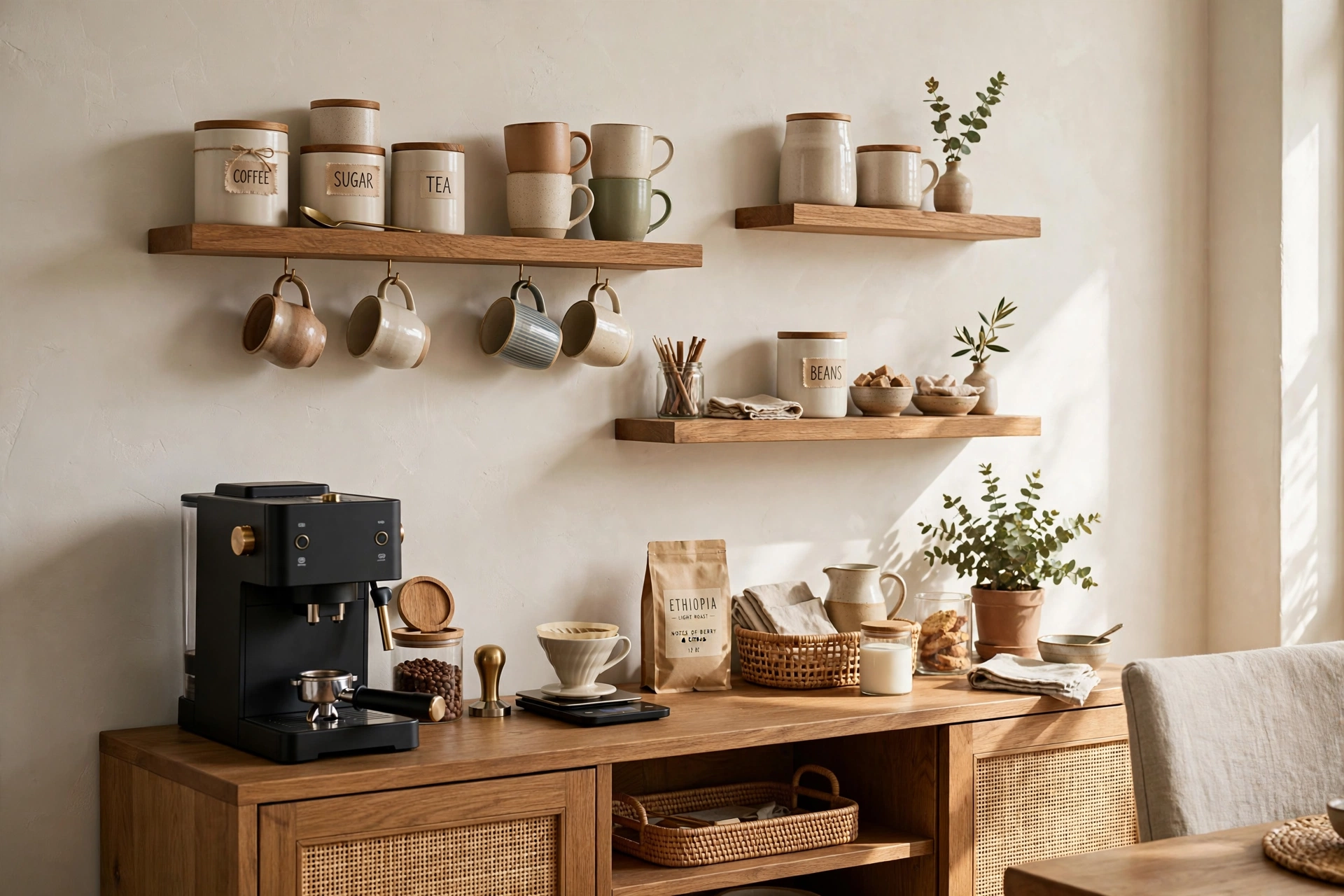
In a tiny kitchen, think vertical: a wall-mounted shelf above the coffee maker holds mugs, canisters, and a small plant in 12 inches of wall space. A narrow rolling cart (12 to 15 inches wide) slides into the gap between the fridge and the counter. Even a sturdy tray on top of a microwave or mini-fridge can become a single-serve coffee station with a pod machine and a mug tree. Small spaces force editing, which usually produces better-styled stations than sprawling ones.
The Coffee Bar Styling Formula
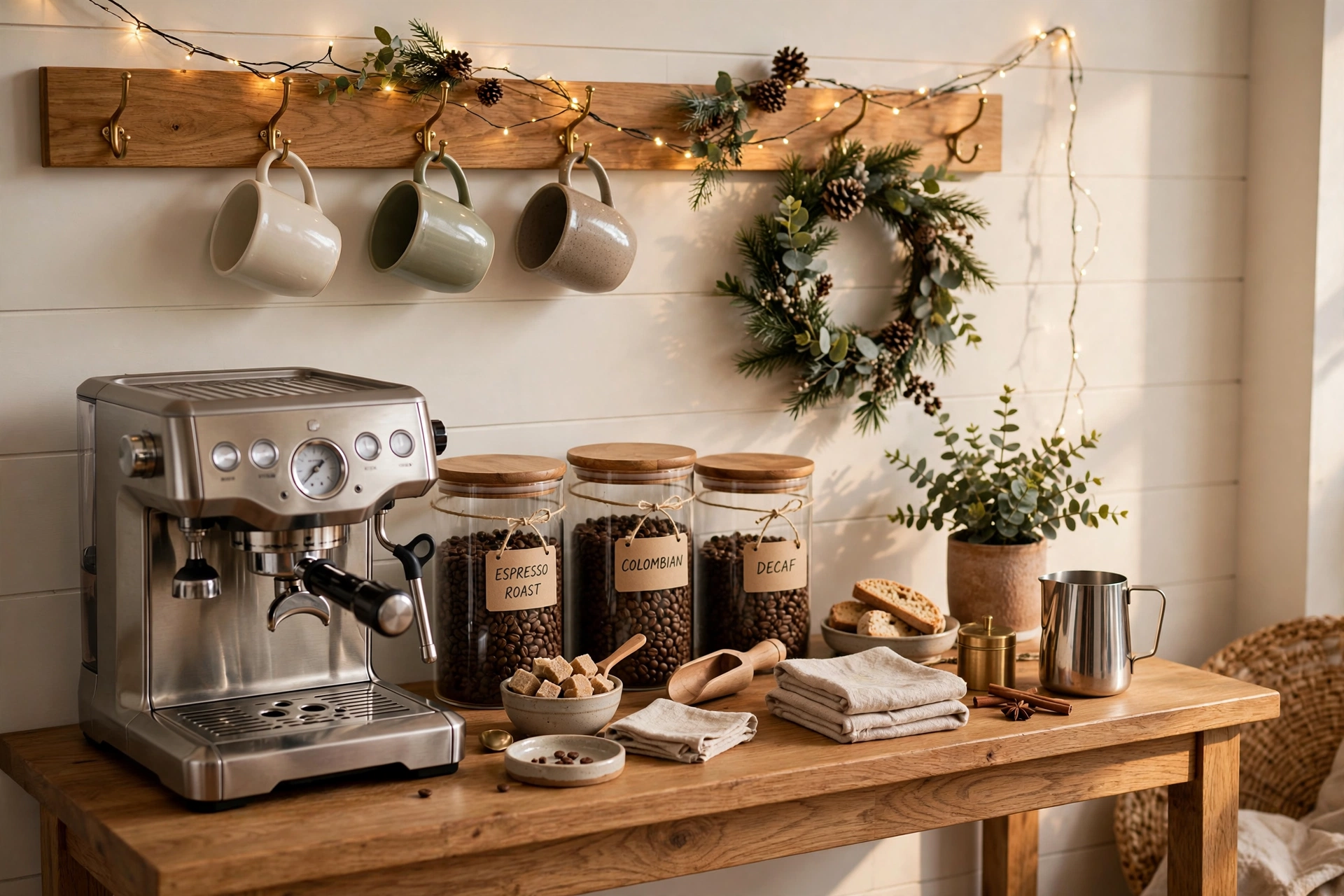
A coffee bar looks intentional when it follows a formula: anchor, brew, store, serve, decorate. Get these five layers right and any collection of coffee gear looks like a designed station.
1. Anchor: the tray or surface
Start with a large tray, wooden board, or marble slab that defines the station’s footprint. Everything sits on or within this boundary. A 20×14-inch tray handles a machine plus accessories; go bigger if you have the space. The tray contains visual chaos, protects the furniture underneath, and makes the whole station portable for cleaning. This single item is the difference between styled and scattered.
2. Brew: the machine and tools
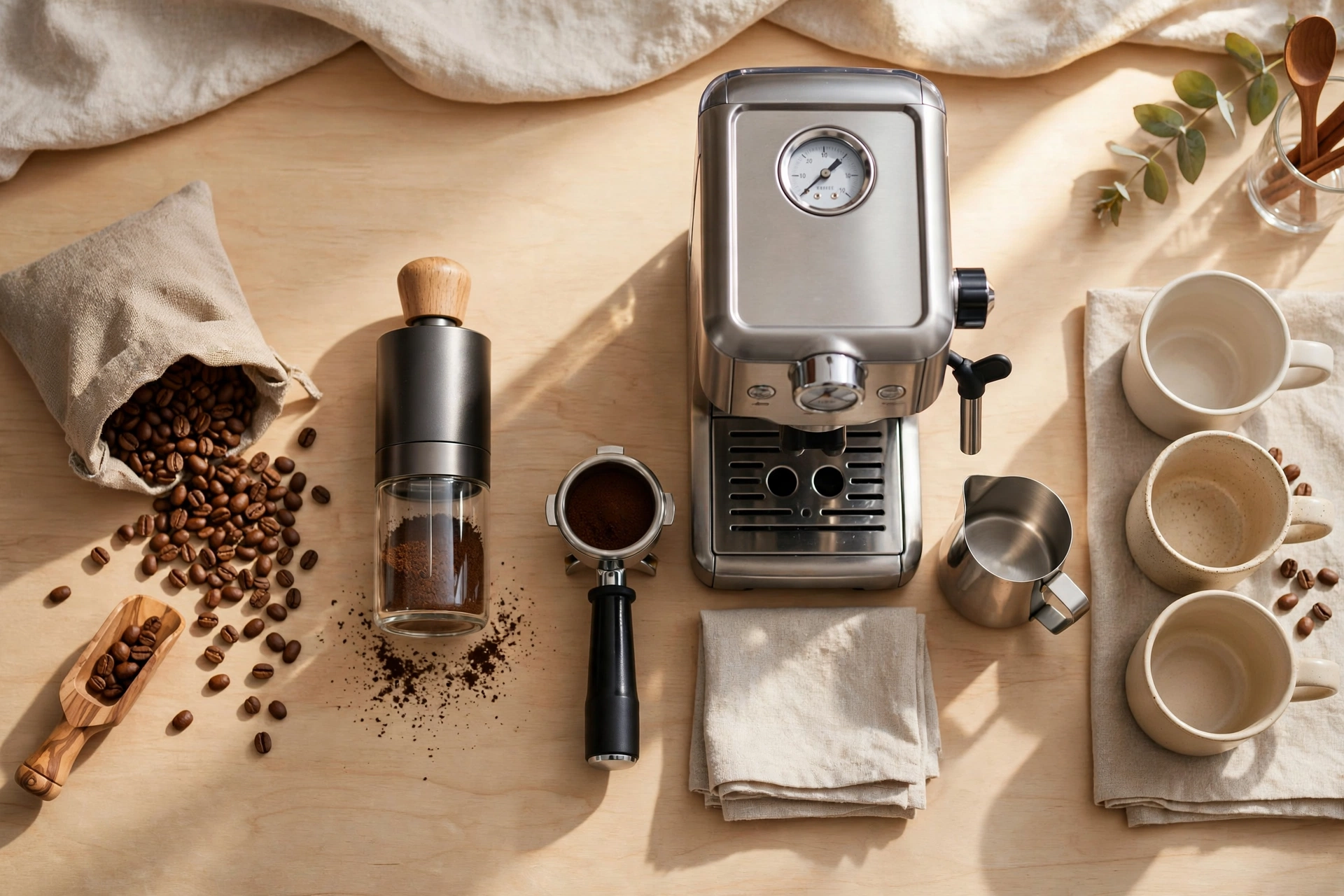
Place the coffee maker as the visual anchor, slightly off-center. Around it, arrange the tools you actually use: grinder, kettle, French press, or pour-over set. Keep daily tools on the tray and occasional tools in a cabinet; a crowded station gets annoying fast. Hide cords with a cord clip or by routing them behind the machine. If your machine is not pretty, that is fine; the styling around it does the work.
3. Store: canisters and organization
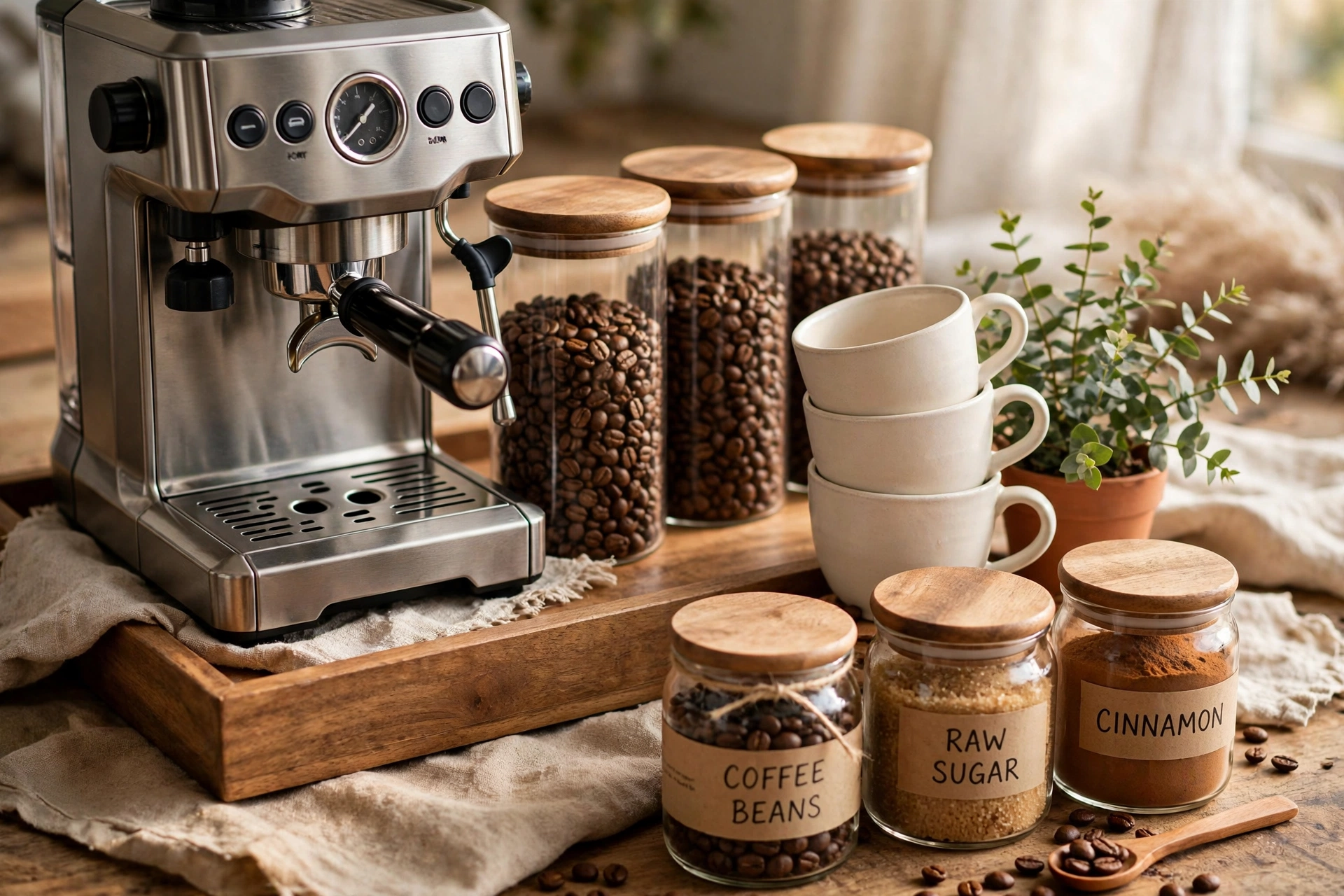
Decant coffee beans, sugar, and tea into matching or coordinated canisters; uniform containers are the fastest way to make a station look pulled together. Glass canisters show off the beans but let in light, so keep them in a shaded spot or use them for short-term supply. The National Coffee Association advises storing beans in airtight, opaque containers away from heat, light, and moisture, and keeping only a week or two of supply at the station while the rest stays sealed; their coffee storage guide has the full details. Label canisters with a label maker or chalk labels for the finished look.
4. Serve: mugs, cups, and accessories
Display four to six mugs on hooks, a mug tree, or a small shelf; more than that looks cluttered. Add small bowls or jars for sugar packets, stir sticks, and pods. A little creamer pitcher and a sugar bowl elevate the station from functional to hospitable. For holiday hosting, add a stack of festive mugs or disposable holiday cups so guests can grab and go without worrying about your good dishes.
5. Decorate: the finishing touches
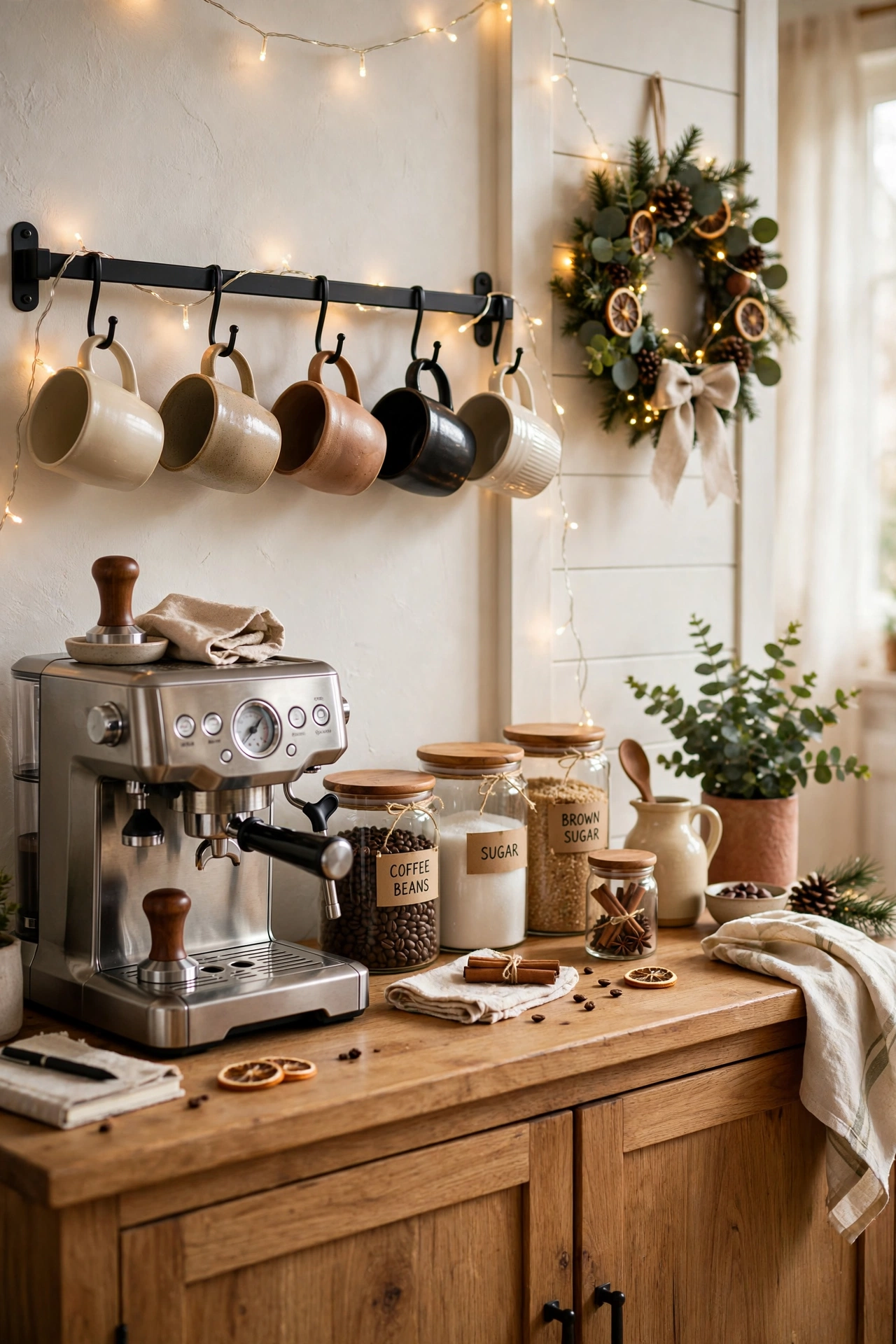
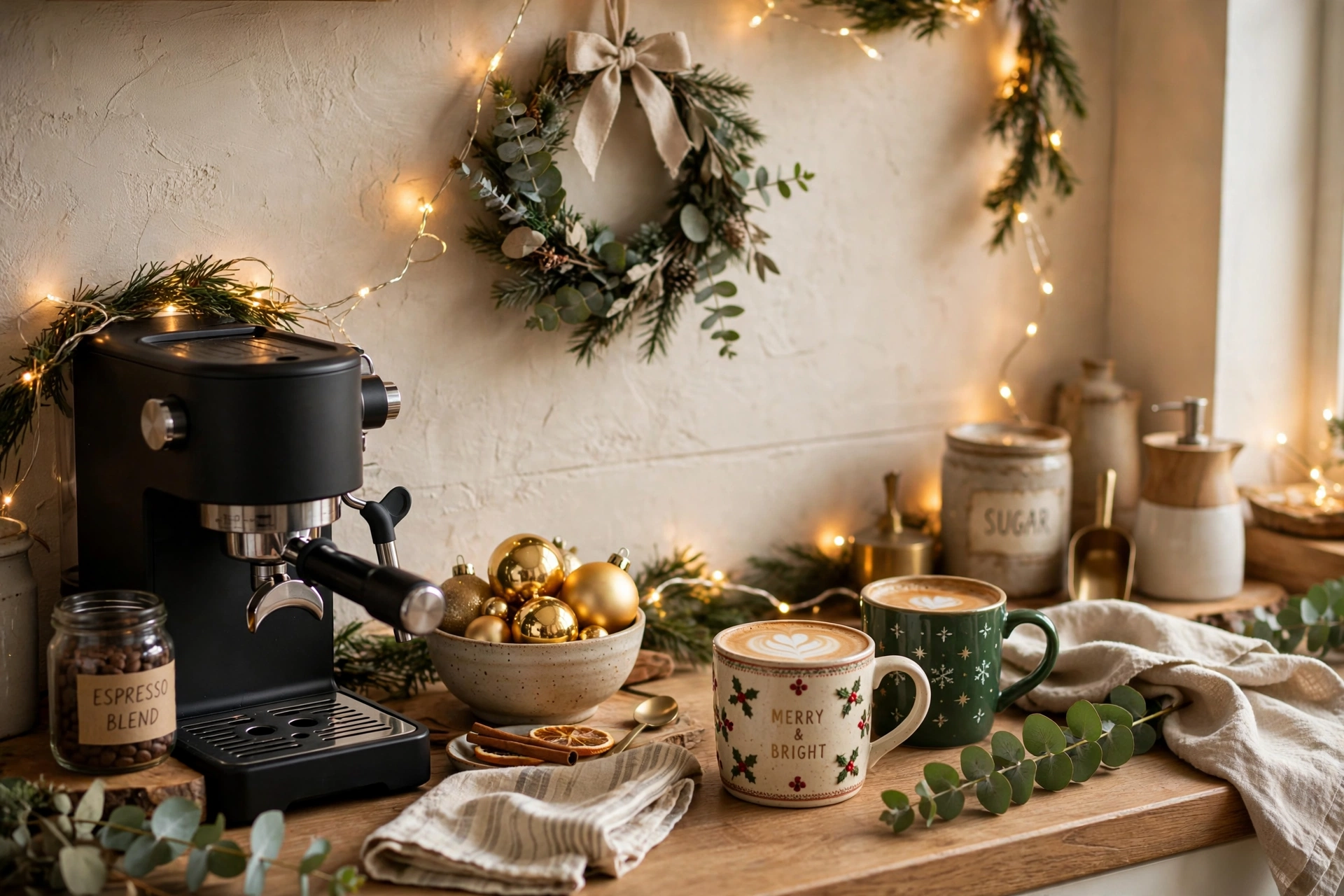
This is the layer that makes it a decor piece: a small plant or eucalyptus sprig, a framed print or letter board with a coffee quote, a candle, and seasonal touches. For Christmas, add a mini wreath on the wall above, a string of battery fairy lights, and a small bowl of ornaments. For New Year’s Eve, swap in metallic accents and a “cheers” sign. The decor layer should take up no more than 20 percent of the station; function first, always. A few well-chosen accessories make the station feel luxurious without much spending, a principle our luxury home decor guide applies to whole rooms.
Bar Cart Styling for Holiday Hosting
A bar cart styled for Christmas or New Year’s Eve is part decor, part hospitality. The formula is similar to the coffee bar but tuned for parties: beautiful bottles, good glassware, and everything guests need to serve themselves.
The holiday bar cart formula
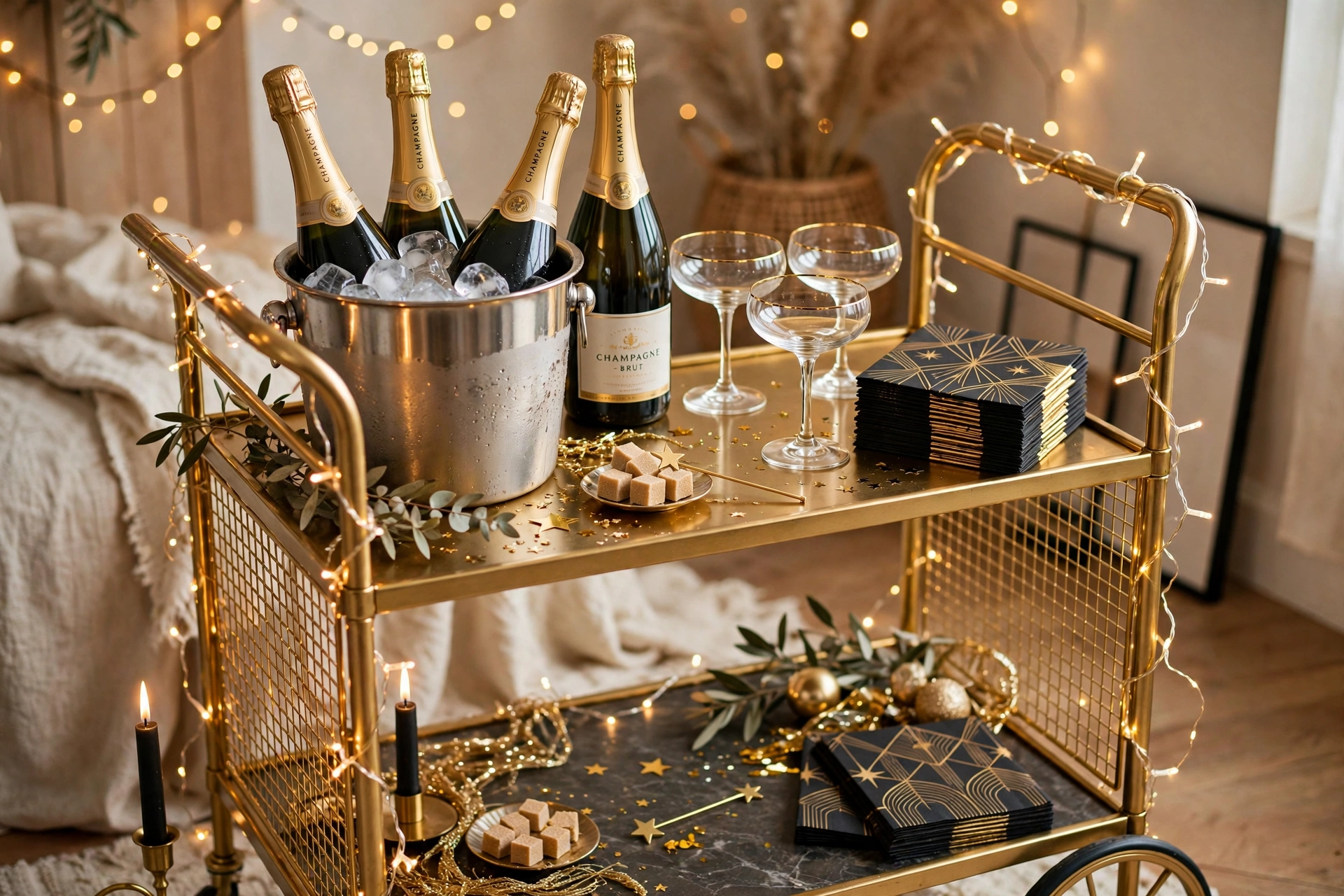
Top tier is for serving: two to three bottles (one spirit, one wine or champagne, one mixer), an ice bucket, and glassware. Middle tier holds backup bottles, extra glasses, and cocktail tools. Bottom tier is for decor and linens: cocktail napkins, a small plant or holiday arrangement, and a candle. Group bottles in odd numbers and vary their heights; a row of identical bottles looks like a store shelf. Add one decorative object per tier, like a small brass cocktail shaker, a bowl of limes, or a string of fairy lights woven around the cart’s frame.
Stocking the cart: what you actually need
For a holiday party of 10 to 15 guests, stock: one bottle of champagne or prosecco, one red and one white wine, one versatile spirit (vodka or bourbon), tonic and soda, one festive mixer (cranberry juice, pomegranate juice, or apple cider), ice (1.5 times what you think), and garnishes (citrus, berries, rosemary sprigs). Add a non-alcoholic option that feels special: sparkling cider, a festive punch, or flavored sparkling water with a garnish. Label nothing; instead, set out one recipe card for a signature cocktail so guests have a starting point. Restock from the kitchen as needed rather than overloading the cart.
Christmas vs. NYE cart styling
The Christmas cart leans cozy: deep greens, plaids, a small wreath on the cart handle, cinnamon sticks and dried orange slices as garnish, and warm candlelight. The NYE cart goes glam: metallics, a fringe garland on the wall behind it, black and gold napkins, and coupe glasses instead of tumblers. The switchover takes 20 minutes: swap the textiles, change the garnishes, trade the wreath for metallic accents. If you host both holidays, style the Christmas version first and plan the NYE refresh as part of your December 26 reset.
Trays, Signage, and the Details That Sell It
These are the small things guests notice and photograph. None costs more than a few dollars, and together they make a station feel professionally styled.
Trays: the hardest-working accessory
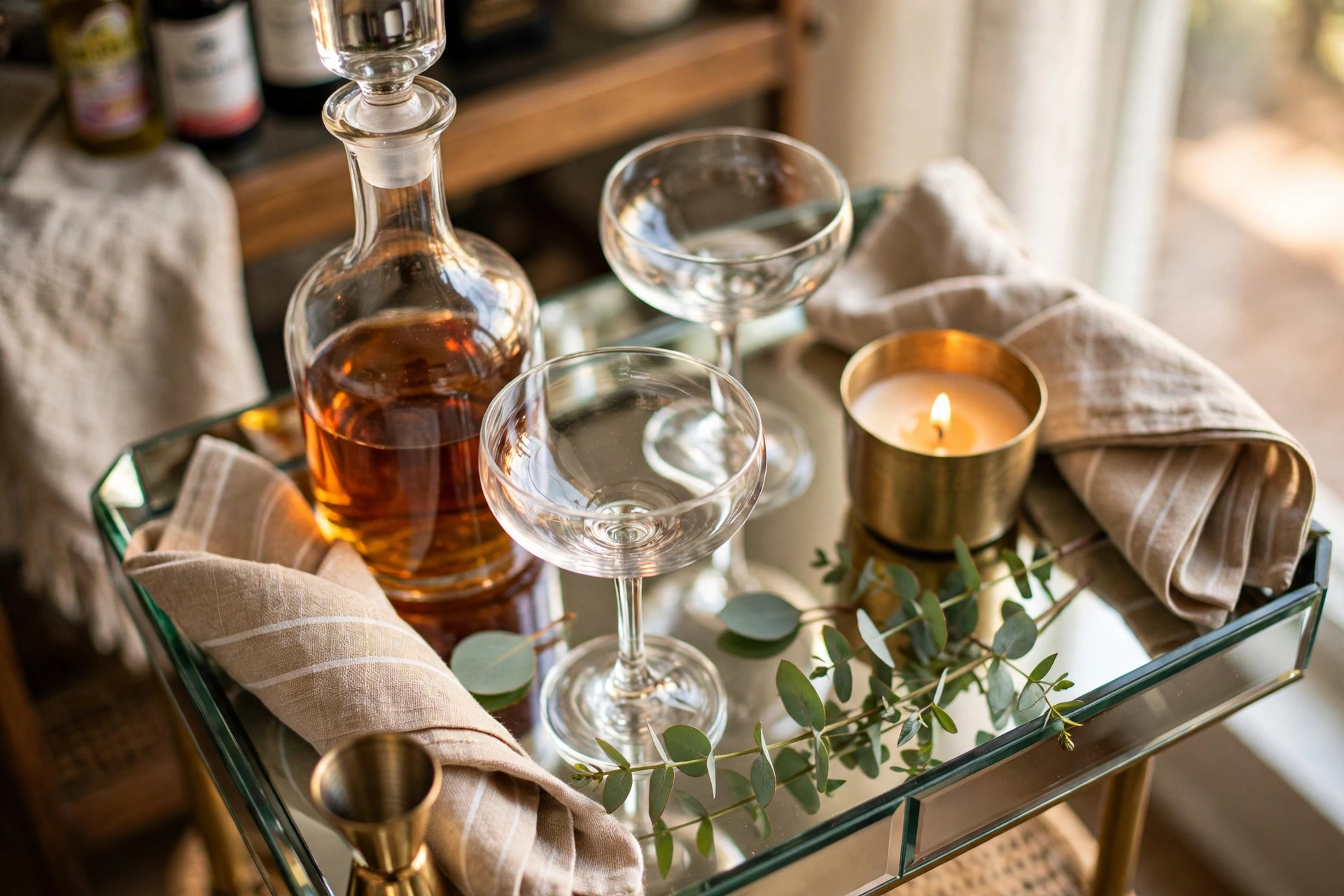
Every station needs at least one tray. Wood trays suit farmhouse and traditional styles; mirrored or metallic trays suit glam holiday styling; marble or stone trays suit modern minimalism. Size the tray to the station: it should hold the core items with a little breathing room. For bar carts, a small tray on the top tier corrals bottles and prevents sliding when the cart rolls. Keep a spare tray for party day; it becomes the serving tray for appetizers or the catch-all for used glasses.
Signage: menus, quotes, and labels
A small framed sign transforms a station from “stuff on a table” to “an experience.” Good sign ideas: a coffee menu (“Espresso, Latte, Pour Over, Tea”), a cocktail recipe card, a letter board with a seasonal quote, or chalkboard labels on canisters. Print signs at home on cardstock; a 5×7-inch frame costs $3 and looks custom. Change the sign seasonally for an instant refresh. Hand-lettering is charming if you have the skill; printing is fine if you do not. The sign’s job is to invite guests in: “Help yourself” is the most hospitable phrase in home entertaining.
Lighting the station
A drink station needs its own light source to glow after dark. Battery-operated fairy lights woven around the station, a small lamp on the console, or a cluster of tea lights all work. For holiday parties, this lighting is what makes the station a focal point instead of a dark corner. Keep lights warm white and away from anything flammable, and put them on a timer so the station lights itself before guests arrive.
Coffee Bar Ideas by Style
The formula is universal, but the look should match your home. Here are four style directions with the specific pieces that define each.
Modern minimalist
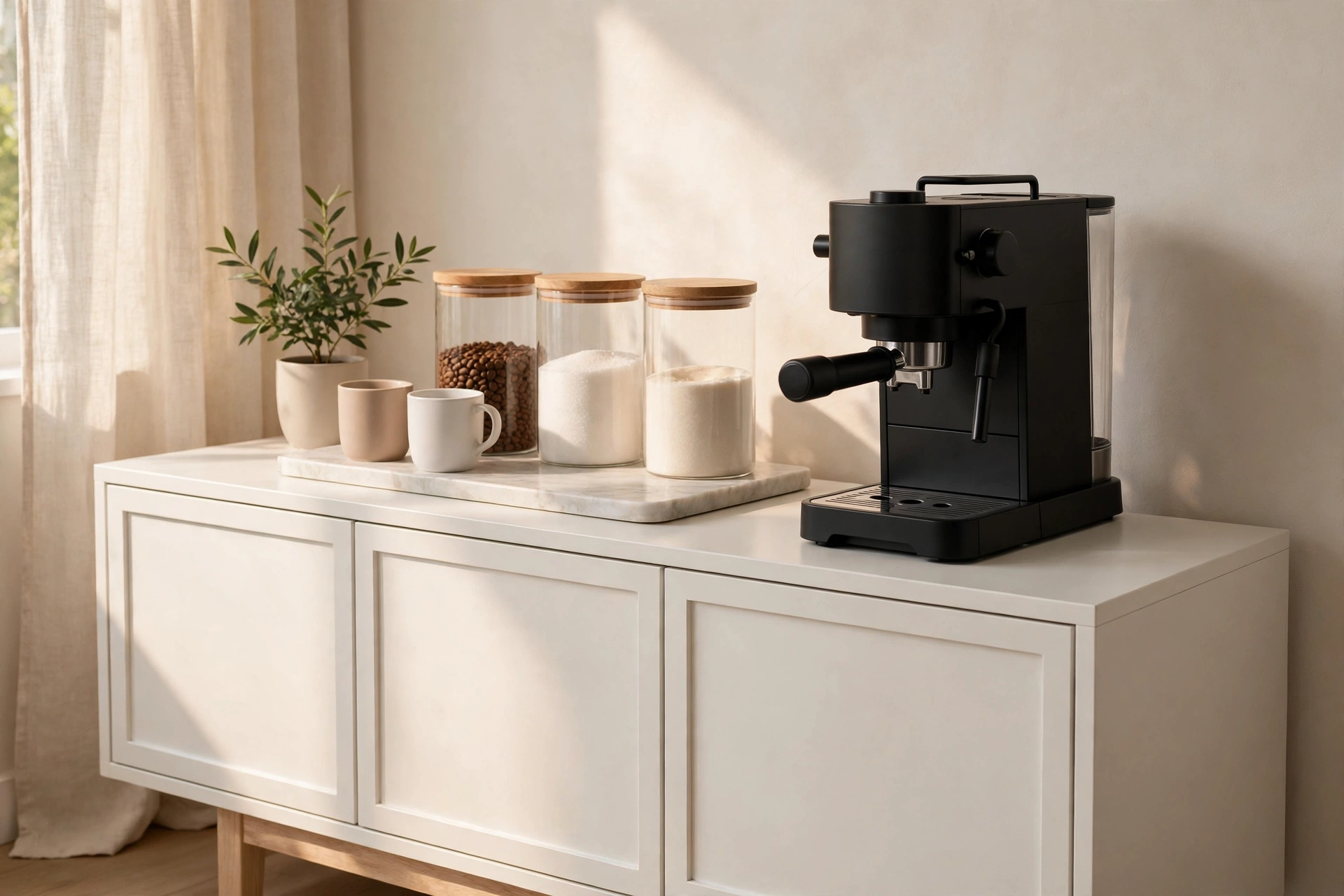
White or light-wood console, marble tray, matte black or white machine, glass canisters with minimal labels, two to four simple ceramic mugs. Decor: one small plant, one framed abstract print. No more. The palette stays to three tones max. This style suits contemporary kitchens and anyone who finds visual clutter stressful.
Farmhouse and rustic
Distressed wood console or repurposed sideboard, galvanized or wooden tray, mason jar canisters, a wire mug rack, enamel mugs. Decor: a small chalkboard sign, dried lavender bundle, a gingham or grain-sack runner under the tray. Warm, gathered, and forgiving of imperfections, which makes it the easiest style to thrift.
Glam and luxe
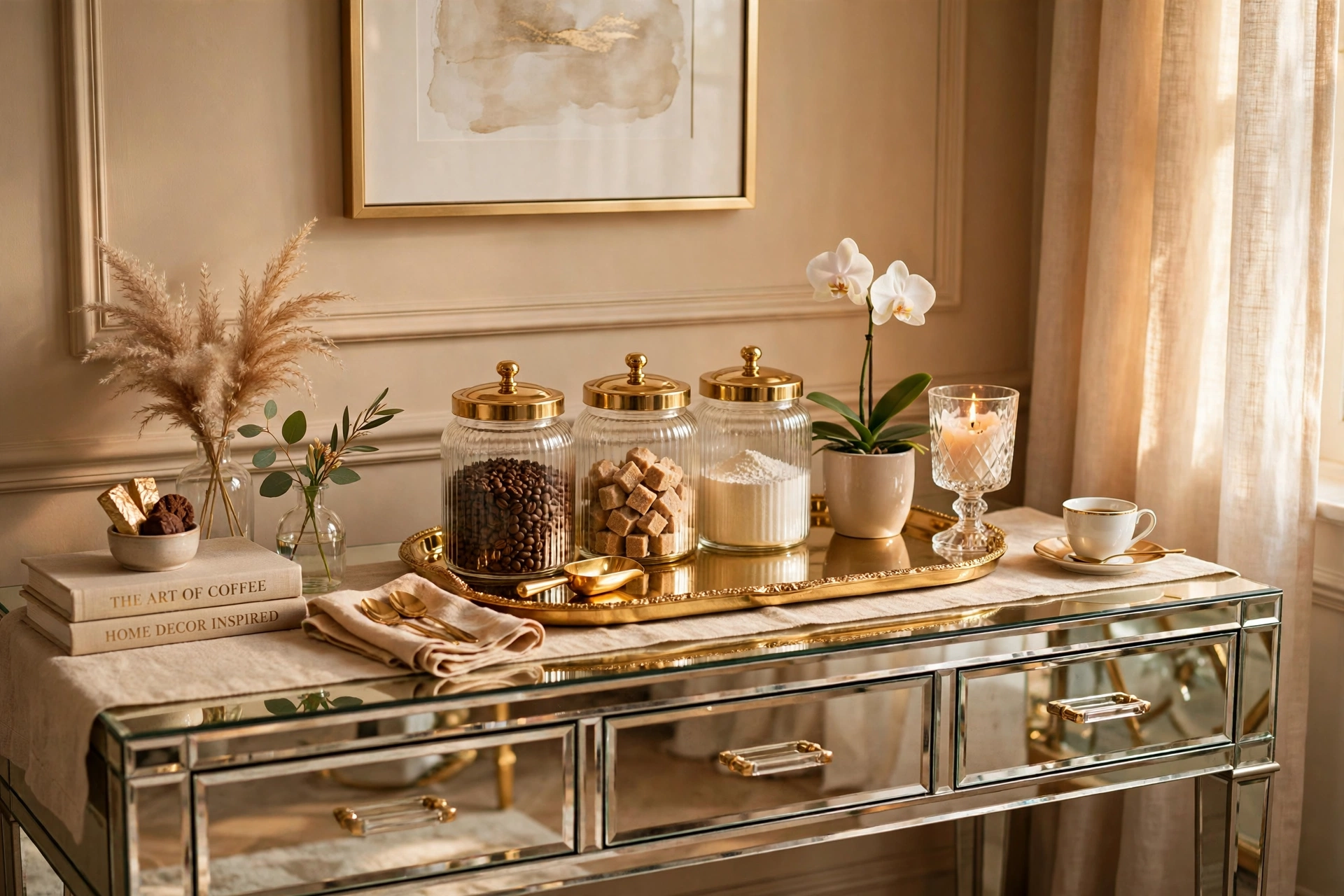
Mirrored or lacquered console, metallic gold tray, glass canisters with gold lids, coupe-style coffee glasses or gold-rimmed mugs. Decor: a small orchid, a crystal candle holder, a framed fashion print. This is the style that borrows most from our luxury home decor principles: reflective surfaces, a tight palette, and one fresh floral element. It is also the natural base for holiday glam; add metallic Christmas decor and you are party-ready.
Cozy traditional
Dark wood sideboard, wooden or brass tray, ceramic canisters in cream or sage, a mix of collected mugs with stories. Decor: a framed family photo, a beeswax candle, a small stack of coffee-table books. This style embraces patina and personality; the “collected over time” look is the whole point, so mismatched pieces are a feature, not a flaw.
Holiday Hosting: The Drink Station Game Plan
A drink station earns its keep at parties. Here is how to plan it for Christmas dinner, NYE, and everything between.
The Christmas morning coffee bar
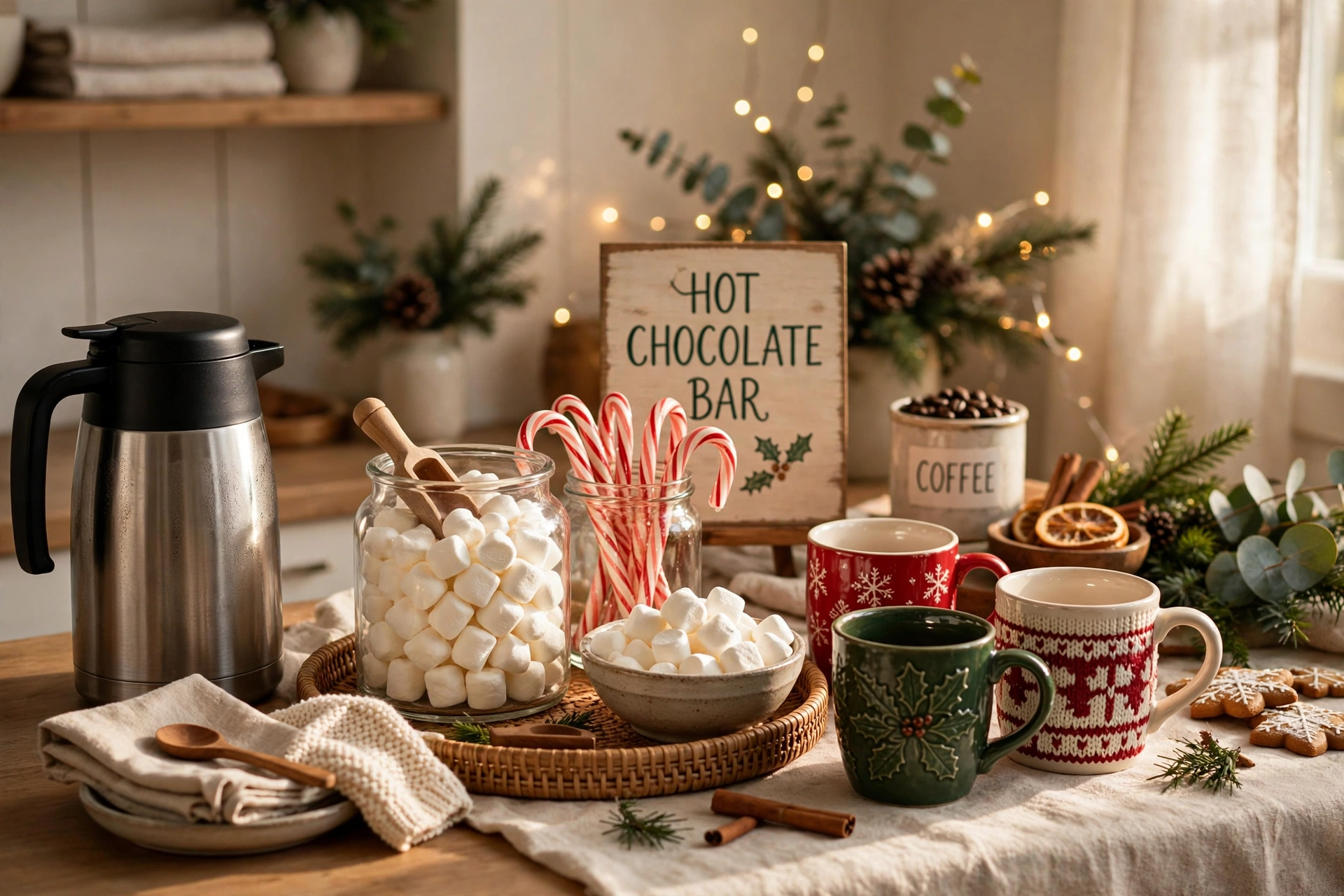
Christmas morning deserves a special setup: set out the coffee bar the night before with festive mugs, a carafe of pre-brewed coffee on a warmer or in a thermal carafe, hot chocolate fixings (cocoa, marshmallows, candy canes for stirring), and a plate of pastries. Add a small sign that says “Merry Christmas” and let the family serve themselves while presents are opened. It takes 15 minutes on Christmas Eve and makes the morning feel magical with almost no Christmas-day effort.
The NYE self-serve bar
For New Year’s Eve, the bar cart or drink table should be fully self-serve from 9 p.m. on: champagne on ice, the signature cocktail in a dispenser with a recipe card, a mocktail option, and all glassware and garnishes laid out. Do a trial run of the signature cocktail the week before so you know the ratios. At 11:30, refresh the ice, wipe down the station, and set out fresh glasses for the midnight toast. Assign the midnight champagne duty to one reliable friend so you can enjoy the countdown.
Thanksgiving and dinner-party drinks
For sit-down dinners, the drink station plays a supporting role: a small setup with water, wine, and coffee for after dinner. Set it on the sideboard so it does not compete with the table. Offer coffee and tea with dessert; a simple setup of a carafe, mugs, cream, and sugar takes five minutes and feels like restaurant service. Guests remember the coffee after a great meal almost as much as the meal itself.
Budget Breakdowns: Three Stations at Three Prices
Drink stations work at every budget. Here is what each tier looks like.
The $50 starter station
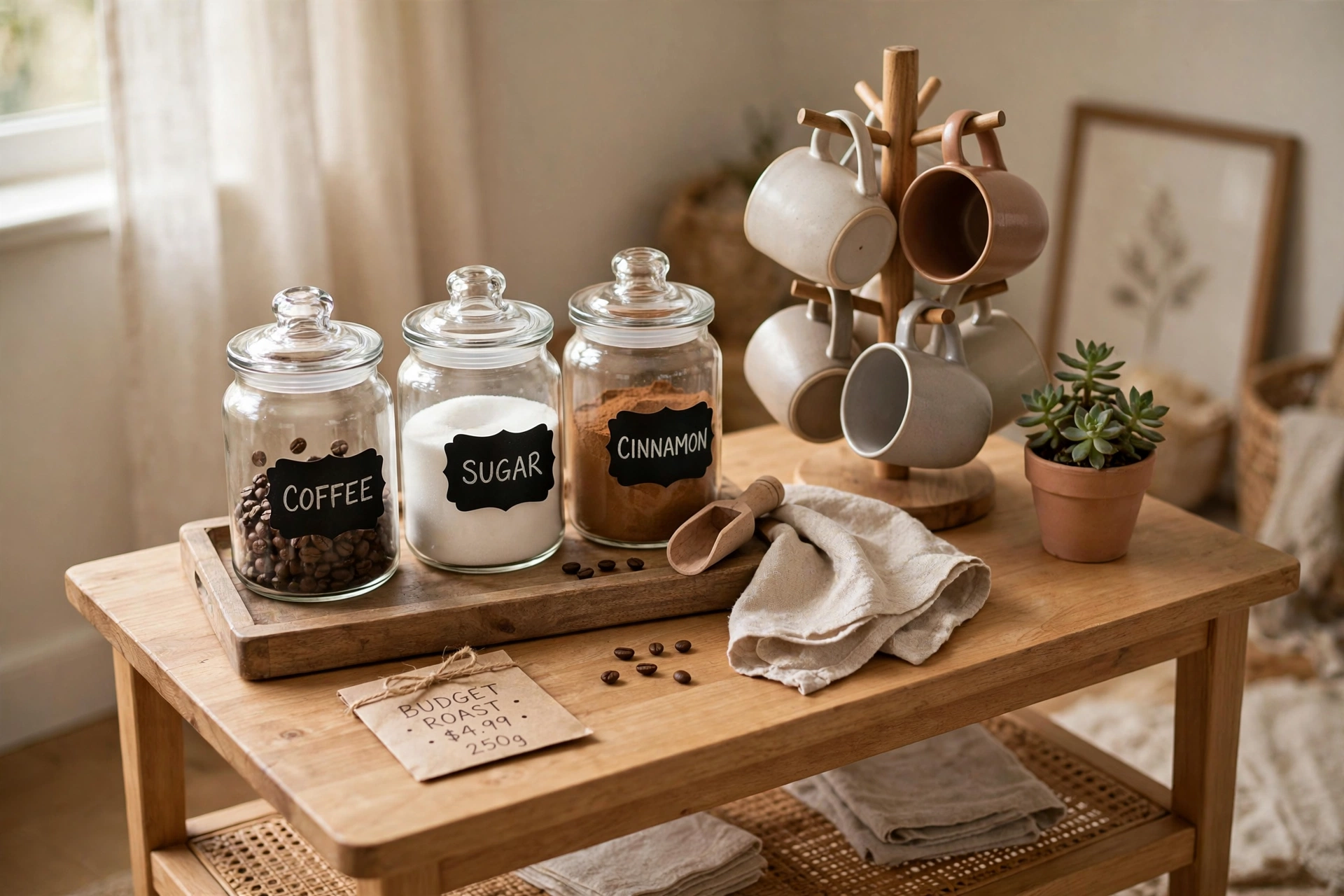
Use furniture you own. Buy: a large wooden tray ($15), two glass canisters ($12), a mug tree or hooks ($10), chalk labels ($5), and a small plant ($8). Total: $50. Style with items from around the house for decor. This setup looks genuinely designed and handles daily coffee beautifully. It is also proof that the formula matters more than the spending.
The $150 dressed-up station
Add to the starter: a dedicated console or small sideboard from a thrift store ($60 to $80), a framed print and letter board ($15), a better tray or marble slab ($20), and holiday decor touches ($15). Total: around $150. This is the sweet spot for most homes: substantial furniture, layered styling, and seasonal flexibility. Shop secondhand for the furniture; consoles are among the easiest quality finds at thrift stores.
The $300 statement station
The full vision: a new console or quality vintage piece ($150), a good espresso machine if you do not have one (the biggest single cost, and optional), coordinated canister sets ($30), proper bar tools ($25), art and lighting ($40), and seasonal decor ($20). This is a furniture-grade installation that anchors a room. Even here, the styling principles are the same; the money buys better materials and presence, not a different formula. For more on stretching a decor budget, our budget-friendly home decor guide covers the prioritization mindset that makes any budget work harder.
Keeping It Functional: Organization and Maintenance
A beautiful station that is annoying to use will be abandoned by February. Design for the daily routine, not just the photo.
Design around your morning routine
Arrange the station in the order you use it: beans and grinder, then machine, then mugs, then cream and sugar. Everything within one pivot step. Keep daily items at the front and occasional items (the French press you use monthly, the holiday mugs) stored below or behind. If making coffee requires moving three things, the layout is wrong. Watch yourself make coffee once and rearrange accordingly; five minutes of observation beats any diagram. Small frictions compound daily, so this is worth getting right.
Cleaning and restocking rhythm
Wipe down the station weekly: the tray, the machine exterior, and the canister lids collect coffee dust and drips. Descale the coffee maker monthly (or follow the manufacturer’s schedule); scale buildup is the number one killer of coffee flavor at home. Restock beans, filters, and sugar before they run out, not after; an empty station is a sad station. Every season, do a deeper reset: wash all canisters, replace stale beans, update the decor layer, and re-evaluate what is earning its space.
When the station stops working
Signs it is time to restyle: items migrate off the tray, you avoid using it, or it has become a catch-all for mail and keys. The fix is usually subtraction, not addition: remove everything, clean the surface, and put back only what you use weekly. Restyle the decor layer with one new seasonal touch. A station that is edited ruthlessly stays joyful; a station that accumulates becomes clutter with a tray.
DIY Touches and Personalization
A few handmade or personalized details make the station feel like yours rather than a catalog page.
Easy DIY projects
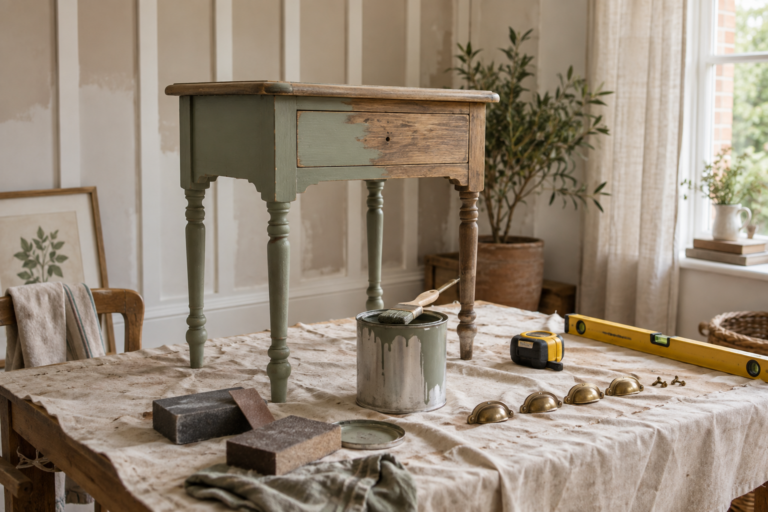
Paint a thrifted tray in your accent color, stencil a coffee quote on a wooden sign, or make chalkboard labels for canisters from adhesive chalkboard paper. A simple floating shelf above the station (a $15 pine board with brackets) adds mug storage and display space in an afternoon. These are beginner-friendly projects; our DIY home decor ideas guide has step-by-step versions of several station-friendly builds, including shelf installation and tray refinishing.
Personal touches that matter
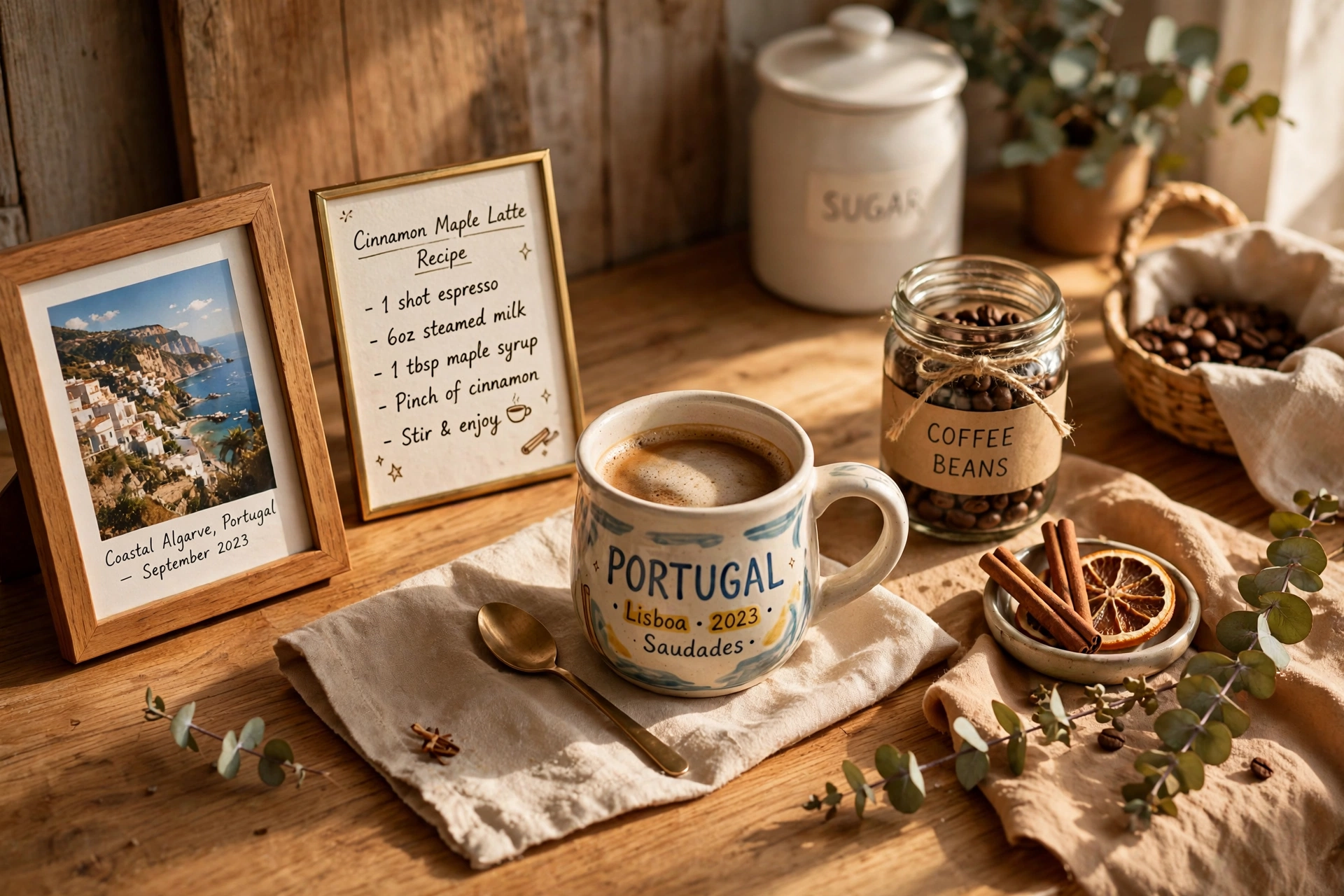
Frame a photo from a favorite coffee trip, display a mug from a meaningful place, or use a family heirloom creamer. These personal objects are what make guests ask about the station and what make it feel like home rather than a showroom. One or two personal items are perfect; ten becomes a shrine. Curate the sentiment like you curate everything else.
Frequently Asked Questions
1. What do I need for a basic home coffee bar?
Five things: a tray or defined surface, your coffee maker, airtight canisters for beans and sugar, four to six mugs, and one decorative touch like a plant or framed print. That is a complete, good-looking station. Everything beyond that (grinder, specialty brewers, extensive mug collections) is an upgrade, not a requirement. Start simple and add only what your routine actually uses. Most people find that the five-piece setup serves them happily for months before they feel the urge to add anything, which is a sign the formula works.
2. Where is the best place to put a coffee bar?
Near water and near where you drink your coffee: a kitchen counter corner, a dining room console, or a living room sideboard all work. Avoid placing it far from the sink, since you will carry water and rinse things daily. For parties, a rolling bar cart can move to wherever guests gather. The best location is the one you will actually use every morning without thinking about it.
3. How do I style a bar cart for Christmas?
Lean cozy: deep green and gold tones, a mini wreath on the cart handle, cinnamon sticks and dried orange slices as garnishes, warm fairy lights woven around the frame, and plaid or linen cocktail napkins. Stock it with wine, a festive spirit, and a holiday mixer like cranberry juice or apple cider. Keep the top tier for serving and the lower tiers for backup bottles and decor.
4. How do I style a bar cart for New Year’s Eve?
Go glam: black and gold or silver and white palette, metallic cocktail napkins, coupe glasses, a champagne bucket as the centerpiece, and fairy lights or a small fringe garland behind the cart. Stock champagne or prosecco, one signature cocktail in a dispenser with a recipe card, and a festive mocktail. Refresh ice and glassware at 11:30 for the midnight toast.
5. Can I make a coffee bar in a small apartment?
Yes. Use vertical space: a wall-mounted shelf above the coffee maker for mugs and canisters, a narrow rolling cart that slides into a gap, or a tray on an existing surface to define the station. A single-serve machine plus a mug tree on a 12-inch-deep shelf is a complete station. Small spaces actually style well because they force you to keep only the essentials.
6. How should I store coffee beans at the coffee bar?
Keep a week or two of beans in an airtight, opaque canister at the station, away from heat and sunlight. Store the bulk supply sealed in a cool, dark cabinet. Do not store beans in the refrigerator; they absorb moisture and odors. The National Coffee Association’s storage guidance emphasizes airtight, opaque containers at room temperature as the ideal, which is worth following since bean freshness is the biggest variable in cup quality.
7. What is the difference between a coffee bar and a bar cart?
A coffee bar is stationary and built around daily coffee and tea rituals; a bar cart is mobile and built around entertaining with spirits and cocktails. Coffee bars live on consoles, sideboards, or counters; bar carts roll to the party. Many homes have both, and the styling principles (tray anchor, layered heights, one decorative layer) apply to each.
8. How much does it cost to set up a coffee bar?
A good-looking starter station costs about $50 using furniture you own: a tray, canisters, mug storage, labels, and a plant. A dressed-up version with thrifted furniture and layered decor runs about $150. A full statement installation with new furniture runs $200 to $300 plus the coffee machine if you need one. The styling formula matters more than the budget at every tier. If funds are tight, start with just the tray and canisters; those two purchases alone create 80 percent of the styled look.
9. How do I keep a drink station from looking cluttered?
Follow three rules: everything sits on the tray or within the defined footprint, daily-use items only on display (occasional items stored below), and the decor layer stays under 20 percent of the station. Decant into matching canisters, limit mugs to four to six on display, and do a weekly five-minute tidy. When in doubt, remove one item; negative space is what makes the rest look intentional.
10. What should I put on a holiday drink station for non-drinkers?
Make the non-alcoholic option feel just as special: a festive punch in a dispenser, sparkling cider in a champagne bucket, flavored sparkling waters with garnishes, or a hot chocolate bar with toppings. Serve it in the same nice glassware as the cocktails and garnish it properly. Nobody should feel like an afterthought, and a beautiful mocktail station often gets as much traffic as the bar. Label it clearly with a pretty sign so guests know it is for them, not just a backup option.