
Plant Care Basics: A Beginner’s Guide to Keeping Plants Healthy and Thriving
Almost everyone who says they “kill every plant they touch” has made the same few mistakes. A fern tucked into a dim corner. A succulent watered every day out of kindness. A tomato seedling planted into cold, soggy ground in early spring. None of these failures had anything to do with a lack of talent….
Almost everyone who says they “kill every plant they touch” has made the same few mistakes. A fern tucked into a dim corner. A succulent watered every day out of kindness. A tomato seedling planted into cold, soggy ground in early spring. None of these failures had anything to do with a lack of talent. They came from not yet knowing what the plant actually needed.
That’s the good news about learning to grow plants. Every plant, from a pothos on a bookshelf to a row of beans in the garden, depends on the same small set of basics: light, water, air, nutrients, and the right temperature. Once you understand how those work and how to read the signals a plant sends when something’s off, most of the guesswork disappears.
This guide covers those fundamentals for both houseplants and outdoor plants. It explains what plants need and why, how to get light and watering right, how soil, containers, and fertilizer fit in, which plants are easiest to start with, and how to spot and fix the most common problems before they become serious.
What Every Plant Needs to Grow
Plants make their own food through photosynthesis. Their leaves capture energy from light and use it to combine carbon dioxide from the air with water drawn up through the roots, producing sugars that fuel growth. Oxygen is released as a byproduct. Nearly everything about caring for a plant comes back to supporting that process.
What Do Plants Need to Grow?
Plants need six basic things to grow: light for photosynthesis, water, air (including oxygen around the roots), nutrients from soil or fertilizer, a suitable temperature range, and a growing medium that anchors their roots. Many tropical houseplants also need moderate humidity. When one of these is missing or out of balance, growth slows and problems appear.
Each need works alongside the others:
- Light is the plant’s energy source. Without enough of it, a plant can’t make the food it needs, no matter how well it’s watered or fed.
- Water carries nutrients from the roots to the leaves, keeps cells firm, and is a raw ingredient in photosynthesis.
- Air matters above and below ground. Leaves need carbon dioxide, and roots need oxygen, which is why waterlogged soil suffocates them.
- Nutrients such as nitrogen, phosphorus, and potassium build leaves, roots, flowers, and fruit.
- Temperature controls how fast a plant grows. Every plant has a comfortable range, and extremes of heat or cold cause stress or damage.
- A growing medium, whether garden soil or potting mix, holds roots in place and stores water, air, and nutrients around them.
Why “Right Plant, Right Place” Matters
The single most useful principle in plant care is to match the plant to the conditions you can offer, rather than trying to change the conditions to suit the plant. A sun-loving herb will always struggle on a shady windowsill, and a shade-loving fern will scorch in a hot, south-facing bed. Choosing plants suited to your light, climate, and routine prevents far more problems than any amount of extra care.
Light: Getting the Most Important Factor Right
Light is the factor beginners most often underestimate, especially indoors. A room that looks bright to human eyes may offer only a fraction of the light a plant needs, and light intensity drops sharply with every foot of distance from a window.
How Much Light Do Plants Need?
It depends on the plant. Outdoors, “full sun” plants need at least six hours of direct sun daily, “part shade” plants need about three to six hours, and “shade” plants need fewer than three. Indoors, most common houseplants grow best in bright, indirect light near a window, while low-light plants tolerate dimmer rooms but still need some natural or artificial light.
Always check the plant label or a reliable plant description for its light needs, and use that as your starting point.
Understanding Indoor Light
Indoor light is usually described in four categories:
- Bright direct light: sun falls directly on the plant for several hours a day, typically in or right beside a window facing the sun. Cacti, many succulents, and herbs like rosemary enjoy this.
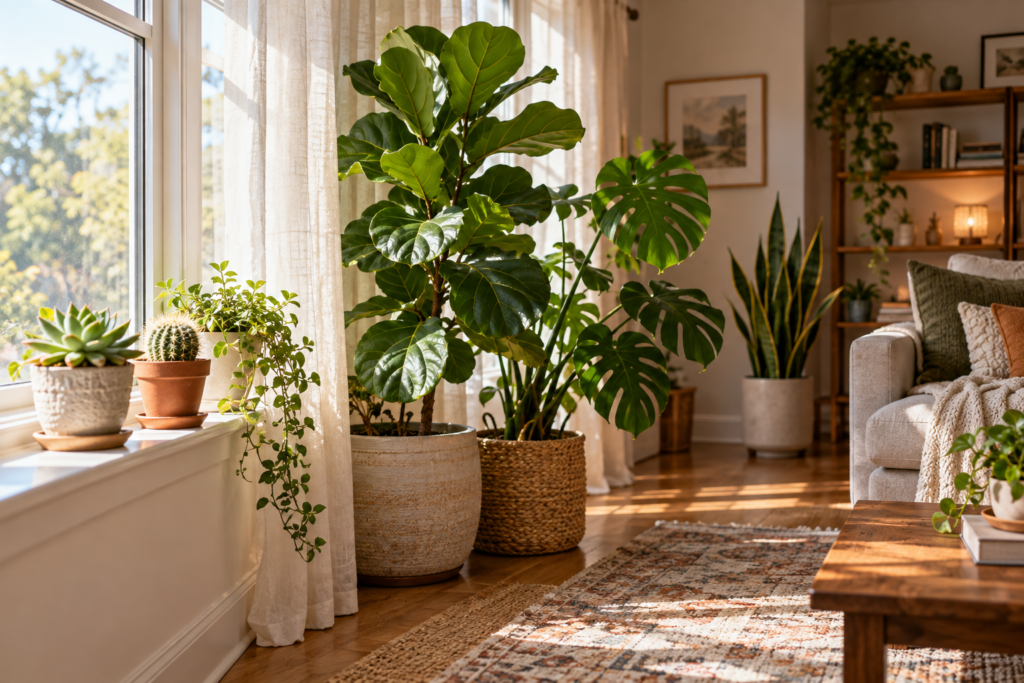
- Bright indirect light: a bright spot near a window where the sun doesn’t hit the leaves directly for long, or is filtered through a sheer curtain. Most tropical houseplants thrive here.
- Medium light: a few feet back from a bright window, or near a window with limited sun.
- Low light: far from windows or in rooms with small or shaded windows. Only tolerant plants cope here, and they grow slowly.
Window direction makes a big difference. In the Northern Hemisphere, south-facing windows get the most sun, west-facing windows get strong, hot afternoon sun, east-facing windows get gentle morning light, and north-facing windows get the least direct light. The pattern is reversed in the Southern Hemisphere.
Reading Light Problems
Plants show clearly when light isn’t right.
Too little light causes long, stretched stems with wide gaps between leaves (called legginess), plants leaning strongly toward the window, smaller new leaves, poor or no flowering, and variegated leaves fading to plain green.
Too much light causes bleached, pale, or yellowed patches, brown crispy scorch marks, and leaves that curl or droop in the heat of the day.
Rotating houseplants a quarter turn every week or two helps them grow evenly rather than leaning toward the light.
Grow Lights
Where natural light is limited, grow lights make a real difference. Full-spectrum LED grow lights are energy-efficient and widely available as bulbs, bars, and panels. Place them close enough to the plants to provide useful light, following the manufacturer’s guidance, and run them on a timer for a consistent daily schedule. Seedlings and herbs in particular benefit from grow lights during winter.
Watering Without Overwatering
More houseplants die from overwatering than from underwatering. It’s an understandable mistake: when a plant looks unwell, the instinct is to water it. But roots need air as well as water, and soil that stays constantly soggy suffocates them, leading to root rot.
How Often Should You Water Plants?
There’s no single schedule. Water most plants when the top inch (2.5 cm) of soil feels dry, then water thoroughly until it drains from the bottom of the pot. Depending on the plant, pot, light, and season, that might mean every few days in summer or every two to three weeks in winter. Succulents and cacti need the soil to dry out more fully between waterings.
Watering by the calendar is the root of most problems, because a plant’s needs change constantly. Plants in bright light, warm rooms, small pots, or terracotta dry out faster. Plants in dim light, cool rooms, large pots, or plastic containers dry out more slowly. In winter, many houseplants grow little and need much less water.
How to Check Whether a Plant Needs Water
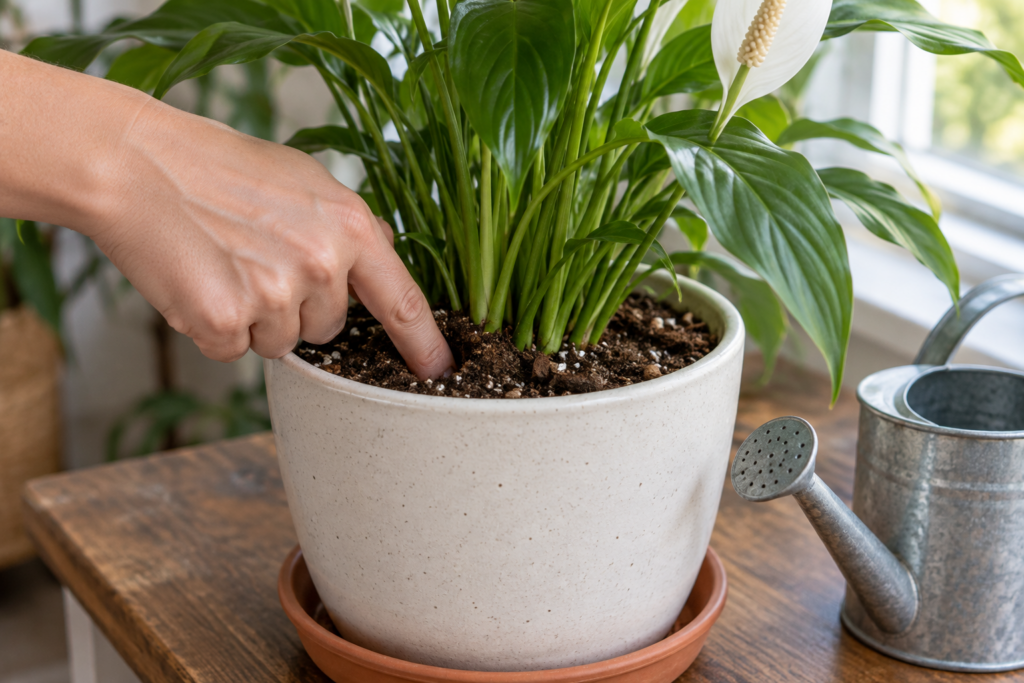
- The finger test: push a finger into the soil up to the first knuckle. If it’s dry at that depth, water; if it’s damp, wait.
- The weight test: lift the pot. A freshly watered pot feels noticeably heavier than a dry one.
- Visual cues: soil pulling away from the sides of the pot often means it’s very dry. Slight wilting can also signal thirst, though wilting can mean overwatering too.
How to Water Properly
When you water, water thoroughly. Pour slowly over the whole soil surface until water runs out of the drainage holes. This makes sure the entire root ball is moistened and flushes out mineral buildup. Then empty any water left in the saucer after about 15–30 minutes, since pots sitting in water stay soggy at the bottom.
Bottom watering is another option for many houseplants: set the pot in a tray of water for 15–30 minutes and let the soil soak up moisture from below, then drain.
Use room-temperature water indoors, since cold water can shock the roots of tropical plants. Some plants, such as calatheas, dracaenas, and spider plants, can develop brown leaf tips from minerals in tap water. Letting tap water stand overnight or using rainwater or filtered water can help these sensitive plants.
Watering Outdoor Plants
Garden plants generally need about 1 inch (2.5 cm) of water per week from rain or watering, more in hot, dry, or windy weather. Water deeply and less often rather than little and often, which encourages roots to grow deep into the soil where moisture lasts longer. Water in the morning where possible, and aim at the base of the plant rather than the leaves to reduce fungal diseases. A layer of mulch helps soil hold moisture between waterings.
Signs of Overwatering vs Underwatering
These two problems can look similar, which confuses many beginners.
Overwatering signs: yellowing leaves, often starting with lower ones; soft, limp, or mushy stems; wilting even though the soil is wet; a sour or musty smell from the soil; fungus gnats around the pot; and brown, soft, rotting roots.
Underwatering signs: dry, crispy leaf edges or tips; wilting that recovers quickly after watering; soil that’s hard, dry, and pulling away from the pot; and lower leaves turning yellow and dropping.
The deciding factor is the soil. If the plant is wilting and the soil is wet, overwatering is the likely cause. If it’s wilting and the soil is dry, it simply needs water.
Soil, Containers, and Feeding
Soil or potting mix does more than hold roots in place. It stores water, air, and nutrients, and its structure decides how well roots can breathe and grow.
Garden Soil Basics
Garden soil is a mix of mineral particles, organic matter, water, air, and living organisms. The mineral part is made of three particle sizes:
- Sand has large particles, drains quickly, and holds few nutrients.
- Silt has medium particles and feels smooth.
- Clay has tiny particles, holds water and nutrients well, but drains slowly and compacts easily.
Loam, a balanced mix of all three with plenty of organic matter, is ideal for most plants. Whatever type of soil you have, adding compost each year improves it: it helps sandy soil hold water and nutrients, and helps clay soil drain and breathe.
Soil pH, a measure of acidity or alkalinity, also affects how well plants take up nutrients. Most garden plants grow best in slightly acidic to neutral soil, roughly pH 6.0 to 7.0. Some plants, like blueberries, azaleas, and camellias, need more acidic soil. An inexpensive soil test tells you your soil’s pH and nutrient levels.
Potting Mix for Containers
Plants in pots need potting mix, not garden soil. Garden soil compacts in containers, drains poorly, and can bring in pests and diseases. A good potting mix is light and airy, typically made from peat moss or coconut coir, bark, perlite, and compost. Special mixes exist for particular plants: gritty, fast-draining mixes for cacti and succulents, chunky bark mixes for orchids, and acidic mixes for acid-loving plants.
Why Drainage Holes Matter
Every pot needs drainage holes so excess water can escape. Without them, water collects at the bottom and roots rot. If you want to use a decorative pot without holes, plant in a plain pot with drainage and place it inside the decorative one, emptying any water that collects.
What Does NPK Mean on Fertilizer?
NPK stands for the three main plant nutrients: nitrogen (N), phosphorus (P), and potassium (K). Fertilizer labels show them as three numbers, such as 10-10-10, giving the percentage of each. Nitrogen supports leafy growth, phosphorus supports roots and flowering, and potassium supports overall health, disease resistance, and fruiting.
Choose fertilizer based on the plant. Balanced fertilizers, with similar numbers, suit most houseplants and general garden plants. Fertilizers higher in nitrogen suit leafy plants and lawns. Fertilizers higher in potassium, often sold for tomatoes, suit flowering and fruiting plants.
When and How to Feed
Plants need feeding mainly while they’re actively growing, typically spring and summer. Most houseplants benefit from a diluted liquid fertilizer every two to four weeks during the growing season, and little or none in winter when growth slows.
There are two main types of fertilizer. Liquid fertilizers are diluted in water and act quickly. Slow-release fertilizers, usually granules or pellets, release nutrients gradually over weeks or months.
More isn’t better. Overfeeding can burn roots, cause weak, floppy growth, and leave a white crust of mineral salts on the soil surface. Follow the label directions, and when in doubt, use a weaker dilution. Always water a dry plant before feeding it.
When to Repot
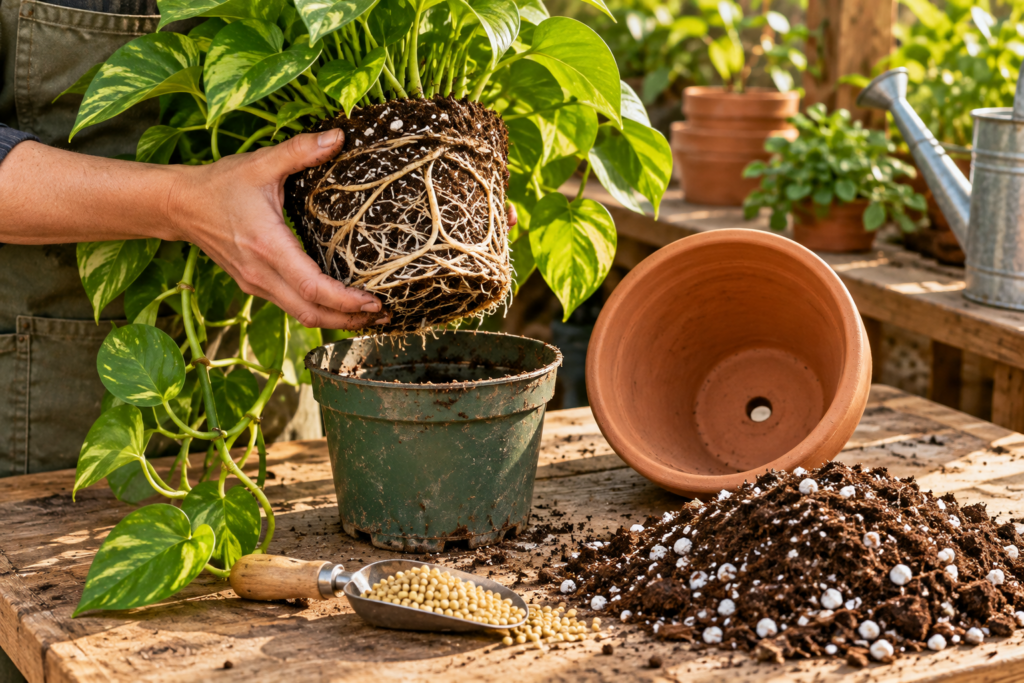
Houseplants eventually outgrow their pots. Signs a plant needs repotting include roots growing out of the drainage holes or circling the soil surface, water running straight through without soaking in, and a plant that dries out much faster than before. Repot in spring when possible, moving to a pot only about 1–2 inches (2.5–5 cm) wider than the old one. A pot much larger than the root ball holds excess wet soil that can lead to root rot.
Choosing Easy Plants and Getting Them Started
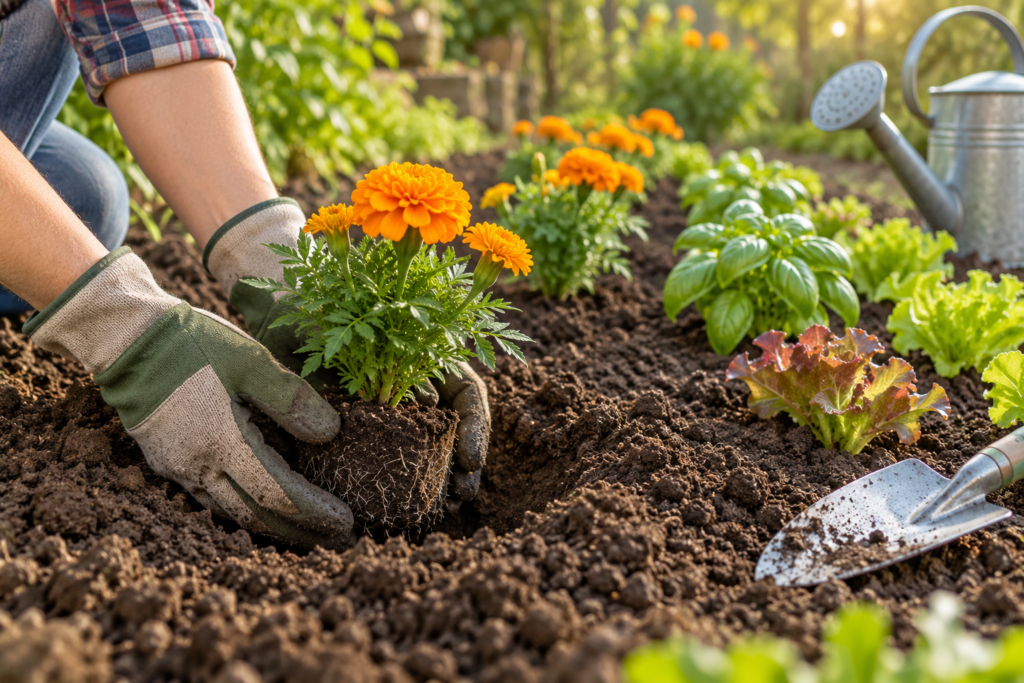
Starting with forgiving plants builds confidence and teaches the basics without constant disappointment.
Easy Houseplants for Beginners
These tolerate a range of conditions and forgive occasional mistakes:
- Pothos: trailing vines that grow quickly in bright to medium light and droop visibly when thirsty, which makes watering easy to judge.
- Snake plant: upright, sword-like leaves that tolerate low light and infrequent watering.
- ZZ plant: glossy leaves and thick underground stems that store water, so it copes well with neglect.
- Spider plant: arching striped leaves that produce baby plantlets, easy to propagate.
- Peace lily: dark green leaves and white flowers, tolerates lower light, and wilts dramatically when thirsty before recovering after watering.
- Philodendron: heart-shaped leaves, adaptable to many indoor conditions.
If you have pets, check before buying. Several common houseplants, including pothos, philodendron, peace lily, snake plant, and ZZ plant, are toxic to cats and dogs if chewed. True lilies are extremely dangerous to cats. Spider plants are generally considered a safer choice around pets.
Easy Outdoor Plants for Beginners
- Flowers: marigolds, zinnias, sunflowers, cosmos, and nasturtiums grow quickly from seed and flower reliably in sun.
- Herbs: basil, parsley, chives, and mint are easy to grow in pots or beds. Grow mint in a container, since it spreads aggressively.
- Vegetables: lettuce, radishes, bush beans, zucchini, and cherry tomatoes are productive and forgiving.
Understanding Plant Types
Knowing a plant’s life cycle helps set expectations. Annuals, such as marigolds, basil, and lettuce, complete their life cycle in one growing season. Perennials, such as lavender, hostas, and many herbs, live for several years, often dying back in winter and regrowing in spring. Biennials, such as parsley and foxgloves, grow leaves in their first year and flower in their second.
For outdoor perennials, trees, and shrubs, check that the plant is suited to your climate. Many countries use hardiness zones based on average winter temperatures, and plant labels often list the zones where a plant survives winter.
Seeds, Transplants, or Cuttings?
Seeds are inexpensive and offer the widest choice of varieties. Fast-growing crops like radishes, beans, sunflowers, and zucchini are easy to sow directly into the garden.
Transplants (young plants from a nursery) give you a head start and are easier for slow-growing crops like tomatoes, peppers, and many perennials.
Cuttings let you grow new plants from existing ones. Many houseplants, including pothos, philodendron, and spider plants, root easily from cuttings placed in water or moist potting mix.
Buying Healthy Plants
When buying plants, look for firm, evenly colored leaves, compact growth, and no signs of pests on the stems or leaf undersides. Gently slide the plant partly out of its pot if possible: healthy roots are usually white or light-colored and firm, not brown, mushy, or tightly circling the pot. Avoid plants with yellowing, wilting, or spotted leaves.
Planting Outdoors
When planting a transplant in the garden, dig a hole about twice as wide as the root ball and about the same depth. Loosen any circling roots, set the plant at the same depth it was growing in its pot (tomatoes are an exception and can be planted deeper), fill around it with soil, and firm gently. Water thoroughly, and add a layer of mulch around the plant, keeping it slightly away from the stem.
Plant tender annuals and vegetables only after your area’s last frost date, and harden off indoor-raised seedlings over one to two weeks by gradually increasing their time outdoors.
Ongoing Care and Solving Common Problems
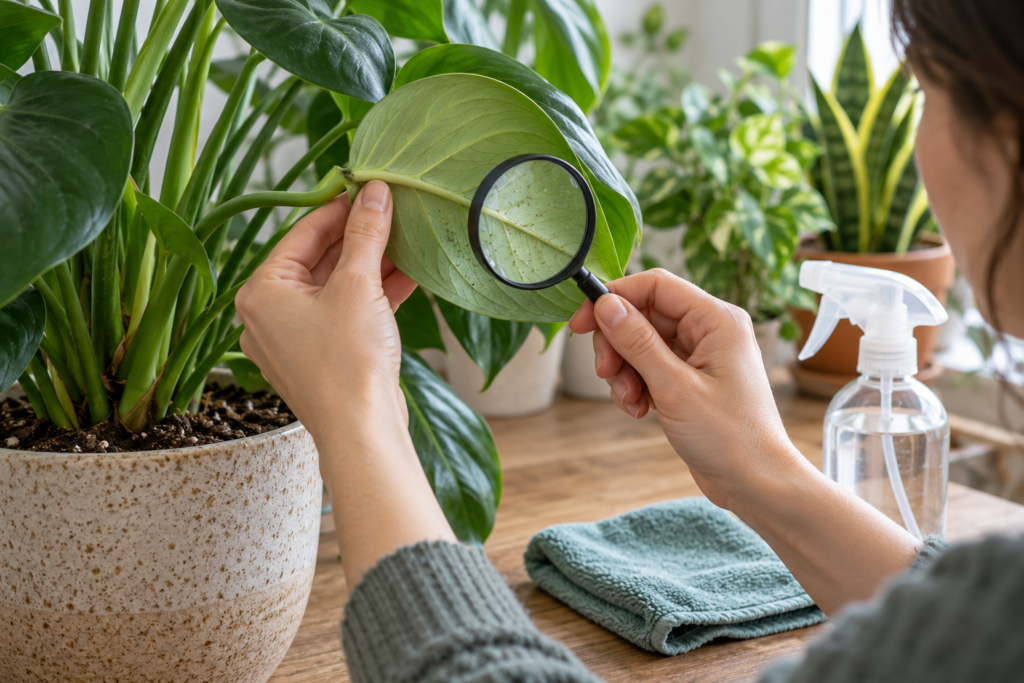
Once plants are settled, a few simple habits keep them healthy, and learning to read their signals helps you catch problems early.
Routine Care
Pinching and pruning. Pinching off the growing tips of plants like basil, coleus, and pothos encourages bushier growth. Remove dead, damaged, or yellowing leaves to keep plants tidy and reduce disease.
Deadheading. Removing faded flowers from annuals and many perennials encourages them to keep blooming instead of setting seed.
Cleaning leaves. Dust on indoor plant leaves reduces the light reaching them. Wipe large leaves gently with a damp cloth every few weeks.
Adjusting to the seasons. Indoor plants need less water and little or no fertilizer in winter, when growth slows. Keep them away from cold drafts and hot, dry air from heaters.
Humidity. Many tropical houseplants prefer moderate humidity. Grouping plants together, placing pots on trays of damp pebbles (with the pot sitting above the water), or using a humidifier can help in dry rooms.
Common Pests
Check plants regularly, especially the undersides of leaves and where leaves join stems.
- Aphids: small green, black, or white insects clustered on new growth. Spray off with water or use insecticidal soap.
- Spider mites: tiny pests causing fine speckling and sometimes webbing, common in hot, dry conditions. Rinse leaves and raise humidity.
- Mealybugs: white, cottony clusters in leaf joints. Dab with a cotton swab dipped in rubbing alcohol.
- Scale insects: small brown or tan bumps on stems and leaves. Scrape off gently and treat with insecticidal soap or horticultural oil.
- Fungus gnats: small dark flies around damp soil. Let the top layer of soil dry out between waterings.
Isolate new plants for a week or two before placing them near others, since many infestations arrive on new purchases.
Common Diseases
Root rot results from waterlogged soil. Affected plants wilt, yellow, and have brown, mushy roots. Remove the plant from its pot, trim away rotten roots, and repot in fresh, well-draining mix.
Powdery mildew appears as white, powdery patches on leaves, often when air circulation is poor. Improve airflow, avoid wetting leaves late in the day, and remove affected leaves.
Leaf spot diseases cause brown or black spots, often with yellow halos. Remove affected leaves and avoid overhead watering.
Reading the Leaves
Leaves are the most useful clue to what a plant needs:
- Yellow lower leaves: often overwatering or a lack of nitrogen; occasionally normal aging.
- Brown, crispy tips or edges: underwatering, low humidity, or mineral buildup from tap water or fertilizer.
- Pale or bleached leaves: too much direct sun.
- Leggy, stretched growth: too little light.
- Drooping leaves: thirst if the soil is dry, root problems if the soil is wet.
- Sudden leaf drop: often a response to a change in location, temperature, or drafts.
Common Beginner Mistakes
Watering on a schedule. Water when the plant needs it, not by the calendar.
Choosing plants for looks alone. A beautiful plant in the wrong light will struggle. Match plants to your conditions.
Using pots without drainage. Standing water at the bottom of a pot leads to root rot.
Overfeeding. Too much fertilizer harms more than it helps.
Moving plants too often. Plants adjust to their light and temperature. Constant moves stress them.
Ignoring early warning signs. A few yellow leaves or a handful of pests are easy to fix early and much harder later.
Keeping a simple plant journal, noting when you water, feed, repot, and see problems, helps you spot patterns quickly. Within a season, you’ll know which plants dry out fastest, which spots in your home or garden suit which plants, and what each plant looks like when it’s content. That knowledge, more than any single rule, is what turns a beginner into a confident gardener.
Frequently Asked Questions
Can plants grow without sunlight?
Plants need light to grow, but it doesn’t have to be sunlight. Grow lights can fully replace natural light for many plants, including herbs, seedlings, and houseplants. Low-light plants such as snake plants and ZZ plants tolerate dim rooms, but even they need some light and will slowly decline in a windowless space without artificial lighting.
Should I mist my houseplants?
Misting raises humidity around leaves only briefly, usually for a few minutes, so it does little to help plants that need consistently higher humidity. Grouping plants, using pebble trays, or running a humidifier are more effective. Frequent misting of plants with fuzzy leaves, such as African violets, can encourage leaf spots and fungal problems.
How long does it take for seeds to sprout?
Germination time varies widely by plant and soil temperature. Fast growers like radishes can sprout within a few days, lettuce and beans typically take about one to two weeks, and slower seeds such as peppers and parsley can take two to three weeks or more. Warm soil speeds germination for most seeds; cold soil slows it or stops it entirely.
Can I use coffee grounds on my plants?
Used coffee grounds can be added to compost, where they break down and add organic matter and nutrients. Spreading thick layers directly on soil isn’t recommended, since they can compact, repel water, or grow mold. They aren’t a substitute for fertilizer, and despite common belief, used grounds are generally close to neutral in acidity.
Can plants grow in water without soil?
Many plants can grow in water, at least for a while. Pothos, philodendron, spider plants, lucky bamboo, and many herbs root easily in water and can live in it for long periods. Change the water every week or two and add a very diluted liquid fertilizer occasionally. Hydroponic systems grow plants long-term without soil using nutrient solutions.
Why is my plant growing so slowly?
Slow growth is often normal in autumn and winter, when light levels drop and many plants rest. At other times, the most common causes are too little light, a lack of nutrients, a pot that’s too small, cool temperatures, or root problems from overwatering. Check light first, since it’s the most frequent limiting factor, especially indoors.
How do I keep my plants alive while I’m on vacation?
Water plants thoroughly before you leave and move houseplants a little further from hot, bright windows so they dry out more slowly. Group them together to raise humidity. For longer trips, self-watering pots, capillary wicks from a water container, or a friend who can water them are the most reliable options. Outdoor plants benefit from mulch and a drip irrigation timer.
Keep Learning
For more beginner help, see How to Start a Garden: The Complete Beginner’s Guide, How to Start a Vegetable Garden: Step-by-Step Guide for Beginners, and Artificial Plants for Home Decor: Best Ways to Use Them.

One Comment