Gardening as a Hobby: How to Get Started and Stick With It
Almost nobody decides to become a gardener. What usually happens is smaller than that. Someone is given a houseplant and it doesn’t die. A packet of basil seeds on the windowsill actually sprouts. A neighbour hands over a bag of courgettes in August and it occurs to you that you could grow those yourself. A…
Almost nobody decides to become a gardener. What usually happens is smaller than that. Someone is given a houseplant and it doesn’t die. A packet of basil seeds on the windowsill actually sprouts. A neighbour hands over a bag of courgettes in August and it occurs to you that you could grow those yourself. A year later there are twelve pots on the balcony and you are reading about soil pH on a Tuesday evening.
Gardening makes an unusually good hobby, and not only for the reasons people list. It’s slow in a way that suits modern life badly and modern minds well. It rewards attention rather than talent. It has a built-in calendar that keeps pulling you back, and it produces something you can eat, cut, give away, or simply sit and look at. It also costs remarkably little to begin, which matters when you’re not yet sure you’ll stay.
This guide is about becoming a gardener rather than about growing one particular crop. It covers what gardening actually gives you, how to find the style that fits your life, the honest time and money involved, what a sensible first season looks like, and how to get past the points where most beginners quietly stop.
Why Gardening Works So Well as a Hobby
Plenty of hobbies are enjoyable. Gardening has a few structural advantages that make it unusually sticky once it takes hold.
It gives you a reason to be outside without calling it exercise. Digging, carrying, kneeling, pruning, and hauling watering cans add up to real physical activity, most of it low-impact and self-paced. It builds grip strength and flexibility in a way that feels incidental rather than obligatory. A morning spent weeding is a morning spent moving, and the results are visible in a way a step count never is.
It absorbs attention completely. There’s something about tasks that occupy the hands and eyes but not the verbal part of the brain. Sowing seeds, pricking out seedlings, and deadheading all demand just enough focus to crowd out rumination. Many people find gardening does for them what meditation is supposed to do, without the effort of sitting still. Time outdoors in daylight also nudges sleep and mood in the right direction, particularly in the darker months when a Saturday in the garden may be the only proper daylight you get.
It has a rhythm that pulls you forward. Gardening comes with a calendar you didn’t have to invent. Seeds go in, seedlings need pricking out, things need planting, then watering, then harvesting, then clearing. There is always a next thing, and the next thing is usually small. Hobbies that stall are often the ones where you have to generate your own momentum. Gardening supplies it.
It teaches patience by making impatience useless. You cannot hurry a tomato. This is frustrating for about a month and then becomes one of the better things about the hobby. A garden operates on its own schedule, and learning to work with that timescale is genuinely restful.
It’s endlessly deep but immediately accessible. A five-year-old can push a bean seed into a pot and watch it grow. A person can also spend forty years studying grafting, breeding roses, or restoring a meadow, and still not run out of things to learn. Few hobbies have that range. You can stay comfortably on the shallow end forever or go as deep as you like.
It produces something real. Salad you grew, a jar of chillies, cut flowers on the kitchen table, a hedge that finally fills in. There is an unfashionable satisfaction in useful output that other hobbies don’t always deliver.
It connects you to a genuinely welcoming community. Gardeners give away seeds, cuttings, and advice with almost no prompting. Allotment sites, plant societies, community gardens, and online groups are full of people who are pleased you’re interested. For anyone looking for a hobby that gets them talking to other humans, it’s an easy entry point.
Finding the Kind of Gardening That Suits You
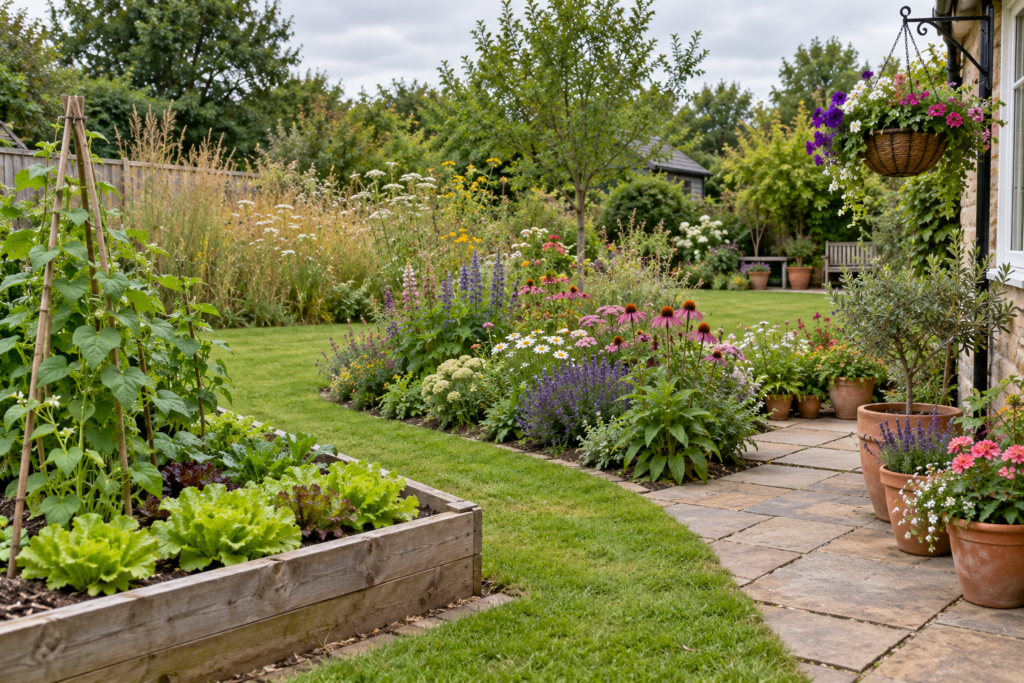
Gardening isn’t one activity. It’s a dozen fairly different pastimes wearing the same coat, and matching the right one to your temperament and circumstances makes the difference between a hobby that lasts and a shed full of abandoned pots.
What kind of gardening should a beginner start with?
Start with whichever branch matches what you already enjoy. If you like cooking, grow herbs and salad. If you like making a space look good, start with containers and ornamentals. If you want wildlife, plant natives and let a corner go unmown. Choosing by existing interest beats choosing by what seems most impressive.
Here’s roughly what each branch feels like in practice.
Growing food is the most common entry point and the most immediately rewarding. Herbs, salad leaves, radishes, and cherry tomatoes give quick results. The feedback loop is short and edible, and the failures are cheap. The downside is that it’s seasonal and demanding at peak times, so summer holidays need planning around.
Ornamental gardening is about how a space looks and feels. Borders, colour combinations, foliage shapes, structure through the year. It suits people with a visual or design streak, and it’s the branch where gardening most resembles an art form. It also rewards patience more than any other, since shrubs and perennials take a few years to come into their own.
Container and balcony gardening turns a very small space into a proper garden. Pots, window boxes, grow bags, and vertical planters. It’s flexible, you can rearrange everything, and it travels with you if you move. Watering is the trade-off, because pots dry out fast in summer.
Houseplants and indoor growing is gardening without weather. It’s year-round, it suits people in flats and cold climates, and it teaches a surprising amount about light, watering, and plant biology. Propagating houseplants from cuttings is a genuinely absorbing sub-hobby in itself.
Wildlife and native planting aims at pollinators, birds, and general ecological usefulness. Less about control and more about setting conditions and stepping back. Deeply satisfying for anyone who likes the idea of a garden that functions as habitat, and often less work than a formal one.
Specialist collecting is what happens when a gardener falls for one genus. Roses, dahlias, orchids, chillies, hostas, succulents, alpines, bonsai. Each has societies, shows, seed exchanges, and an enormous depth of accumulated knowledge. This tends to find you rather than the other way around.
Propagation and seed saving is the quiet craft at the centre of gardening: taking cuttings, dividing clumps, sowing, saving seed, and multiplying plants for free. It appeals strongly to people who like process and results at small scale.
Lawn and landscape work covers turf, hedges, paths, and structure. More physical, more project-shaped, and better suited to people who enjoy visible before-and-after transformations.
Most gardeners end up doing several of these. But picking one to start with prevents the very common beginner error of attempting all of them in one spring and doing none of them well.
The Honest Time, Space, and Money It Takes
Gardening has a reputation for being either effortless or all-consuming, depending on who’s describing it. Neither is accurate, and knowing the real numbers helps you commit sensibly.
How much time does gardening take each week?
A small garden or a collection of containers needs roughly two to four hours a week during the growing season, usually split into short visits rather than one long session. Winter drops to almost nothing. Spring and midsummer are the busy points, when watering, sowing, and weeding overlap.
The shape of that time matters more than the total. Gardening rewards frequent short visits far more than occasional marathons. Fifteen minutes most evenings keeps weeds tiny, catches pests early, and spots the plant that’s wilting before it dies. A four-hour blitz once a month means dealing with everything at its worst. If your schedule genuinely only allows the occasional long session, design for it: mulch heavily, choose drought-tolerant and low-maintenance plants, install a drip system on a timer, and grow fewer things that need daily attention.
Be honest about the peak weeks too. Late spring and high summer are when gardens ask the most, and they’re also when holidays happen. Planning a watering arrangement before you go away is one of those small, boring pieces of foresight that saves an entire season.
Is gardening an expensive hobby to start?
No. A genuinely capable starter setup costs very little: a trowel, a hand fork, secateurs, gloves, a watering can, some seeds, and a few bags of compost. Growing from seed rather than buying mature plants keeps costs low, and most of the real expense in gardening is optional and comes later.
Where the money actually goes, in rough order: hard landscaping and raised bed construction, mature plants and trees, powered equipment, greenhouses, and pots. All of those can wait. What keeps a hobby budget sane is buying tools properly once rather than cheaply several times, and starting things from seed, cuttings, and division wherever you can.
Gardening also has a strong second-hand and free economy that beginners often don’t know about. Seed swaps, plant society sales, community garden giveaways, local buy-nothing groups, and simply asking a neighbour for a cutting will fill a garden for almost nothing. Bricks, pots, timber, and tools turn up constantly on local listing sites. Many councils and community schemes offer cheap or free compost. A gardener who is patient about acquisition spends a fraction of what one in a hurry does.
Can you take up gardening without a garden?
Yes. Balconies, windowsills, doorsteps, and indoor spaces all support real gardening. Beyond that, community gardens and allotments offer proper ground for a modest annual fee, and volunteering at a public garden, school, or conservation project gives you hands-on experience and expert company without owning any land at all.
Waiting lists for allotments can be long in some areas, so it’s worth putting your name down early even if you’re not sure yet. In the meantime, a few large containers will teach you most of the same lessons.
Your First Season: A Realistic Plan
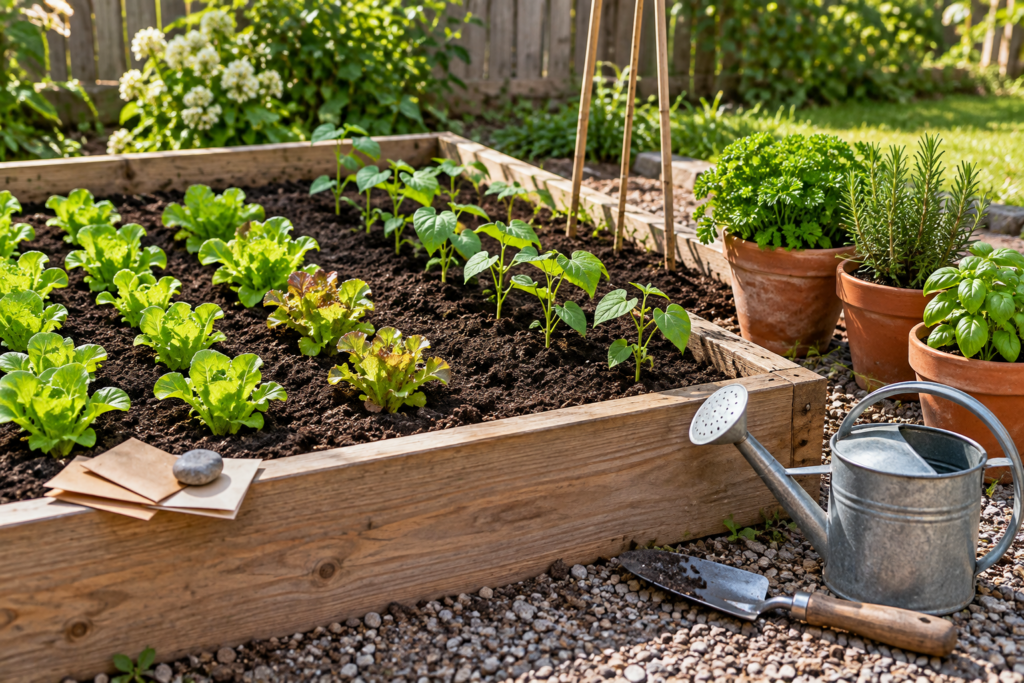
The single strongest predictor of whether someone sticks with gardening is whether their first season produced a visible win. Design for that deliberately.
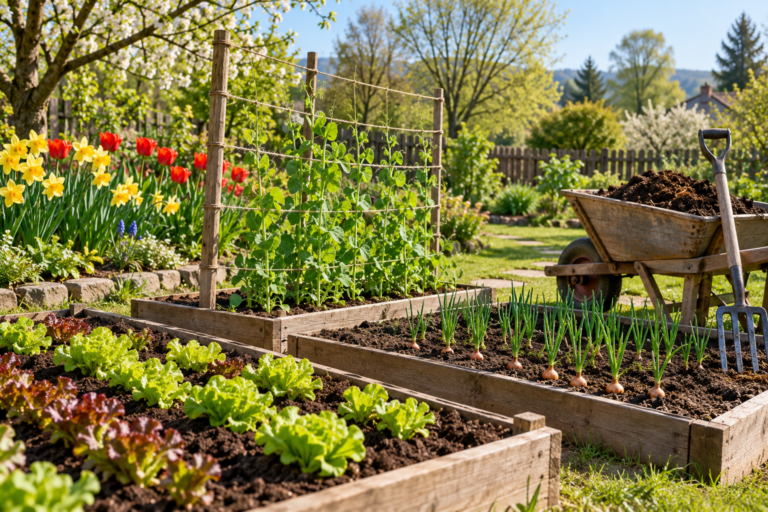
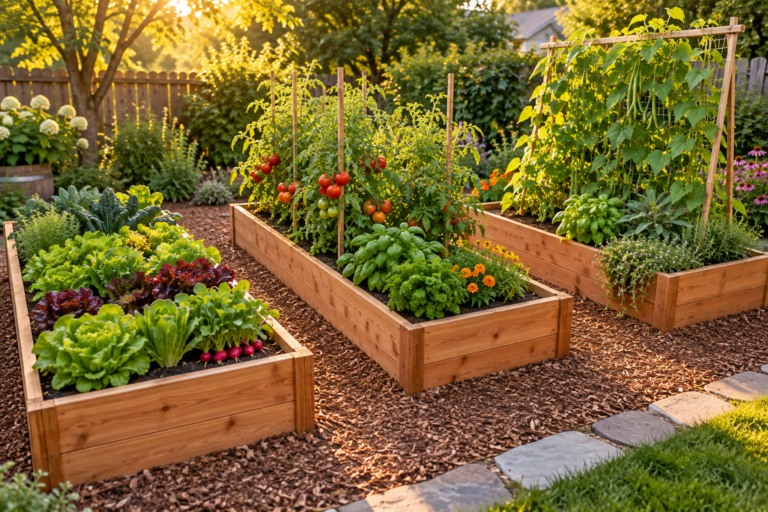
Start smaller than feels satisfying. One raised bed, a handful of containers, or a single border. Roughly the amount you could tend properly in half an hour, a few times a week. The instinct is to fill every available space in April, and that instinct is why so many gardens look defeated by July. You can always expand next year with a season of knowledge behind you. Scaling back mid-season feels like failure and rarely happens; people just stop going outside.
Pick things that want to grow. For your first year, choose plants with a reputation for being forgiving. Among edibles: lettuce, radishes, bush beans, courgettes, cherry tomatoes, chard, and herbs like mint, chives, parsley, and thyme. Among ornamentals: marigolds, cosmos, nasturtiums, sunflowers, hardy geraniums, lavender, and spring bulbs, which are close to foolproof if you plant them in autumn. Leave the temperamental things for later. Cauliflower and melons are not beginner projects, and neither are orchids.
Learn two numbers about where you live. Your average last frost date and your first frost date. Between those two lies your growing season, and almost every piece of timing advice you’ll read depends on them. Local agricultural extension services, national horticultural societies, and botanical gardens publish them for your area, along with planting calendars.
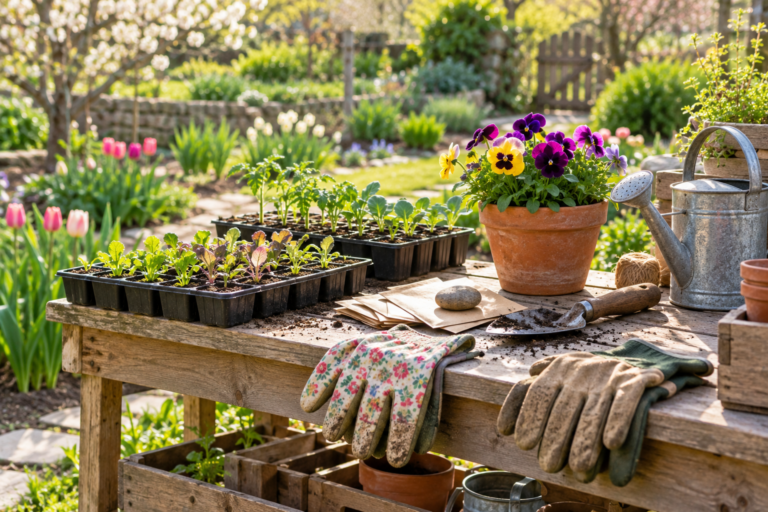
Buy the few tools you’ll use constantly. A hand trowel, a hand fork, bypass secateurs, gloves, and a watering can with a fine rose will handle nearly everything in a small garden. Add a spade and a garden fork if you’re working open ground. Skip the boxed sets.
Spend your effort on soil first. It’s the least glamorous investment and the highest returning. Adding compost improves drainage in heavy soil, water retention in light soil, and nutrition in both. Almost every persistent problem a beginner gardener has traces back to soil, light, or water rather than to the plant.
Mix fast results with slow ones. Radishes and salad leaves give you something to show for yourself within weeks. A shrub or a fruit bush gives you something in three years. Having both means the hobby feeds you encouragement early and depth later.
Write things down from day one. What you planted, when, where it came from, and what happened. A cheap notebook or a note on your phone is fine. Within two seasons this becomes the most useful gardening resource you own, because it’s the only one written for your exact conditions.
Expect to kill things. Every gardener does, permanently and continuously. A dead plant is tuition, and it’s cheap tuition. The gardeners who improve fastest are the ones who go and find out what went wrong rather than concluding they lack the knack.
Staying With It: Habits, Slumps, and the Quiet Months
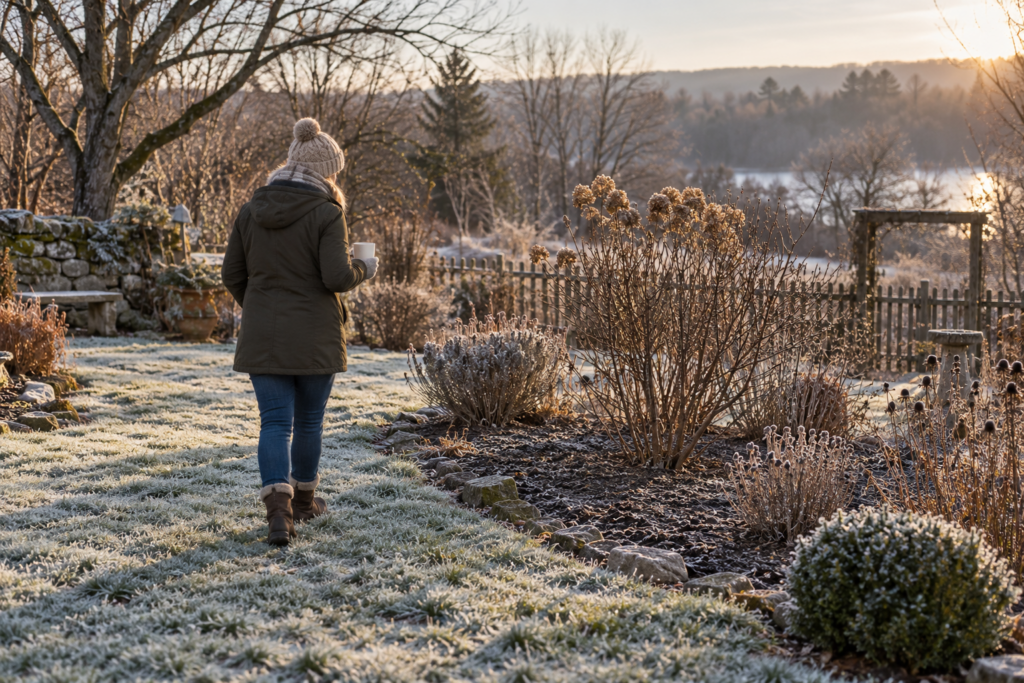
Plenty of people start gardening. The interesting question is what separates a first enthusiastic spring from a hobby that’s still going in ten years.
Make it small and frequent rather than big and occasional. Attach a short garden visit to something you already do. Coffee in hand before work. Ten minutes after dinner. A slow walk around with no task at all, just looking. The looking is genuinely productive, because it’s how you notice things early, and it’s also the part most people enjoy most.
Plan for the July slump. Midsummer is when gardens get away from people. Everything needs watering, weeds are established, the novelty has worn off, and it’s too hot to be out at midday. The fix is mostly preparation: mulch thickly in late spring, get a soaker hose or timer in place, and accept in advance that some things will be untidy. A garden that looks a bit rough in August is normal, not a verdict on you.
Let winter be quiet. New gardeners often assume the hobby stops in winter and take that as a sign of waning interest. It isn’t. Winter is for planning, ordering seeds, sharpening and oiling tools, pruning dormant fruit trees, forcing bulbs indoors, reading, and doing structural jobs while beds are empty. Houseplants and indoor propagation fill the gap nicely if you need something growing in front of you.
Change what isn’t working instead of persevering. If a bed is always shaded and always disappointing, stop fighting it and plant something shade-tolerant, or turn it into seating. If a crop failed twice, drop it. Gardening advice tends toward the earnest, but a hobby you’re enjoying is worth more than a garden that’s theoretically correct.
Resist comparison. Photographs of gardens are taken on the best day of the best week, often in a different climate, sometimes by people who garden professionally. Your garden at 7pm on a windy Thursday is not the comparison they invite. The useful measure is whether this year’s garden is better than last year’s.
Be willing to plateau. There will be seasons where you do the same things you did before and learn nothing new, and that’s fine. Hobbies are allowed to be comfortable. The people who garden for decades aren’t improving continuously; they’re just still out there.
Going Deeper: Skills, People, and Where the Hobby Can Lead
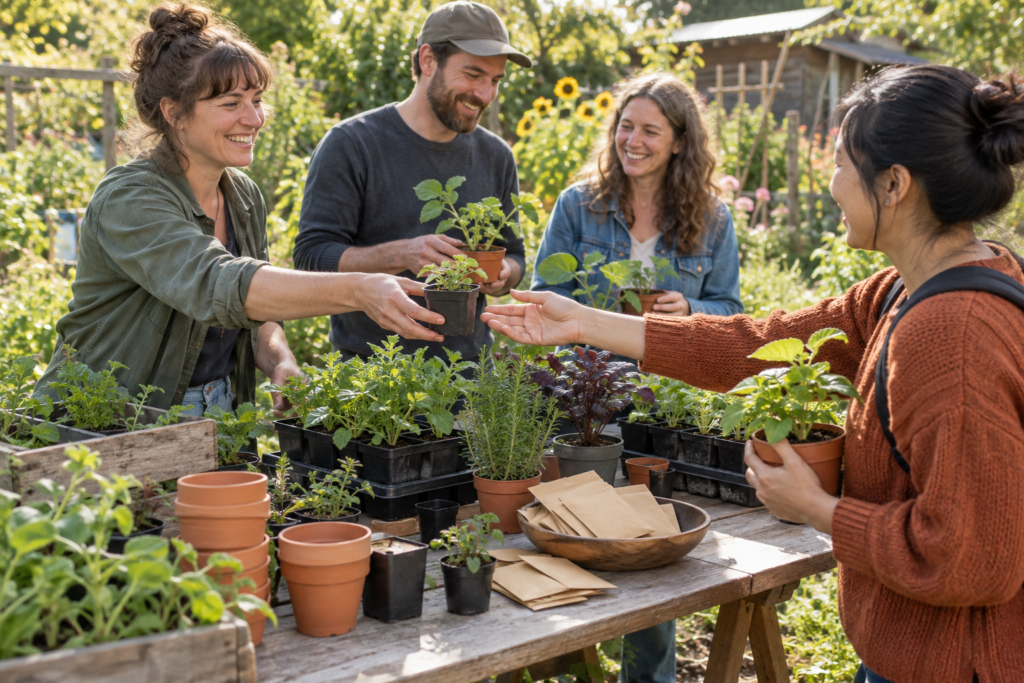
At some point gardening stops being a task list and turns into a genuine interest. That’s usually when it gets most enjoyable, and there’s plenty of room to grow into.
Skills worth learning next. Taking softwood and hardwood cuttings, which turns one plant into ten for free. Dividing perennials. Saving seed and understanding why some crops come true and others don’t. Pruning fruit trees properly. Making decent compost. Starting seeds indoors under lights. Grafting, if you catch the bug. Each of these is a small craft with a clear technique, and each one meaningfully expands what you can do.
Find other gardeners. Local horticultural societies, allotment associations, community gardens, and plant societies all run talks, shows, plant sales, and seed swaps. Open garden schemes let you walk around private gardens in your own area, which is far more instructive than looking at photographs, because you’re seeing what grows well in your exact conditions. Volunteering at a botanical garden, a park, or a conservation project puts you next to experienced horticulturists doing real work, which is the fastest informal training available.
Show and compete, if that appeals. Local shows have classes for vegetables, flowers, and arrangements, and they’re far less intimidating than they sound. Specialist societies run their own. Competing is a good way to push technique and meet people who take the same plant seriously.
Give things away. Surplus seedlings, cuttings, seeds, and produce. This is the traditional currency of gardening and the easiest way into a local network. It also solves the annual problem of having sown far too many tomatoes.
Consider where it might lead. Some hobby gardeners eventually go further: Master Gardener training through extension services, horticultural certificates and diplomas, work at a nursery or in garden maintenance, or design and consultancy. Others start a small plant stall, run a school garden, or manage a community plot. None of that is necessary, and a hobby that stays a hobby is a perfectly good outcome. But it’s worth knowing the door exists, because a surprising number of professional horticulturists started with one pot of basil on a windowsill.
The thing that catches most people off guard is how much the hobby changes how you see everywhere else. Once you garden, you notice street trees, hedgerows, what’s flowering in a park in February, which weeds are taking over a verge. The world gets more detailed. That, more than any harvest, tends to be what keeps people doing it.
Frequently Asked Questions
Is gardening a good hobby for someone with no experience?
Yes, and it’s one of the most beginner-friendly hobbies there is. Plants want to grow, so a reasonable amount of sun, water, and decent soil gets you a long way without any prior knowledge. Starting with forgiving plants like radishes, salad leaves, herbs, or marigolds means early success, and the mistakes are cheap enough that learning by doing is genuinely practical.
What is the easiest thing to grow when you’re just starting out?
Radishes, salad leaves, bush beans, and courgettes are the easiest edibles, and most herbs are close behind. For flowers, marigolds, nasturtiums, cosmos, and sunflowers germinate readily and bloom the same year, while spring bulbs planted in autumn are close to guaranteed. All of these grow quickly enough to give visible results within the first season.
How do I start gardening if I only have a balcony or windowsill?
Use the largest containers your space can hold, fill them with a quality potting mix, and check how many hours of direct sun the spot gets before choosing plants. Herbs, salad leaves, cherry tomatoes, peppers, bush beans, and compact flowers all grow well in pots. Containers dry out fast, so plan for frequent watering or use self-watering pots.
Do I need to know anything about plants before I begin?
No. Two pieces of information will carry you through a first season: how much sun your space gets, and your area’s average last and first frost dates. Everything else can be looked up as it comes up. Seed packets and plant labels carry spacing, depth, and timing instructions, and local extension services or horticultural societies fill in the regional detail.
Why do my plants keep dying even though I’m following instructions?
The usual culprits are watering, light, and soil rather than anything exotic. Overwatering kills more houseplants and container plants than neglect does, because waterlogged roots suffocate. Too little direct sun produces pale, leggy, unproductive plants. Compacted or poor soil limits everything. Checking those three before looking for pests or disease solves most beginner problems.
Is gardening actually good for mental and physical health?
It combines several things that are independently beneficial: moderate physical activity, daylight exposure, absorbing focused attention, and a sense of progress over time. Many gardeners describe it as restorative rather than relaxing, since it occupies the mind rather than emptying it. It isn’t a replacement for medical care, but as hobbies go it’s an unusually healthy one.
What should I do with my garden in winter as a beginner?
Treat winter as the planning and maintenance season. Clear spent plants, mulch beds, clean and sharpen tools, order seeds, and read up on what you want to try next year. Prune dormant fruit trees and deciduous shrubs at the appropriate time for each. If you want something actively growing, move indoors with houseplants, cuttings, or windowsill herbs.
How long before a new garden starts looking established?
Annual flowers and vegetables give results within a single season, so a container garden or vegetable bed can look full in its first summer. Perennials generally take two to three years to fill out, and shrubs and trees three to five. Gardeners often describe perennials as sleeping the first year, creeping the second, and leaping the third, which is a fair description of how it feels.
Keep Learning
For more beginner help, see How to Start a Garden: The Complete Beginner’s Guide, How to Start a Vegetable Garden: Step-by-Step Guide for Beginners, and Gift Ideas for Gardeners: What They Actually Want and Use.